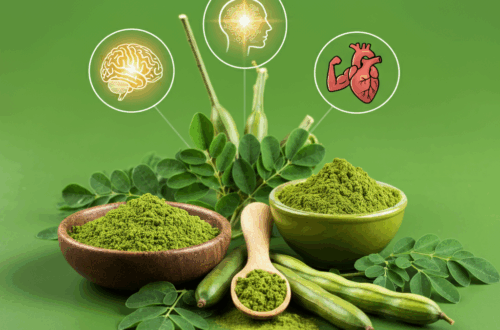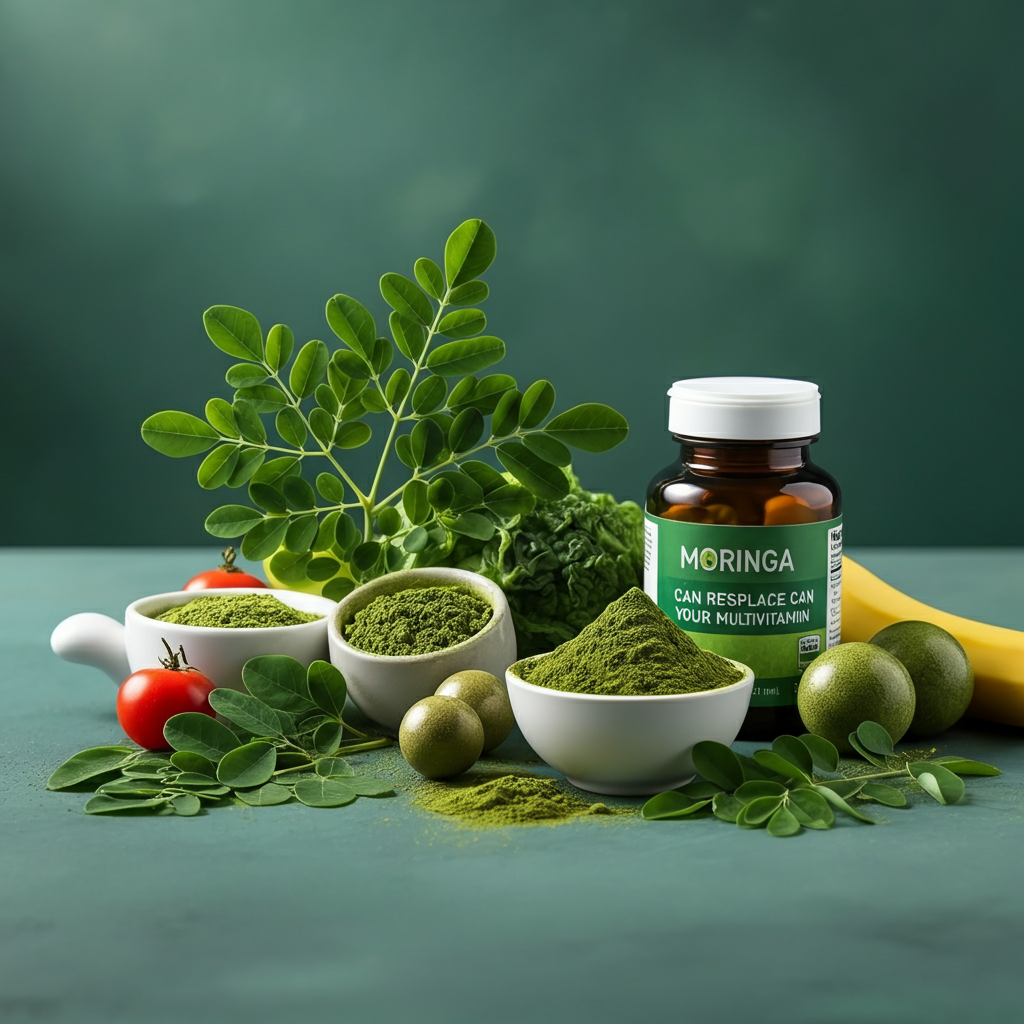
How Moringa Can Replace Your Multivitamin
Many of us reach for a daily multivitamin to fill potential nutritional gaps in our diet. It feels like a sensible insurance policy for our health. But what if nature offered a single, plant-based source that could provide a similar spectrum of nutrients, plus additional benefits that synthetic pills can’t match? Meet Moringa oleifera, the “Miracle Tree” that is challenging the way we think about daily supplementation.
Moringa is a fast-growing, drought-resistant tree whose leaves are one of the most nutrient-dense foods on the planet. For centuries, traditional cultures have used it to fight malnutrition and support overall health. Today, modern science is confirming its powerful nutritional profile, positioning it as a potent, natural alternative to a synthetic multivitamin. This single green powder offers a holistic way to nourish your body, straight from nature.
Disclaimer: The information in this article is for educational purposes only and is not intended as medical advice. Always consult with a qualified healthcare professional before making any changes to your supplement regimen or health routine.
Moringa vs. Multivitamin: A Nutrient Showdown
The primary reason people take multivitamins is to get a broad range of essential vitamins and minerals. The problem is that many synthetic vitamins are created in a lab and may not be as easily recognized or absorbed by the body as their natural counterparts. Moringa, on the other hand, delivers these nutrients in a whole-food form, complete with the co-factors and enzymes that help your body use them effectively.
Let’s look at how Moringa’s nutritional content stacks up against what you’d find in a typical multivitamin bottle.
A Powerhouse of Vitamins
Moringa leaves are bursting with essential vitamins that are crucial for everything from energy production to immune defense. Gram for gram, fresh Moringa leaves offer:
- More Vitamin C than oranges: Essential for immune function, skin health, and antioxidant protection.
- More Vitamin A than carrots: Crucial for vision, immune response, and cellular growth.
- A rich supply of B Vitamins: Including B1 (thiamine), B2 (riboflavin), B3 (niacin), and B6, which are vital for converting food into energy and supporting brain function.
Unlike a multivitamin that provides isolated, synthetic forms of these vitamins, Moringa delivers them in a natural complex that your body can easily recognize and absorb.
An Abundance of Minerals
Minerals are the spark plugs of the body, necessary for countless metabolic processes. Moringa is an incredible plant-based source of key minerals that are often lacking in modern diets. It contains significant amounts of:
- Calcium: Essential for strong bones, teeth, and proper muscle function.
- Potassium: Important for maintaining healthy blood pressure and fluid balance.
- Iron: Crucial for creating red blood cells that transport oxygen, thus fighting fatigue.
- Magnesium: Involved in over 300 biochemical reactions, including muscle relaxation, nerve function, and blood sugar control.
Getting these minerals from a plant source like Moringa ensures they are in a bioavailable form, ready for your body to use.
Beyond the Basics: What a Multivitamin Can’t Offer
While a multivitamin might provide a checklist of nutrients, its benefits often stop there. As a whole food, Moringa offers a synergistic blend of compounds that work together to provide health benefits far beyond basic nutrition.
1. A Complete Plant-Based Protein
Protein is made up of amino acids, nine of which are essential because our bodies can’t produce them. It’s rare for a single plant to contain all nine, but Moringa does. This makes it a complete protein source, which is invaluable for vegetarians, vegans, or anyone looking to build and repair tissues, from muscles to skin. A multivitamin pill contains no protein.
2. Potent Anti-Inflammatory Compounds
Chronic inflammation is a contributing factor to many serious health conditions. Moringa is rich in powerful anti-inflammatory compounds, including isothiocyanates and quercetin. These natural substances help calm your body’s inflammatory response at a cellular level, promoting long-term joint health, cardiovascular wellness, and overall vitality. This is a benefit you won’t find listed on a multivitamin label.
3. A Rich Source of Antioxidants
Our bodies are constantly under attack from free radicals, unstable molecules that cause cellular damage and accelerate aging. Moringa is loaded with a diverse array of antioxidants—like quercetin, chlorogenic acid, and beta-carotene—that neutralize these harmful molecules. This antioxidant army helps protect your DNA, reduce oxidative stress, and support healthy aging from the inside out. While some multivitamins include antioxidants like Vitamin C or E, they can’t match the broad-spectrum protection offered by a whole food like Moringa.
4. Natural and Bioavailable Nutrients
Perhaps the most significant advantage of Moringa is its origin. The nutrients in Moringa are food-state, meaning they are bound in a natural complex of fiber, enzymes, and phytonutrients. This “food matrix” helps your body recognize and absorb the nutrients far more effectively than isolated, synthetic vitamins. Your body knows what to do with a leaf, but it may struggle to process a chemical compound created in a lab.
Making the Switch: How to Use Moringa
If you’re considering a more natural approach to your daily supplementation, incorporating Moringa is incredibly simple. It is most commonly available as a fine powder or in convenient capsules.
- Moringa Powder: This is the most versatile option. You can add a teaspoon to your morning smoothie, stir it into oatmeal or yogurt, mix it into soups and sauces, or even bake with it. Start with half a teaspoon to acclimate to its earthy, matcha-like flavor.
- Moringa Capsules: For those who prefer a tasteless, no-fuss option, capsules are perfect. You can take them with a glass of water, just like you would with a regular multivitamin. This is an easy way to get a consistent, measured dose every day.
A Whole-Food Approach to Wellness
Choosing between Moringa and a multivitamin is about more than just comparing labels; it’s about choosing a philosophy of health. Do you want to fill nutritional gaps with isolated, synthetic compounds, or do you want to nourish your body with a complex, synergistic whole food that it instinctively knows how to use?
Moringa doesn’t just check boxes on a nutrient list. It provides a holistic foundation for wellness, offering protein, anti-inflammatories, and a full spectrum of antioxidants that work together to support your energy, immunity, and long-term vitality.
Ready to trade your synthetic pill for a powerful plant? Give your body the natural, whole-food nourishment it deserves.
Click here to buy high-quality Moringa online and start your journey to natural wellness!