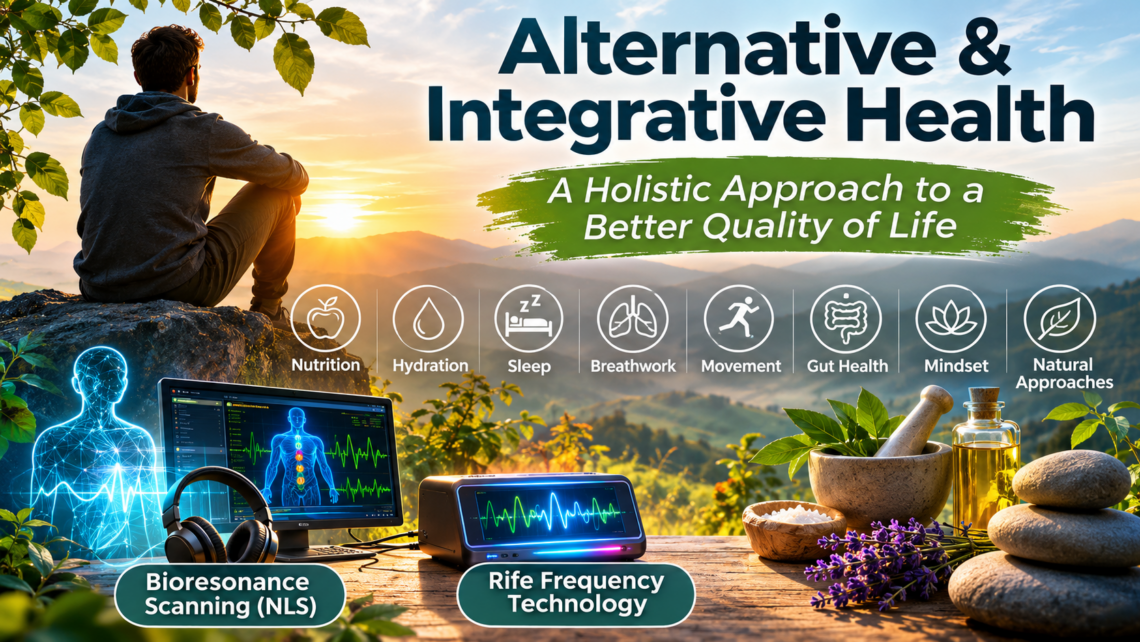
Alternative & Integrative Health: A Holistic Approach to Improving Your Quality of Life
Exploring the connection between modern healthcare, natural wellness practices, lifestyle choices, Rife frequency technology and Bioresonance Scanning.
Table of Contents
Introduction: Looking Beyond Symptoms
Have you ever wondered whether there is more to health than simply treating symptoms when something goes wrong?
Our bodies are complex systems. Physical health, emotional wellbeing, mental balance, nutrition, sleep, movement and our surrounding environment all contribute to how we feel and function.
Yet, in modern life, it is easy to become disconnected from these fundamental aspects of wellbeing. We spend long hours sitting, experience ongoing stress, eat convenient rather than nourishing foods and often neglect the importance of rest and recovery.
This is where Alternative and Integrative Health enters the conversation.
It encourages us to take a broader view of our wellbeing, exploring different approaches that may complement conventional healthcare while placing greater emphasis on lifestyle, prevention, self-awareness and personal responsibility.
At VitalPulse, we believe that wellbeing is a journey of exploration, reflection and balance.
Let’s explore what alternative and integrative health really means, how you can improve your quality of life and where technologies such as Rife Frequency Therapy and Bioresonance Scanning fit into this approach.
1. What Is Alternative & Integrative Health?
Although the terms are often used interchangeably, they have slightly different meanings.
Alternative Health
Alternative health refers to practices, therapies and wellness approaches that are used outside conventional medical care. These may include traditional healing systems, herbal approaches, energy-based practices and various natural wellness philosophies.
Complementary Health
Complementary health involves using non-conventional approaches alongside conventional healthcare.
For example, someone receiving conventional treatment for a health condition may also practise meditation, gentle yoga or relaxation techniques to support their overall wellbeing.
Integrative Health
Integrative health takes a broader, whole-person approach. It combines conventional healthcare with complementary approaches that have appropriate evidence for their safety and effectiveness.
Rather than focusing exclusively on an individual symptom or condition, integrative health considers the many interconnected factors that influence a person’s quality of life.
The World Health Organization recognises the importance of traditional, complementary and integrative medicine and emphasises the need for evidence, safety and responsible integration into healthcare.
Read more: World Health Organization – Traditional, Complementary and Integrative Medicine.
2. The Whole-Person Approach to Wellbeing
One of the central ideas behind holistic wellbeing is that we should not look at the body, mind and lifestyle as completely separate things.
Consider how different aspects of your life influence one another:
- Poor sleep can affect concentration, mood and energy.
- Ongoing stress can influence digestion, appetite and sleep quality.
- Inadequate nutrition can affect energy levels and normal bodily functions.
- A sedentary lifestyle can negatively influence cardiovascular and metabolic health.
- Social isolation and emotional strain can affect mental and physical wellbeing.
Improving one area may positively influence several others.
This is why a holistic approach encourages us to look at the bigger picture rather than concentrating on individual symptoms alone.
3. How Can You Improve Your Quality of Life Naturally?
You don’t necessarily need expensive equipment, complicated programmes or an entirely new lifestyle to begin improving your wellbeing.
Small, consistent changes can make a meaningful difference.
Here are nine important areas to explore.
1. Hydration – Give Your Body What It Needs
Water plays an essential role in regulating body temperature, transporting nutrients, supporting digestion and maintaining normal cellular function.
Make hydration a daily priority.
- Drink water regularly throughout the day.
- Increase your intake when exercising or sweating.
- Include water-rich foods such as cucumber, watermelon and oranges.
- Pay attention to thirst and other signs of inadequate hydration.
2. Nutrition – Nourish Rather Than Simply Feed
Food provides the nutrients your body needs to function, repair tissues and maintain normal metabolic processes.
Focus on:
- Vegetables and fruit.
- Whole grains and fibre-rich foods.
- Quality protein sources.
- Healthy fats.
- Minimally processed foods.
- Reducing excessive added sugar and highly processed foods.
A balanced diet doesn’t need to be complicated. Consistency matters more than perfection.
3. Sleep & Recovery – Allow Your Body to Rest
Sleep is essential for physical recovery, memory, emotional regulation and metabolic health.
Try to:
- Maintain a consistent sleeping schedule.
- Create a comfortable, dark sleeping environment.
- Reduce screen exposure before bedtime.
- Avoid excessive caffeine late in the day.
- Aim for approximately 7–9 hours of sleep each night as an adult.
Rest is not wasted time. It is an important part of maintaining wellbeing.
4. Breathing & Nervous System Regulation
Breathing is something we do automatically, but becoming more aware of our breathing patterns can help us develop relaxation skills.
Gentle breathing exercises may help reduce feelings of stress and encourage relaxation.
Explore:
- Diaphragmatic breathing.
- Slow, comfortable nasal breathing.
- Mindful breathing.
- Guided relaxation.
- Meditation.
There is no need to force deep breathing. Comfortable, gentle breathing is a good starting point.
5. Movement – Keep Your Body Active
Movement supports cardiovascular health, muscular strength, joint mobility and metabolic function.
You don’t have to become a professional athlete.
Start with manageable activities:
- Walking.
- Gentle stretching.
- Yoga.
- Cycling.
- Swimming.
- Resistance exercises.
Even short periods of movement throughout the day are better than remaining inactive.
6. Gut Health – Look After Your Digestive System
Your digestive system plays an important role in nutrient absorption, immune function and overall health.
Support digestive wellbeing by:
- Eating sufficient dietary fibre.
- Including a variety of plant-based foods.
- Drinking enough water.
- Eating slowly and mindfully.
- Including fermented foods if tolerated.
- Maintaining regular physical activity.
Persistent digestive symptoms should be assessed by an appropriate healthcare professional rather than automatically attributed to an imbalance in gut bacteria.
7. Emotional & Mental Wellbeing
Our emotional wellbeing is just as important as our physical health.
Stress, unresolved emotions, constant pressure and a lack of personal time can influence how we experience everyday life.
Consider incorporating:
- Journaling.
- Mindfulness.
- Meditation.
- Time in nature.
- Creative activities.
- Meaningful social connections.
- Professional psychological support when needed.
Taking care of your emotional wellbeing is not selfish. It is an important investment in yourself.
8. Environmental Wellbeing
Our surroundings can influence our daily habits and overall comfort.
Consider the quality of your indoor air, exposure to excessive noise, household cleanliness, access to natural light and the products you use in your home.
Small environmental improvements can make your living space more comfortable and supportive of healthy routines.
9. Personal Awareness & Self-Reflection
Perhaps one of the most overlooked aspects of wellbeing is simply learning to pay attention to yourself.
Ask yourself:
- How is my energy throughout the day?
- Am I sleeping well?
- How do I respond to stress?
- Are my eating habits supporting my lifestyle?
- Am I making enough time for myself?
- What changes could improve my everyday experience?
Self-awareness is often the starting point for meaningful lifestyle changes.
4. Where Does Rife Frequency Therapy Come In?
Rife Frequency Therapy is an alternative wellness approach associated with the work of Royal Raymond Rife, an American inventor who developed frequency-generating equipment during the early twentieth century.
The general concept behind Rife technology is that electromagnetic frequencies may interact with biological systems.
Rife devices generate electrical or electromagnetic signals at selected frequencies. Different systems deliver these signals in different ways, depending on their design.
Within alternative wellness communities, frequency-based approaches are explored as part of broader personal wellbeing routines.
Understanding the Frequency Concept
Everything in the physical world involves energy and physical processes that can be described using scientific principles.
Biological systems also exhibit electrical activity, from nerve impulses to the electrical signals associated with heart function.
However, the existence of biological electrical activity does not automatically establish that particular Rife frequencies can identify or eliminate specific pathogens or treat medical conditions.
Research into electromagnetic approaches continues in different areas of science, but the effectiveness of commercial Rife devices for treating diseases has not been established through reliable clinical evidence.
How Is Rife Used in Alternative Wellness?
Some practitioners incorporate frequency-generating devices into complementary wellness routines.
People interested in this approach may explore frequency sessions as part of their broader personal wellbeing journey.
At VitalPulse, Rife technology is approached as an alternative wellness modality, with an emphasis on responsible use, education and realistic expectations.
Important: Rife devices should not be considered proven treatments for infections, cancer, parasites or other medical conditions. They should never replace prescribed medication, medical investigations or established treatment.
5. What Is Bioresonance Scanning (NLS Technology)?
Bioresonance is an alternative approach based on the idea that biological systems have measurable electromagnetic characteristics.
Some bioresonance systems claim to analyse signals associated with the body and use specialised software to generate information about different areas of wellbeing.
One variation is known as NLS (Non-Linear Systems) scanning.
NLS systems use specialised electronic equipment and computer software to generate extensive reports covering different biological systems and areas of interest.
Depending on the equipment and software, these reports may include categories relating to:
- Digestive system.
- Cardiovascular system.
- Respiratory system.
- Nervous system.
- Musculoskeletal system.
- Endocrine system.
- Nutritional themes.
- General wellbeing indicators.
What Is the Purpose of an NLS Scan?
Within alternative wellness settings, an NLS scan is generally presented as an exploratory tool intended to encourage greater awareness of different aspects of wellbeing.
It can provide an opportunity to discuss lifestyle habits, personal wellness goals and areas that someone may wish to investigate further.
However, it is important to understand the limitations.
The diagnostic accuracy and clinical validity of NLS and bioresonance scanning have not been established through sufficient reliable scientific evidence. The generated reports should not be interpreted as confirmed medical findings, diagnoses, deficiencies, infections or organ abnormalities.
An NLS scan is not a substitute for blood tests, medical examinations or other clinically validated investigations.
How Does Bioresonance Fit Into a Holistic Wellness Journey?
Rather than viewing a scan as a medical answer, it is more responsible to approach it as an exploratory wellness experience.
For example, someone interested in improving their digestive wellbeing might use the experience as an opportunity to reflect on:
- Their hydration habits.
- Dietary choices.
- Stress levels.
- Sleep quality.
- Daily movement.
- Existing digestive concerns.
The most valuable part of any wellness journey is translating awareness into practical, sensible lifestyle improvements.
6. Bringing Everything Together: The Integrative Approach
Imagine approaching your wellbeing from several different directions rather than relying on just one method.
You might combine:
| Wellness area | Possible approach |
|---|---|
| Nutrition | Balanced, nutrient-rich eating |
| Hydration | Consistent daily water intake |
| Movement | Walking, stretching and exercise |
| Sleep | Better sleep routines |
| Mental health | Mindfulness and relaxation |
| Digestive health | Fibre-rich foods and healthy habits |
| Emotional wellbeing | Journaling and self-reflection |
| Complementary wellness | Exploring suitable complementary approaches |
| Personal awareness | Wellness assessments and goal setting |
This is the essence of a whole-person approach.
There is no single machine, supplement, therapy or lifestyle practice that can replace the many interconnected things that contribute to good health.
The goal is to develop a sustainable approach that supports your physical, mental and emotional wellbeing.
7. The VitalPulse Philosophy: Explore Your Wellbeing
At VitalPulse, we believe that wellbeing is not simply about waiting until something goes wrong.
It is about becoming more aware of your body, understanding your lifestyle and taking small, meaningful steps towards a healthier and more balanced life.
Our philosophy is built around three simple principles:
Reconnect.
Reconnect with yourself. Become more aware of your body, your habits, your environment and the things that influence how you feel.
Reflect.
Take time to explore your lifestyle, recognise areas that could benefit from attention and develop a better understanding of your personal wellbeing goals.
Realign.
Make practical adjustments. Improve your daily routines, nourish your body, prioritise rest and develop habits that support a healthier lifestyle.
Through wellness education, lifestyle exploration, remote NLS/Bioresonance Scanning and alternative frequency-based wellness approaches, VitalPulse aims to encourage a more conscious and informed relationship with personal wellbeing.
We don’t believe in quick fixes or overnight transformations.
We believe in education, awareness, consistency and taking responsibility for the choices that shape our everyday lives.
Final Thoughts: Your Wellbeing Is a Journey
Improving your quality of life doesn’t have to begin with a dramatic change.
It can start with drinking more water, taking a daily walk, improving your sleep, preparing a nourishing meal or simply taking ten minutes to slow down and reconnect with yourself.
Alternative and integrative health offers a broad range of perspectives and approaches to explore. The key is to remain curious, informed and responsible about the choices you make.
Explore different approaches, understand their limitations, seek reliable information and work alongside qualified healthcare professionals when necessary.
Your health is worth exploring. Your wellbeing is worth prioritising. And your journey starts with the choices you make today.
Explore Your Wellbeing with VitalPulse
Discover our wellness resources, explore alternative wellness approaches and learn more about our remote NLS/Bioresonance Scanning services.
Reconnect. Reflect. Realign.
Visit: www.vitalpulse.co.za
Important Wellness Disclaimer
VitalPulse provides wellness education and complementary wellness services. Rife Frequency Therapy and NLS/Bioresonance Scanning are alternative approaches whose effectiveness for diagnosing or treating medical conditions has not been established by reliable clinical evidence.
NLS/Bioresonance reports are not medical diagnoses and should not be used to identify or rule out diseases, infections, nutritional deficiencies or other medical conditions.
Our services are not intended to replace professional medical advice, diagnosis or treatment. Always consult an appropriately qualified healthcare professional about medical concerns and before making changes to prescribed treatments.

