The Complete Guide to Cell/Tissue Salts
Understanding the 12 Schüssler Cell Salts, Their Traditional Uses and Their Connection to Energy and Wellbeing
VitalPulse – Explore Your Wellbeing
Reconnect. Reflect. Realign.
1. Introduction to Tissue Salts
Our bodies are extraordinary biological systems, made up of trillions of individual cells working together to sustain life. Every movement, thought, heartbeat and metabolic process depends on the coordinated activity of these cells.
Minerals play an essential role in maintaining normal cellular function. They contribute to nerve signalling, muscle contraction, fluid regulation, bone structure, enzyme activity and countless other biological processes.
Tissue salts, also known as Schüssler Cell Salts or Biochemic Tissue Salts, are a complementary health system developed in the nineteenth century by German physician Dr Wilhelm Heinrich Schüssler.
The system is based on the traditional belief that twelve inorganic mineral salts are particularly important to the structure and functioning of human tissues.
Schüssler proposed that disturbances in the availability or utilisation of these mineral substances could affect cellular function and that specially prepared mineral salts could help support the body’s natural processes.
Today, tissue salts remain popular within certain homeopathic and holistic wellbeing traditions.
They are generally prepared in highly diluted or triturated forms, commonly using potencies such as 6X and 12X. These preparations are different from conventional mineral supplements, which are designed to supply measurable quantities of minerals.
The Philosophy Behind Tissue Salts
The traditional tissue salt philosophy can be understood through three central principles:
1. Cellular balance
The body depends on a complex balance of minerals, fluids and biochemical processes. Healthy cells require appropriate conditions to perform their functions.
2. Mineral relationships
Different minerals have different roles in the body. Calcium, potassium, sodium, magnesium, iron and other minerals contribute to different physiological processes.
3. Supporting the body’s natural processes
Rather than viewing wellbeing as simply the absence of symptoms, the tissue salt tradition considers how the body’s tissues and cellular systems work together.
It is important to distinguish the established biological roles of minerals from the traditional claims made about highly diluted tissue salt preparations. The latter have not been demonstrated to correct mineral deficiencies or treat specific illnesses reliably.
A Brief History
Dr Wilhelm Heinrich Schüssler developed his biochemical system during the late nineteenth century.
He believed that the mineral composition of human tissues could provide a framework for understanding health and disease.
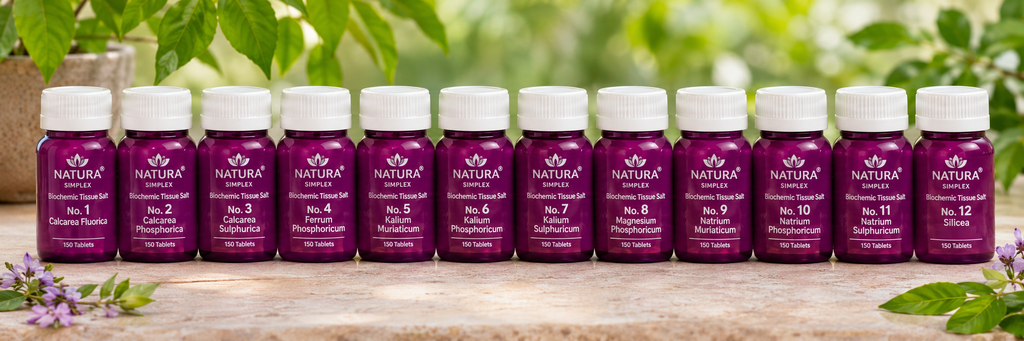
The traditional Schüssler system is associated with twelve mineral preparations. The order and naming used in product ranges and reference materials can vary.
To keep this guide aligned with the products available in South Africa, the tissue salts below follow the Natura South Africa range and numbering:
- Calc Fluor – Calcarea Fluorica
- Calc Phos – Calcarea Phosphorica
- Calc Sulph – Calcarea Sulphurica
- Ferrum Phos – Ferrum Phosphoricum
- Kali Mur – Kali Muriaticum
- Kali Phos – Kali Phosphoricum
- Kali Sulph – Kali Sulphuricum
- Mag Phos – Magnesia Phosphorica
- Nat Mur – Natrium Muriaticum
- Nat Phos – Natrium Phosphoricum
- Nat Sulph – Natrium Sulphuricum
- Silica – Silicea
2. Understanding the Twelve Tissue Salts
Each tissue salt has a traditional profile describing its associated tissues, functions and applications.
The descriptions below reflect traditional Schüssler and homeopathic practice. They are intended as educational information, not proven therapeutic effects.
TISSUE SALT No. 1 – CALC FLUOR (CALCAREA FLUORICA)
Mineral: Calcium Fluoride
Traditional theme: Elasticity, flexibility and structural resilience
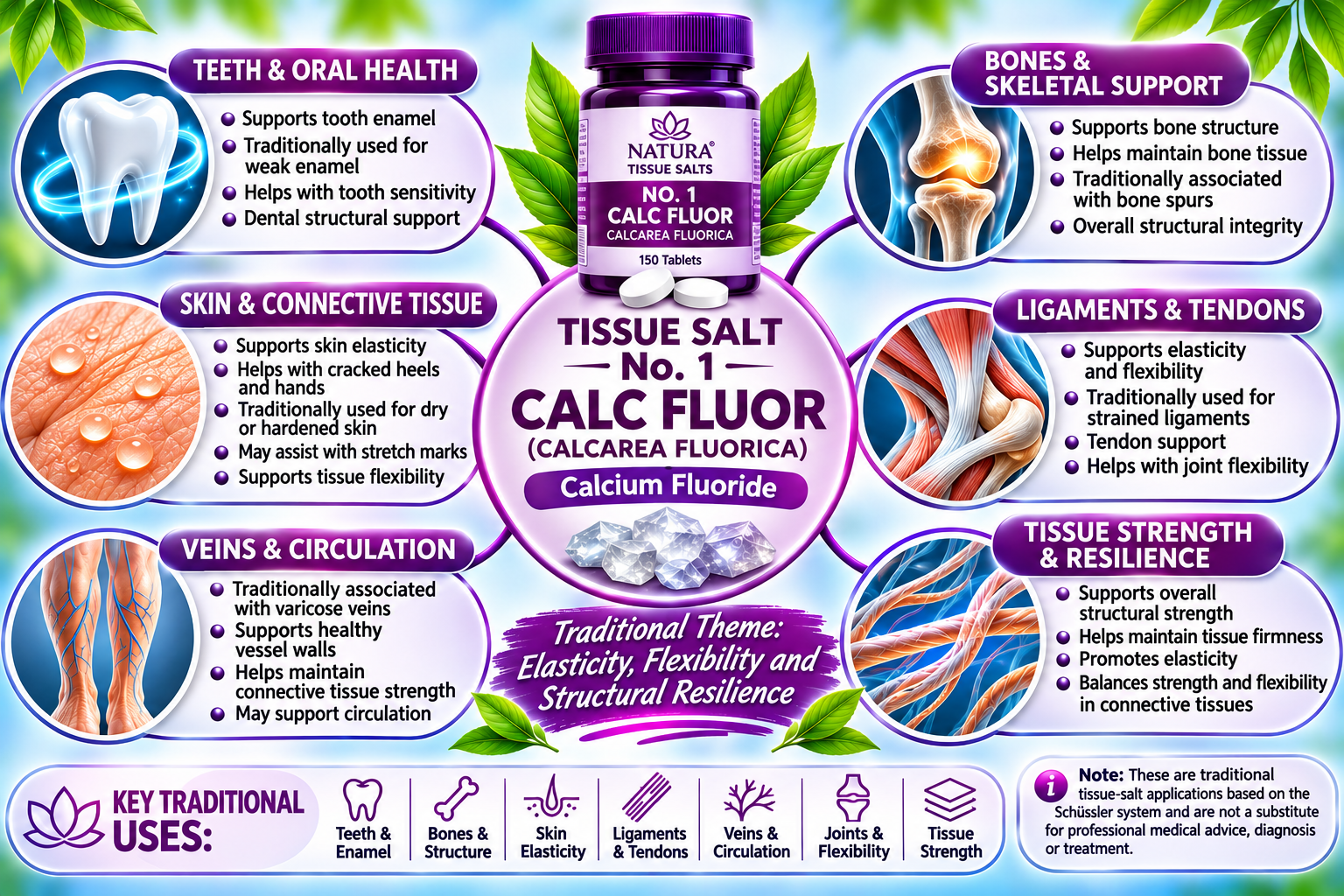
Calcarea Fluorica is traditionally associated with the elasticity and resilience of connective tissues.
In Schüssler philosophy, it is considered particularly relevant to structures that need to maintain flexibility while providing physical support.
Traditionally associated with:
- Connective tissue and ligaments.
- Skin elasticity and tissue firmness.
- Teeth and tooth enamel.
- Bones and supporting structures.
- Tendons and the flexibility of tissues.
- Veins and the elasticity of vessel walls.
Traditional uses and applications:
Practitioners traditionally select Calcarea Fluorica when considering concerns involving tissue elasticity, firmness or structural resilience.
It is commonly associated with:
- Supporting the traditional concept of healthy connective tissue.
- Maintaining skin firmness and elasticity.
- Supporting the structural integrity of teeth and bones.
- Addressing concerns traditionally associated with stiff or weakened connective tissues.
- Supporting the body’s structural framework.
Holistic wellbeing perspective:
Calcarea Fluorica symbolically represents adaptability and flexibility.
From a holistic perspective, it can be used as a reminder that wellbeing involves finding a balance between stability and the ability to adapt to changing circumstances.
Traditional keyword: Elasticity.
TISSUE SALT No. 2 – CALC PHOS (CALCAREA PHOSPHORICA)
Mineral: Calcium Phosphate
Traditional theme: Growth, nourishment and regeneration
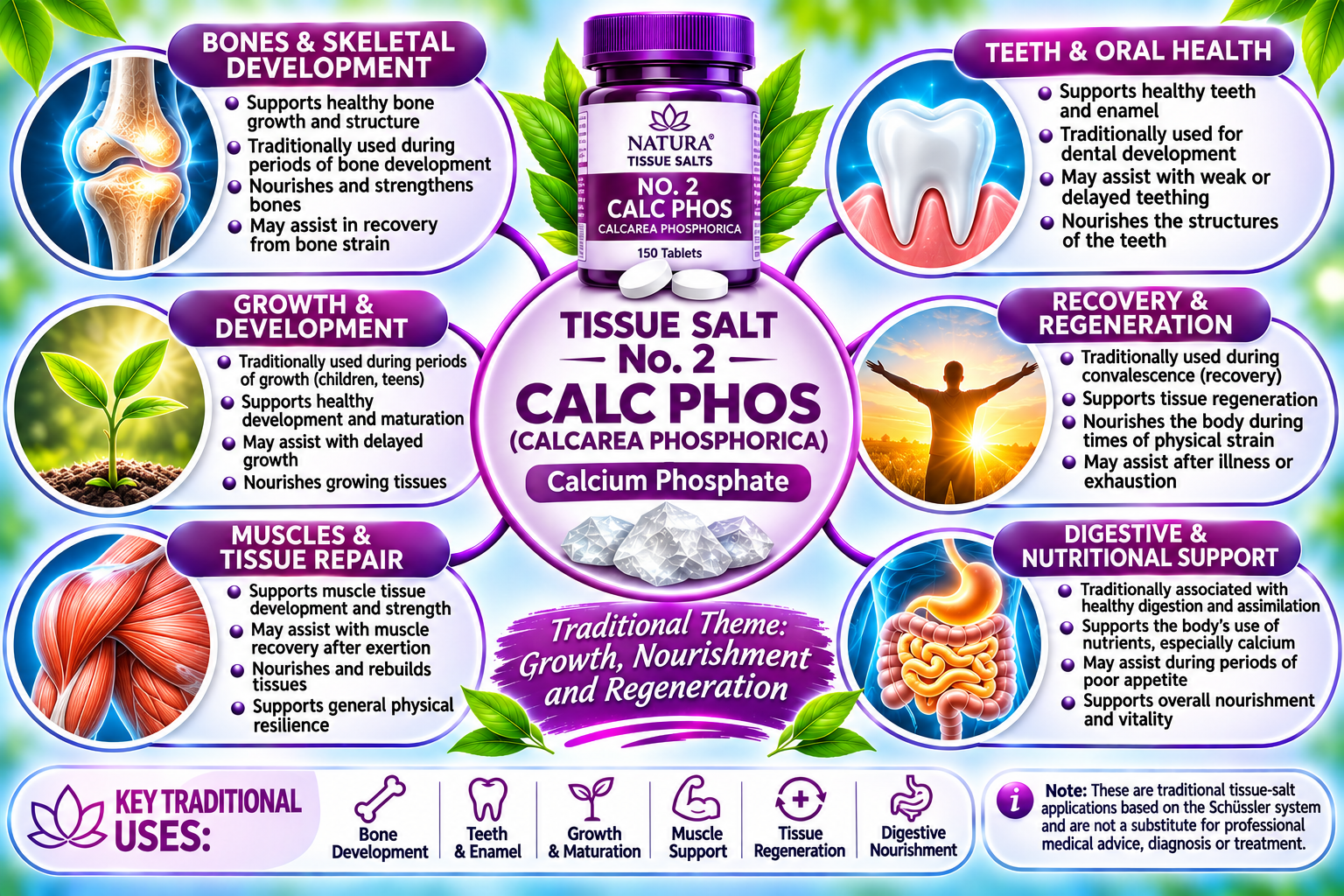
Calcarea Phosphorica is traditionally regarded as one of the principal salts associated with growth and the formation of structural tissues.
Calcium and phosphate are genuine essential minerals involved in bone mineralisation and many other biological processes.
Within Schüssler philosophy, this salt is associated with the body’s developmental and restorative processes.
Traditionally associated with:
- Bones and teeth.
- Growing tissues.
- Cellular development.
- Structural formation.
- General nourishment.
- Physical development and recovery.
Traditional uses and applications:
Practitioners traditionally associate Calcarea Phosphorica with:
- Periods of growth and development.
- The body’s natural tissue renewal processes.
- Maintaining healthy bones and teeth.
- General physical vitality.
- Supporting the traditional concept of recovery following periods of physical strain.
- Situations involving general weakness or poor physical development.
Holistic wellbeing perspective:
This salt symbolises nourishment, growth and the opportunity to rebuild.
It represents the importance of providing the body with the foundations it needs: adequate nutrition, rest, hydration and a supportive environment.
Traditional keyword: Growth.
TISSUE SALT No. 3 – CALC SULPH (CALCAREA SULPHURICA)
Mineral: Calcium Sulphate
Traditional theme: Skin, tissue maintenance and natural recovery
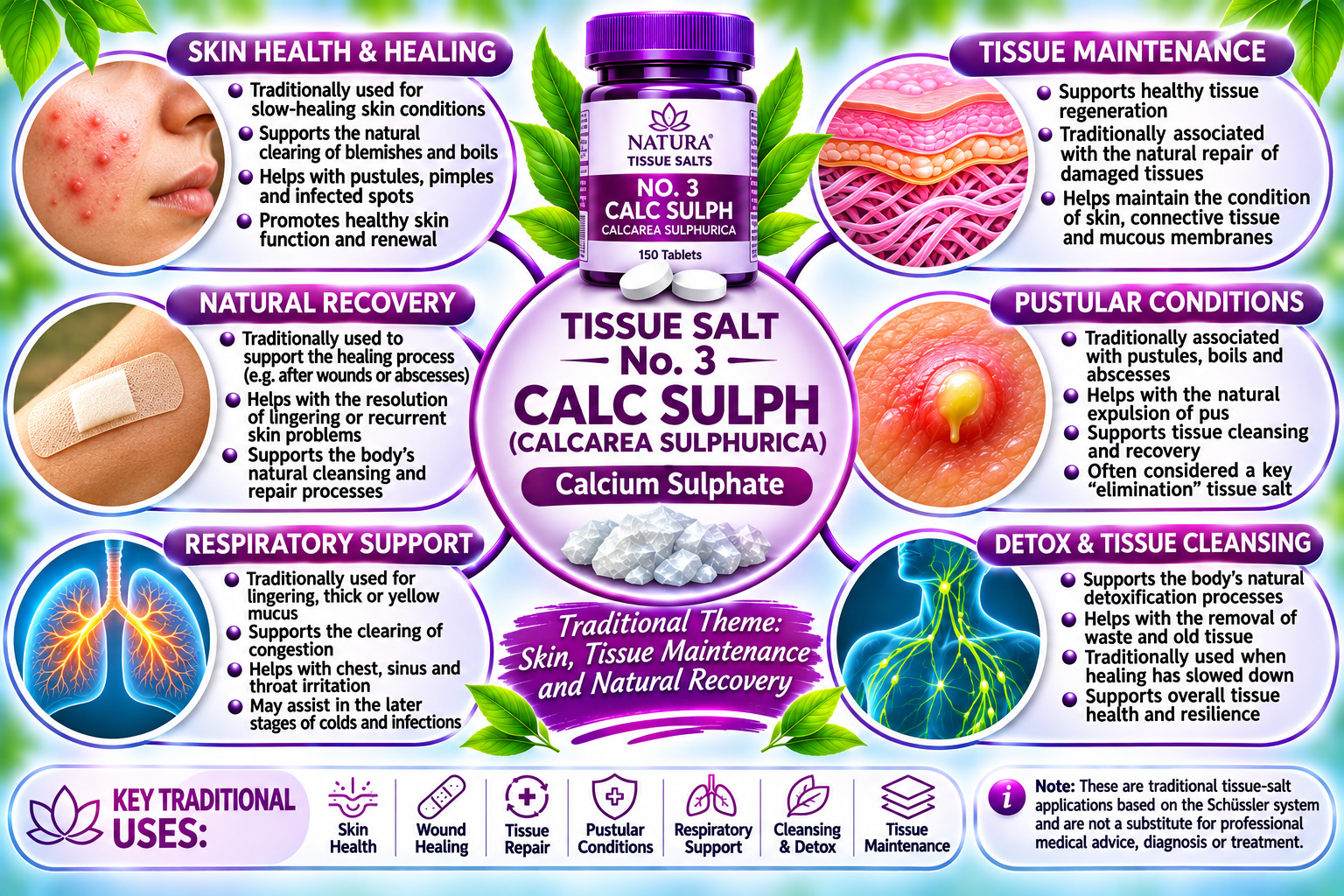
Calcarea Sulphurica is traditionally associated with skin health and tissue recovery.
It is sometimes described as the cleansing or recovery salt in Schüssler literature.
Traditionally associated with:
- Skin and epithelial tissues.
- Traditional descriptions of tissue repair.
- Yellowish secretions.
- Skin complaints.
- Tissue maintenance.
- The later stages of inflammatory processes.
Traditional uses and applications:
Practitioners traditionally associate Calcarea Sulphurica with:
- Certain skin complaints.
- Traditional descriptions of slow recovery.
- Yellowish or thick secretions.
- The maintenance of healthy skin.
- Tissue renewal and recovery.
Holistic wellbeing perspective:
Calcarea Sulphurica symbolises restoration, renewal and the body’s capacity to recover.
It can be considered alongside broader self-care practices that encourage recovery and healthy lifestyle habits.
Traditional keyword: Restoration.
TISSUE SALT No. 4 – FERRUM PHOS (FERRUM PHOSPHORICUM)
Mineral: Iron Phosphate
Traditional theme: Vitality, circulation and the early stages of inflammation
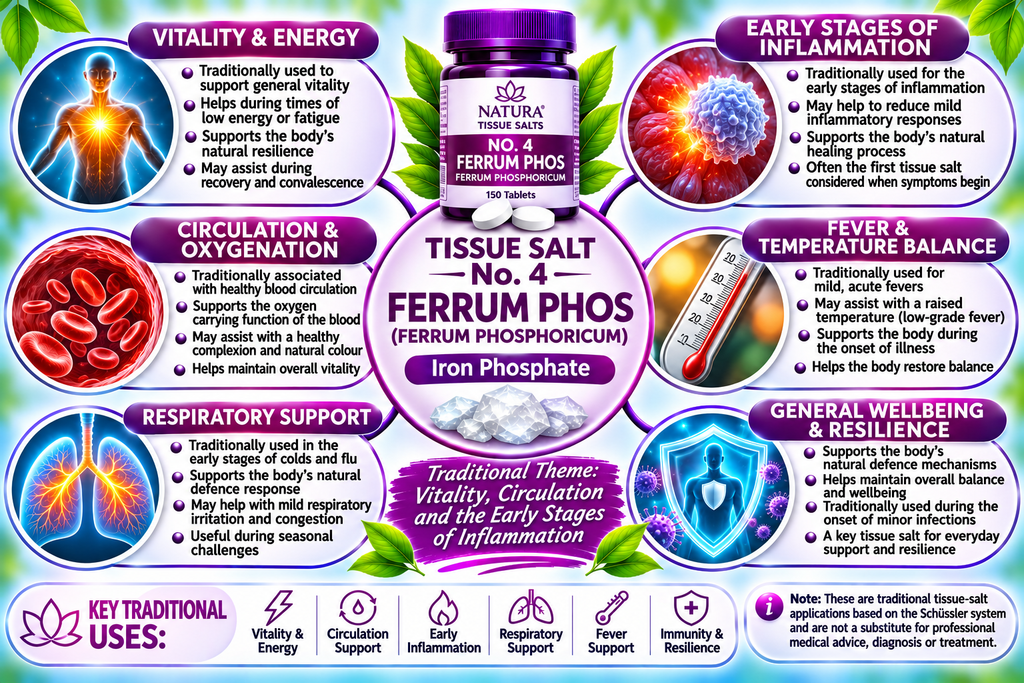
Ferrum Phosphoricum is traditionally known as the first-aid or early-stage inflammation salt within Schüssler practice.
Iron is an essential mineral involved in haemoglobin production and oxygen transport. However, the highly diluted tissue salt preparation should not be confused with an iron supplement.
Traditionally associated with:
- Blood and circulation.
- Oxygen transport.
- Physical vitality.
- The body’s inflammatory response.
- General resilience.
- Early-stage inflammatory conditions.
Traditional uses and applications:
In traditional tissue salt practice, Ferrum Phosphoricum is associated with:
- The early stages of inflammatory complaints.
- Temporary redness and warmth.
- General physical tiredness.
- Supporting the traditional concept of healthy circulation.
- Situations involving the body’s natural response to physical stress.
Holistic wellbeing perspective:
Ferrum Phosphoricum represents activation, vitality and the body’s response to challenges.
It can be understood symbolically as the transition from rest into action and the importance of maintaining healthy physical energy.
Traditional keyword: Vitality.
TISSUE SALT No. 5 – KALI MUR (KALI MURIATICUM)
Mineral: Potassium Chloride
Traditional theme: Mucous membranes, fluid balance and tissue maintenance
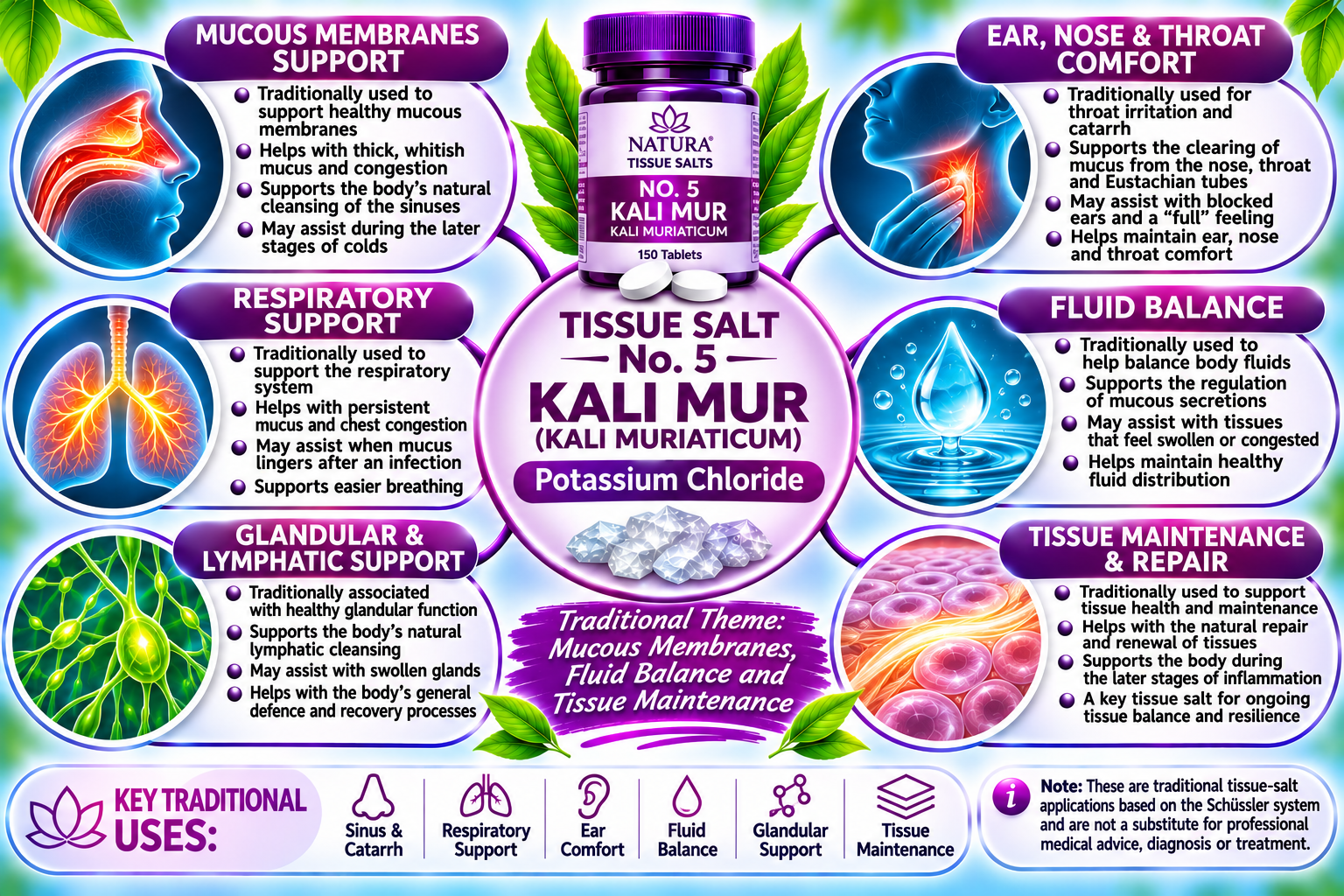
Kali Muriaticum is traditionally associated with mucous membranes and the body’s natural secretions.
Potassium and chloride are important electrolytes involved in fluid balance, nerve function and normal cellular activity.
Traditionally associated with:
- Mucous membranes.
- Respiratory secretions.
- Digestive secretions.
- Skin and epithelial tissues.
- The traditional concept of thick or white mucus.
- Cellular fluid regulation.
Traditional uses and applications:
Within Schüssler practice, Kali Muriaticum is traditionally selected for:
- Conditions associated with thick, white or cloudy mucus.
- Mucous membrane complaints.
- Traditional descriptions of congestion.
- Certain skin complaints.
- General support of tissue maintenance.
Holistic wellbeing perspective:
Kali Muriaticum symbolically represents balance, protection and the body’s natural boundaries.
It highlights the importance of healthy mucous membranes, which form part of the body’s protective interface with the environment.
Traditional keyword: Protection.
TISSUE SALT No. 6 – KALI PHOS (KALI PHOSPHORICUM)
Mineral: Potassium Phosphate
Traditional theme: Nervous system, mental energy and emotional resilience
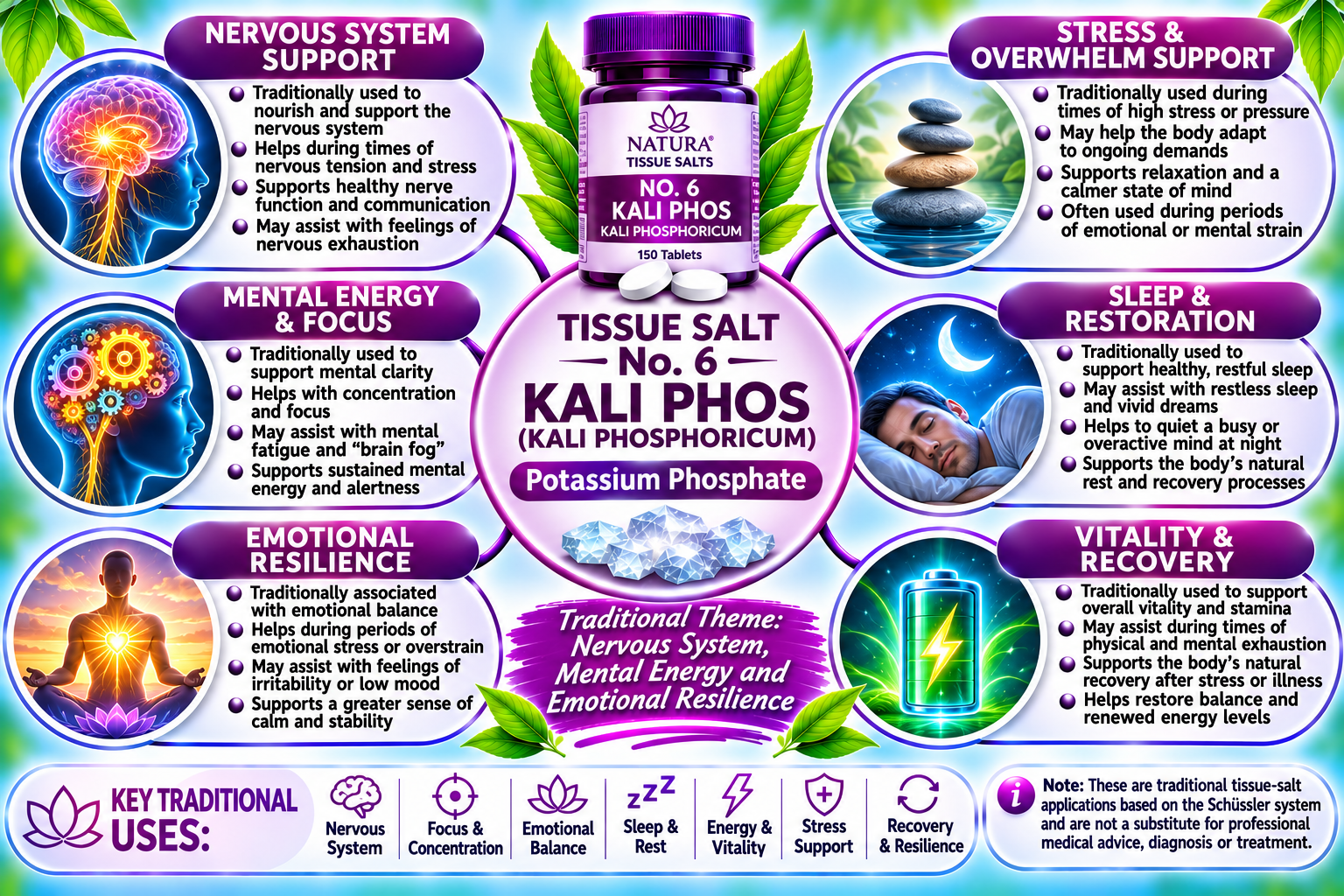
Kali Phosphoricum is often described as the nerve salt.
It is traditionally associated with the nervous system, mental fatigue and periods of emotional or physical exhaustion.
Potassium and phosphate have genuine roles in cellular physiology, including nerve and muscle function and energy metabolism.
Traditionally associated with:
- Nervous system function.
- Mental fatigue.
- Concentration.
- Emotional resilience.
- Physical exhaustion.
- Stress-related tiredness.
Traditional uses and applications:
Practitioners traditionally associate Kali Phosphoricum with:
- Mental tiredness following prolonged concentration.
- Feelings of nervous exhaustion.
- Periods of stress and emotional strain.
- Difficulty concentrating.
- General fatigue associated with demanding lifestyles.
- Supporting a sense of calm and mental balance.
Holistic wellbeing perspective:
Kali Phosphoricum is particularly interesting within a holistic wellbeing framework because of its traditional association with mental and emotional exhaustion.
It represents the relationship between mental activity, emotional resilience and physical energy.
It also provides an opportunity to explore the importance of:
- Rest and recovery.
- Stress management.
- Healthy sleep patterns.
- Emotional awareness.
- Appropriate boundaries.
- Time away from overstimulation.
Traditional keyword: Nervous energy.
TISSUE SALT No. 7 – KALI SULPH (KALI SULPHURICUM)
Mineral: Potassium Sulphate
Traditional theme: Skin, cellular renewal and oxygen utilisation
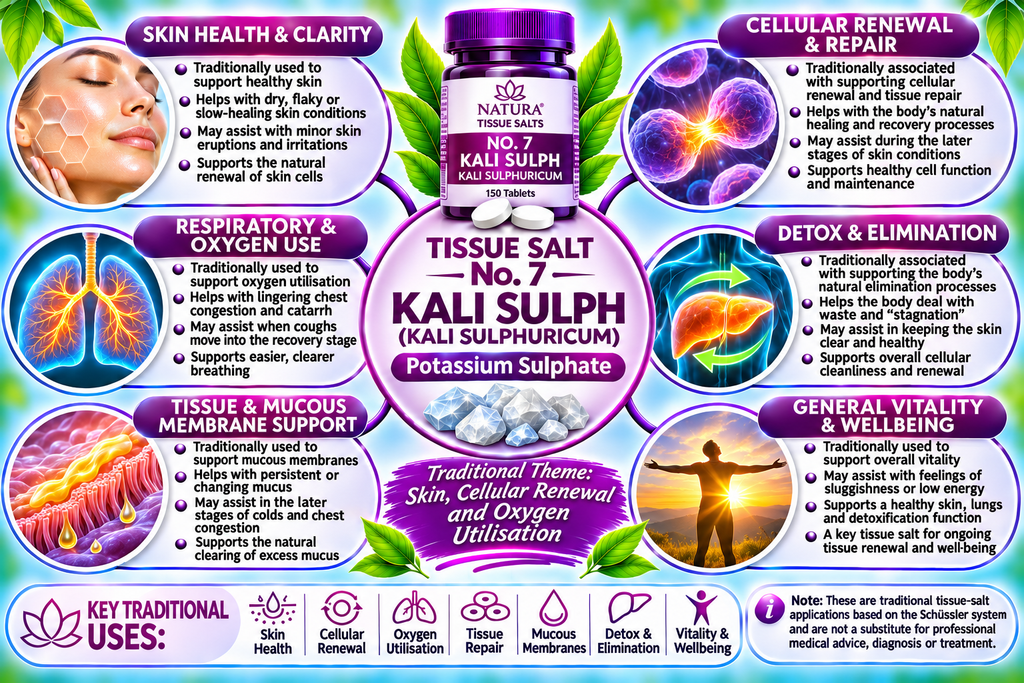
Kali Sulphuricum is traditionally associated with the skin and processes involving tissue renewal.
In Schüssler philosophy, it is considered particularly relevant to later stages of inflammatory processes and the traditional concept of cellular regeneration.
Traditionally associated with:
- Skin and epithelial tissues.
- Cellular renewal.
- The traditional concept of oxygen utilisation.
- Yellowish secretions.
- Skin scaling and flaking.
- Tissue maintenance.
Traditional uses and applications:
Practitioners traditionally associate Kali Sulphuricum with:
- Certain skin complaints.
- Yellowish or discoloured mucus.
- The later stages of inflammatory complaints.
- Skin renewal and maintenance.
- Traditional descriptions of sluggish tissue recovery.
Holistic wellbeing perspective:
Kali Sulphuricum represents renewal, transition and the continuous process of change.
It symbolically reflects the importance of allowing the body and mind sufficient time to recover and adapt.
Traditional keyword: Renewal.
TISSUE SALT No. 8 – MAG PHOS (MAGNESIA PHOSPHORICA)
Mineral: Magnesium Phosphate
Traditional theme: Muscular relaxation, tension and movement

Magnesia Phosphorica is traditionally known as the muscle and cramp salt.
Magnesium is an essential mineral involved in normal muscle and nerve function, energy production and numerous enzymatic reactions.
However, a highly diluted tissue salt is not equivalent to a magnesium supplement and should not be relied upon to correct magnesium deficiency.
Traditionally associated with:
- Muscles and muscular tension.
- Nerve signalling.
- Muscle cramps.
- Spasmodic discomfort.
- Physical tension.
- Relaxation and movement.
Traditional uses and applications:
Practitioners traditionally select Magnesia Phosphorica for:
- Muscle cramps and spasms.
- Tension-related muscular discomfort.
- Traditional descriptions of neuralgic discomfort.
- Muscular tightness.
- Physical tension following exertion.
- Discomfort traditionally described as improving with warmth.
Holistic wellbeing perspective:
Magnesia Phosphorica represents relaxation, movement and the release of physical tension.
It can be explored alongside wellbeing practices such as:
- Gentle stretching.
- Relaxation techniques.
- Breathing exercises.
- Adequate hydration.
- Restorative movement.
- Stress reduction.
Traditional keyword: Relaxation.
TISSUE SALT No. 9 – NAT MUR (NATRIUM MURIATICUM)
Mineral: Sodium Chloride
Traditional theme: Hydration, moisture regulation and fluid balance
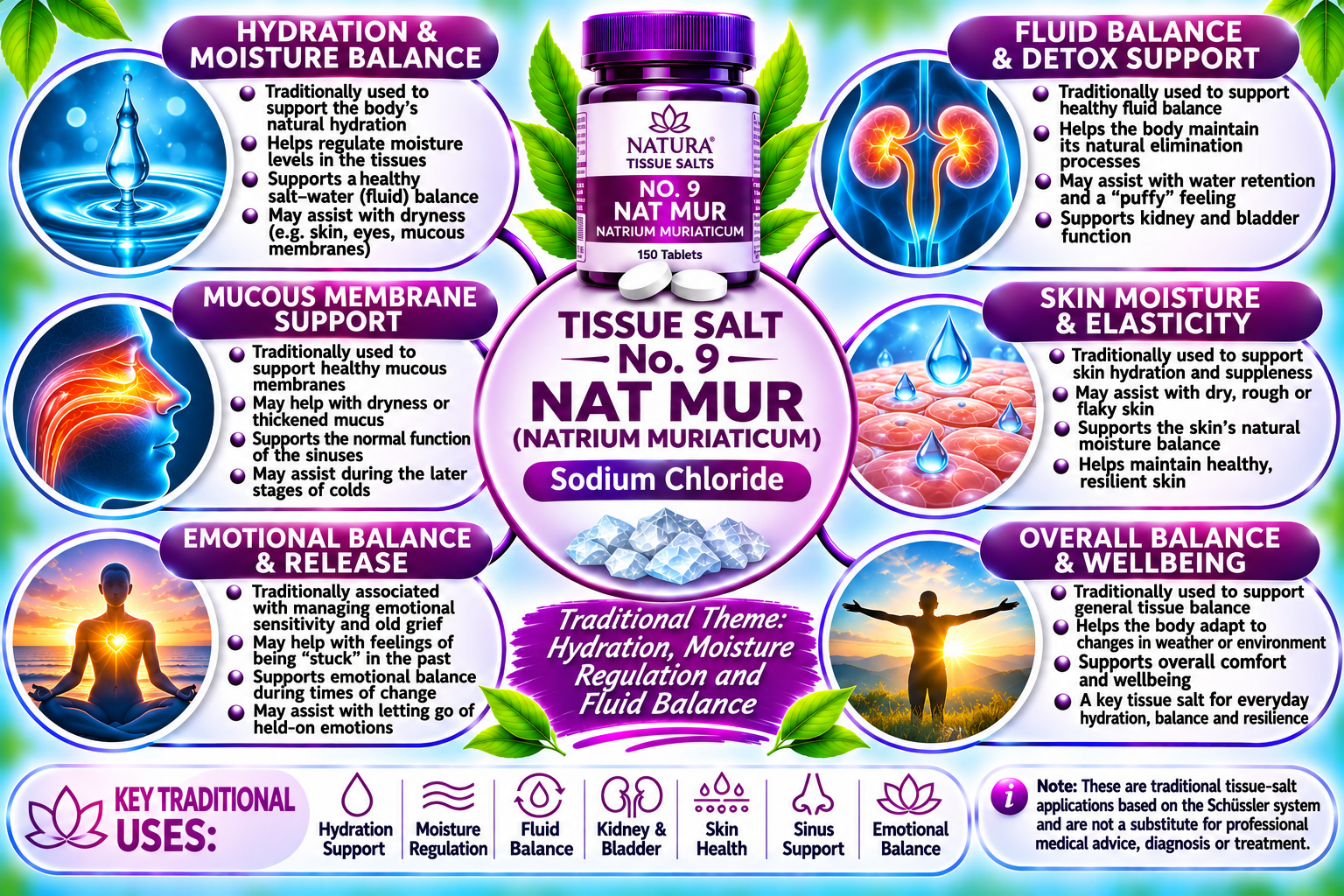
Natrium Muriaticum is traditionally known as the water or fluid balance salt.
Sodium chloride is ordinary salt, an important electrolyte involved in maintaining fluid balance, nerve signalling and muscle function.
Traditionally associated with:
- Fluid regulation.
- Hydration.
- Skin moisture.
- Mucous membranes.
- Normal bodily secretions.
- The traditional concept of fluid distribution.
Traditional uses and applications:
Within Schüssler practice, Natrium Muriaticum is traditionally associated with:
- Dry skin and mucous membranes.
- Certain patterns of watery secretions.
- Traditional descriptions of fluid imbalance.
- Dryness associated with the eyes, nose or mouth.
- General hydration-related complaints.
Holistic wellbeing perspective:
Natrium Muriaticum represents balance, nourishment and the ability to maintain internal equilibrium.
It offers a natural connection to the importance of:
- Drinking adequate water.
- Maintaining electrolyte balance.
- Eating a balanced diet.
- Supporting healthy skin.
- Understanding individual hydration needs.
Traditional keyword: Hydration.
TISSUE SALT No. 10 – NAT PHOS (NATRIUM PHOSPHORICUM)
Mineral: Sodium Phosphate
Traditional theme: Acid-base balance and digestion
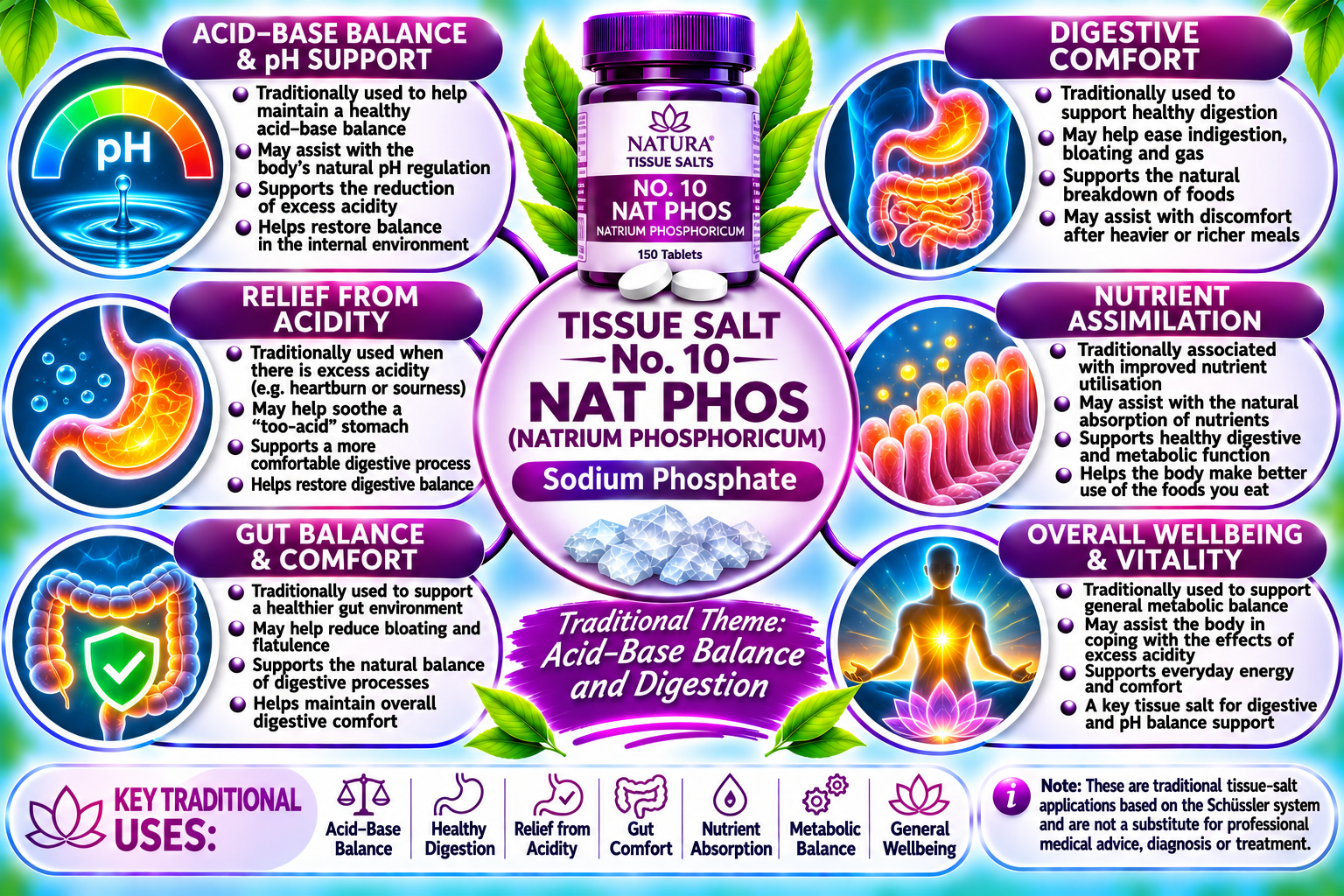
Natrium Phosphoricum is traditionally referred to as the acid-neutralising salt.
Phosphate is involved in numerous biological processes, including energy metabolism and acid-base regulation.
The body’s acid-base balance is tightly regulated through the lungs, kidneys and other physiological mechanisms.
Traditionally associated with:
- Digestive processes.
- Acid-base balance.
- Stomach acidity.
- Metabolic processes.
- Traditional descriptions of excess acidity.
- Digestive discomfort.
Traditional uses and applications:
Practitioners traditionally associate Natrium Phosphoricum with:
- Acid-related digestive complaints.
- Indigestion.
- Heartburn in traditional homeopathic descriptions.
- Certain digestive discomforts.
- The traditional concept of metabolic acidity.
- Fat digestion and digestive balance.
Holistic wellbeing perspective:
Natrium Phosphoricum represents equilibrium and the importance of maintaining internal balance.
It connects naturally with:
- Mindful eating.
- Balanced nutrition.
- Healthy digestive habits.
- Eating at regular intervals.
- Recognising individual food sensitivities.
- Supporting normal digestive function.
Traditional keyword: Digestive balance.
TISSUE SALT No. 11 – NAT SULPH (NATRIUM SULPHURICUM)
Mineral: Sodium Sulphate
Traditional theme: Fluid elimination and metabolic balance
Natrium Sulphuricum is traditionally known as the liver and elimination salt.
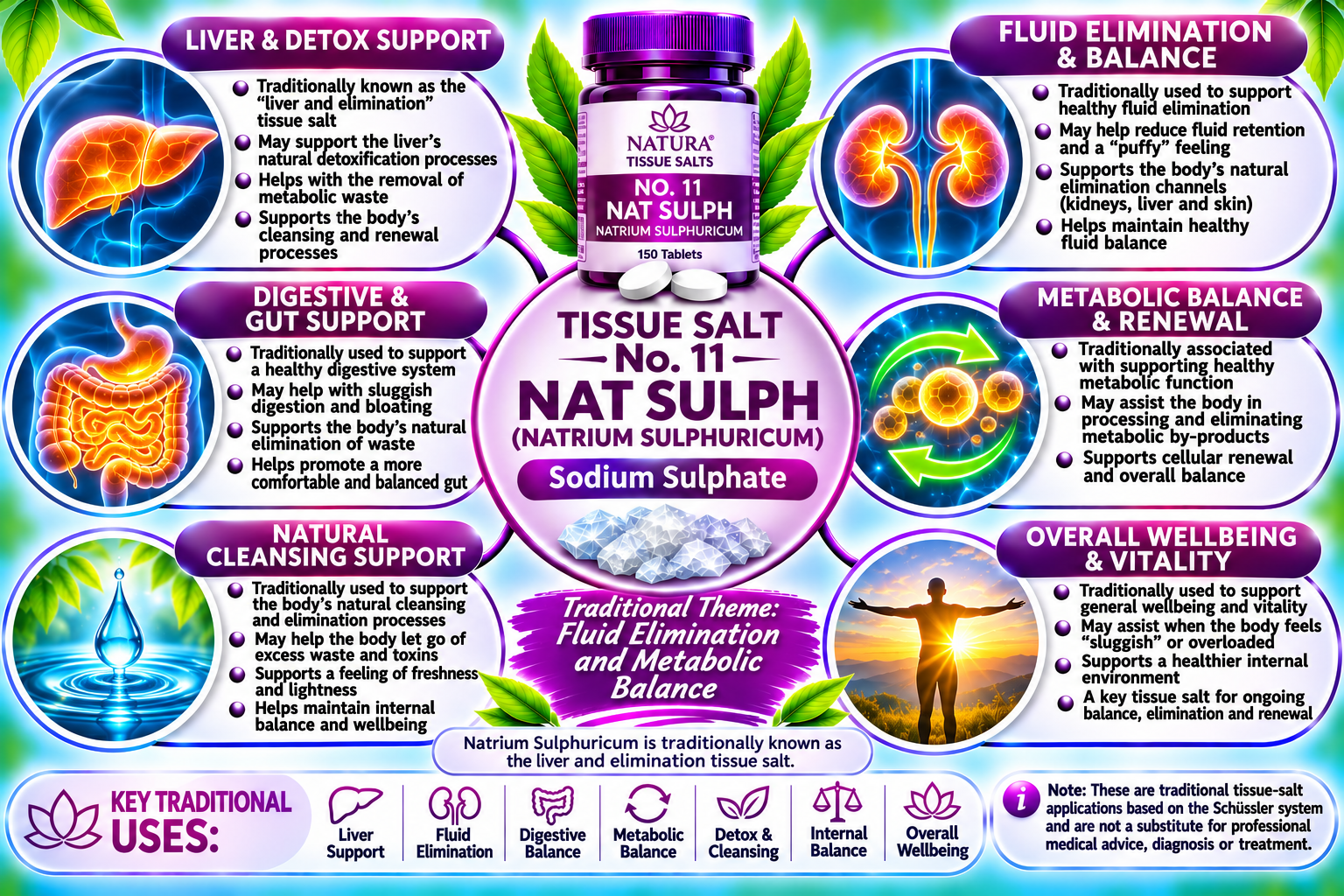
It is associated with fluid regulation and the body’s natural processes of removing metabolic waste.
The liver and kidneys have important physiological roles in processing substances and maintaining internal balance.
Traditionally associated with:
- Liver function.
- Fluid regulation.
- Normal elimination processes.
- Digestive function.
- Metabolic balance.
- The traditional concept of waste removal.
Traditional uses and applications:
Practitioners traditionally associate Natrium Sulphuricum with:
- Certain digestive complaints.
- Traditional descriptions of sluggish elimination.
- Fluid-related discomfort.
- The body’s natural elimination processes.
- Certain complaints associated with digestive discomfort following rich foods.
Holistic wellbeing perspective:
Natrium Sulphuricum represents release, elimination and letting go.
In a broader wellbeing context, it can be used as a symbolic reminder of the importance of healthy routines and allowing the body’s natural elimination systems to function properly.
This includes:
- Adequate hydration.
- Balanced nutrition.
- Regular movement.
- Healthy bowel habits.
- Appropriate sleep and recovery.
Traditional keyword: Elimination.
TISSUE SALT No. 12 – SILICA (SILICEA)
Mineral: Silicon Dioxide
Traditional theme: Hair, skin, nails and connective tissue

Silica (also known as Silicea) is traditionally associated with the structural integrity of the skin, hair, nails and connective tissues.
It is often referred to as the beauty or cleansing salt within traditional tissue salt literature.
Traditionally associated with:
- Hair and nails.
- Skin and connective tissue.
- Structural resilience.
- Traditional descriptions of tissue repair.
- The body’s natural elimination processes.
- Skin firmness.
Traditional uses and applications:
Practitioners traditionally associate Silica with:
- Brittle nails.
- Weak or thinning hair.
- Certain skin complaints.
- Traditional descriptions of slow tissue recovery.
- The maintenance of connective tissues.
- General structural support.
Holistic wellbeing perspective:
Silica symbolises strength, structure and inner resilience.
It represents the importance of caring for the body’s external and internal structures through:
- Adequate protein intake.
- Balanced nutrition.
- Appropriate hydration.
- Skin care.
- Rest and recovery.
- General nutritional wellbeing.
Traditional keyword: Structure.
3. The Twelve Tissue Salts at a Glance
The following table summarises the Natura South Africa tissue salt range and its traditional associations.
| No. | Natura Tissue Salt | Mineral | Traditional Focus |
|---|---|---|---|
| 1 | Calc Fluor | Calcium Fluoride | Elasticity and structural resilience |
| 2 | Calc Phos | Calcium Phosphate | Growth and nourishment |
| 3 | Calc Sulph | Calcium Sulphate | Skin and tissue recovery |
| 4 | Ferrum Phos | Iron Phosphate | Vitality and circulation |
| 5 | Kali Mur | Potassium Chloride | Mucous membranes |
| 6 | Kali Phos | Potassium Phosphate | Nervous system and mental energy |
| 7 | Kali Sulph | Potassium Sulphate | Skin and cellular renewal |
| 8 | Mag Phos | Magnesium Phosphate | Muscles and relaxation |
| 9 | Nat Mur | Sodium Chloride | Hydration and fluid balance |
| 10 | Nat Phos | Sodium Phosphate | Digestive and acid-base balance |
| 11 | Nat Sulph | Sodium Sulphate | Fluid elimination |
| 12 | Silica | Silicon Dioxide | Hair, skin and nails |
4. Tissue Salts and Energy Healing
Exploring the relationship between mineral balance, cellular activity and subtle energy.
One of the most interesting ways to explore tissue salts within a holistic wellbeing framework is to consider their relationship with the broader concept of energy.
Energy is a term that has several meanings in health and wellbeing.
In conventional physiology, energy refers to the biochemical processes that enable the body to function. In complementary and spiritual traditions, energy can also refer to subtle energy, life force or the perceived flow of vitality throughout the body.
These are different concepts, and it is important not to confuse them.
Nevertheless, both perspectives explore an underlying question:
What supports a sense of balance, vitality and wellbeing within the human system?
4.1 The Body’s Biological Energy
Every living cell requires energy to maintain its functions.
A significant proportion of cellular energy is generated through processes that produce adenosine triphosphate (ATP).
ATP supports:
- Muscle contraction.
- Nerve signalling.
- Cellular transport.
- Tissue maintenance.
- Metabolic reactions.
- Growth and repair processes.
Minerals are involved in many of these processes.
For example:
- Magnesium participates in hundreds of enzyme reactions and is required for normal ATP-dependent processes.
- Potassium contributes to electrical gradients across cell membranes.
- Sodium contributes to nerve impulses and fluid regulation.
- Calcium participates in muscle contraction and cellular signalling.
- Phosphate is a structural component of ATP and other important biological molecules.
- Iron is essential for oxygen transport and cellular energy metabolism.
This provides a genuine biological connection between minerals and the body’s energy systems.
However, the presence of these minerals in the body does not establish that homeopathic tissue salt preparations improve cellular energy.
4.2 The Concept of Subtle Energy
Many traditional healing systems describe the human body as having an energetic dimension.
Different traditions use different terminology:
Prana: The concept of life force in Indian traditions.
Qi or Chi: The traditional Chinese concept of vital energy.
Ki: A related concept found in Japanese healing traditions.
Vital force: A term used in various historical healing philosophies.
Biofield: A term sometimes used in contemporary complementary health discussions to describe proposed energetic fields associated with living systems.
These concepts provide different philosophical frameworks for understanding vitality and the relationship between body, mind and environment.
There is currently no established scientific evidence that the traditional subtle-energy concepts represent a measurable energy system equivalent to ATP production, electrical signalling or other recognised physiological processes.
4.3 Where Tissue Salts and Energy Healing Intersect
Within a holistic framework, tissue salts and energy healing can be explored as two complementary philosophies.
Tissue salts focus on mineral symbolism, cellular balance and the traditional biochemical relationships between minerals and tissues.
Energy healing focuses on concepts such as energetic balance, relaxation, vitality and the relationship between emotional and physical wellbeing.
Their connection can be explored through several themes.
1. Balance
Tissue salt philosophy places importance on maintaining mineral balance.
Energy healing traditions often place importance on restoring a perceived sense of energetic balance.
Both use balance as a central concept, although they describe different mechanisms.
2. Vitality
Certain tissue salts, particularly Ferrum Phosphoricum and Kali Phosphoricum, are traditionally associated with physical and mental vitality.
Energy healing practices frequently focus on supporting a person’s subjective sense of energy and wellbeing.
3. Relaxation
Magnesia Phosphorica is traditionally associated with muscular relaxation and tension.
Practices such as Reiki, meditation, gentle breathwork and relaxation exercises may help some individuals experience reduced stress and a greater sense of calm.
4. The Mind-Body Relationship
Both holistic approaches encourage consideration of the person as a whole rather than viewing physical experiences in isolation.
Sleep, stress, emotional experiences, nutrition, movement and social surroundings all contribute to overall wellbeing.
4.4 Tissue Salts and the Chakra System
Some holistic practitioners may also explore tissue salts through the chakra system.
Chakras originate in Indian spiritual traditions and are commonly described as seven major energetic centres.
There is no universally established scientific correspondence between individual tissue salts and specific chakras. Any such mapping should therefore be presented as a contemporary holistic interpretation rather than an original Schüssler teaching or proven physiological relationship.
For reflective or educational purposes, possible symbolic associations include:
| Chakra | Associated Theme | Possible Tissue Salt Reflection |
|---|---|---|
| Root | Stability and security | Calcarea Fluorica |
| Sacral | Creativity and flow | Natrium Muriaticum |
| Solar Plexus | Confidence and personal vitality | Ferrum Phosphoricum |
| Heart | Connection and emotional balance | Kali Phosphoricum |
| Throat | Expression and communication | Kali Muriaticum |
| Third Eye | Awareness and clarity | Kali Phosphoricum |
| Crown | Reflection and spiritual awareness | Silicea |
These associations are illustrative, not clinically validated correspondences.
4.5 Tissue Salts as Part of a Holistic Wellbeing Routine
A holistic approach should never rely on one remedy or modality alone.
Instead, tissue salts can be explored within a wider self-care framework that considers:
- Nutritional quality.
- Hydration.
- Sleep and recovery.
- Gentle movement.
- Stress regulation.
- Emotional awareness.
- Relaxation.
- Personal reflection.
- Connection with nature.
This broader perspective is particularly important because wellbeing is influenced by multiple interacting biological, psychological, social and environmental factors.
5. Tissue Salts and the Nine Pillars of Wellbeing
At VitalPulse, wellbeing is approached as an interconnected experience rather than a collection of isolated symptoms.
The twelve tissue salts can be explored as an educational framework alongside the following nine wellbeing pillars.
1. Nutrition and Nourishment
Understanding the role of minerals, vitamins, proteins and other nutrients in supporting normal bodily function.
2. Hydration and Fluid Balance
Exploring the importance of water, electrolytes and appropriate hydration.
3. Digestive Wellbeing
Understanding digestion, gut function, food choices and healthy digestive habits.
4. Nervous System and Stress Regulation
Exploring the relationship between stress, relaxation, emotional resilience and nervous system function.
5. Breathing and Oxygenation
Understanding respiratory function, breathing habits and relaxation techniques.
6. Movement and Structural Wellbeing
Supporting mobility, flexibility, strength and physical resilience.
7. Sleep and Recovery
Recognising the importance of rest, circadian rhythms and recovery.
8. Emotional and Mental Wellbeing
Exploring emotional awareness, mindfulness, self-reflection and mental resilience.
9. Energy and Personal Balance
Exploring vitality, motivation, relaxation and the subjective experience of feeling balanced.
Tissue salts can provide a traditional reference point for discussing several of these areas, but they should not be regarded as a replacement for nutritional assessment or appropriate medical care.
6. Can Tissue Salts Correct Mineral Deficiencies?
This is an important question.
Although tissue salts are named after genuine minerals found in the human body, they are not equivalent to conventional mineral supplements.
Most Schüssler preparations are manufactured using serial dilution and trituration processes.
For example, a 6X preparation has undergone six successive 1:10 dilution stages, resulting in a nominal dilution of one part original substance in one million parts preparation.
A 12X preparation represents twelve successive 1:10 dilution stages.
The amount of original mineral remaining therefore depends on the preparation and its potency.
This distinction matters because:
- A tissue salt tablet is not necessarily a meaningful source of dietary calcium, magnesium, potassium or iron.
- A person with an actual mineral deficiency requires appropriate assessment.
- A highly diluted preparation should not be assumed to restore depleted mineral stores.
- The traditional indications for a tissue salt do not establish that it treats the corresponding medical condition.
For genuine nutritional deficiencies, appropriate dietary changes, laboratory assessment and evidence-based supplementation may be necessary.
7. How to Approach Tissue Salts Responsibly
If someone chooses to explore tissue salts, a thoughtful and informed approach is important.
Understand the preparation
Check the actual ingredients, potency, inactive ingredients and manufacturer information.
Avoid assuming that natural means harmless
Products vary in composition and dilution. Some preparations may contain meaningful amounts of active substances.
Consider individual circumstances
Pregnancy, breastfeeding, chronic illness, medication use and childhood require additional caution.
Do not delay medical attention
Persistent, worsening or unexplained symptoms should be assessed by an appropriately qualified healthcare professional.
Do not substitute tissue salts for essential treatment
Tissue salts should not replace prescribed medicines, medical investigations, vaccinations or necessary treatment.
Think holistically
Consider nutrition, hydration, sleep, movement, emotional wellbeing and environmental factors rather than relying on a single complementary approach.
8. Frequently Asked Questions
Are tissue salts the same as mineral supplements?
No. Conventional mineral supplements provide measurable quantities of minerals. Tissue salts are generally prepared using homeopathic dilution techniques and are not necessarily capable of supplying meaningful nutritional amounts.
Are tissue salts homeopathic?
Yes. Schüssler tissue salts are generally classified as a form of homeopathic or biochemic preparation, although the original system developed its own distinctive mineral-based philosophy.
Can tissue salts be taken together?
Some commercial preparations combine several tissue salts. However, the suitability of a particular combination depends on its ingredients, potency, product quality and the individual using it. There is insufficient reliable clinical evidence to establish that combining salts provides additional therapeutic benefits.
Which tissue salt is traditionally associated with stress?
Kali Phosphoricum is traditionally associated with mental fatigue and nervous exhaustion.
This does not mean it has been clinically demonstrated to treat stress, anxiety or other mental health conditions.
Which tissue salt is traditionally associated with muscles?
Magnesia Phosphorica is traditionally associated with muscular tension, cramps and spasmodic discomfort.
Which tissue salt is traditionally associated with hydration?
Natrium Muriaticum is traditionally associated with fluid balance and hydration.
It should not be used as a substitute for adequate fluid intake or appropriate electrolyte replacement.
Are tissue salts suitable for everyone?
Not necessarily. Product ingredients, preparation methods and individual health circumstances matter. Consult an appropriately qualified healthcare professional if you are uncertain.
Do tissue salts work through energy healing?
There is no established scientific evidence that tissue salts work by influencing subtle energy fields.
Some complementary practitioners incorporate tissue salts into broader holistic practices, but these should be understood as separate approaches rather than a proven combined treatment.
9. The VitalPulse Perspective: Returning to Balance
At VitalPulse, we believe that exploring wellbeing begins with curiosity, awareness and a willingness to understand the many factors that influence how we feel.
Tissue salts offer an interesting historical perspective on the relationship between minerals, cells and human health.
Their traditional philosophy encourages us to consider the body as an interconnected system in which different tissues and processes depend on one another.
When explored alongside nutritional education, mindfulness, stress management, gentle movement and restorative practices, tissue salts can form part of a wider conversation about holistic wellbeing.
The most important consideration is to remain informed, open-minded and responsible.
We do not need to choose between exploring complementary wellbeing philosophies and respecting modern scientific knowledge.
We can appreciate traditional approaches while recognising their limitations and making informed decisions about our health.
Wellbeing is not about finding one magic solution. It is about understanding the many small factors that contribute to a healthier, more balanced life.
VitalPulse – Explore Your Wellbeing.
Reconnect. Reflect. Realign.
Educational Disclaimer
This article is provided for general educational and informational purposes. It discusses traditional Schüssler tissue salt philosophy and complementary wellbeing practices. It does not constitute medical advice, diagnosis or treatment.
Tissue salts have not been established as effective treatments for specific medical conditions, and there is insufficient reliable clinical evidence to support many of their traditional therapeutic claims.
They should not replace appropriate medical assessment, nutritional treatment or prescribed medication.
Always consult a suitably qualified healthcare professional regarding persistent symptoms, suspected deficiencies or health concerns.