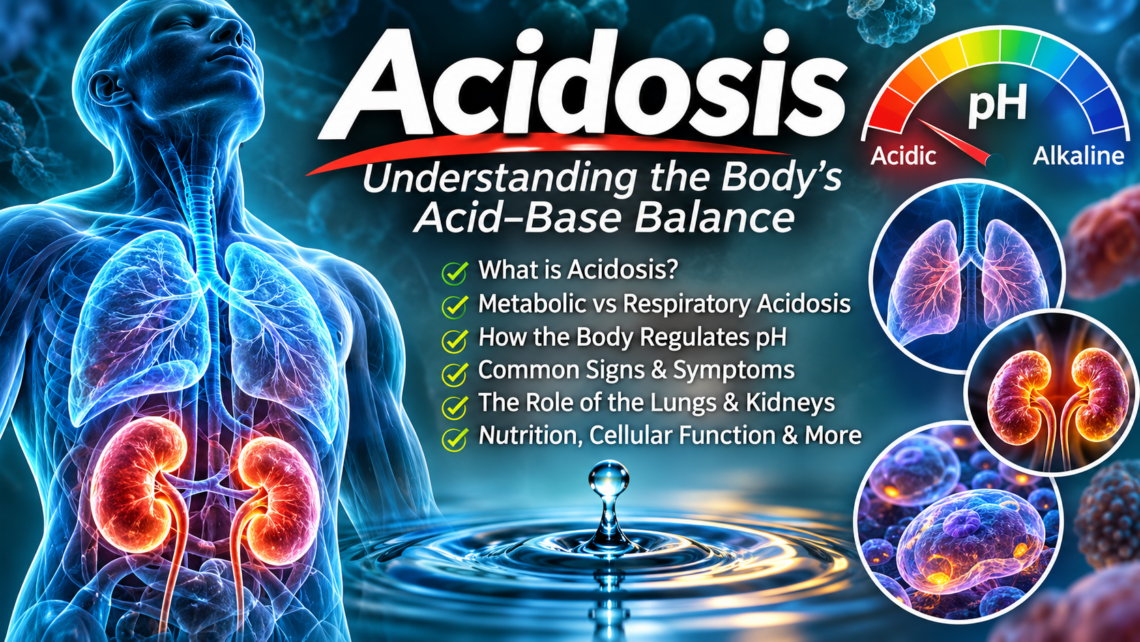
Acidosis: Understanding the Body’s Acid–Base Balance
Introduction
Every cell in the human body depends on a carefully regulated internal environment to function correctly. One of the most important aspects of this environment is acid–base balance, which determines how acidic or alkaline the body’s fluids are.
Acidosis occurs when the body develops an excess of acid or loses too much bicarbonate, causing the blood to become more acidic than normal. It can also develop when the lungs cannot remove sufficient carbon dioxide, allowing it to accumulate in the bloodstream.
Although the body has several mechanisms to maintain its pH within a narrow range, disruptions involving the kidneys, lungs, metabolism or circulation can overwhelm these regulatory systems.
Understanding acidosis means understanding how different organs work together to maintain physiological stability.
1. What Is Acidosis?
Acidosis refers to a physiological process in which excessive acid accumulates or the body’s ability to neutralise acid becomes insufficient.
Normal arterial blood pH generally ranges between 7.35 and 7.45.
- Below 7.35: Acidemia (abnormally acidic blood).
- Above 7.45: Alkalemia (abnormally alkaline blood).
It is important to distinguish between two related terms:
Acidosis: A physiological process that pushes the body towards increased acidity.
Acidemia: The actual measurable reduction in blood pH.
A person can have an underlying acidosis without their blood pH falling below the normal range because the body may compensate through respiratory or renal mechanisms.
The body’s ability to maintain this balance is essential for enzyme activity, oxygen delivery, cellular metabolism, electrolyte regulation and normal organ function.
2. The Two Main Types of Acidosis
Acidosis is broadly divided into two categories: metabolic acidosis and respiratory acidosis.
A. Metabolic Acidosis
Metabolic acidosis develops when the body produces excessive amounts of acid, cannot eliminate sufficient acid, or loses too much bicarbonate.
Bicarbonate (HCO₃⁻) is an important alkaline buffer that helps neutralise acids in the bloodstream.
Common causes include:
- Kidney disease: Impaired kidney function can reduce the body’s ability to eliminate acids.
- Diabetic ketoacidosis: Insufficient insulin can cause the body to break down fat and produce excessive ketones.
- Lactic acidosis: Lactate can accumulate during conditions involving inadequate oxygen delivery, impaired circulation or certain metabolic disturbances.
- Severe diarrhoea: Excessive bicarbonate loss through the gastrointestinal tract can disturb acid–base balance.
- Certain medications and toxins: Some substances can interfere with acid production, metabolism or elimination.
Metabolic acidosis can be acute or chronic, depending on its underlying cause.
B. Respiratory Acidosis
Respiratory acidosis occurs when the lungs cannot eliminate enough carbon dioxide (CO₂).
Carbon dioxide participates in a chemical reaction that produces carbonic acid. When CO₂ accumulates, blood acidity increases.
This condition is commonly associated with inadequate ventilation.
Potential causes include:
- Chronic obstructive pulmonary disease (COPD).
- Severe asthma or airway obstruction.
- Sleep-related breathing disorders.
- Respiratory muscle weakness.
- Neuromuscular disorders.
- Chest injuries or abnormalities affecting breathing.
- Certain medications that suppress respiratory activity.
In respiratory acidosis, the kidneys attempt to compensate by retaining more bicarbonate and increasing acid elimination.
This compensation can take hours to days to become fully established.
3. How the Body Regulates Its pH
The human body uses three interconnected mechanisms to maintain acid–base balance.
A. Chemical Buffer Systems
Buffer systems provide the body’s first line of defence against sudden changes in acidity.
The most important extracellular buffer system is the bicarbonate–carbonic acid system.
This involves the following reversible reaction:
CO₂ + H₂O ⇌ H₂CO₃ ⇌ H⁺ + HCO₃⁻
In simple terms:
- Carbon dioxide combines with water.
- Carbonic acid is formed.
- Carbonic acid can release hydrogen ions and bicarbonate.
- Bicarbonate helps neutralise excess hydrogen ions.
Other important buffering systems include proteins, haemoglobin and phosphate.
These systems help prevent sudden changes in pH while the lungs and kidneys respond.
B. The Respiratory System
The lungs regulate carbon dioxide levels through breathing.
When the body becomes too acidic due to a metabolic disturbance, breathing may become faster and deeper. This allows more carbon dioxide to be exhaled, helping raise blood pH.
When carbon dioxide accumulates because of inadequate ventilation, respiratory acidosis may develop.
This demonstrates why respiratory health is closely connected to the body’s chemical balance.
C. The Kidneys
The kidneys play a major role in long-term acid–base regulation.
They help maintain pH by:
- Excreting excess hydrogen ions.
- Reabsorbing filtered bicarbonate.
- Producing additional bicarbonate.
- Regulating urinary acid elimination.
When kidney function becomes impaired, these processes may become less effective, increasing the risk of metabolic acidosis.
The lungs and kidneys therefore work together to maintain a stable internal environment.
4. Common Signs and Symptoms of Acidosis
Symptoms vary depending on the type, severity and underlying cause.
Mild disturbances may produce few noticeable symptoms, whereas severe acidosis can affect multiple organ systems.
Possible symptoms include:
General symptoms
- Persistent fatigue.
- Weakness.
- Nausea and vomiting.
- Reduced appetite.
- General feelings of illness.
Respiratory symptoms
- Rapid or unusually deep breathing.
- Shortness of breath.
- Changes in breathing patterns.
Neurological symptoms
- Headaches.
- Confusion.
- Drowsiness.
- Reduced alertness.
Cardiovascular symptoms
- Changes in heart rate.
- Low blood pressure in severe cases.
- Heart rhythm disturbances.
Severe untreated acidosis can interfere with cardiovascular function and may become life-threatening.
Importantly, these symptoms are not specific to acidosis and can occur in many other conditions.
5. The Relationship Between Acidosis and Cellular Function
The body’s pH influences almost every biochemical process.
Cells depend on a stable internal environment to maintain their normal metabolic activities.
When acidity increases significantly, several processes can be affected.
Enzyme Activity
Enzymes regulate thousands of biochemical reactions.
Each enzyme operates most effectively within a particular pH range. Significant changes in pH can alter enzyme structure and activity, interfering with normal metabolic processes.
Energy Production
Cells require adenosine triphosphate (ATP) to perform essential functions.
Severe acid–base disturbances can interfere with metabolic pathways involved in energy production.
Electrolyte Balance
Acid–base disturbances are closely associated with changes in electrolyte regulation.
Potassium, sodium, chloride, calcium and phosphate all play important roles in cellular function.
For example, significant acid–base disturbances can influence potassium distribution between cells and extracellular fluid.
These changes may affect muscle contraction, nerve signalling and cardiac electrical activity.
Oxygen Delivery
Blood pH influences haemoglobin’s affinity for oxygen.
A reduction in pH shifts the oxygen–haemoglobin dissociation curve to the right, encouraging haemoglobin to release oxygen more readily into tissues.
This is known as the Bohr effect.
However, severe acidemia can also impair cardiovascular function and tissue oxygen delivery.
6. Acidosis and the Kidneys: An Important Connection
The kidneys are particularly important in preventing long-term acid accumulation.
Every day, normal metabolism generates acids that must be eliminated.
Healthy kidneys manage this through several processes, including:
- Reabsorbing bicarbonate.
- Excreting hydrogen ions.
- Producing ammonium for acid elimination.
- Regulating phosphate buffering in urine.
Chronic kidney disease can compromise these mechanisms.
When metabolic acidosis develops in people with impaired kidney function, it can contribute to disturbances in bone and muscle metabolism and may be associated with worsening kidney-related complications.
This is why monitoring bicarbonate levels is an important part of assessing certain kidney conditions.
7. Acidosis and the Digestive System
The digestive system also contributes to acid–base balance.
The stomach produces hydrochloric acid to support digestion, while the pancreas and other digestive structures release bicarbonate to help neutralise acidic stomach contents as they enter the small intestine.
The gastrointestinal tract can influence systemic acid–base balance in several ways.
For example:
- Prolonged diarrhoea can cause bicarbonate loss.
- Certain intestinal disorders can affect electrolyte absorption.
- Severe dehydration can contribute to metabolic disturbances.
- Some gastrointestinal and metabolic conditions can indirectly influence acid production and elimination.
It is important to distinguish normal stomach acidity from blood acidity.
Having acid reflux, gastritis or an acidic stomach does not automatically mean that someone has systemic acidosis.
The body regulates these environments separately.
8. Acidosis and Nutrition
Nutrition influences metabolism and the production of acids within the body.
Foods contain different mineral and organic components that are metabolised through various biochemical pathways.
However, an important distinction must be made between dietary acid load and actual blood acidosis.
The kidneys and lungs tightly regulate blood pH. In healthy individuals, eating acidic foods does not normally cause the blood to become acidic.
Some dietary patterns can influence the amount of acid the kidneys need to eliminate.
For example:
- Protein metabolism produces acids that require renal elimination.
- Fruits and vegetables provide organic anions that can contribute to bicarbonate generation during metabolism.
- Dietary minerals such as potassium, magnesium and calcium participate in numerous physiological processes.
A balanced diet supports normal metabolic and kidney function.
However, no particular food, alkaline water or supplement should be considered a treatment for clinically significant acidosis.
9. How Is Acidosis Diagnosed?
Acidosis cannot reliably be diagnosed through symptoms alone.
Medical assessment generally involves blood testing to determine whether an acid–base disturbance exists and identify its underlying cause.
Common investigations include:
Arterial Blood Gas (ABG)
Measures arterial blood pH, carbon dioxide pressure and other important parameters.
Serum Bicarbonate
Helps identify metabolic disturbances and assess the body’s buffering capacity.
Electrolyte Testing
Measures sodium, potassium and chloride, which are important for understanding acid–base regulation.
Kidney Function Tests
Creatinine and estimated glomerular filtration rate (eGFR) help assess kidney function.
Blood Glucose and Ketones
These may be investigated when diabetic ketoacidosis is suspected.
Lactate Testing
Can help identify lactic acid accumulation in appropriate clinical circumstances.
Additional investigations depend on the suspected underlying cause.
10. Supporting Healthy Acid–Base Balance
The body already possesses sophisticated mechanisms for maintaining its internal pH.
The objective of general wellbeing practices is to support the organs responsible for these processes rather than attempting to manipulate blood pH directly.
Consider the following areas:
1. Support Kidney Health
Maintain appropriate hydration, manage conditions such as diabetes and high blood pressure, and seek medical attention for persistent urinary or kidney-related problems.
2. Support Respiratory Health
Avoid smoking, reduce exposure to respiratory irritants and seek assessment for persistent breathing difficulties.
3. Maintain Balanced Nutrition
Eat a varied diet containing vegetables, fruit, adequate protein and essential nutrients.
4. Support Metabolic Health
Maintain appropriate physical activity, adequate sleep and healthy blood glucose regulation.
5. Be Careful With Medications and Supplements
Certain medications, excessive supplement intake and toxic substances can interfere with acid–base regulation.
Avoid self-treating suspected acidosis with baking soda or alkaline supplements.
Clinically significant acidosis requires investigation and treatment of its underlying cause.
11. When Should You Seek Medical Attention?
Acidosis can be a serious medical condition, particularly when it develops rapidly or is associated with kidney failure, uncontrolled diabetes, severe infection or respiratory impairment.
Seek urgent medical attention if you experience:
- Unusually deep or rapid breathing.
- Significant confusion or unusual drowsiness.
- Persistent vomiting accompanied by weakness or dehydration.
- Severe breathing difficulties.
- Fainting or reduced consciousness.
- Symptoms suggestive of diabetic ketoacidosis, such as excessive thirst, frequent urination, abdominal pain and vomiting.
Severe symptoms require emergency assessment rather than nutritional or complementary approaches.
Conclusion: The Importance of Internal Balance
Acidosis illustrates the remarkable interconnectedness of the human body.
The lungs regulate carbon dioxide, the kidneys eliminate acids and conserve bicarbonate, while chemical buffer systems help maintain stability at the cellular level.
These systems work continuously to create an environment in which cells can produce energy, communicate, repair themselves and perform their essential functions.
Understanding acid–base balance offers a broader appreciation of how metabolism, respiration, kidney function, circulation and nutrition contribute to overall wellbeing.
Rather than focusing on simply making the body more alkaline, it is far more useful to understand and support the physiological mechanisms that naturally maintain balance.
At VitalPulse, we believe that exploring the connections between the body’s systems is an important step towards greater wellbeing awareness.
Medical Disclaimer: This article is intended for educational and general wellbeing purposes only. It does not provide medical diagnosis or treatment advice. Acidosis is a measurable medical condition that requires appropriate clinical investigation. Dietary changes, supplements and complementary wellbeing practices cannot replace medical assessment or treatment.

