Chromosome 13: The Genetic Blueprint of DNA Repair, Vision, Copper Metabolism & Cellular Protection
Exploring the genes that help protect genetic information, regulate cell growth, support eye development, transport essential minerals and maintain healthy blood vessels.
Introduction
What connects the body’s ability to repair damaged DNA, regulate cell division, develop the retina, process copper and maintain the structure of blood vessels?
An important part of the answer lies in Chromosome 13.
Chromosome 13 contains several genes with essential roles in human development and cellular maintenance. Some help protect the integrity of our genetic information, while others regulate cell growth, support the development of the eyes, transport copper and maintain the structural foundations of blood vessels.
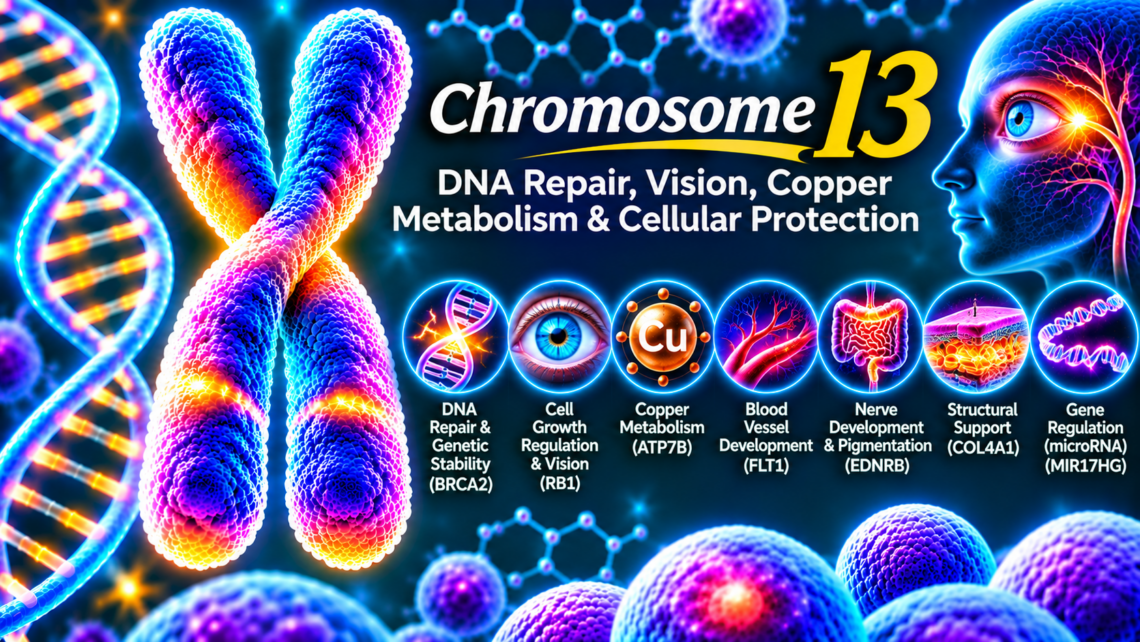
Among its best-known genes are BRCA2, RB1, ATP7B, FLT1, EDNRB, COL4A1 and MIR17HG.
These genes illustrate the diversity of chromosome 13’s biological functions. BRCA2 and RB1 are important tumour-suppressor genes. ATP7B helps regulate copper levels in the body. FLT1 contributes to blood vessel development, while COL4A1 provides instructions for producing a structural component of basement membranes.
Chromosome 13 is also associated with several important genetic conditions, including retinoblastoma, Wilson disease, Feingold syndrome type 2 and trisomy 13, also known as Patau syndrome.
In this article, we explore the structure and biological functions of chromosome 13, its important genes, associated genetic conditions, its relationship with different body systems, and complementary perspectives on its possible symbolic significance.
1. Understanding Chromosome 13
Humans normally have 46 chromosomes arranged into 23 pairs. Chromosome 13 is one of the 22 pairs of autosomes, meaning it is not a sex chromosome.
We inherit one copy from each biological parent.
Chromosome 13 contains approximately 115 million DNA base pairs and represents around 3.5–4% of the total DNA in our cells. According to MedlinePlus Genetics, it contains an estimated 300–400 protein-coding genes.
Chromosome 13 is an acrocentric chromosome. This means its centromere is positioned close to one end, resulting in a very short p arm and a much longer q arm.
Its structure includes:
- Short arm (p): The smaller section of the chromosome.
- Long arm (q): The larger section, which contains many of its recognised genes.
Genes are positioned at specific locations along these arms. Genetic changes may affect an individual gene, several neighbouring genes or a much larger section of the chromosome.
Some particularly important genes and regions include:
- BRCA2: DNA repair and maintenance of genetic stability.
- RB1: Regulation of cell division and tumour suppression.
- ATP7B: Copper transport and elimination of excess copper.
- FLT1: Blood vessel development and vascular signalling.
- EDNRB: Development of certain nerve cells and pigment-producing cells.
- COL4A1: Formation of type IV collagen and basement membranes.
- MIR17HG: Production of a microRNA cluster involved in growth and development.
Together, these genes contribute to several interconnected biological systems.
2. The Major Biological Functions of Chromosome 13
Chromosome 13 contributes to a range of essential biological processes.
DNA Repair and Genetic Stability
One of its most significant contributions comes from BRCA2.
BRCA2 helps repair certain types of DNA damage, particularly double-strand breaks, through a process known as homologous recombination.
This process helps preserve the integrity of genetic information and reduces the likelihood that damaged DNA will be passed on when cells divide.
Cellular Growth and Regulation
The RB1 gene produces a protein that helps regulate the cell cycle.
Cells need to divide to support growth, replace damaged tissue and maintain normal bodily functions. However, this process must be carefully controlled.
RB1 helps prevent cells from progressing through the cell cycle when conditions are not appropriate.
Mineral Transport and Metabolism
ATP7B is involved in copper transport.
Copper is an essential trace mineral required by several enzymes involved in normal cellular function.
However, excessive copper can be toxic.
ATP7B helps deliver copper where it is needed and supports the removal of excess copper through bile.
Blood Vessel Development
FLT1 produces a receptor involved in vascular endothelial growth factor signalling.
This signalling system helps regulate the development and maintenance of blood vessels.
It is particularly important during embryonic development and in processes involving vascular growth and regulation.
Eye and Nervous System Development
Chromosome 13 contains genes involved in the development and maintenance of structures associated with vision and the nervous system.
RB1 is particularly important in the regulation of retinal cell growth.
EDNRB contributes to the development of certain nerve cells in the digestive tract and pigment-producing cells.
Structural Support for Tissues
COL4A1 produces a component of type IV collagen, a structural protein found in basement membranes.
These specialised structures support and separate cells in many tissues, including those surrounding blood vessels.
3. Important Genes Located on Chromosome 13
Chromosome 13 contains hundreds of protein-coding genes. Several are particularly significant for human health and biological development.
| Gene | Main biological function | Associated conditions or relevance |
|---|---|---|
| BRCA2 | Repairs damaged DNA and helps maintain genetic stability | Hereditary breast, ovarian, prostate and pancreatic cancer susceptibility |
| RB1 | Regulates cell division and acts as a tumour suppressor | Retinoblastoma; increased risk of certain other cancers |
| ATP7B | Transports copper and supports its elimination | Wilson disease |
| FLT1 | Regulates vascular endothelial growth factor signalling | Blood vessel development; placental and vascular research |
| EDNRB | Supports development of enteric nerve cells and pigment-producing cells | Hirschsprung disease; Waardenburg syndrome type 4 |
| COL4A1 | Produces a component of type IV collagen | COL4A1-related vascular and neurological conditions |
| MIR17HG | Produces the miR-17~92 microRNA cluster | Feingold syndrome type 2 |
| ZMYM2 | Participates in gene regulation and chromatin-associated processes | Certain acquired chromosomal rearrangements in blood cancers |
Let’s explore some of these genes in greater detail.
BRCA2 – DNA Repair and Cellular Protection
BRCA2 stands for breast cancer type 2 susceptibility protein.
The BRCA2 gene provides instructions for producing a protein that plays an important role in repairing damaged DNA.
One of its key functions involves homologous recombination, a high-accuracy DNA repair process.
When both strands of a DNA molecule break, cells need an effective repair mechanism to prevent the loss or rearrangement of genetic information.
BRCA2 works with other proteins, including RAD51, to help repair these breaks using an intact DNA template.
This process contributes to:
- Genetic stability.
- Accurate DNA repair.
- Normal cell division.
- Prevention of certain forms of cellular damage.
Inherited pathogenic variants in BRCA2 can significantly increase the risk of developing certain cancers.
These include:
- Breast cancer.
- Ovarian cancer.
- Prostate cancer.
- Pancreatic cancer.
A BRCA2 variant does not mean that a person will definitely develop cancer. It changes the probability of developing certain cancers and may influence recommendations for screening and prevention.
BRCA2 is an important example of how the body uses specialised genetic mechanisms to protect the integrity of its DNA.
RB1 – The Retinoblastoma Tumour-Suppressor Gene
RB1 is one of the best-known tumour-suppressor genes in human genetics.
It provides instructions for producing a protein called pRB, which helps regulate the cell cycle.
The cell cycle is the series of stages through which a cell grows, copies its DNA and divides.
RB1 helps control the transition between important stages of this process.
When the protein functions normally, it can prevent cells from dividing when conditions are not appropriate.
If both functional copies of RB1 are lost or significantly disrupted in a cell, cell division may become uncontrolled.
Pathogenic variants in RB1 can cause retinoblastoma, a rare cancer of the retina that primarily affects young children.
Retinoblastoma may affect one or both eyes.
Inherited RB1 variants can also increase the risk of developing other cancers later in life.
RB1 demonstrates the importance of cellular regulation and the body’s natural mechanisms for controlling growth.
ATP7B – Copper Transport and Mineral Balance
The ATP7B gene provides instructions for producing a protein known as copper-transporting ATPase 2.
This protein is particularly active in the liver, although it is also found in smaller amounts in other tissues.
Copper is an essential mineral.
It contributes to the function of several enzymes involved in:
- Energy production.
- Iron metabolism.
- Connective tissue formation.
- Antioxidant defence.
- Nervous system function.
However, copper must be carefully regulated because excessive accumulation can damage cells and tissues.
ATP7B performs two important functions:
- It helps transfer copper to ceruloplasmin, a protein that transports copper through the bloodstream.
- It helps remove excess copper from the liver through bile.
Pathogenic variants in both copies of ATP7B can cause Wilson disease.
When the protein does not function properly, excess copper accumulates in the body, particularly in the liver and brain.
Possible manifestations include:
- Liver inflammation or damage.
- Neurological difficulties.
- Tremors.
- Problems with coordination.
- Changes in speech or movement.
- Psychiatric or behavioural symptoms.
Some individuals develop characteristic copper deposits around the cornea known as Kayser-Fleischer rings.
Wilson disease is a treatable genetic condition, but it requires proper diagnosis and ongoing medical management.
ATP7B demonstrates the importance of mineral balance and the body’s specialised transport mechanisms.
FLT1 – Blood Vessel Development and Vascular Signalling
FLT1 stands for fms-related receptor tyrosine kinase 1.
It produces a receptor involved in signalling pathways controlled by vascular endothelial growth factors.
These growth factors help regulate the development and function of blood vessels.
FLT1 is particularly important in:
- Embryonic blood vessel development.
- Vascular growth and regulation.
- Placental development.
- Communication between endothelial cells and their environment.
The FLT1 protein exists in different forms, including a membrane-bound receptor and a soluble form known as soluble FLT1.
Soluble FLT1 can bind vascular endothelial growth factors and influence their availability to other receptors.
This is particularly relevant in placental biology and research into pre-eclampsia, a pregnancy-related condition involving high blood pressure and other complications.
FLT1 illustrates how genetic information contributes to the development and regulation of the circulatory system.
EDNRB – Nerve Development and Pigmentation
EDNRB provides instructions for producing endothelin receptor type B.
This receptor responds to endothelins, which are signalling molecules involved in several developmental processes.
EDNRB is particularly important in the development and migration of:
- Enteric nerve cells.
- Melanocytes, the cells responsible for producing pigment.
Enteric nerve cells form the nervous system of the digestive tract.
This network helps coordinate intestinal movement and other digestive functions.
Certain pathogenic variants in EDNRB can cause:
Hirschsprung Disease
Hirschsprung disease is a developmental condition in which nerve cells are missing from part of the large intestine.
Without these nerve cells, the affected section of the bowel cannot coordinate normal movement of stool.
Symptoms can include severe constipation, abdominal swelling and intestinal obstruction.
Waardenburg Syndrome Type 4
This condition combines features of Waardenburg syndrome with Hirschsprung disease.
Possible characteristics include changes in pigmentation, hearing loss and intestinal abnormalities.
EDNRB demonstrates the close developmental relationship between the nervous system of the digestive tract and pigment-producing cells.
COL4A1 – Structural Support and Blood Vessel Integrity
COL4A1 provides instructions for producing the alpha-1 chain of type IV collagen.
Type IV collagen is a major component of basement membranes.
Basement membranes are specialised layers of extracellular material that support cells and help separate different tissue structures.
They are found throughout the body, particularly around blood vessels.
COL4A1 contributes to:
- Structural support.
- Cellular organisation.
- Tissue development.
- Blood vessel integrity.
- Cell migration and differentiation.
Pathogenic variants in COL4A1 can cause several related conditions involving fragile blood vessels.
These may affect the brain, eyes, kidneys and other tissues.
Possible manifestations include:
- Small-vessel disease in the brain.
- Stroke.
- Brain haemorrhage.
- Eye abnormalities.
- Kidney problems.
- Muscle cramps in certain COL4A1-related conditions.
COL4A1 demonstrates that structural proteins do much more than provide physical support. They also influence how cells interact with their surrounding environment.
MIR17HG – MicroRNA and Developmental Regulation
MIR17HG is a gene that produces a group of small regulatory RNA molecules known as the miR-17~92 microRNA cluster.
Unlike conventional protein-coding genes, MIR17HG does not provide instructions for producing a protein.
Instead, it produces microRNAs that help regulate the activity of other genes.
MicroRNAs can influence gene expression by binding to messenger RNA molecules and reducing their ability to produce proteins.
The miR-17~92 cluster participates in biological pathways involved in:
- Cell growth.
- Cell survival.
- Tissue development.
- Organ formation.
- Embryonic growth regulation.
Deletions involving MIR17HG can cause Feingold syndrome type 2.
This condition can involve abnormalities of the fingers and toes, a smaller-than-average head circumference and learning difficulties.
MIR17HG demonstrates how non-coding RNA molecules can have important effects on human development.
4. Genetic Conditions Associated with Chromosome 13
Changes affecting individual genes or larger sections of chromosome 13 can contribute to several inherited and developmental conditions.
Retinoblastoma
Associated with pathogenic variants in RB1.
Retinoblastoma is a cancer of the retina that primarily affects young children.
It can occur in one or both eyes.
Some cases are inherited, while others result from genetic changes acquired only in retinal cells.
Wilson Disease
Associated with pathogenic variants in both copies of ATP7B.
The condition affects copper transport and elimination, causing copper to accumulate in the liver, brain and other tissues.
Early diagnosis and appropriate treatment are important for preventing serious complications.
Hereditary Breast and Ovarian Cancer Susceptibility
Inherited pathogenic variants in BRCA2 can increase the risk of several cancers, including breast, ovarian, prostate and pancreatic cancer.
Genetic counselling and appropriate risk assessment can help individuals understand their inherited risk and screening options.
Feingold Syndrome Type 2
Associated with deletions involving the MIR17HG region at 13q31.3.
Possible features include:
- Shortening of certain fingers and toes.
- Microcephaly.
- Learning difficulties.
- Developmental differences.
Hirschsprung Disease
Certain pathogenic variants in EDNRB can cause Hirschsprung disease.
The condition affects the development of nerve cells in the intestine and can interfere with normal bowel movement.
Other genes can also cause Hirschsprung disease, so EDNRB is only one possible genetic contributor.
Waardenburg Syndrome Type 4
Some pathogenic variants in EDNRB can cause Waardenburg syndrome type 4.
It can involve changes in pigmentation, hearing loss and Hirschsprung disease.
COL4A1-Related Disorders
Pathogenic variants in COL4A1 can cause conditions involving fragile blood vessels and abnormalities affecting the brain, eyes and kidneys.
The specific presentation depends on the variant and the tissues affected.
Trisomy 13 – Patau Syndrome
Trisomy 13 occurs when a person has three copies of chromosome 13 rather than the usual two copies.
It is also known as Patau syndrome.
The additional genetic material disrupts normal development and can affect multiple organ systems.
Possible features include:
- Congenital heart defects.
- Brain and spinal cord abnormalities.
- Eye abnormalities.
- Cleft lip or palate.
- Extra fingers or toes.
- Feeding and breathing difficulties.
- Developmental impairment.
Some cases involve a complete extra chromosome, while others involve mosaic trisomy 13 or an additional section of chromosome 13 attached to another chromosome.
The clinical presentation and prognosis vary depending on the chromosomal arrangement and the individual.
13q Deletion Syndrome
A 13q deletion occurs when a section of the long arm of chromosome 13 is missing.
The effects depend on the size and location of the deletion.
If the deleted region includes RB1, the individual may have an increased risk of retinoblastoma.
Larger deletions may affect additional genes and contribute to developmental delay, intellectual disability, growth differences and other physical features.
Other Chromosomal Rearrangements
Chromosome 13 can also be involved in structural changes associated with certain blood cancers.
For example, a translocation involving chromosome 13 and chromosome 8 can create a ZMYM2::FGFR1 fusion gene.
This rearrangement can produce abnormal cellular signalling and uncontrolled growth in blood-forming cells.
Such changes are generally acquired in affected cells during a person’s lifetime rather than inherited.
5. Chromosome 13 and the Body’s Major Systems
The genes on chromosome 13 do not operate independently. Their biological functions connect with several major systems.
The Visual System
RB1 plays a particularly important role in regulating the growth of retinal cells.
The retina is the light-sensitive tissue at the back of the eye that converts light into electrical signals for the brain.
Abnormalities affecting RB1 can result in retinoblastoma.
Other genes and structural proteins on chromosome 13 also contribute to eye and vascular development.
The Liver and Metabolic System
ATP7B is particularly important for liver function because it helps regulate copper transport and elimination.
Copper is required for normal enzyme activity, but excessive amounts can damage liver cells.
This demonstrates the importance of maintaining mineral balance.
The Nervous System
EDNRB contributes to the development of nerve cells in the digestive tract.
COL4A1-related conditions can also affect the brain’s small blood vessels, potentially leading to neurological complications.
BRCA2 contributes to DNA repair in many cell types, including cells within the nervous system.
The Cardiovascular and Circulatory Systems
FLT1 participates in blood vessel development and vascular signalling.
COL4A1 helps maintain the structural integrity of basement membranes surrounding blood vessels.
These genes illustrate chromosome 13’s contribution to vascular development and maintenance.
The Cellular Growth and Protection System
BRCA2 and RB1 are particularly important in cellular protection.
BRCA2 helps repair damaged DNA, while RB1 helps regulate cell division.
Together, these genes demonstrate two different but complementary mechanisms that help prevent abnormal cellular growth.
6. Chromosome 13, Epigenetics and Gene Expression
Genetics describes the DNA sequence inherited from our parents.
Epigenetics explores how gene activity can be regulated without changing the underlying DNA sequence.
Several mechanisms are involved:
- DNA methylation: Chemical modifications that can influence whether particular genes are active or less active.
- Histone modification: Changes to proteins around which DNA is packaged, influencing gene accessibility.
- Non-coding RNA: RNA molecules that can regulate gene expression without producing proteins.
- Chromatin remodelling: Changes in how DNA is organised and accessed by cellular machinery.
MicroRNA and Gene Regulation
MIR17HG provides a particularly interesting example of gene regulation.
Instead of producing a protein, it produces microRNAs that help regulate the activity of other genes.
These small RNA molecules can influence how much protein is produced from particular messenger RNA molecules.
This allows cells to coordinate complex developmental processes.
The miR-17~92 cluster is involved in pathways regulating cell growth, survival and development.
DNA Repair and Cellular Stability
BRCA2 demonstrates the importance of maintaining genetic stability.
DNA repair is essential because genetic material can become damaged during normal cellular activity and through environmental exposures.
Cells use multiple repair pathways to maintain the integrity of their DNA.
BRCA2 participates in one of the important pathways involved in repairing double-strand breaks.
Epigenetic Research and Cancer
Changes in DNA methylation, chromatin organisation and gene expression can influence cancer development.
Research into BRCA2 and RB1 demonstrates how genetic changes and altered cellular regulation can contribute to abnormal growth.
It is important to distinguish between inherited DNA variants and epigenetic changes acquired during life.
Epigenetics does not mean that thoughts, emotions or particular wellbeing practices can directly switch individual chromosome 13 genes on or off in a predictable way.
7. A Holistic Wellbeing Perspective
From a holistic wellbeing perspective, chromosome 13 offers an opportunity to explore several interconnected themes:
- Cellular protection.
- Genetic stability.
- Mineral balance.
- Structural integrity.
- Vision and perception.
- Blood vessel health.
- Development and regulation.
These themes can serve as educational and reflective starting points.
They do not mean that chromosome 13 determines a person’s personality, emotional characteristics or energetic state.
Protection and Cellular Integrity
BRCA2 reminds us that the body has sophisticated mechanisms for protecting the integrity of its genetic information.
Cells constantly manage DNA damage and use specialised processes to repair it.
As a reflective theme, this can inspire questions about the importance of protection, boundaries and maintaining healthy foundations.
Balance and Mineral Regulation
ATP7B highlights the importance of balance.
Copper is essential for normal biological function, but excessive amounts can become harmful.
This demonstrates a broader principle in physiology: many substances are beneficial within appropriate ranges but can cause problems when their levels become too high or too low.
Vision and Awareness
RB1’s role in retinal cell regulation provides an opportunity to explore the importance of vision.
From a reflective perspective, vision can also represent awareness, perspective and the ability to recognise what is happening around us.
This is a symbolic interpretation, not a direct psychological function of RB1.
Structure and Support
COL4A1 demonstrates the importance of structural foundations.
Basement membranes help support cells and maintain the organisation of tissues.
Symbolically, this can inspire reflection on the foundations that support physical, emotional and social wellbeing.
Regulation and Growth
RB1 and BRCA2 illustrate that healthy cellular functioning depends on more than growth alone.
Cells also need mechanisms that regulate division, repair damage and maintain stability.
From a holistic perspective, this can be used as a metaphor for balancing activity, recovery and personal development.
8. Chromosome 13: An Esoteric and Symbolic Perspective
The following section is a symbolic exploration for personal reflection. There is no scientifically established connection between chromosome 13 and Tarot archetypes, numerology, chakras or specific energetic patterns.
If we explore chromosome 13 through an esoteric lens, several themes emerge from its biological functions.
These include transformation, renewal, protection, release, balance and the transition between different stages of life.
The Number 13 – Transformation and Renewal
The number 13 has different meanings across cultures and symbolic traditions.
In some traditions it is associated with transformation, endings and new beginnings.
In others, it represents change, renewal and the movement from one phase of life into another.
Chromosome 13 offers an interesting biological starting point for exploring these ideas.
Its genes participate in processes involving cellular repair, growth regulation, mineral balance and development.
These biological functions can be used as metaphors for transformation and the maintenance of balance.
This is symbolic interpretation, not a scientific property of the chromosome.
Tarot Archetype: Death – XIII
The thirteenth Major Arcana card in the Tarot is Death.
Despite its name, the Death card does not generally represent literal physical death in conventional Tarot interpretation.
It is traditionally associated with:
- Transformation.
- Endings.
- Release.
- Renewal.
- Transition.
- Letting go of outdated patterns.
- The beginning of a new chapter.
The card represents the idea that meaningful change sometimes requires something to end before something new can develop.
There is an interesting symbolic comparison with chromosome 13’s involvement in cellular regulation.
Cells must sometimes stop dividing, repair damage or undergo programmed cell death when they can no longer function appropriately.
Programmed cell death, known as apoptosis, is a normal biological process that helps remove unwanted or damaged cells.
RB1 participates in cellular growth regulation, while BRCA2 contributes to maintaining genetic stability.
These processes are not the same as the symbolic meaning of the Tarot card, but they offer a useful metaphor for understanding the importance of regulation and renewal.
Tarot Archetype: Temperance – XIV
Another possible symbolic connection is Temperance, the fourteenth Major Arcana card.
Temperance is traditionally associated with balance, moderation, integration and the careful blending of different elements.
This offers an interesting comparison with ATP7B and its role in copper regulation.
Copper is essential for life, but excessive amounts can be harmful.
The body must maintain an appropriate balance to support normal physiological function.
Symbolically, Temperance can represent the importance of moderation and finding equilibrium.
Tarot Archetype: The Star – XVII
The Star is traditionally associated with hope, renewal, inspiration and healing.
This card can be explored alongside chromosome 13’s contribution to DNA repair and cellular protection.
BRCA2 participates in the repair of damaged DNA, helping preserve genetic stability.
As a symbolic reflection, The Star can represent the possibility of restoration after disruption and the importance of maintaining hope during periods of change.
Symbolic Themes for Chromosome 13
For a personal reflection framework, chromosome 13 could be explored through:
- Transformation: Allowing change to create new possibilities.
- Renewal: Recognising the importance of recovery and restoration.
- Protection: Establishing healthy boundaries and foundations.
- Balance: Understanding the importance of moderation.
- Release: Letting go of patterns that no longer serve a useful purpose.
- Awareness: Developing a clearer perspective.
- Resilience: Finding ways to adapt during periods of change.
These themes may be useful in journaling, mindfulness and personal development activities.
9. Supporting General Wellbeing
Lifestyle practices cannot repair inherited genetic variants or directly control individual chromosome 13 genes.
However, general wellbeing habits can support the biological systems discussed in this article.
Support General Cellular Health
Healthy cells depend on adequate nutrition, normal metabolic function and protection from excessive environmental stress.
General approaches include:
- Eating a varied and balanced diet.
- Avoiding tobacco.
- Limiting excessive alcohol consumption.
- Maintaining adequate sleep.
- Participating in regular physical activity.
- Protecting the skin from excessive ultraviolet exposure.
These habits support general health but cannot guarantee protection against genetic disease or cancer.
Support Liver Health
Because ATP7B is involved in copper regulation, liver health is an important subject in understanding chromosome 13.
General approaches include avoiding excessive alcohol consumption, maintaining a balanced diet and seeking medical advice for persistent symptoms.
People with Wilson disease require specific medical treatment and monitoring. General lifestyle practices are not a substitute for treatment.
Support Cardiovascular Health
Healthy blood vessels are essential for delivering oxygen and nutrients throughout the body.
General measures include:
- Regular physical activity.
- Balanced nutrition.
- Avoiding tobacco.
- Appropriate blood pressure monitoring.
- Managing cholesterol where necessary.
- Attending routine health assessments.
Support Eye Health
Regular eye examinations can help identify certain eye conditions before they become more advanced.
Children with a family history of hereditary retinoblastoma should receive appropriate genetic and specialist assessment.
Sudden changes in vision, new visual disturbances or persistent eye symptoms should be evaluated by an appropriate healthcare professional.
Maintain Appropriate Genetic and Preventive Care
Some inherited chromosome 13 variants have important implications for screening and medical monitoring.
People with known pathogenic variants in BRCA2, RB1, ATP7B or other genes should discuss their individual circumstances with a qualified healthcare professional or genetic specialist.
Genetic counselling can help explain inherited risks and available testing options.
10. Questions for Personal Reflection
The biological functions associated with chromosome 13 offer several useful questions for personal exploration.
- What does transformation mean to me?
- Are there patterns or habits I am ready to release?
- Where in my life could I benefit from greater balance?
- What foundations help me feel protected and supported?
- How do I respond when circumstances require change?
- Am I allowing enough time for rest and renewal?
- What does resilience mean to me?
- How can I develop a healthier relationship with endings and new beginnings?
These questions are intended for personal reflection, not genetic assessment.
11. Frequently Asked Questions
What does chromosome 13 do?
Chromosome 13 contains genes involved in DNA repair, cellular growth regulation, copper metabolism, blood vessel development, eye development and structural support for tissues.
Which important genes are found on chromosome 13?
Some important genes include BRCA2, RB1, ATP7B, FLT1, EDNRB, COL4A1 and MIR17HG.
Is chromosome 13 associated with cancer?
Yes. BRCA2 and RB1 are important tumour-suppressor genes.
Inherited pathogenic variants in BRCA2 can increase the risk of several cancers, while RB1 variants are associated with retinoblastoma and increased risks of certain other cancers.
Is chromosome 13 associated with eye conditions?
Yes. RB1 is particularly important because pathogenic variants can cause retinoblastoma, a cancer affecting the retina.
Does chromosome 13 influence copper metabolism?
Yes. The ATP7B gene helps transport copper and remove excess copper from the body. Pathogenic variants in both copies can cause Wilson disease.
What is trisomy 13?
Trisomy 13, also known as Patau syndrome, occurs when a person has an additional copy of chromosome 13 or additional chromosome 13 material.
It can affect multiple organ systems and cause significant developmental and medical complications.
Is chromosome 13 associated with the nervous system?
Yes. EDNRB contributes to the development of nerve cells in the digestive tract. COL4A1-related conditions can also affect blood vessels in the brain, potentially causing neurological complications.
Can lifestyle changes influence chromosome 13?
Lifestyle practices do not change the inherited DNA sequence of chromosome 13. However, general health behaviours can support cardiovascular, metabolic, liver and other biological functions associated with genes on this chromosome.
Conclusion: Chromosome 13 and the Biology of Transformation
Chromosome 13 is an important part of the human genetic blueprint.
Its genes contribute to DNA repair, cellular growth regulation, copper metabolism, blood vessel development, eye function and the structural integrity of tissues.
From BRCA2’s role in maintaining genetic stability to RB1’s regulation of cell division, ATP7B’s contribution to copper transport and COL4A1’s role in supporting blood vessels, chromosome 13 demonstrates how different biological processes work together to maintain the body.
Its associated genetic conditions also highlight the importance of understanding how changes in individual genes or larger chromosomal regions can influence human development and health.
From a holistic perspective, chromosome 13 provides a starting point for exploring transformation, renewal, protection, balance and resilience.
The symbolic message of the Death card offers an especially interesting reflection: endings and transitions are not necessarily failures. They can be part of the process through which new possibilities emerge.
Understanding genetics and exploring wellbeing from multiple perspectives can deepen our appreciation of the complexity of human life.
Explore Your Wellbeing. Reconnect. Reflect. Realign.
References and Further Reading
The following resources provide reliable scientific information about chromosome 13 and its associated genes.
- MedlinePlus Genetics – Chromosome 13
https://medlineplus.gov/genetics/chromosome/13/ - MedlinePlus Genetics – BRCA2 Gene
https://medlineplus.gov/genetics/gene/brca2/ - National Cancer Institute – BRCA1 and BRCA2
https://www.cancer.gov/publications/pdq/information-summaries/genetics/brca-genes-hp-pdq - MedlinePlus Genetics – RB1 Gene
https://medlineplus.gov/genetics/gene/rb1/ - MedlinePlus Genetics – Retinoblastoma
https://medlineplus.gov/genetics/condition/retinoblastoma/ - MedlinePlus Genetics – ATP7B Gene
https://medlineplus.gov/genetics/gene/atp7b/ - MedlinePlus Genetics – Wilson Disease
https://medlineplus.gov/genetics/condition/wilson-disease/ - MedlinePlus Genetics – COL4A1 Gene
https://medlineplus.gov/genetics/gene/col4a1/ - MedlinePlus Genetics – Trisomy 13
https://medlineplus.gov/genetics/condition/trisomy-13/ - The DNA Sequence and Analysis of Human Chromosome 13 – Nature
https://www.nature.com/articles/nature02379
Medical Disclaimer
This article is intended for general educational and wellbeing information only. It does not provide medical diagnosis, genetic counselling or treatment recommendations.
Genetic conditions can only be assessed through appropriate clinical evaluation and, where indicated, validated genetic testing. Genetic associations do not mean that a person will necessarily develop a particular condition.
The holistic and esoteric interpretations in this article are presented for personal reflection and are not scientifically established explanations of chromosome function.
Always consult a qualified healthcare professional regarding persistent symptoms, suspected genetic conditions or concerns about inherited health risks.
VitalPulse – Explore Your Wellbeing. Reconnect. Reflect. Realign.

You May Also Like
Anaemia: Understanding the Causes, Recognising the Symptoms & Supporting Your Body Naturally

Opisthorchis felineus: Understanding Liver Flukes, Their Effects on the Body & How to Protect Your Health