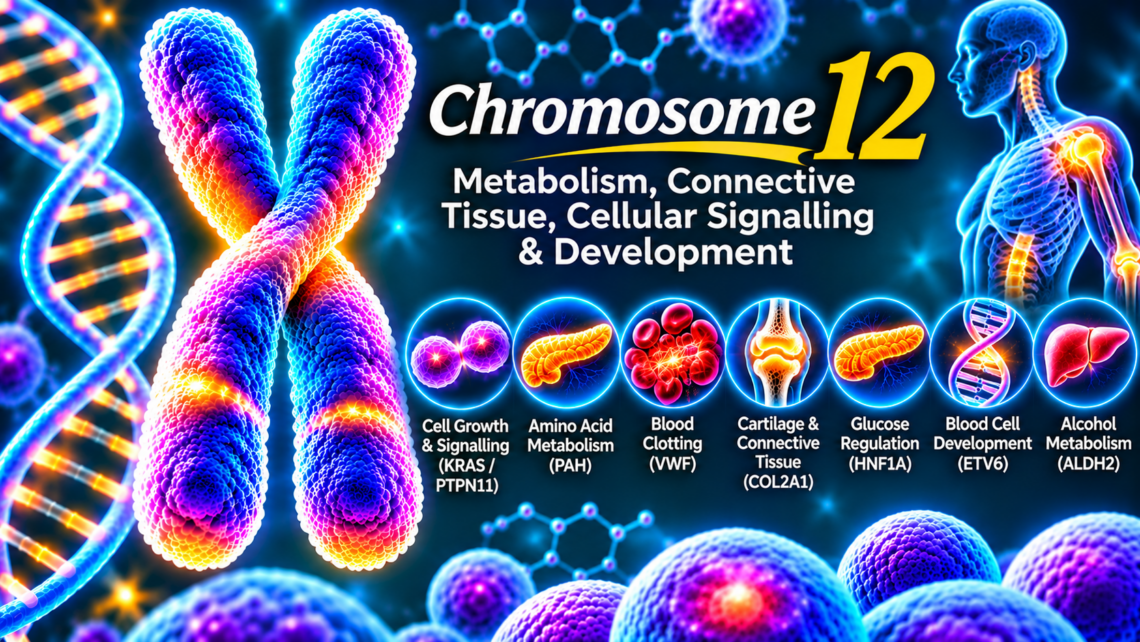
Chromosome 12: The Genetic Blueprint of Metabolism, Connective Tissue, Cellular Signalling & Development
Exploring the genes that influence how the body processes nutrients, regulates growth, maintains connective tissue, supports blood clotting and coordinates essential cellular functions.
Introduction
Chromosomes carry the genetic instructions that help build, maintain and regulate the human body. Each chromosome contains hundreds or thousands of genes, and many of these genes work together to support multiple biological systems.
Chromosome 12 is particularly interesting because of the diversity of its genetic functions.
It contains genes involved in metabolism, amino acid processing, connective tissue formation, blood clotting, cellular communication, growth regulation and neurological development.
Among its most significant genes are KRAS, PTPN11, PAH, VWF, COL2A1, HNF1A, ETV6 and ALDH2.
Some of these genes help regulate how cells grow and divide. Others provide instructions for producing enzymes that process amino acids, proteins that support cartilage and connective tissue, or factors that allow blood to clot normally.
Chromosome 12 also contains genes involved in important developmental pathways. Changes in some of these genes can affect the heart, skeleton, metabolism, nervous system and other organs.
In this article, we explore the structure and biological functions of chromosome 12, its important genes, associated genetic conditions, its relationship with different body systems, and complementary perspectives on its possible symbolic significance.
1. Understanding Chromosome 12
Humans normally have 46 chromosomes arranged into 23 pairs. Chromosome 12 is one of the 22 pairs of autosomes, meaning it is not a sex chromosome.
We inherit one copy from each biological parent.
Chromosome 12 spans approximately 134 million DNA base pairs and represents around 4–4.5% of the total DNA in our cells. It contains an estimated 1,100–1,200 protein-coding genes.
Like other chromosomes, chromosome 12 has two main arms:
- Short arm (p): The smaller section of the chromosome.
- Long arm (q): The larger section of the chromosome.
Genes are positioned at specific locations along these arms. Genetic changes may affect an individual gene, several neighbouring genes or a larger section of the chromosome.
Chromosome 12 is particularly interesting because it contains genes associated with several major biological processes, including:
- Cellular growth and signalling.
- Amino acid metabolism.
- Blood clotting.
- Cartilage and connective tissue development.
- Glucose regulation.
- Nervous system development.
- Blood cell formation.
These functions illustrate how one chromosome can contribute to many different aspects of human physiology.
2. The Major Biological Functions of Chromosome 12
Chromosome 12 contributes to several interconnected biological processes.
Cellular Growth and Communication
Genes such as KRAS and PTPN11 participate in the RAS/MAPK signalling pathway.
This pathway allows cells to receive and respond to signals that influence growth, division, movement and differentiation.
These processes are essential during embryonic development and throughout life, when tissues need to maintain and replace cells.
Amino Acid Metabolism
The PAH gene provides instructions for producing phenylalanine hydroxylase, an enzyme involved in processing the amino acid phenylalanine.
This enzyme converts phenylalanine into another amino acid called tyrosine.
Tyrosine is used to produce proteins and serves as a precursor for several important biological compounds, including catecholamine neurotransmitters and thyroid hormones.
Connective Tissue and Skeletal Development
The COL2A1 gene provides instructions for producing type II collagen.
Type II collagen is a major structural component of cartilage and is important for the normal development and function of joints, bones, the eyes and the inner ear.
Blood Clotting
The VWF gene provides instructions for producing von Willebrand factor, a protein that helps platelets attach to damaged blood vessels and supports the function of clotting factor VIII.
This protein is essential for normal blood clot formation.
Glucose Regulation
HNF1A is a transcription factor involved in regulating gene activity in several tissues, including the liver and pancreatic beta cells.
It contributes to normal glucose regulation and pancreatic function.
Certain inherited variants in HNF1A can cause a form of diabetes known as maturity-onset diabetes of the young type 3 (MODY3).
Alcohol Metabolism
The ALDH2 gene provides instructions for producing an enzyme involved in breaking down acetaldehyde, a toxic intermediate produced during alcohol metabolism.
This enzyme helps protect cells from the harmful effects of acetaldehyde accumulation.
3. Important Genes Located on Chromosome 12
Chromosome 12 contains many genes, but several are particularly relevant to human health and biological development.
| Gene | Main biological function | Associated conditions or relevance |
|---|---|---|
| KRAS | Regulates cellular growth and signalling | Cancer biology; cardiofaciocutaneous syndrome |
| PTPN11 | Regulates RAS/MAPK signalling | Noonan syndrome; LEOPARD syndrome |
| PAH | Converts phenylalanine into tyrosine | Phenylketonuria (PKU) |
| VWF | Supports platelet adhesion and blood clotting | Von Willebrand disease |
| COL2A1 | Produces type II collagen | Stickler syndrome; skeletal dysplasias |
| HNF1A | Regulates gene expression and glucose metabolism | MODY3 |
| ETV6 | Regulates gene activity, particularly in blood cell development | Certain inherited predispositions and acquired blood cancers |
| ALDH2 | Helps break down acetaldehyde | Alcohol-related flushing response; metabolic and toxicology research |
Let’s examine some of these genes in greater detail.
KRAS – Cellular Growth and Signalling
The KRAS gene provides instructions for producing a protein called K-Ras.
This protein acts as a molecular switch within the RAS/MAPK signalling pathway.
It receives signals from outside the cell and helps relay them towards the cell nucleus, influencing whether a cell should grow, divide, move or mature into a specialised cell type.
Under normal circumstances, K-Ras switches between active and inactive states.
This controlled signalling is essential for normal development and tissue maintenance.
However, certain KRAS variants can cause the protein to remain abnormally active.
This can result in excessive cellular signalling and uncontrolled cell growth.
KRAS mutations are found in several types of cancer, including pancreatic, colorectal and lung cancers.
Inherited pathogenic variants in KRAS can also cause certain developmental conditions, including some cases of cardiofaciocutaneous syndrome.
KRAS demonstrates the importance of carefully regulated communication between cells.
PTPN11 – Cellular Regulation and Development
PTPN11 provides instructions for producing a protein called SHP-2.
This protein helps regulate the RAS/MAPK signalling pathway, which influences cell growth, differentiation and movement.
During embryonic development, PTPN11 plays an important role in the formation of:
- The heart.
- Blood cells.
- Bones.
- Other developing tissues.
Pathogenic variants in PTPN11 are an important cause of Noonan syndrome, a genetic condition that can involve distinctive facial features, short stature, congenital heart defects and developmental differences.
Some variants in PTPN11 can also cause other related conditions, including Noonan syndrome with multiple lentigines.
PTPN11 illustrates how a change in cellular signalling can influence the development of several different organs.
PAH – Amino Acid Processing and Phenylalanine Metabolism
The PAH gene provides instructions for producing phenylalanine hydroxylase.
This enzyme is primarily active in the liver, where it helps convert phenylalanine into tyrosine.
Phenylalanine is an essential amino acid, meaning it must be obtained through food.
The body uses amino acids to build proteins and support numerous biological functions.
When phenylalanine hydroxylase does not function properly, phenylalanine can accumulate in the blood and tissues.
Pathogenic variants in both copies of PAH can cause phenylketonuria (PKU).
Without appropriate treatment, high phenylalanine levels can damage the developing brain and cause intellectual disability and other neurological problems.
PKU is commonly identified through newborn screening.
Treatment generally involves a carefully managed diet that restricts phenylalanine, alongside specialised nutritional support. Some individuals may also benefit from medication.
PAH demonstrates the importance of genetic instructions in nutrient metabolism and neurological health.
VWF – Blood Clotting and Vascular Protection
The VWF gene provides instructions for producing von Willebrand factor.
This large protein plays two important roles in normal blood clotting.
First, it helps platelets attach to damaged blood vessel walls.
Second, it carries and protects clotting factor VIII in the bloodstream.
Together, these functions help the body form stable blood clots when blood vessels are injured.
Pathogenic variants in VWF can cause von Willebrand disease, one of the most common inherited bleeding disorders.
Symptoms may include:
- Frequent nosebleeds.
- Easy bruising.
- Prolonged bleeding after injuries.
- Heavy menstrual bleeding.
- Excessive bleeding after dental procedures or surgery.
The severity varies considerably between individuals.
The VWF gene highlights the importance of genetic factors in maintaining vascular integrity and controlling blood loss.
COL2A1 – Cartilage, Joints and Structural Support
COL2A1 provides instructions for producing the alpha-1 chain of type II collagen.
Type II collagen is one of the main structural proteins found in cartilage.
Cartilage is a specialised connective tissue that provides cushioning, flexibility and support.
It is found in several areas of the body, including:
- The surfaces of joints.
- The developing skeleton.
- The cartilage of the nose and ears.
- The inner ear.
- The vitreous gel inside the eye.
- The discs between the vertebrae.
COL2A1 is therefore important for the normal development and maintenance of several tissues.
Pathogenic variants can cause a group of conditions known as type II collagen disorders.
These include:
Stickler Syndrome
This inherited connective tissue disorder can affect the eyes, ears, joints and facial development.
Possible features include severe short-sightedness, retinal abnormalities, hearing loss and joint problems.
Spondyloepiphyseal Dysplasia Congenita
This skeletal condition can cause disproportionate short stature, a short torso, spinal abnormalities and problems involving vision and hearing.
Kniest Dysplasia
A rare skeletal condition that can involve short stature, joint abnormalities, spinal curvature and visual or hearing difficulties.
COL2A1 demonstrates how one structural protein can contribute to the integrity of multiple tissues.
HNF1A – Glucose Regulation and Pancreatic Function
HNF1A is a transcription factor that regulates the activity of other genes.
It is particularly important in the liver and pancreatic beta cells.
In the pancreas, HNF1A contributes to the normal functioning of cells responsible for producing insulin.
Insulin helps regulate blood glucose by allowing cells to take up and use glucose from the bloodstream.
Pathogenic variants in HNF1A can cause maturity-onset diabetes of the young type 3 (MODY3).
This is an inherited form of diabetes that typically develops in adolescence or early adulthood, although the age of onset can vary.
HNF1A demonstrates how genetic regulation influences metabolism and hormonal communication.
ETV6 – Blood Cell Development and Genetic Regulation
ETV6 is a transcription factor involved in regulating gene activity.
It plays an important role in the development and maintenance of blood-forming cells in the bone marrow.
It helps coordinate the processes through which immature blood cells develop into specialised cell types.
Inherited pathogenic variants in ETV6 can cause a predisposition to certain blood disorders, including thrombocytopenia and an increased risk of haematological malignancies.
ETV6 is also involved in acquired chromosomal rearrangements found in certain leukaemias.
One example is the ETV6::RUNX1 fusion, which is associated with a subset of childhood acute lymphoblastic leukaemia.
ETV6 illustrates the importance of carefully regulated gene expression in blood cell development.
ALDH2 – Alcohol Metabolism and Cellular Protection
ALDH2 provides instructions for producing mitochondrial aldehyde dehydrogenase 2.
This enzyme helps convert acetaldehyde into acetate during alcohol metabolism.
Acetaldehyde is a toxic compound produced when the body breaks down alcohol.
If acetaldehyde is not efficiently processed, it can accumulate and contribute to unpleasant physiological effects.
Certain inherited ALDH2 variants significantly reduce the activity of this enzyme.
People carrying these variants may experience facial flushing, rapid heartbeat, nausea and other symptoms after consuming alcohol.
Reduced ALDH2 activity can also increase exposure to acetaldehyde and is associated with increased risks of certain alcohol-related cancers among people who drink.
ALDH2 demonstrates the role of genetic variation in how individuals process environmental substances.
4. Genetic Conditions Associated with Chromosome 12
Changes affecting individual genes or larger sections of chromosome 12 can contribute to a range of inherited and developmental conditions.
Phenylketonuria (PKU)
Associated with pathogenic variants in PAH.
The condition affects the body’s ability to break down phenylalanine.
Without appropriate treatment, excessive phenylalanine accumulation can damage the developing nervous system.
Noonan Syndrome
Often associated with pathogenic variants in PTPN11, although several other genes can also cause the condition.
Possible features include:
- Congenital heart abnormalities.
- Short stature.
- Distinctive facial characteristics.
- Chest wall differences.
- Developmental or learning difficulties.
- Bleeding or lymphatic abnormalities in some individuals.
Von Willebrand Disease
Associated with pathogenic variants in VWF.
The condition affects the body’s ability to form normal blood clots and can cause prolonged or excessive bleeding.
Stickler Syndrome
Often associated with variants in COL2A1.
It can affect connective tissue, particularly the eyes, joints, ears and facial structures.
MODY3
Caused by pathogenic variants in HNF1A.
This inherited form of diabetes affects insulin production and glucose regulation.
Pallister-Killian Syndrome
Usually associated with an extra isochromosome containing two copies of the short arm of chromosome 12, known as isochromosome 12p.
This is generally a mosaic chromosomal condition, meaning that some cells contain the extra genetic material while others do not.
Possible features include:
- Developmental delay.
- Intellectual disability.
- Low muscle tone.
- Distinctive facial features.
- Seizures.
- Congenital abnormalities.
- Differences in pigmentation.
The presentation varies considerably between individuals.
PDGFRB-Associated Chronic Eosinophilic Leukaemia
Certain acquired chromosomal rearrangements involving chromosome 12 can create fusion genes that activate abnormal signalling in blood-forming cells.
One example is the ETV6::PDGFRB fusion.
This can result in abnormal growth of eosinophils, a type of white blood cell.
These changes are generally acquired during a person’s lifetime and are not inherited.
Trisomy 12 in Chronic Lymphocytic Leukaemia
Some people with chronic lymphocytic leukaemia have an extra copy of chromosome 12 in affected cancer cells.
This is called trisomy 12.
It is a somatic chromosomal change, meaning it occurs in certain cells during life rather than being present in every cell from birth.
Other Chromosomal Changes
Structural changes involving chromosome 12 may include:
- Partial deletion.
- Partial duplication.
- Ring chromosome formation.
- Translocations involving other chromosomes.
- Mosaic chromosomal abnormalities.
The effects depend on which genes are involved and how much genetic material is affected.
5. Chromosome 12 and the Body’s Major Systems
The genes on chromosome 12 do not operate independently. Their functions connect with several major biological systems.
The Musculoskeletal System
COL2A1 is particularly important for cartilage and skeletal development.
It contributes to the structural integrity of joints, the spine, the inner ear and certain eye structures.
PTPN11 and KRAS also participate in developmental pathways that influence bone and tissue formation.
The Digestive and Metabolic Systems
PAH contributes to amino acid metabolism, while HNF1A plays a role in glucose regulation.
These genes demonstrate the importance of genetic instructions in processing nutrients and maintaining metabolic balance.
The Cardiovascular and Circulatory Systems
VWF contributes to normal blood clotting and the body’s response to vascular injury.
PTPN11 also participates in heart development.
Together, these genes illustrate chromosome 12’s involvement in both cardiovascular development and blood-related functions.
The Nervous System
PAH is important for maintaining normal phenylalanine levels, which is particularly relevant to neurological development.
PTPN11 and KRAS participate in signalling pathways that influence embryonic development, including aspects of nervous system formation.
The Immune and Blood-Forming Systems
ETV6 helps regulate blood cell development.
Its function is important in maintaining normal processes within the bone marrow.
The Cellular Protection and Signalling Systems
KRAS and PTPN11 are involved in signalling pathways that regulate cell growth and differentiation.
These pathways must operate within tightly controlled limits to support normal tissue function.
6. Chromosome 12, Epigenetics and Gene Expression
Genetics describes the DNA sequence inherited from our parents.
Epigenetics explores how gene activity can be regulated without changing the underlying DNA sequence.
Several mechanisms are involved:
- DNA methylation: Chemical modifications that can influence whether particular genes are active or less active.
- Histone modification: Changes to proteins around which DNA is packaged, influencing gene accessibility.
- Non-coding RNA: RNA molecules that can regulate gene expression.
- Chromatin remodelling: Changes in how DNA is organised and accessed by cellular machinery.
Gene Expression and Cellular Identity
Different cells in the body contain essentially the same DNA, but they express different combinations of genes.
For example:
- A liver cell expresses genes involved in metabolism.
- A cartilage-forming cell expresses genes involved in producing structural proteins.
- A pancreatic beta cell expresses genes involved in insulin production.
- A blood-forming cell expresses genes needed for the development of specialised blood cells.
Epigenetic regulation helps maintain these differences in cellular identity.
Epigenetics and Metabolism
Genes involved in metabolic pathways are subject to complex regulatory processes.
Research continues to investigate how environmental influences, nutrition, ageing and metabolic conditions interact with gene expression.
However, it is important not to assume that particular foods, emotions or complementary therapies can directly switch individual chromosome 12 genes on or off in a predictable way.
Epigenetics is a complex field of research, not a simple system of consciously controlling genetic activity.
7. A Holistic Wellbeing Perspective
From a holistic wellbeing perspective, chromosome 12 offers an opportunity to explore several interconnected themes:
- Structural support and flexibility.
- Nutrient processing.
- Metabolic balance.
- Cellular communication.
- Blood and vascular health.
- Adaptation and environmental response.
- Growth and development.
These themes can serve as educational and reflective starting points.
They do not mean that chromosome 12 determines a person’s personality, emotional characteristics or energetic state.
Structural Support and Flexibility
COL2A1 highlights the importance of connective tissue.
Cartilage, joints and other structural tissues help the body move, adapt and maintain physical stability.
From a reflective perspective, this can inspire questions about the balance between flexibility and stability in everyday life.
Metabolic Balance
PAH and HNF1A demonstrate how important it is for the body to process nutrients and regulate glucose.
Metabolic health involves many interacting factors, including genetics, nutrition, physical activity, sleep and hormonal regulation.
Communication and Adaptation
KRAS and PTPN11 are involved in cellular signalling.
Cells need to receive and interpret information to respond appropriately to their environment.
This provides an opportunity to reflect on communication, awareness and adaptability in daily life.
Protection and Boundaries
VWF is involved in the body’s response to blood vessel injury.
Symbolically, this can provide a starting point for reflecting on protection, boundaries and the ability to recover after difficult experiences.
This is a metaphorical association rather than a direct biological or psychological connection.
8. Chromosome 12: An Esoteric and Symbolic Perspective
The following section is a symbolic exploration for personal reflection. There is no scientifically established connection between chromosome 12 and Tarot archetypes, numerology, chakras or specific energetic patterns.
If we explore chromosome 12 through an esoteric lens, several themes emerge from its biological functions.
These include flexibility, perspective, surrender, transformation, structural support and the relationship between individual parts and the greater whole.
The Number 12 – Cycles, Structure and Completion
The number 12 appears in many symbolic systems and cultural traditions.
Examples include:
- Twelve months in a year.
- Twelve zodiac signs.
- Twelve hours on a traditional clock face.
- Twelve Major and Minor divisions in various symbolic traditions.
In numerology and esoteric traditions, 12 is sometimes associated with cycles, completion, organisation and the integration of different experiences.
As a reflective association, these themes can be explored alongside chromosome 12’s involvement in multiple interconnected biological systems.
This is a symbolic interpretation, not a scientific property of the chromosome.
Tarot Archetype: The Hanged Man – XII
The twelfth Major Arcana card in the Tarot is The Hanged Man.
<The Hanged Man> is traditionally associated with:
- Surrender.
- Patience.
- Perspective.
- Stillness.
- Reconsideration.
- Letting go of resistance.
- Seeing familiar situations differently.
The card depicts a figure suspended upside down, suggesting a willingness to pause and experience the world from another perspective.
This offers an interesting metaphor for chromosome 12.
Its genes participate in systems that require adaptation, regulation and carefully coordinated responses.
For personal reflection, The Hanged Man can represent the value of stepping back rather than immediately reacting.
Sometimes a change in perspective allows us to understand a situation more clearly.
Tarot Archetype: The Wheel of Fortune – X
Another possible symbolic connection is The Wheel of Fortune, the tenth Major Arcana card.
The Wheel of Fortune is associated with cycles, changing circumstances, movement and transformation.
Chromosome 12’s involvement in metabolism, cellular signalling and tissue development provides an opportunity to reflect on biological and personal adaptation.
The body is not static. It continually responds to internal and external changes.
Symbolically, the Wheel of Fortune can represent the changing conditions through which growth and development occur.
Tarot Archetype: Temperance – XIV
Temperance is traditionally associated with moderation, integration, balance and the careful blending of different elements.
This provides another possible symbolic association with chromosome 12.
Its genes contribute to several different biological systems, each with specialised functions that must operate in coordination with the others.
Temperance can serve as a metaphor for integration: finding a balanced relationship between different aspects of life.
Symbolic Themes for Chromosome 12
For a personal reflection framework, chromosome 12 could be explored through:
- Perspective: Looking at situations from a different angle.
- Flexibility: Adapting without losing a sense of stability.
- Surrender: Recognising when resistance is no longer useful.
- Integration: Bringing different aspects of life into balance.
- Structure: Building foundations that support movement and growth.
- Transformation: Allowing experiences to become opportunities for learning.
- Patience: Understanding that development takes time.
These themes may be useful in journaling, mindfulness and personal development activities.
9. Supporting General Wellbeing
Lifestyle practices cannot repair inherited genetic variants or directly control individual chromosome 12 genes.
However, general wellbeing habits can support the biological systems discussed in this article.
Support Healthy Metabolism
General approaches include:
- Eating a varied and balanced diet.
- Including fibre-rich foods.
- Choosing nutritious sources of protein.
- Maintaining regular physical activity.
- Prioritising adequate sleep.
- Attending appropriate health screenings.
People with inherited metabolic conditions such as PKU require specialised medical and nutritional guidance.
Support Connective Tissue and Joint Health
General measures that support musculoskeletal health include:
- Regular movement appropriate to individual ability.
- Strength and mobility exercises.
- Adequate nutritional intake.
- Maintaining a healthy body weight where appropriate.
- Seeking medical advice for persistent joint pain or mobility difficulties.
These habits support general musculoskeletal health but do not correct inherited COL2A1 variants.
Support Cardiovascular Health
Because VWF contributes to blood clotting, it is important to recognise that bleeding disorders require appropriate medical assessment.
General cardiovascular wellbeing can be supported through physical activity, balanced nutrition, avoiding tobacco and monitoring blood pressure and cholesterol.
People with von Willebrand disease need individualised advice regarding medication, surgery and bleeding management.
Support Digestive and Nutritional Health
A balanced diet provides the nutrients required for normal metabolism and tissue maintenance.
Adequate fluid intake, dietary variety and sufficient fibre can support general digestive health.
People with diagnosed metabolic disorders should follow their prescribed nutritional plans rather than making major dietary changes independently.
Support Healthy Cellular Function
General health practices, including avoiding tobacco, limiting excessive alcohol consumption, maintaining adequate sleep and protecting the skin from excessive ultraviolet exposure, can help reduce certain environmental risks.
These measures do not guarantee protection against cancer or other diseases.
10. Questions for Personal Reflection
The biological functions associated with chromosome 12 offer several useful questions for personal exploration.
- Where in my life could I benefit from greater flexibility?
- Do I recognise when I need to pause and see a situation differently?
- What foundations help me feel physically and emotionally supported?
- How do I respond when circumstances require adaptation?
- Am I giving myself enough time to process experiences before reacting?
- Which areas of my life could benefit from better integration?
- What does balance mean to me?
- Where might letting go of resistance create room for growth?
These questions are intended for personal reflection, not genetic assessment.
11. Frequently Asked Questions
What does chromosome 12 do?
Chromosome 12 contains genes involved in cellular signalling, amino acid metabolism, blood clotting, connective tissue formation, glucose regulation and development.
Which important genes are found on chromosome 12?
Some important genes include KRAS, PTPN11, PAH, VWF, COL2A1, HNF1A, ETV6 and ALDH2.
Is chromosome 12 associated with metabolic conditions?
Yes. The PAH gene is associated with phenylketonuria, while HNF1A is associated with MODY3, an inherited form of diabetes.
Does chromosome 12 affect connective tissue?
Yes. COL2A1 provides instructions for producing type II collagen, an important structural component of cartilage and other tissues.
Is chromosome 12 associated with blood clotting?
Yes. The VWF gene produces von Willebrand factor, which helps platelets attach to damaged blood vessels and supports clotting factor VIII.
Is chromosome 12 associated with cancer?
Several genes and chromosomal regions on chromosome 12 are relevant to cancer biology.
KRAS participates in cellular growth signalling, while ETV6 can be involved in acquired chromosomal rearrangements associated with certain leukaemias. Trisomy 12 is also found in some cases of chronic lymphocytic leukaemia.
These changes do not mean that simply having chromosome 12 causes cancer.
What is Pallister-Killian syndrome?
Pallister-Killian syndrome is a rare mosaic chromosomal condition usually caused by an extra isochromosome containing additional copies of the short arm of chromosome 12.
It can affect development, muscle tone, learning and several organ systems.
Can lifestyle changes influence chromosome 12?
Lifestyle practices do not change the inherited DNA sequence of chromosome 12. However, general health behaviours can support metabolic, cardiovascular, musculoskeletal and other biological processes associated with genes on this chromosome.
Conclusion: Chromosome 12 and the Art of Adaptation
Chromosome 12 is an important part of the human genetic blueprint.
Its genes contribute to cellular communication, amino acid metabolism, connective tissue formation, blood clotting, glucose regulation and the development of several organs and tissues.
From KRAS and PTPN11’s roles in cellular signalling to PAH’s involvement in amino acid metabolism, VWF’s contribution to blood clotting and COL2A1’s importance in cartilage formation, chromosome 12 demonstrates the diversity of biological processes encoded within our DNA.
It also reminds us that the body depends on coordination between many different systems.
From a holistic perspective, chromosome 12 offers a useful starting point for exploring themes of flexibility, perspective, integration, patience and adaptation.
The symbolic message of The Hanged Man is particularly relevant as a reflection: sometimes progress begins when we pause, reconsider and allow ourselves to see things differently.
Understanding genetics and exploring wellbeing from multiple perspectives can deepen our appreciation of the complexity of human life.
Explore Your Wellbeing. Reconnect. Reflect. Realign.
References and Further Reading
The following resources provide reliable scientific information about chromosome 12 and its associated genes.
- MedlinePlus Genetics – Chromosome 12
https://medlineplus.gov/genetics/chromosome/12/ - MedlinePlus Genetics – KRAS Gene
https://medlineplus.gov/genetics/gene/kras/ - MedlinePlus Genetics – PTPN11 Gene
https://medlineplus.gov/genetics/gene/ptpn11/ - MedlinePlus Genetics – PAH Gene
https://medlineplus.gov/genetics/gene/pah/ - MedlinePlus Genetics – VWF Gene
https://medlineplus.gov/genetics/gene/vwf/ - MedlinePlus Genetics – COL2A1 Gene
https://medlineplus.gov/genetics/gene/col2a1/ - MedlinePlus Genetics – HNF1A Gene
https://medlineplus.gov/genetics/gene/hnf1a/ - MedlinePlus Genetics – Noonan Syndrome
https://medlineplus.gov/genetics/condition/noonan-syndrome/ - The Finished DNA Sequence of Human Chromosome 12 – Nature
https://www.nature.com/articles/nature04569
Medical Disclaimer
This article is intended for general educational and wellbeing information only. It does not provide medical diagnosis, genetic counselling or treatment recommendations.
Genetic conditions can only be assessed through appropriate clinical evaluation and, where indicated, validated genetic testing. Genetic associations do not mean that a person will necessarily develop a particular condition.
The holistic and esoteric interpretations in this article are presented for personal reflection and are not scientifically established explanations of chromosome function.
Always consult a qualified healthcare professional regarding persistent symptoms, suspected genetic conditions or concerns about inherited health risks.
VitalPulse – Explore Your Wellbeing. Reconnect. Reflect. Realign.


You May Also Like

Leaky Gut: Understanding Intestinal Permeability & How to Support Your Gut Health
Chromosome 9: The Genetic Blueprint of Blood Groups, Cellular Protection, Energy Production & Neurological Health