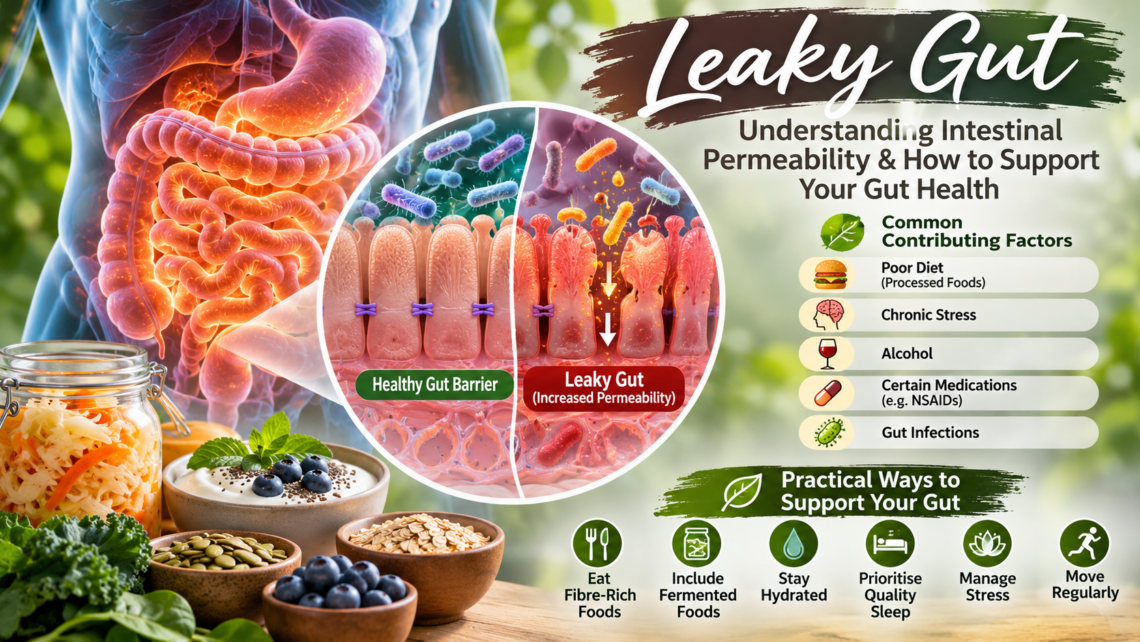
Leaky Gut: Understanding Intestinal Permeability & How to Support Your Gut Health
Table of Contents
Your gut does far more than digest food. It plays an important role in nutrient absorption, immune function and maintaining the body’s natural protective barriers. But what happens when this protective barrier becomes compromised?
Gut health has become an increasingly popular topic in the world of holistic wellbeing, and one term that frequently appears in these discussions is Leaky Gut.
Also known as increased intestinal permeability, this concept relates to the integrity of the intestinal lining and its ability to regulate what passes from the digestive tract into the bloodstream.
Let’s explore what leaky gut means, what science tells us, potential contributing factors and practical ways to support a healthier digestive system.
What is Leaky Gut? | GutDr Mini-Explainer
1. What Is Leaky Gut?
Your intestines are lined with a specialised layer of cells that form a protective barrier between the contents of your digestive tract and the rest of your body.
This barrier has several important responsibilities:
- Absorbing nutrients, vitamins, minerals and water.
- Helping prevent unwanted microorganisms and substances from crossing into the body.
- Supporting normal immune system activity.
- Maintaining a healthy relationship between the gut and its resident microorganisms.
The cells lining the intestinal wall are connected by structures called tight junctions. These junctions help regulate the movement of substances between neighbouring cells.
When intestinal barrier function becomes impaired, permeability can increase, allowing substances to pass through the intestinal lining more easily than normal.
This phenomenon is known as increased intestinal permeability.
It is important to understand that intestinal permeability is a recognised biological process. However, “Leaky Gut Syndrome” is not currently recognised as a standalone medical diagnosis, and researchers are still investigating its role in different health conditions.
2. What Can Contribute to Increased Intestinal Permeability?
The integrity of the intestinal barrier can be influenced by several factors.
Some recognised contributors include:
Chronic intestinal inflammation
Conditions such as Crohn’s disease and ulcerative colitis can damage the intestinal lining and affect normal barrier function.
Poor dietary patterns
Diets consistently low in fibre and high in heavily processed foods may negatively influence the gut microbiome and overall digestive health.
Alcohol consumption
Excessive alcohol consumption can affect the intestinal lining, alter gut bacteria and contribute to inflammation.
Certain medications
Some medications, particularly non-steroidal anti-inflammatory drugs (NSAIDs), can affect the gastrointestinal tract and intestinal barrier.
Gastrointestinal infections
Certain bacterial and viral infections can temporarily disrupt the normal protective function of the intestinal lining.
Chronic stress
Stress can influence digestion, gut motility, immune signalling and communication between the brain and digestive system. The relationship between stress and intestinal barrier function is an active area of research.
These factors do not automatically mean someone has increased intestinal permeability, but they highlight why maintaining digestive health is important.
3. Possible Signs of Digestive Dysfunction
People who are concerned about their gut health frequently report symptoms such as:
- Persistent bloating and abdominal distension.
- Excessive gas and belching.
- Changes in bowel movements.
- Diarrhoea or constipation.
- Abdominal discomfort.
- Indigestion.
- Food-related digestive symptoms.
Other complaints, such as fatigue, headaches and brain fog, are sometimes attributed to leaky gut.
However, these symptoms are not specific to intestinal permeability and can have many different causes.
Persistent digestive symptoms should not automatically be labelled as leaky gut. Conditions such as irritable bowel syndrome, coeliac disease, food intolerances and inflammatory bowel disease may need to be investigated.
4. The Gut Microbiome: Your Internal Ecosystem
Your digestive tract is home to trillions of microorganisms, collectively known as the gut microbiome.
These include bacteria and other microorganisms that interact with your digestive system in numerous ways.
A healthy and diverse gut microbiome contributes to:
- Normal digestion.
- Fermentation of dietary fibre.
- Production of beneficial short-chain fatty acids.
- Support for the intestinal lining.
- Normal immune system regulation.
- Protection against certain harmful microorganisms.
One particularly important group of substances produced when beneficial gut bacteria ferment dietary fibre is short-chain fatty acids (SCFAs).
Butyrate, for example, is an important energy source for cells lining the colon and is involved in maintaining intestinal barrier function.
This is one reason why dietary fibre is such an important part of a gut-friendly eating pattern.
5. How Can You Support Your Gut Health Naturally?
Although there is no universally proven treatment or supplement protocol for so-called leaky gut syndrome, there are several evidence-informed ways to support normal digestive and intestinal health.
A. Eat More Fibre-Rich Foods
Dietary fibre provides nourishment for beneficial gut microorganisms.
Consider incorporating:
- Oats.
- Apples and pears.
- Bananas.
- Lentils and beans.
- Broccoli and carrots.
- Spinach and leafy greens.
- Whole grains.
- Seeds and nuts.
Increase fibre gradually, particularly if you are prone to bloating, and drink sufficient water.
B. Include Fermented Foods
Fermented foods can provide live microorganisms and other compounds that may support gut health.
Examples include:
- Plain yoghurt containing live cultures.
- Kefir.
- Sauerkraut.
- Kimchi.
- Other traditionally fermented vegetables.
Not every fermented food contains live cultures, and individual tolerance varies.
C. Reduce Excessive Alcohol and Highly Processed Foods
Excessive alcohol consumption and diets dominated by highly processed foods can negatively influence digestive health.
Try to prioritise whole, minimally processed foods and moderate alcohol consumption.
You do not need to follow an extremely restrictive diet to support your gut.
D. Stay Hydrated
Water supports normal digestion, helps maintain stool consistency and assists the movement of waste through the digestive tract.
Aim to drink water regularly throughout the day, adjusting your intake according to activity, climate and individual needs.
E. Prioritise Quality Sleep
Sleep and digestive health are closely connected through the body’s circadian rhythms and gut-brain communication.
Establish a consistent sleeping routine, reduce excessive screen exposure before bedtime and create a relaxing sleeping environment.
F. Manage Everyday Stress
The gut and brain communicate through a complex network involving nerves, hormones, immune signalling and microbial activity.
Consider incorporating:
- Gentle breathing exercises.
- Mindfulness.
- Meditation.
- Walking outdoors.
- Gentle stretching.
- Time for relaxation.
Even small daily changes can help support a healthier relationship between stress and digestion.
G. Move Your Body
Regular physical activity supports digestive motility, metabolic health and overall wellbeing.
Walking, cycling, swimming and gentle resistance exercises are all worthwhile options.
You do not need an intense exercise routine. Consistency is more important than intensity.
6. Supplements and Gut Health
The supplement industry offers numerous products marketed for intestinal repair and leaky gut support.
Some commonly discussed ingredients include:
L-Glutamine
An amino acid used by intestinal cells as an energy source. It has been investigated for its potential role in intestinal barrier function, although evidence for treating a generalised leaky gut syndrome remains insufficient.
Zinc
Zinc is an essential mineral involved in immune function, cellular growth and tissue repair. Adequate zinc intake is important for maintaining normal intestinal function. Supplementation is most useful when dietary intake is insufficient or a deficiency has been identified.
Omega-3 Fatty Acids
Found in oily fish, flaxseeds, chia seeds and walnuts, omega-3 fatty acids are involved in normal inflammatory regulation. Their potential benefits for intestinal barrier health are still being investigated.
Probiotics
Probiotics are live microorganisms that may provide health benefits when consumed in adequate amounts. Different strains have different effects, and benefits are condition-specific. Not every probiotic supplement is appropriate for every digestive complaint.
Prebiotics
Prebiotics are substances, often specific types of dietary fibre, that beneficial microorganisms can use as nourishment. Examples include inulin and certain resistant starches.
Food sources include onions, garlic, asparagus, oats and legumes.
Collagen
Collagen supplements contain amino acids that contribute to the body’s normal protein structures. Although collagen is marketed for gut lining support, there is currently insufficient clinical evidence to establish it as a treatment for increased intestinal permeability.
An Important Note About Supplements
More supplements do not necessarily mean better gut health.
Some products can cause bloating, diarrhoea, constipation or other unwanted effects. High doses of certain nutrients can also be harmful.
It is best to identify potential nutritional deficiencies and underlying digestive conditions before starting a supplement programme. Consult a qualified healthcare professional, particularly if you take medication or have an existing medical condition.
7. Can You Test for Leaky Gut?
This is an area where it is important to distinguish between scientific research and commercially marketed wellness testing.
Researchers have developed methods for studying intestinal permeability, including:
- Lactulose-mannitol testing: Measures the urinary recovery of two different sugars after ingestion to investigate intestinal permeability.
- Intestinal biopsies: Tissue samples can be examined to investigate inflammation and structural changes in the intestinal lining.
- Specialised laboratory markers: Certain biomarkers are being investigated for their potential relationship with intestinal barrier function.
However, there is currently no universally validated, standard clinical test that can diagnose a generalised condition called Leaky Gut Syndrome.
Commercial tests measuring substances such as zonulin are sometimes marketed as definitive leaky gut tests, but their clinical reliability and usefulness remain questionable.
A healthcare professional may instead recommend investigations for underlying conditions, depending on your symptoms. These could include blood tests, stool tests or endoscopic investigations.
The goal should be to identify the cause of digestive problems rather than simply attach a leaky gut label to them. Cleveland Clinic+2
8. The Gut-Brain Connection: Why Stress Matters
Your digestive system and nervous system are in constant communication through what is commonly known as the gut-brain axis.
This communication network involves:
- The vagus nerve.
- The autonomic nervous system.
- Hormonal signalling.
- Immune system activity.
- Gut microorganisms and their metabolic products.
Stress can influence digestive function in several ways.
For example, prolonged stress may affect:
- Gut motility and bowel regularity.
- Digestive secretions.
- Intestinal sensitivity.
- The composition of the gut microbiome.
- Communication between intestinal cells and the immune system.
This helps explain why some people experience digestive discomfort during stressful periods.
It also highlights why gut health should not be approached exclusively through diet and supplementation.
Supporting your nervous system through relaxation, breathing exercises, adequate sleep and regular physical activity can form part of a broader digestive wellbeing strategy.
From a holistic wellbeing perspective, the gut-brain relationship is a reminder that physical, emotional and lifestyle factors are interconnected.
9. Common Myths About Leaky Gut
There is considerable information circulating online about intestinal permeability. Unfortunately, not all of it is supported by scientific evidence.
Let’s look at a few common misconceptions.
Myth 1: Everyone with bloating has leaky gut.
Bloating is a common digestive complaint with numerous possible causes, including constipation, food intolerances, IBS and changes in gut motility.
Myth 2: Gluten causes leaky gut in everyone.
Gluten is a problem for people with certain conditions, particularly coeliac disease. However, there is no justification for everyone to eliminate gluten in an attempt to repair their intestinal lining.
Myth 3: A leaky gut detox can repair the intestinal lining.
There is no established scientific evidence that commercial detox programmes can repair intestinal permeability. Some restrictive detox programmes may actually result in inadequate nutrient intake.
Myth 4: Expensive supplements are necessary to heal your gut.
A balanced diet, appropriate medical treatment where necessary and healthy lifestyle habits are more important than purchasing numerous supplements.
Myth 5: Leaky gut is responsible for every unexplained health problem.
Although intestinal barrier dysfunction is being investigated in several health conditions, it does not mean that increased intestinal permeability is the underlying cause of every symptom or illness.
A balanced approach means remaining open to emerging research without accepting unsupported health claims.
10. When Should You Seek Medical Advice?
Digestive symptoms should not be ignored, particularly when they persist, worsen or interfere with everyday life.
Consider seeking medical assessment if you experience:
- Persistent or unexplained abdominal pain.
- Frequent diarrhoea or constipation.
- Ongoing bloating and digestive discomfort.
- Unexplained weight loss.
- Persistent fatigue.
- Recurrent vomiting.
- Changes in bowel habits that do not resolve.
Certain symptoms require more urgent medical attention, including:
- Blood in your stools.
- Black, tarry stools.
- Severe or worsening abdominal pain.
- Vomiting blood.
- Signs of dehydration.
- Unexplained significant weight loss.
These symptoms can indicate conditions requiring medical investigation.
Remember that conditions such as coeliac disease, inflammatory bowel disease and other gastrointestinal disorders can produce symptoms that overlap with those commonly attributed to leaky gut.
If coeliac disease is suspected, do not eliminate gluten before testing, as doing so can affect the accuracy of diagnostic results. NIDDK+2
11. Building a Healthier Relationship With Your Gut
Supporting your digestive system does not have to involve complicated protocols, expensive supplements or restrictive diets.
Start with the fundamentals:
- Eat a varied diet containing sufficient fibre.
- Include different plant-based foods throughout the week.
- Stay adequately hydrated.
- Get consistent, quality sleep.
- Find healthy ways to manage everyday stress.
- Incorporate regular movement into your routine.
- Avoid excessive alcohol consumption.
- Investigate persistent digestive symptoms rather than self-diagnosing.
Small, consistent lifestyle changes can contribute to better digestive health over time.
Remember that everyone’s digestive system is different. What works well for one person may not necessarily work for another.
Final Thoughts: Your Gut Health Is Part of Your Overall Wellbeing
Your intestinal lining is much more than a digestive surface. It is a sophisticated protective barrier that interacts with your immune system, nervous system and gut microbiome.
Although the term Leaky Gut is sometimes used rather loosely, increased intestinal permeability is a genuine area of scientific research.
Understanding the difference between established science and emerging theories allows us to make better decisions about our health.
Rather than searching for a miracle supplement or an overnight solution, focus on supporting the foundations of digestive wellbeing: nutrition, hydration, movement, sleep and stress management.
Your gut health is not isolated from the rest of your body. It is an important part of the bigger picture of wellbeing.
At VitalPulse, we believe in exploring wellbeing through a balanced approach that considers the relationship between the body, mind and everyday lifestyle.
Reconnect. Reflect. Realign.
Explore Your Wellbeing.
Disclaimer
This article is intended for general educational and informational purposes only. It does not constitute medical advice, diagnosis or treatment. The information presented should not replace consultation with a qualified healthcare professional. Increased intestinal permeability is a recognised physiological phenomenon, but Leaky Gut Syndrome is not currently an established standalone medical diagnosis. Always seek appropriate medical advice for persistent or concerning digestive symptoms.
References and Further Reading
The following resources provide additional scientific and medical information: