Geopathic Stress: Could Your Living Environment Be Affecting Your Physical Wellbeing?
Exploring the relationship between the Earth, our surroundings and the body’s ability to maintain balance.
Table of Contents
Introduction
Have you ever walked into a room and immediately felt uncomfortable? Perhaps you struggle to sleep in a particular bedroom, experience unexplained restlessness at home, or simply feel more relaxed and energised when spending time somewhere else.
Our surroundings influence us in more ways than we sometimes realise. Factors such as noise, lighting, air quality, temperature, environmental chemicals and electromagnetic fields can all play a role in our comfort, sleep and general wellbeing.
Within complementary and holistic health circles, another concept often discussed is Geopathic Stress.
But what exactly is geopathic stress? How is it believed to affect the human body, and is there a connection between the environment and our physical health?
Let’s explore the concept.
What Is Geopathic Stress?
The term geopathic stress comes from two words:
- Geo: Relating to the Earth.
- Pathic: Relating to suffering or disease.
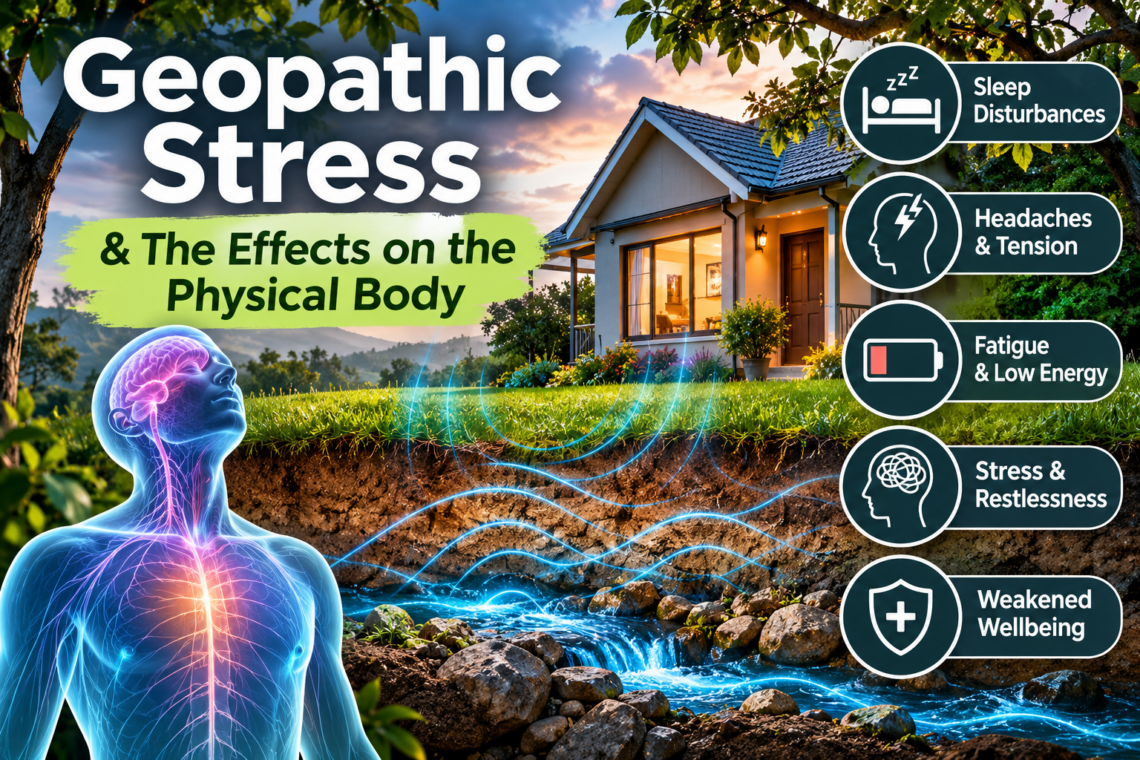
Geopathic stress is a concept found in certain complementary and alternative health traditions. It suggests that natural features beneath the Earth’s surface may create environmental disturbances that could influence the wellbeing of people living or sleeping above them.
These disturbances are traditionally associated with:
- Underground water streams.
- Geological fault lines.
- Certain mineral deposits.
- Underground geological formations.
- Natural variations in the Earth’s electromagnetic environment.
According to this perspective, prolonged exposure to certain locations may interfere with the body’s natural balance, particularly when a person spends many hours sleeping or resting in one place.
It is important to understand that geopathic stress remains an unproven hypothesis. There is currently no reliable scientific evidence establishing that underground water veins or geological fault lines produce harmful energy patterns that cause illness in humans.
Nevertheless, the broader question of how our physical environment influences our health is an important one.
How Could Environmental Stress Affect the Physical Body?
Our bodies are constantly interacting with the surrounding environment.
The nervous system, endocrine system and immune system all respond to environmental information. Temperature, light exposure, sound, air quality and psychological stress can influence how we feel and function.
From a holistic perspective, geopathic stress is sometimes proposed as another potential environmental stressor.
Practitioners who work with this concept commonly associate it with the following experiences.
1. Sleep Disturbances and Fatigue
One of the most frequently reported concerns associated with geopathic stress is disrupted sleep.
People sometimes report:
- Difficulty falling asleep.
- Waking up repeatedly during the night.
- Feeling unrefreshed in the morning.
- Persistent tiredness.
- Restlessness during sleep.
However, these symptoms have many established possible explanations, including stress, sleep disorders, uncomfortable sleeping conditions, medication effects and environmental disturbances such as noise and excessive light.
Read more about sleep and its importance to physical health.
2. Nervous System Stress
The nervous system helps regulate our body’s response to internal and external demands.
Prolonged exposure to uncomfortable environmental conditions can contribute to stress responses, potentially influencing:
- Muscle tension.
- Irritability.
- Difficulty concentrating.
- Feelings of restlessness.
- Reduced relaxation.
Some geopathic stress theories suggest that environmental energy disturbances may place additional demands on the nervous system. This particular mechanism, however, has not been scientifically demonstrated.
3. Headaches and Physical Discomfort
Some individuals associate geopathic stress with recurring headaches, muscle tension and general physical discomfort.
While these experiences are real, there is no established evidence that geopathic zones cause them.
It is worth investigating more familiar environmental contributors, including poor ventilation, dehydration, excessive screen exposure, lighting, noise and indoor air quality.
4. General Wellbeing and Energy Levels
In holistic health discussions, prolonged exposure to geopathic stress is sometimes associated with feeling depleted, unbalanced or generally uncomfortable.
The body relies on a combination of good sleep, adequate nutrition, physical activity, recovery and a supportive environment to maintain normal functioning.
When these foundations are disrupted, our overall quality of life can suffer.
The Relationship Between the Earth and the Human Body
The human body is an electrical and biochemical system.
The heart produces measurable electrical activity, the brain communicates through electrical impulses, and cells maintain electrical gradients across their membranes.
The Earth also has natural electromagnetic fields.
Scientists study these interactions through disciplines such as biophysics, environmental health and geophysics.
However, the existence of natural electromagnetic fields does not automatically mean that every environmental frequency has a harmful effect on the human body.
It is important to distinguish between established scientific observations and theories that have not yet been adequately demonstrated.
For further information, explore the World Health Organization’s research on electromagnetic fields.
Understanding this distinction allows us to remain open-minded while making informed decisions about our wellbeing.
How Is Geopathic Stress Assessed in Holistic Health?
Within complementary and alternative health practices, various methods are used to explore suspected geopathic stress.
These may include:
Dowsing and L-Rods
Some practitioners use rods or pendulums to identify suspected underground water streams, geological disturbances or energetic patterns.
Geopathic Stress Detection Devices
Certain devices claim to measure or identify environmental energetic disturbances.
Bioresonance and NLS Systems
Some bioresonance and NLS (Non-Linear System) practitioners use specialised software and equipment to explore energetic patterns and concepts relating to environmental influences.
These methods form part of complementary wellness practices. They have not been scientifically validated as reliable ways of detecting geopathic stress or diagnosing environmental health problems.
At VitalPulse, such approaches should be viewed as exploratory wellness tools rather than medical diagnostic methods.
Practical Ways to Create a Healthier Living Environment
Regardless of whether you subscribe to the concept of geopathic stress, creating a supportive home environment is one of the simplest ways to promote everyday wellbeing.
Here are some practical steps worth considering.
1. Evaluate Your Sleeping Environment
Your bedroom should be a place of rest and recovery.
- Keep your sleeping area clean and uncluttered.
- Ensure your mattress and pillow provide adequate support.
- Reduce unnecessary noise and artificial light.
- Maintain comfortable room temperatures.
- Allow fresh air to circulate where possible.
2. Improve Indoor Air Quality
Poor indoor air quality can contribute to headaches, respiratory irritation, fatigue and general discomfort.
Consider:
- Regularly ventilating your home.
- Addressing dampness and mould.
- Reducing excessive dust.
- Avoiding unnecessary chemical fragrances.
- Ensuring adequate ventilation when using household cleaning products.
For more information, visit the US Environmental Protection Agency’s Indoor Air Quality resource.
3. Be Mindful of Your Electromagnetic Environment
Electromagnetic fields (EMFs) are naturally present in our environment and are also generated by electrical appliances, mobile phones, Wi-Fi routers and other technologies.
The World Health Organization continues to assess the potential health effects of electromagnetic field exposure. Current evidence does not establish that typical low-level household exposure causes the nonspecific symptoms sometimes attributed to it.
If you prefer a simpler bedroom environment, you can switch off unnecessary electronic devices and keep your phone away from your pillow.
4. Spend Time in Nature
Nature can offer an opportunity to slow down, relax and reconnect with your surroundings.
Consider:
- Walking barefoot on grass if it is safe and comfortable.
- Spending time in natural sunlight during the day.
- Gardening.
- Walking in parks or natural surroundings.
- Practising mindfulness outdoors.
These activities can support relaxation and help establish healthier daily routines.
5. Pay Attention to How Your Environment Makes You Feel
Notice whether particular rooms or environments affect your comfort, concentration or ability to relax.
If you consistently experience discomfort in a particular location, investigate practical environmental factors such as ventilation, temperature, noise, lighting, dampness and possible sources of chemical exposure.
You do not need to assume that an invisible energetic disturbance is responsible.
Where Does Bioresonance Fit Into the Picture?
Within complementary wellness, bioresonance and NLS technology are sometimes used by practitioners to explore energetic patterns and concepts relating to environmental influences.
Some practitioners incorporate these approaches into broader discussions about environmental stress, energetic balance and general wellbeing.
At VitalPulse, we recognise the interest in exploring the relationship between the human body and its environment.
However, it is important to distinguish between exploratory wellness practices and scientifically validated environmental measurements.
NLS and bioresonance systems have not been established as reliable instruments for detecting geopathic stress, measuring underground energy disturbances or diagnosing physical illness.
For concerns about actual environmental hazards, appropriate professional testing and assessment remain the preferred approach.
The VitalPulse Perspective: Creating Balance Between You and Your Environment
At VitalPulse, we believe wellbeing is influenced by many interconnected factors.
Our physical surroundings, daily habits, emotional wellbeing, nutrition, sleep and stress-management practices all contribute to the bigger picture.
Whether you approach geopathic stress from a complementary perspective or simply want to understand how your home environment influences your quality of life, the starting point remains the same:
Become more aware of your surroundings. Listen to your body. Create an environment that supports rest, recovery and balance.
You cannot always control everything happening around you, but you can take meaningful steps towards creating a healthier and more supportive space.
Sometimes, improving your wellbeing starts with changing the environment in which you spend most of your time.
A Final Thought
Could the environment in which you spend eight hours sleeping be just as important as the lifestyle choices you make during the other sixteen hours of your day?
It is a question worth exploring.
Reconnect. Reflect. Realign.
VitalPulse – Explore Your Wellbeing.
Curious About NLS Bioresonance Scanning?
What if you could explore your body’s energetic patterns from a different perspective?
At VitalPulse, we invite you to discover NLS (Non-Linear System) Bioresonance Scanning – an alternative wellness exploration approach designed to provide insights into energetic patterns and potential areas of imbalance within the body’s systems.
Whether you’re interested in understanding your wellbeing more deeply, exploring the body’s interconnected systems, or simply curious about complementary approaches to wellness, an NLS scan offers an opportunity to explore a different perspective.
Why not experience it for yourself?
✨ Explore your body’s energetic patterns.
✨ Discover a different perspective on your overall wellbeing.
✨ Identify areas you may wish to explore further as part of your personal wellness journey.
🎁 Take the First Step – Explore NLS Bioresonance!
👉 EXPLORE NLS BIORESONANCE SCANNING
VitalPulse – Explore Your Wellbeing.
Reconnect. Reflect. Realign.
Please note: NLS Bioresonance scanning is offered as a complementary wellness exploration service. It is not a medically validated diagnostic tool and does not diagnose, treat, cure or prevent disease. It is not a substitute for professional medical advice, diagnosis or treatment.
Further Reading
If you would like to explore the scientific and environmental aspects of this topic further, here are some useful resources:
- World Health Organization – Electromagnetic Fields
- National Heart, Lung, and Blood Institute – Sleep
- US Environmental Protection Agency – Indoor Air Quality
- PubMed – Biomedical Evidence of Influence of Geopathic Zones
Disclaimer: This article is intended for educational and general wellness purposes only. Geopathic stress is a proposed concept within complementary health practices and is not an established medical diagnosis. The health effects attributed to geopathic stress have not been scientifically established. Bioresonance and NLS assessments are not substitutes for medical diagnosis, environmental testing or professional healthcare. Always consult an appropriately qualified healthcare professional about persistent or unexplained symptoms.


You May Also Like

Candida: Understanding Yeast Overgrowth, Gut Health & Microbial Balance
Vascular Headaches in Myalgic Encephalomyelitis (ME): Understanding Blood Flow, Brain Function and Head Pain