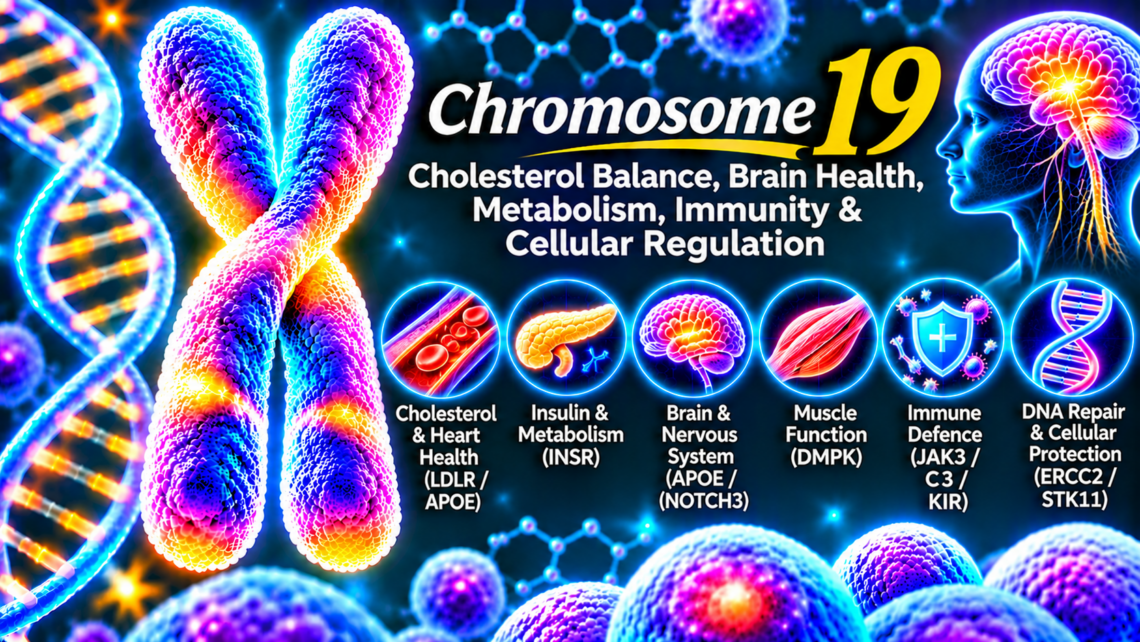
Chromosome 19 – The Genetic Blueprint of Cholesterol Balance, Brain Health, Metabolism, Immunity & Cellular Regulation
Explore the genes that help regulate cholesterol, insulin, brain function, muscle activity, immune defence and cellular health.
Introduction: Why Is Chromosome 19 So Important?
Chromosome 19 is one of the most genetically concentrated chromosomes in the human genome. Although relatively small, it contains an extraordinary collection of genes involved in cholesterol transport, insulin signalling, neurological function, muscle activity, immune defence and cellular regulation.
Some of its genes influence how the body processes fats and sugars. Others help regulate blood vessels, protect against infection, maintain muscle function and control how cells grow and communicate.
One particularly fascinating feature of Chromosome 19 is its unusually high gene density. It demonstrates how a relatively compact section of DNA can contain a remarkable amount of biological information.
In this article, we explore the structure of Chromosome 19, its important genes, associated genetic conditions, connections to different body systems and its potential significance from a broader holistic wellbeing perspective.
1. Understanding Chromosome 19
Humans normally have 46 chromosomes arranged into 23 pairs. We inherit one copy of each chromosome from our mother and one from our father.
Chromosome 19 is an autosome, meaning it is not one of the sex chromosomes. It contains approximately 59 million DNA base pairs and represents almost 2% of the DNA found in human cells.
It is estimated to contain approximately 1,500 protein-coding genes, although gene counts can vary depending on the reference genome and annotation methods used.
What makes Chromosome 19 unusual?
Chromosome 19 has the highest gene density of all human chromosomes. Its gene concentration is more than twice the average across the genome.
It also contains numerous clusters of related genes, including large families of zinc-finger genes and genes involved in immune recognition.
These characteristics make Chromosome 19 particularly interesting to researchers studying genetic regulation, evolution, immune function and human disease.
2. Important Genes Found on Chromosome 19
Chromosome 19 contains many genes with important biological functions. The following examples illustrate its involvement in several major body systems.
| Gene | Main biological function | Associated condition or relevance |
|---|---|---|
| APOE | Lipid transport and cholesterol metabolism | Alzheimer’s disease risk and lipid disorders |
| LDLR | Removes LDL cholesterol from the bloodstream | Familial hypercholesterolaemia |
| INSR | Insulin receptor and glucose regulation | Severe insulin resistance syndromes |
| NOTCH3 | Blood vessel structure and cellular signalling | CADASIL |
| DMPK | Muscle-cell function and intracellular signalling | Myotonic dystrophy type 1 |
| STK11 | Cellular energy sensing and tumour suppression | Peutz-Jeghers syndrome |
| JAK3 | Immune-cell signalling | Severe combined immunodeficiency |
| ERCC2 | DNA repair and transcription | Xeroderma pigmentosum and related disorders |
| C3 | Complement system and immune defence | Complement-related immune disorders |
| KIR gene family | Regulation of natural killer cells | Variation in immune recognition |
These genes do not work independently. They form part of complex biological networks that communicate with genes on other chromosomes and respond to signals from the surrounding cellular environment.
3. Exploring the Major Genes of Chromosome 19
3.1 APOE – Cholesterol Transport and Brain Health
The APOE gene provides instructions for producing apolipoprotein E, a protein involved in transporting cholesterol and other lipids throughout the body.
Apolipoprotein E helps move fats between cells and supports the maintenance of cell membranes and nervous system structures.
It is particularly important in the brain, where cholesterol is needed for neuronal function, cell membranes and myelin.
APOE has three common forms, known as:
- APOE ε2
- APOE ε3
- APOE ε4
These variants can influence lipid metabolism and are associated with differences in the risk of developing certain conditions.
The APOE ε4 variant is associated with an increased risk of late-onset Alzheimer’s disease, but it does not mean that someone carrying this variant will necessarily develop the condition.
Biological connections:
- Cholesterol transport
- Brain and nervous system function
- Cell membrane maintenance
- Lipid metabolism
- Neuronal health
3.2 LDLR – Cholesterol Regulation
The LDLR gene provides instructions for making the low-density lipoprotein receptor.
These receptors are found on the surface of cells, particularly liver cells, where they help remove LDL particles from the bloodstream.
LDL cholesterol is sometimes called bad cholesterol because elevated levels can contribute to plaque accumulation in arteries.
The LDLR gene plays an important role in maintaining healthy blood cholesterol levels.
Certain inherited LDLR variants reduce the number or function of LDL receptors, resulting in familial hypercholesterolaemia.
This inherited condition can cause significantly elevated LDL cholesterol and increase the risk of premature cardiovascular disease.
Biological connections:
- Liver function
- Cholesterol regulation
- Lipid transport
- Cardiovascular health
- Cellular receptor activity
3.3 INSR – Insulin Signalling and Glucose Regulation
The INSR gene provides instructions for producing the insulin receptor.
Insulin is a hormone produced by the pancreas that helps regulate blood glucose levels.
When insulin binds to its receptor, it activates a series of intracellular signalling processes that help cells respond to insulin.
This is particularly important for glucose uptake, metabolism and energy regulation.
Certain pathogenic variants in INSR can cause severe insulin resistance syndromes, including rare inherited conditions affecting the body’s ability to respond to insulin.
Biological connections:
- Pancreatic hormone signalling
- Blood glucose regulation
- Cellular energy metabolism
- Insulin sensitivity
- Metabolic health
3.4 NOTCH3 – Blood Vessels and Neurological Health
The NOTCH3 gene provides instructions for producing a receptor involved in cellular communication and development.
It is particularly important in vascular smooth muscle cells, which help regulate the structure and function of blood vessels.
NOTCH3 is associated with CADASIL, a hereditary condition affecting small blood vessels in the brain.
CADASIL stands for cerebral autosomal dominant arteriopathy with subcortical infarcts and leukoencephalopathy.
It can cause recurrent strokes, migraine with aura, cognitive difficulties and changes in mood.
Biological connections:
- Blood vessel structure
- Cerebral circulation
- Vascular smooth muscle
- Cellular communication
- Neurological function
3.5 DMPK – Muscle Function and Cellular Communication
The DMPK gene provides instructions for producing myotonic dystrophy protein kinase.
This protein is involved in cellular signalling and is particularly relevant to muscle function.
A specific type of genetic change involving an expanded CTG repeat in the DMPK gene causes myotonic dystrophy type 1.
This condition can affect several body systems, including:
- Skeletal muscles
- Heart muscle and electrical conduction
- Respiratory muscles
- Eyes
- Endocrine function
- Nervous system function
Myotonic dystrophy type 1 can cause progressive muscle weakness and myotonia, which is difficulty relaxing muscles after contraction.
Biological connections:
- Skeletal muscle function
- Muscle relaxation
- Cardiac function
- Cellular signalling
- Neuromuscular communication
3.6 STK11 – Cellular Energy Regulation and Tumour Suppression
The STK11 gene, also known as LKB1, provides instructions for producing an enzyme involved in regulating cellular metabolism and growth.
One of its important functions is activating AMPK-related signalling pathways.
AMPK acts as a cellular energy sensor, helping cells respond when energy availability changes.
STK11 also plays a role in controlling cell growth and maintaining normal cellular behaviour.
Inherited pathogenic variants in STK11 cause Peutz-Jeghers syndrome, a condition associated with characteristic pigmentation and gastrointestinal polyps, as well as increased risks of certain cancers.
Biological connections:
- Cellular energy sensing
- Metabolic regulation
- Cell growth control
- Tumour suppression
- Digestive system health
3.7 JAK3 – Immune System Communication
The JAK3 gene provides instructions for producing Janus kinase 3, an enzyme involved in signalling pathways used by several immune-system cytokines.
Cytokines are signalling molecules that help coordinate immune-cell development, communication and activity.
JAK3 is particularly important for the development and function of certain lymphocytes.
Pathogenic variants affecting both copies of JAK3 can cause a form of severe combined immunodeficiency.
This condition can severely compromise the body’s ability to fight infections.
Biological connections:
- Lymphocyte development
- Immune signalling
- Cytokine communication
- T-cell and natural killer cell function
- Immune defence
3.8 ERCC2 – DNA Repair and Cellular Protection
The ERCC2 gene, also known as XPD, provides instructions for producing a protein involved in nucleotide excision repair.
This repair process helps cells identify and remove certain forms of DNA damage, including damage caused by ultraviolet radiation.
ERCC2 also forms part of the TFIIH complex, which participates in transcription and DNA repair.
Different pathogenic variants in ERCC2 can cause several rare inherited disorders, including certain forms of xeroderma pigmentosum, Cockayne syndrome and trichothiodystrophy.
These conditions demonstrate how important accurate DNA repair and gene transcription are for normal cellular function.
Biological connections:
- DNA repair
- Genetic stability
- Cellular protection
- Response to ultraviolet damage
- Gene transcription
3.9 C3 – The Complement System and Immune Defence
The C3 gene provides instructions for producing complement component 3.
C3 is a central protein in the complement system, an important part of the innate immune response.
The complement system helps the body identify and eliminate pathogens, supports inflammation and assists immune cells in recognising unwanted material.
C3 is involved in all three major complement activation pathways:
- Classical pathway
- Lectin pathway
- Alternative pathway
When these pathways are activated, C3 contributes to the marking and removal of microorganisms and damaged cellular material.
Inherited deficiencies or dysfunction involving C3 can cause serious susceptibility to certain infections and may affect immune regulation.
Biological connections:
- Innate immunity
- Inflammation
- Pathogen recognition
- Immune-cell communication
- Complement activation
3.10 KIR Gene Family – Natural Killer Cells and Immune Recognition
Chromosome 19 contains an important cluster of genes known as the killer cell immunoglobulin-like receptor family.
These genes are commonly referred to as KIR genes.
KIR proteins are found on certain immune cells, particularly natural killer cells.
Natural killer cells help identify and respond to infected or abnormal cells.
KIR receptors interact with human leukocyte antigen class I molecules, which are encoded primarily within the Major Histocompatibility Complex on Chromosome 6.
This creates an important relationship between Chromosome 19 and Chromosome 6 in the regulation of immune recognition.
The KIR gene cluster is highly variable between individuals, and this genetic diversity contributes to differences in immune regulation.
Biological connections:
- Natural killer cell activity
- Immune recognition
- Cellular surveillance
- Interaction with HLA molecules
- Immune regulation
4. Chromosome 19 and the Major Body Systems
The genes found on Chromosome 19 contribute to several interconnected biological systems.
| Body system | Important genes | Biological contribution |
|---|---|---|
| Cardiovascular | LDLR, APOE, NOTCH3 | Cholesterol transport, vascular structure and circulation |
| Nervous system | APOE, NOTCH3, DMPK | Lipid transport, vascular support and neuromuscular function |
| Endocrine | INSR, STK11 | Insulin signalling and metabolic regulation |
| Digestive | STK11, APOE | Cellular regulation and lipid metabolism |
| Immune | JAK3, C3, KIR | Immune-cell development and pathogen defence |
| Musculoskeletal | DMPK | Muscle function and relaxation |
| Cellular protection | ERCC2, STK11 | DNA repair and regulation of cell growth |
| Metabolic | APOE, LDLR, INSR, STK11 | Lipid, glucose and energy regulation |
These connections highlight an important principle: the body’s systems do not function independently.
For example, cholesterol metabolism influences the availability of lipids required by the nervous system. Insulin signalling affects how cells use energy. Immune communication depends on coordinated interactions between multiple genes and proteins.
Chromosome 19 contributes to several of these processes simultaneously.
5. Genetic Conditions Associated with Chromosome 19
Changes involving individual genes or larger sections of Chromosome 19 can contribute to a variety of inherited conditions.
Some examples include:
| Condition | Associated gene or chromosome change | General description |
|---|---|---|
| Familial hypercholesterolaemia | LDLR | Inherited elevation of LDL cholesterol |
| Alzheimer’s disease susceptibility | APOE | APOE variants influence disease risk |
| CADASIL | NOTCH3 | Inherited small-vessel disease affecting the brain |
| Myotonic dystrophy type 1 | DMPK | Progressive multisystem muscle disorder |
| Peutz-Jeghers syndrome | STK11 | Gastrointestinal polyps and increased cancer risk |
| Severe combined immunodeficiency | JAK3 | Impaired immune-system development |
| Xeroderma pigmentosum | ERCC2 and other genes | Impaired repair of certain forms of DNA damage |
| 19p13.13 deletion syndrome | Chromosomal deletion | Developmental and growth-related features |
| Other partial chromosome 19 abnormalities | Deletions, duplications or rearrangements | Variable developmental and physical effects |
Chromosome 19 and cancer
Chromosome 19 contains genes involved in cell growth, DNA repair and tumour suppression.
Changes affecting these genes can contribute to cancer development.
Chromosome 19 rearrangements have also been identified in certain blood cancers, including some forms of acute lymphoblastic leukaemia.
It is important to distinguish between inherited genetic conditions and acquired changes that develop in particular cells during a person’s lifetime. A chromosome rearrangement found in cancer cells does not automatically mean that the person inherited that rearrangement.
6. Chromosome 19 and Epigenetics
Epigenetics describes processes that influence how genes are used without changing the underlying DNA sequence.
These mechanisms help cells determine which genes should be active, when they should be active and how strongly they should be expressed.
Important epigenetic mechanisms include:
- DNA methylation
- Histone modification
- Chromatin remodelling
- Non-coding RNA regulation
Chromosome 19 contains many genes involved in transcriptional regulation, including extensive clusters of zinc-finger genes.
Zinc-finger proteins can interact with DNA and influence gene expression. Many members of the KRAB zinc-finger family are involved in regulating genomic activity, including the control of repetitive genetic elements.
This makes Chromosome 19 particularly interesting in research exploring how the genome maintains its organisation and regulates gene activity.
Epigenetic regulation is complex and varies between tissues and throughout life. It should not be interpreted as a simple mechanism through which lifestyle choices can selectively switch individual disease-related genes on or off.
7. Chromosome 19 from a Holistic Wellbeing Perspective
At VitalPulse, we explore wellbeing through the interconnected relationship between biological systems, lifestyle, emotional experiences and personal awareness.
Chromosome 19 provides an interesting starting point for examining several important areas of health.
7.1 Metabolic Wellbeing
The presence of genes such as APOE, LDLR and INSR highlights the importance of lipid metabolism and insulin signalling.
Metabolic wellbeing involves much more than blood glucose or cholesterol measurements. It includes the coordinated regulation of energy production, nutrient processing, hormone signalling and cellular activity.
General supportive practices include:
- Eating a balanced variety of minimally processed foods.
- Including appropriate sources of dietary fibre.
- Maintaining regular physical activity.
- Supporting consistent sleep routines.
- Monitoring relevant metabolic health indicators with qualified healthcare professionals.
7.2 Cardiovascular Wellbeing
The LDLR, APOE and NOTCH3 genes illustrate the relationship between cholesterol metabolism, blood vessels and circulation.
Cardiovascular wellbeing involves maintaining healthy blood pressure, supporting normal lipid levels and reducing avoidable cardiovascular risk factors.
Regular health assessments are particularly important when there is a family history of inherited cholesterol disorders or early cardiovascular disease.
7.3 Neurological Wellbeing
APOE and NOTCH3 highlight the relationship between lipid transport, brain health and cerebral circulation.
The brain depends on a constant supply of oxygen and nutrients, healthy blood vessels and effective communication between nerve cells.
General supportive practices include:
- Maintaining regular sleep patterns.
- Engaging in appropriate physical activity.
- Supporting cardiovascular health.
- Maintaining social and cognitive engagement.
- Addressing persistent changes in memory, movement or neurological function with a healthcare professional.
7.4 Immune Wellbeing
The JAK3, C3 and KIR gene families demonstrate the complexity of immune regulation.
The immune system depends on communication between different cells, signalling molecules and recognition mechanisms.
General wellbeing practices can support overall health, but they cannot correct inherited immune deficiencies or replace medical treatment.
7.5 Cellular Protection and Repair
ERCC2 demonstrates the importance of DNA repair in maintaining genetic stability.
Cells are continually exposed to different forms of stress and DNA damage. Repair mechanisms help identify and correct certain types of damage before they accumulate.
Protective habits include avoiding excessive ultraviolet exposure, not smoking and following appropriate occupational and environmental safety precautions.
8. The Esoteric Perspective: Chromosome 19 and Tarot Archetype XIX – The Sun
The biological functions of Chromosome 19 offer an interesting opportunity for symbolic reflection.
In the Tarot Major Arcana, card XIX is The Sun.
The Sun traditionally represents vitality, clarity, illumination, growth, warmth, confidence and the expression of life.
This symbolism creates an interesting metaphorical connection with several themes represented by genes on Chromosome 19.
Important: This is an esoteric and reflective interpretation, not a scientifically established relationship between Chromosome 19 and Tarot.
Why The Sun?
The Sun represents the visible expression of vitality and life energy.
Chromosome 19 contains genes involved in several systems that help maintain the body’s internal balance:
- Cholesterol transport and lipid metabolism.
- Insulin signalling and energy regulation.
- Brain and nervous system function.
- Immune defence and cellular recognition.
- Muscle function and movement.
- DNA repair and cellular protection.
Symbolically, these functions can be explored through the themes of vitality, balance, resilience and the expression of life.
The Sun and Metabolic Energy
The STK11 gene participates in cellular energy-sensing pathways, while INSR contributes to insulin signalling.
From a symbolic perspective, these functions can be associated with The Sun’s themes of vitality and the intelligent use of energy.
The connection is metaphorical: cellular energy regulation is a biological process, while The Sun represents an archetype of vitality.
The Sun and Clarity
The APOE gene contributes to lipid transport and is particularly relevant to brain biology.
The Sun’s symbolism of illumination and clarity offers a reflective lens through which to explore awareness, learning and mental vitality.
This should not be interpreted as APOE determining consciousness, intelligence or an individual’s psychological characteristics.
The Sun and Immune Protection
The C3 and KIR gene systems contribute to immune recognition and defence.
Symbolically, this can be associated with protection, boundaries and the ability to distinguish what supports life from what threatens it.
Reflective Tarot Associations
For a deeper symbolic exploration, Chromosome 19 can also be considered alongside:
- The Empress III: Growth, nourishment, fertility and the natural world.
- The Wheel of Fortune X: Cycles, change, adaptation and interconnected systems.
- Temperance XIV: Balance, integration and regulation.
- The Sun XIX: Vitality, clarity, expression and life.
Together, these archetypes provide a symbolic framework for reflecting on growth, balance, energy and the interconnectedness of biological life.
9. Supporting Your Overall Wellbeing
Although lifestyle choices cannot rewrite inherited genetic variants or guarantee protection against genetic conditions, healthy routines can support many of the biological systems associated with Chromosome 19.
Consider the following areas:
Nutrition: Choose a varied, balanced eating pattern that supports cardiovascular and metabolic health.
Movement: Incorporate regular physical activity appropriate to your abilities and circumstances.
Sleep: Maintain consistent sleep and waking times where possible.
Stress management: Explore breathing exercises, mindfulness, relaxation and other healthy ways of managing everyday stress.
Cardiovascular awareness: Monitor blood pressure and cholesterol when appropriate, especially if there is a family history of cardiovascular disease.
Neurological health: Support brain health through physical activity, social connection, adequate sleep and ongoing learning.
Preventive healthcare: Seek appropriate medical advice when there are unexplained symptoms or a family history of inherited conditions.
These practices support general wellbeing rather than treating or reversing specific genetic abnormalities.
10. Frequently Asked Questions About Chromosome 19
How many genes does Chromosome 19 contain?
Chromosome 19 is estimated to contain approximately 1,500 protein-coding genes. It has the highest gene density of all human chromosomes.
Why is Chromosome 19 considered unusual?
It is relatively small but contains a very high concentration of genes, including large clusters of zinc-finger genes and immune-related gene families.
Does Chromosome 19 influence cholesterol levels?
Yes. The LDLR and APOE genes, among others, contribute to cholesterol transport and lipid metabolism.
Is Chromosome 19 associated with Alzheimer’s disease?
The APOE gene is located on Chromosome 19. Certain APOE variants, particularly ε4, are associated with increased risk of late-onset Alzheimer’s disease. However, carrying this variant does not mean someone will necessarily develop Alzheimer’s disease.
Does Chromosome 19 influence insulin resistance?
Yes. The INSR gene, located on Chromosome 19, provides instructions for producing the insulin receptor. Certain pathogenic variants can cause severe inherited insulin resistance.
Is Chromosome 19 involved in immune function?
Yes. It contains genes such as JAK3 and C3, as well as the KIR gene cluster, which contributes to immune-cell communication and recognition.
Can lifestyle choices change Chromosome 19?
Lifestyle choices do not change the inherited DNA sequence of Chromosome 19. However, environmental and lifestyle factors can influence many biological processes, including gene regulation and metabolic health.
Is Chromosome 19 linked to cancer?
Some genes on Chromosome 19 participate in cell growth regulation and DNA repair. Acquired chromosome rearrangements involving Chromosome 19 have also been identified in certain cancers. These findings do not mean that everyone has an inherited cancer risk because of Chromosome 19.
11. Final Thoughts: A Small Chromosome with an Extraordinary Role
Chromosome 19 demonstrates how much biological complexity can be contained within a relatively small section of the human genome.
Its genes contribute to cholesterol transport, insulin signalling, brain health, blood vessel function, immune defence, muscle activity and cellular protection.
From the regulation of blood lipids through APOE and LDLR to the immune functions of JAK3, C3 and KIR, Chromosome 19 participates in many processes that help maintain the body’s internal balance.
Its unusually high gene density also makes it an important area of scientific research, particularly in the study of genetic variation, cellular regulation and human disease.
From a holistic perspective, Chromosome 19 invites us to reflect on vitality, energy, balance and the interconnected nature of wellbeing.
The Tarot archetype of The Sun offers a symbolic reminder that wellbeing is not determined by one gene or one body system. It emerges from the complex interaction of many biological, environmental and personal factors.
Understanding our genetic blueprint can help us appreciate the remarkable organisation of the human body while recognising that each person’s health journey is unique.
VitalPulse – Explore Your Wellbeing. Reconnect. Reflect. Realign.
Curious About NLS Bioresonance Scanning?
What if you could explore your body’s energetic patterns from a different perspective?
At VitalPulse, we invite you to discover NLS (Non-Linear System) Bioresonance Scanning – an alternative wellness exploration approach designed to provide insights into energetic patterns and potential areas of imbalance within the body’s systems.
Whether you’re interested in understanding your wellbeing more deeply, exploring the body’s interconnected systems, or simply curious about complementary approaches to wellness, an NLS scan offers an opportunity to explore a different perspective.
Why not experience it for yourself?
✨ Explore your body’s energetic patterns.
✨ Discover a different perspective on your overall wellbeing.
✨ Identify areas you may wish to explore further as part of your personal wellness journey.
🎁 Take the First Step – Explore NLS Bioresonance!
👉 EXPLORE NLS BIORESONANCE SCANNING
VitalPulse – Explore Your Wellbeing.
Reconnect. Reflect. Realign.
Please note: NLS Bioresonance scanning is offered as a complementary wellness exploration service. It is not a medically validated diagnostic tool and does not diagnose, treat, cure or prevent disease. It is not a substitute for professional medical advice, diagnosis or treatment.
References and Further Reading
- MedlinePlus Genetics – Chromosome 19
https://medlineplus.gov/genetics/chromosome/19/ - Grimwood J. et al. (2004). The DNA sequence and biology of human chromosome 19. Nature, 428, 529–535.
https://doi.org/10.1038/nature02399 - MedlinePlus Genetics – LDLR Gene
https://medlineplus.gov/genetics/gene/ldlr/ - MedlinePlus Genetics – APOE Gene
https://medlineplus.gov/genetics/gene/apoe/ - GeneReviews – Myotonic Dystrophy Type 1
https://www.ncbi.nlm.nih.gov/books/NBK1165/ - GeneReviews – Peutz-Jeghers Syndrome
https://www.ncbi.nlm.nih.gov/books/NBK1266/ - NCBI Bookshelf – The KIR Gene Cluster
https://www.ncbi.nlm.nih.gov/books/NBK10135/ - MedlinePlus Genetics – DMPK Gene
https://medlineplus.gov/genetics/gene/dmpk/
Medical Disclaimer
This article is intended for educational and general wellbeing purposes only. It does not provide medical diagnosis, genetic counselling or treatment recommendations.
Genetic variants can have different effects depending on the individual, the specific variant and other biological factors. The presence of a gene variant does not automatically mean that a person will develop an associated condition.
If you have concerns about inherited conditions, family history or genetic risk, consult a qualified healthcare professional or genetic counsellor.
VitalPulse promotes wellbeing education and exploration. It does not replace conventional medical care.