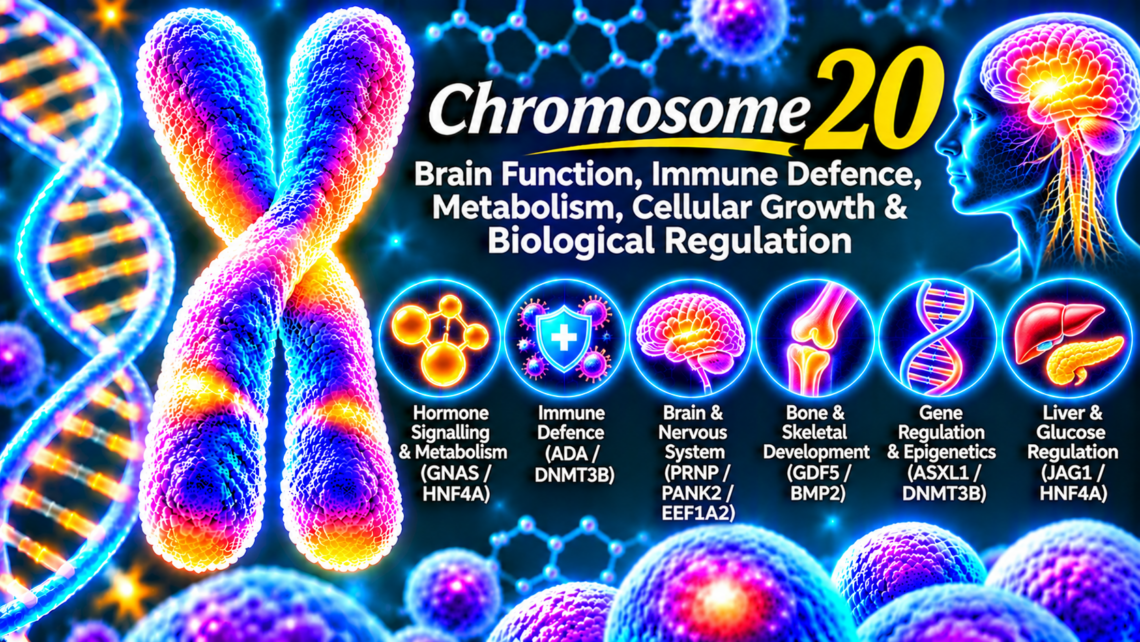
Chromosome 20 – The Genetic Blueprint of Brain Function, Immune Defence, Metabolism, Cellular Growth & Biological Regulation
Discover the genes that help regulate hormone signalling, immune function, neurological development, bone formation and cellular communication.
Introduction: Exploring the Importance of Chromosome 20
Chromosome 20 is a relatively small but biologically important human chromosome. It contains genes involved in brain development, nerve-cell communication, immune responses, blood sugar regulation, bone formation and the control of cellular growth.
Some of its genes help regulate how cells respond to insulin, while others influence the development of the nervous system, the formation of blood cells and the body’s ability to recognise abnormal cellular activity.
One particularly interesting feature of Chromosome 20 is its involvement in several important signalling pathways. These pathways help coordinate communication between cells, regulate development and maintain the balance between cellular growth and repair.
In this article, we explore the structure of Chromosome 20, its important genes, associated genetic conditions, connections to different body systems and its potential significance from a broader holistic wellbeing perspective.
1. Understanding Chromosome 20
Humans normally have 46 chromosomes arranged into 23 pairs. We inherit one copy of each chromosome from our mother and one from our father.
Chromosome 20 is an autosome, meaning it is not one of the sex chromosomes.
It contains approximately 63 million DNA base pairs and represents around 2% of the DNA in human cells.
The estimated number of genes depends on the reference genome and the method used to identify and classify them. MedlinePlus estimates that Chromosome 20 contains approximately 500–600 protein-coding genes, while other genome annotations count additional genes and non-coding sequences.
What makes Chromosome 20 interesting?
Chromosome 20 contains genes involved in several major biological processes:
- Hormone signalling and metabolic regulation.
- Immune-cell development and defence.
- Brain and nervous system function.
- Bone and skeletal development.
- DNA methylation and epigenetic regulation.
- Cellular growth and differentiation.
- Protein processing and communication between cells.
It also contains genes involved in genomic imprinting, a process in which the activity of certain genes depends partly on whether they were inherited from the mother or father.
This is particularly important when exploring the GNAS gene and its complex regulatory mechanisms.
2. Important Genes Found on Chromosome 20
Chromosome 20 contains many genes with specialised functions. The following examples illustrate its involvement in different biological systems.
| Gene | Main biological function | Associated condition or relevance |
|---|---|---|
| GNAS | Hormone receptor signalling and cellular communication | Pseudohypoparathyroidism and related GNAS disorders |
| JAG1 | Notch signalling and embryonic development | Alagille syndrome |
| ADA | Purine metabolism and immune-cell function | ADA-related immunodeficiency |
| HNF4A | Regulation of liver and pancreatic gene activity | MODY1 and other metabolic conditions |
| PRNP | Cellular prion protein function | Inherited prion diseases |
| PANK2 | Coenzyme A production and cellular metabolism | Pantothenate kinase-associated neurodegeneration |
| DNMT3B | DNA methylation and epigenetic regulation | ICF syndrome type 1 |
| ASXL1 | Chromatin regulation and gene expression | Bohring-Opitz syndrome and myeloid disorders |
| GDF5 | Bone, cartilage and joint development | Skeletal development disorders |
| BMP2 | Bone formation and tissue development | Skeletal and developmental conditions |
| AHCY | Methionine metabolism and methylation balance | Adenosylhomocysteinase deficiency |
| EEF1A2 | Protein synthesis and neuronal function | Neurodevelopmental and neuromuscular disorders |
These genes do not work independently. They interact with proteins, hormones, cellular structures and genes located on other chromosomes.
Together, they contribute to the complex biological networks that maintain normal development and physiological function.
3. Exploring the Major Genes of Chromosome 20
3.1 GNAS – Hormone Signalling, Calcium Balance and Cellular Communication
The GNAS gene is one of the most interesting genes on Chromosome 20.
It provides instructions for producing the alpha subunit of the stimulatory G protein, commonly known as Gsα, along with other transcripts produced from the complex GNAS region.
Gsα is involved in transmitting signals from certain cell-surface hormone receptors into the cell.
When a hormone binds to its receptor, G-protein signalling can activate an enzyme called adenylyl cyclase, which helps produce cyclic AMP (cAMP).
cAMP acts as an intracellular messenger, allowing cells to respond to hormonal and other signals.
This pathway is important in several physiological processes, including:
- Hormone regulation.
- Calcium and phosphate balance.
- Kidney function.
- Thyroid signalling.
- Bone development.
- Cellular communication.
Pathogenic changes affecting GNAS can cause several related disorders, including pseudohypoparathyroidism and progressive osseous heteroplasia.
An important feature: Genomic imprinting
The GNAS region is particularly interesting because some of its transcripts are regulated through parent-of-origin-specific expression.
This means that the activity of certain parts of the gene can differ depending on whether they were inherited from the mother or father.
Consequently, similar genetic changes can sometimes produce different clinical effects depending on which parental copy is affected.
Biological connections:
- Endocrine signalling.
- Calcium and phosphate regulation.
- Kidney function.
- Bone development.
- Epigenetic regulation.
3.2 JAG1 – Development, Cellular Communication and Organ Formation
The JAG1 gene provides instructions for producing a protein called Jagged-1.
Jagged-1 is involved in the Notch signalling pathway, an important communication system used by neighbouring cells during embryonic development and throughout life.
Notch signalling helps cells determine their developmental identity and influences how tissues and organs form.
The JAG1 gene is particularly important during the development of:
- Liver bile ducts.
- Heart structures.
- Blood vessels.
- Skeletal structures.
- Other developing tissues.
Pathogenic variants in JAG1 are the most common genetic cause of Alagille syndrome.
Alagille syndrome is a multisystem genetic condition that can affect the liver, heart, skeleton, eyes and other organs.
Although JAG1 is located on Chromosome 20, another gene, NOTCH2, located on Chromosome 1, can also cause Alagille syndrome.
Biological connections:
- Embryonic development.
- Liver and bile duct formation.
- Cardiovascular development.
- Cellular differentiation.
- Tissue organisation.
3.3 ADA – Immune Defence and Purine Metabolism
The ADA gene provides instructions for producing adenosine deaminase.
This enzyme participates in purine metabolism, helping break down certain compounds involved in DNA and RNA metabolism.
ADA is particularly important for the development and survival of lymphocytes, which are specialised immune cells.
When ADA activity is severely reduced, toxic purine metabolites can accumulate and damage developing immune cells.
Inherited pathogenic variants in ADA can cause ADA-related immunodeficiency, including severe combined immunodeficiency (ADA-SCID).
Affected individuals may have profound problems with immune function and can be highly susceptible to infections.
ADA therefore illustrates the close relationship between cellular metabolism and immune health.
Biological connections:
- Purine metabolism.
- Lymphocyte development.
- Immune defence.
- DNA and RNA metabolism.
- Cellular survival.
3.4 HNF4A – Liver Function, Pancreatic Activity and Glucose Regulation
The HNF4A gene provides instructions for producing hepatocyte nuclear factor 4 alpha, a transcription factor.
Transcription factors are proteins that help regulate the activity of other genes.
HNF4A is important in the development and function of the liver and pancreas.
It influences the expression of genes involved in:
- Glucose metabolism.
- Lipid metabolism.
- Liver function.
- Pancreatic beta-cell activity.
- Hormonal and metabolic regulation.
Certain inherited HNF4A variants can cause maturity-onset diabetes of the young type 1 (MODY1).
This is a form of monogenic diabetes, meaning it results from a pathogenic change in a single gene rather than the complex combination of factors associated with most common forms of diabetes.
Some HNF4A variants can also be associated with increased insulin production and low blood glucose in infancy.
Biological connections:
- Pancreatic function.
- Liver metabolism.
- Blood glucose regulation.
- Insulin secretion.
- Gene transcription.
3.5 PRNP – The Cellular Prion Protein and Nervous System Function
The PRNP gene provides instructions for producing the cellular prion protein, commonly called PrPᶜ.
This protein is found particularly in the nervous system, although it is also present in other tissues.
Its normal biological functions are still being investigated. Research suggests that it may participate in cellular communication, neuronal maintenance and responses to cellular stress.
Certain pathogenic variants in PRNP can cause inherited prion diseases.
These rare neurological conditions involve abnormal folding of prion proteins, which can lead to progressive damage within the nervous system.
Examples include:
- Genetic Creutzfeldt-Jakob disease.
- Gerstmann-Sträussler-Scheinker syndrome.
- Fatal familial insomnia.
These conditions are distinct from the sporadic and acquired forms of prion disease.
Biological connections:
- Neuronal function.
- Protein structure and folding.
- Cellular communication.
- Nervous system maintenance.
- Protein-related neurological disease.
3.6 PANK2 – Cellular Energy Metabolism and Coenzyme A Production
The PANK2 gene provides instructions for producing pantothenate kinase 2, an enzyme located in mitochondria.
This enzyme participates in the production of coenzyme A (CoA), an essential molecule involved in many metabolic reactions.
Coenzyme A is important for:
- Fatty acid metabolism.
- Energy production.
- Mitochondrial function.
- The synthesis and breakdown of metabolic compounds.
- Cellular biochemical reactions.
Pathogenic variants in both copies of PANK2 can cause pantothenate kinase-associated neurodegeneration (PKAN).
PKAN belongs to a group of conditions known as neurodegeneration with brain iron accumulation.
It can cause progressive movement difficulties, muscle stiffness, dystonia and other neurological symptoms.
The condition demonstrates how disturbances in cellular metabolism can have significant effects on the nervous system.
Biological connections:
- Mitochondrial metabolism.
- Coenzyme A production.
- Fatty acid processing.
- Cellular energy pathways.
- Neurological function.
3.7 DNMT3B – DNA Methylation and Epigenetic Regulation
The DNMT3B gene provides instructions for producing DNA methyltransferase 3 beta.
This enzyme is involved in establishing DNA methylation patterns.
DNA methylation is an epigenetic process in which methyl groups are added to DNA, often influencing whether certain genes are active or inactive.
These processes are important during:
- Embryonic development.
- Cell differentiation.
- Tissue organisation.
- Genomic stability.
- Regulation of gene expression.
Pathogenic variants in DNMT3B can cause immunodeficiency, centromeric instability and facial anomalies syndrome type 1, commonly known as ICF syndrome.
This rare inherited condition can involve immune deficiencies, characteristic chromosomal abnormalities and developmental features.
DNMT3B is especially interesting because it demonstrates how the regulation of genetic information is just as important as the DNA sequence itself.
Biological connections:
- Epigenetics.
- DNA methylation.
- Gene regulation.
- Immune development.
- Chromosomal stability.
3.8 ASXL1 – Chromatin Organisation and Cellular Development
The ASXL1 gene provides instructions for producing additional sex combs-like protein 1.
ASXL1 participates in chromatin regulation, helping influence how genetic information is organised and accessed within cells.
Chromatin is the complex of DNA and associated proteins that makes up chromosomes.
ASXL1 is involved in regulating gene expression during development and in blood-forming cells.
Pathogenic variants in ASXL1 can cause Bohring-Opitz syndrome, a rare developmental condition.
Acquired ASXL1 mutations are also found in certain myeloid blood disorders, including some cases of myelodysplastic syndromes and clonal haematopoiesis.
It is important to distinguish these acquired changes from inherited ASXL1-related conditions.
Biological connections:
- Chromatin organisation.
- Gene expression.
- Embryonic development.
- Blood-cell formation.
- Cellular growth regulation.
3.9 GDF5 – Bone, Cartilage and Joint Development
The GDF5 gene provides instructions for producing growth differentiation factor 5.
GDF5 belongs to the transforming growth factor beta (TGF-β) superfamily of signalling proteins.
It is particularly important during the development of bones, cartilage, joints and connective tissues.
GDF5 helps regulate the formation and organisation of skeletal structures.
Certain pathogenic variants can cause inherited skeletal conditions, including brachydactyly type C and acromesomelic dysplasia, depending on the specific genetic change.
Other common genetic variants near GDF5 have been investigated in research involving joint characteristics and osteoarthritis susceptibility.
Biological connections:
- Bone formation.
- Cartilage development.
- Joint structure.
- Limb development.
- Connective tissue organisation.
3.10 BMP2 – Bone Formation and Tissue Development
The BMP2 gene provides instructions for producing bone morphogenetic protein 2.
BMP2 is another member of the TGF-β superfamily.
It plays an important role in the development and maintenance of bone and other tissues.
BMP2 signalling influences:
- Bone formation.
- Skeletal development.
- Cellular differentiation.
- Tissue repair processes.
- Embryonic development.
BMP2 is also studied in regenerative medicine and bone tissue engineering because of its role in promoting bone formation.
Its biological effects are highly dependent on the tissue, timing and signalling environment.
Biological connections:
- Skeletal development.
- Bone formation.
- Cellular differentiation.
- Tissue organisation.
- Developmental signalling.
3.11 AHCY – Methylation Balance and Metabolic Regulation
The AHCY gene provides instructions for producing S-adenosylhomocysteine hydrolase.
This enzyme participates in the metabolism of S-adenosylhomocysteine (SAH), a compound involved in methylation reactions.
Methylation is an important biochemical process used in many aspects of cellular regulation.
These reactions contribute to:
- DNA methylation.
- RNA modification.
- Protein regulation.
- Metabolic pathways.
- Cellular biochemical balance.
Pathogenic variants in AHCY can cause a rare metabolic disorder known as S-adenosylhomocysteine hydrolase deficiency.
This condition can affect muscle function, liver health and neurological development.
Biological connections:
- Methionine metabolism.
- Methylation pathways.
- Liver metabolism.
- Cellular regulation.
- Epigenetic processes.
3.12 EEF1A2 – Protein Production and Nervous System Function
The EEF1A2 gene provides instructions for producing eukaryotic translation elongation factor 1 alpha 2.
This protein participates in protein synthesis, helping transfer aminoacyl-tRNA molecules during the process of translating genetic instructions into proteins.
EEF1A2 is particularly relevant in certain specialised tissues, including skeletal muscle and the nervous system.
Pathogenic variants can cause rare neurodevelopmental and neuromuscular conditions, which may include developmental delay, intellectual disability, epilepsy and movement difficulties.
This gene demonstrates how the basic process of producing proteins is essential for normal brain and muscle function.
Biological connections:
- Protein synthesis.
- Neuronal development.
- Muscle function.
- Cellular growth.
- Neuromuscular communication.
4. Chromosome 20 and the Major Body Systems
The genes found on Chromosome 20 contribute to several interconnected biological systems.
| Body system | Important genes | Biological contribution |
|---|---|---|
| Endocrine | GNAS, HNF4A | Hormone signalling and glucose regulation |
| Immune | ADA, DNMT3B | Lymphocyte development and immune regulation |
| Nervous system | PRNP, PANK2, EEF1A2 | Neuronal function and cellular metabolism |
| Skeletal | GDF5, BMP2, GNAS | Bone, cartilage and joint development |
| Liver and digestive | JAG1, HNF4A, AHCY | Bile duct development and metabolic regulation |
| Cellular regulation | ASXL1, DNMT3B, GNAS | Chromatin organisation and gene expression |
| Metabolic | HNF4A, PANK2, AHCY | Glucose, coenzyme A and methylation pathways |
| Cardiovascular development | JAG1, GNAS | Developmental signalling and tissue organisation |
These relationships demonstrate that individual genes can influence several body systems simultaneously.
For example, GNAS participates in endocrine signalling but also affects bone and metabolic regulation. JAG1 contributes to embryonic development across several organ systems, while PANK2 links mitochondrial metabolism with neurological function.
5. Genetic Conditions Associated with Chromosome 20
Changes involving individual genes or larger sections of Chromosome 20 can contribute to a variety of inherited conditions.
| Condition | Associated gene or chromosome change | General description |
|---|---|---|
| Alagille syndrome | JAG1 | Multisystem developmental condition affecting the liver, heart and other organs |
| ADA-related immunodeficiency | ADA | Impaired immune-cell development and function |
| MODY1 | HNF4A | Inherited form of diabetes |
| GNAS-related disorders | GNAS | Hormone resistance and abnormalities involving bone development |
| Prion diseases | PRNP | Rare progressive neurological disorders |
| PKAN | PANK2 | Neurodegeneration with brain iron accumulation |
| ICF syndrome type 1 | DNMT3B | Immunodeficiency and chromosomal instability |
| Bohring-Opitz syndrome | ASXL1 | Rare developmental condition |
| Skeletal dysplasias | GDF5 | Abnormalities affecting bone, joints and limb development |
| AHCY deficiency | AHCY | Rare metabolic disorder affecting methylation pathways |
| Ring chromosome 20 syndrome | Ring chromosome 20 | Chromosomal condition frequently associated with difficult-to-control epilepsy |
5.1 Ring Chromosome 20 Syndrome
One particularly interesting chromosome-level condition is ring chromosome 20 syndrome.
A ring chromosome forms when a chromosome breaks in two places and the broken ends join together, creating a circular structure.
Ring chromosome 20 may occur in some or all of a person’s cells.
It is particularly associated with epilepsy, including difficult-to-control seizures and episodes of non-convulsive status epilepticus.
In many affected individuals, the ring chromosome does not involve a large deletion of genetic material. Researchers are still investigating how the altered chromosome structure and changes in gene activity contribute to the condition.
5.2 Partial Deletions and Duplications
Changes involving sections of Chromosome 20 can also occur.
Examples include:
- 20p deletion.
- 20q deletion.
- Partial trisomy 20p.
- Partial trisomy 20q.
- Partial monosomy 20p.
- Partial monosomy 20q.
The effects depend on which genes are involved, the size of the affected region and whether the abnormality is present in all cells or only some cells.
5.3 Chromosome 20 and Cancer
Chromosome 20 contains genes involved in cellular growth, chromatin regulation and the control of gene expression.
Acquired changes involving Chromosome 20 have been identified in several blood and bone marrow disorders, including:
- Myelodysplastic syndromes.
- Certain leukaemias.
- Myeloproliferative neoplasms.
Deletions involving the long arm of Chromosome 20, known as 20q deletions, are particularly recognised in haematological disorders.
These abnormalities are generally acquired somatic changes, meaning they develop in particular cells during a person’s lifetime rather than necessarily being inherited.
6. Chromosome 20 and Epigenetics
Epigenetics describes biological processes that influence how genes are used without changing the underlying DNA sequence.
These mechanisms help determine which genes are active, when they are active and how strongly they are expressed.
Important epigenetic mechanisms include:
- DNA methylation.
- Histone modification.
- Chromatin remodelling.
- Non-coding RNA regulation.
- Genomic imprinting.
Chromosome 20 contains several genes directly involved in these processes.
DNMT3B and DNA Methylation
DNMT3B is particularly important because it encodes an enzyme responsible for establishing DNA methylation patterns.
DNA methylation contributes to the regulation of gene activity and helps maintain normal cellular identity.
Abnormal DNMT3B function can disrupt these patterns and contribute to ICF syndrome.
GNAS and Genomic Imprinting
The GNAS region provides another fascinating example of epigenetic regulation.
Certain transcripts within this region are expressed differently depending on whether they were inherited from the mother or father.
This parent-of-origin effect helps explain why changes involving GNAS can produce different clinical outcomes depending on which parental copy is affected.
Chromosome 20 therefore provides an important example of how inherited DNA and epigenetic regulation work together.
7. Chromosome 20 from a Holistic Wellbeing Perspective
At VitalPulse, we explore wellbeing through the interconnected relationship between biological systems, lifestyle, emotional experiences and personal awareness.
Chromosome 20 provides an interesting starting point for examining several important areas of health.
7.1 Hormonal and Metabolic Wellbeing
The GNAS and HNF4A genes highlight the importance of hormone signalling and metabolic regulation.
The endocrine system uses hormones to coordinate activities throughout the body.
Insulin, thyroid hormones, parathyroid hormone and other chemical messengers help regulate energy use, growth, mineral balance and cellular activity.
General supportive practices include:
- Eating a varied, balanced diet.
- Maintaining regular physical activity.
- Supporting consistent sleep routines.
- Seeking appropriate assessment of persistent metabolic symptoms.
- Following medical advice when managing endocrine conditions.
7.2 Immune Wellbeing
The ADA and DNMT3B genes demonstrate the relationship between cellular metabolism, DNA regulation and immune-cell development.
Immune function depends on the coordinated activity of specialised cells, signalling molecules and metabolic processes.
General wellbeing practices can support overall health, but they cannot correct inherited immune deficiencies or replace appropriate medical treatment.
7.3 Neurological Wellbeing
PRNP, PANK2 and EEF1A2 highlight different aspects of nervous system function.
The nervous system depends on healthy neurons, effective communication, protein production and energy metabolism.
General supportive practices include:
- Maintaining consistent sleep patterns.
- Engaging in appropriate physical activity.
- Supporting cardiovascular health.
- Maintaining social and cognitive engagement.
- Seeking medical assessment for persistent neurological symptoms.
7.4 Skeletal and Structural Wellbeing
GDF5 and BMP2 highlight the importance of biological signalling in the development and maintenance of bones, cartilage and joints.
The musculoskeletal system provides structural support, protects internal organs and enables movement.
General supportive practices include appropriate weight-bearing activity, balanced nutrition and attention to mobility and posture.
7.5 Cellular and Epigenetic Wellbeing
DNMT3B and ASXL1 demonstrate how important gene regulation and chromatin organisation are for normal cellular activity.
Cells require carefully coordinated systems to maintain their identity, respond to signals and regulate growth.
Healthy lifestyle choices can support general cellular health, but they should not be interpreted as ways to repair inherited genetic abnormalities or selectively control specific genes.
8. The Esoteric Perspective: Chromosome 20 and Tarot Archetype XX – Judgement
The biological functions of Chromosome 20 offer an interesting opportunity for symbolic reflection.
In the Tarot Major Arcana, card XX is Judgement.
Judgement traditionally represents awakening, renewal, transformation, reflection, accountability and the emergence of a new level of awareness.
This symbolism creates an interesting metaphorical connection with some of the themes represented by genes on Chromosome 20.
Important: This is an esoteric and reflective interpretation, not a scientifically established relationship between Chromosome 20 and Tarot.
Why Judgement?
The Judgement card is often associated with a moment of recognition, when something previously hidden becomes visible and a new understanding emerges.
Chromosome 20 contains genes involved in several processes that help cells respond to signals, regulate their activity and develop into specialised structures.
Symbolically, this can be explored through themes of awareness, adaptation, renewal and transformation.
Judgement and Cellular Communication
GNAS and JAG1 are involved in important cellular signalling pathways.
From a symbolic perspective, these genes can be considered alongside Judgement’s theme of responding to a call or signal.
In biological terms, cells receive chemical messages and activate specific pathways in response. In Tarot, the call of the trumpet symbolises awakening and recognition.
The connection is metaphorical rather than biological.
Judgement and Transformation
DNMT3B and ASXL1 participate in mechanisms that influence gene expression and chromatin organisation.
These processes help regulate how cells develop and maintain their specialised identities.
Symbolically, this can be associated with transformation, the release of old patterns and the emergence of new possibilities.
Judgement and the Body’s Structural Foundations
GDF5 and BMP2 contribute to skeletal development and tissue organisation.
The Judgement archetype can be used as a reflection on the foundations that support growth, movement and the ability to adapt.
Reflective Tarot Associations
For a deeper symbolic exploration, Chromosome 20 can also be considered alongside:
- The Hierophant V: Knowledge, learning, tradition and the transmission of information.
- The Wheel of Fortune X: Cycles, change and interconnected systems.
- Death XIII: Transformation, endings and renewal.
- Judgement XX: Awakening, reflection and the emergence of a new understanding.
Together, these archetypes provide a symbolic framework for reflecting on biological complexity, development, transformation and self-awareness.
9. Supporting Your Overall Wellbeing
Although lifestyle choices cannot rewrite inherited genetic variants or guarantee protection against genetic conditions, healthy routines can support many of the biological systems associated with Chromosome 20.
Consider the following areas:
Nutrition: Choose a varied and balanced eating pattern that provides the nutrients needed for normal metabolic and cellular function.
Movement: Incorporate regular physical activity appropriate to your abilities and circumstances.
Sleep: Maintain consistent sleep and waking times where possible.
Stress management: Explore mindfulness, breathing exercises, relaxation and other healthy ways of managing everyday stress.
Metabolic awareness: Monitor relevant blood glucose and other metabolic indicators when appropriate, particularly if there is a family history of inherited metabolic conditions.
Immune awareness: Seek appropriate medical advice for recurrent or unusual infections.
Musculoskeletal health: Support mobility through appropriate movement and seek professional guidance for persistent joint or skeletal concerns.
Preventive healthcare: Discuss family history and possible inherited conditions with a qualified healthcare professional when relevant.
These practices support general wellbeing rather than treating or reversing specific genetic abnormalities.
10. Frequently Asked Questions About Chromosome 20
How many genes does Chromosome 20 contain?
The number depends on the genome reference and annotation method. MedlinePlus estimates approximately 500–600 protein-coding genes, while other gene catalogues count additional gene types and non-coding sequences.
What is Chromosome 20 responsible for?
Chromosome 20 contains genes involved in hormone signalling, immune defence, brain function, skeletal development, cellular growth, metabolism and epigenetic regulation.
Is Chromosome 20 associated with diabetes?
Yes. The HNF4A gene on Chromosome 20 is associated with maturity-onset diabetes of the young type 1 (MODY1), a rare inherited form of diabetes.
Does Chromosome 20 influence immune function?
Yes. The ADA gene is particularly important for immune-cell development. Certain inherited ADA variants can cause severe combined immunodeficiency.
Is Chromosome 20 associated with liver disease?
Yes. The JAG1 gene is associated with Alagille syndrome, a condition that can affect the liver’s bile ducts as well as the heart, skeleton and other organs.
Does Chromosome 20 influence brain function?
Yes. Genes such as PRNP, PANK2 and EEF1A2 contribute to different aspects of nervous system function and neurological development.
What is ring chromosome 20 syndrome?
Ring chromosome 20 syndrome is a rare chromosomal condition in which one copy of Chromosome 20 forms a circular structure. It is particularly associated with epilepsy and can involve difficult-to-control seizures.
Can lifestyle choices change Chromosome 20?
Lifestyle choices do not change the inherited DNA sequence of Chromosome 20. However, environmental and lifestyle factors can influence many biological processes, including metabolism, cellular activity and gene regulation.
What is the connection between Chromosome 20 and epigenetics?
Chromosome 20 contains genes such as DNMT3B and the complex GNAS region, which demonstrate the importance of DNA methylation, gene regulation and genomic imprinting.
11. Final Thoughts: The Chromosome of Signalling, Development and Regulation
Chromosome 20 demonstrates how a relatively small section of the human genome can contribute to a remarkable variety of biological functions.
Its genes participate in hormone signalling, immune defence, neurological function, skeletal development, metabolic regulation and cellular organisation.
From GNAS and HNF4A, which influence hormone and metabolic pathways, to JAG1 and GDF5, which contribute to organ and skeletal development, Chromosome 20 plays an important role in the coordination of biological processes.
Its epigenetic mechanisms also remind us that the body’s genetic blueprint is not simply a fixed instruction manual. Gene activity is regulated through complex interactions involving DNA, proteins, cellular signals and environmental influences.
From a holistic perspective, Chromosome 20 invites us to reflect on development, transformation, communication and renewal.
The Tarot archetype of Judgement offers a symbolic reminder that awareness and understanding can create opportunities for reflection and positive change.
Ultimately, wellbeing is not determined by one chromosome or one gene. It emerges from the interaction of many biological, environmental and personal factors.
Understanding our genetic blueprint helps us appreciate the extraordinary complexity of the human body.
VitalPulse – Explore Your Wellbeing. Reconnect. Reflect. Realign.
Curious About NLS Bioresonance Scanning?
What if you could explore your body’s energetic patterns from a different perspective?
At VitalPulse, we invite you to discover NLS (Non-Linear System) Bioresonance Scanning – an alternative wellness exploration approach designed to provide insights into energetic patterns and potential areas of imbalance within the body’s systems.
Whether you’re interested in understanding your wellbeing more deeply, exploring the body’s interconnected systems, or simply curious about complementary approaches to wellness, an NLS scan offers an opportunity to explore a different perspective.
Why not experience it for yourself?
✨ Explore your body’s energetic patterns.
✨ Discover a different perspective on your overall wellbeing.
✨ Identify areas you may wish to explore further as part of your personal wellness journey.
🎁 Take the First Step – Explore NLS Bioresonance!
👉 EXPLORE NLS BIORESONANCE SCANNING
VitalPulse – Explore Your Wellbeing.
Reconnect. Reflect. Realign.
Please note: NLS Bioresonance scanning is offered as a complementary wellness exploration service. It is not a medically validated diagnostic tool and does not diagnose, treat, cure or prevent disease. It is not a substitute for professional medical advice, diagnosis or treatment.
References and Further Reading
- MedlinePlus Genetics – Chromosome 20
https://medlineplus.gov/genetics/chromosome/20/ - The DNA Sequence and Comparative Analysis of Human Chromosome 20 – Nature
https://doi.org/10.1038/414865a - GeneReviews – Alagille Syndrome
https://www.ncbi.nlm.nih.gov/books/NBK1273/ - GeneReviews – Adenosine Deaminase Deficiency
https://www.ncbi.nlm.nih.gov/books/NBK1483/ - GeneReviews – Disorders of GNAS Inactivation
https://www.ncbi.nlm.nih.gov/books/NBK459117/ - GeneReviews – Pantothenate Kinase-Associated Neurodegeneration
https://www.ncbi.nlm.nih.gov/books/NBK1490/ - GeneReviews – ASXL1-Related Bohring-Opitz Syndrome
https://www.ncbi.nlm.nih.gov/books/NBK481833/ - National Human Genome Research Institute – Severe Combined Immunodeficiency
https://www.genome.gov/Genetic-Disorders/Severe-Combined-Immunodeficiency - NCBI – The DNMT3B DNA Methyltransferase Gene and ICF Syndrome
https://pmc.ncbi.nlm.nih.gov/articles/PMC24450/
Medical Disclaimer
This article is intended for educational and general wellbeing purposes only. It does not provide medical diagnosis, genetic counselling or treatment recommendations.
Genetic variants can have different effects depending on the individual, the specific variant and other biological factors. The presence of a gene variant does not automatically mean that a person will develop an associated condition.
If you have concerns about inherited conditions, family history or genetic risk, consult a qualified healthcare professional or genetic counsellor.
VitalPulse promotes wellbeing education and exploration. It does not replace conventional medical care.


You May Also Like
Rhinoviruses: Understanding the Viruses Behind the Common Cold

Chronic Fatigue Syndrome (ME/CFS): Understanding the Condition, Supporting Your Body & Finding a Way Forward