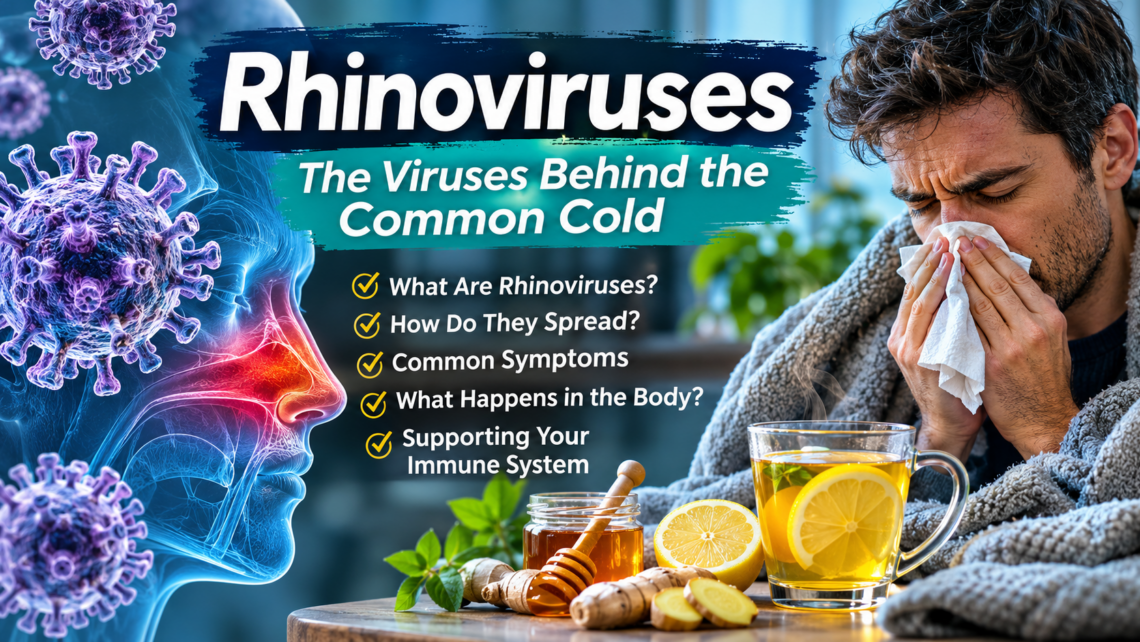
Rhinoviruses: Understanding the Viruses Behind the Common Cold
Table of Contents
Have you ever experienced a runny nose, persistent sneezing, nasal congestion, a scratchy throat or an irritating cough that seems to appear out of nowhere?
One of the most common causes of these symptoms is a group of viruses known as rhinoviruses.
Rhinoviruses are responsible for a significant proportion of common colds worldwide. Although infections are generally mild and resolve naturally, these viruses can sometimes contribute to more serious respiratory complications, particularly in young children, older adults and people with underlying respiratory conditions.
Understanding how rhinoviruses work, how they spread and how the immune system responds can help us make better decisions about our respiratory health.
1. What Are Rhinoviruses?
Rhinoviruses are small, non-enveloped viruses belonging to the Picornaviridae family.
The name comes from the Greek word rhin, meaning nose, reflecting their association with infections of the upper respiratory tract.
There are numerous different rhinovirus types, broadly classified into three groups:
- Rhinovirus A
- Rhinovirus B
- Rhinovirus C
These different types explain why someone can experience repeated common colds throughout their lifetime. Infection with one type does not necessarily provide lasting protection against other types.
Rhinoviruses primarily infect the cells lining the nose and upper respiratory tract. They are particularly successful at multiplying in the relatively cooler temperatures found in the nasal passages.
Although most infections are mild, rhinoviruses can occasionally affect the lower respiratory tract.
2. How Do Rhinoviruses Spread?
Rhinoviruses are highly contagious and can spread through several routes.
Respiratory droplets and particles
When an infected person coughs, sneezes or talks, virus-containing respiratory particles can enter the air and reach another person’s nose, mouth or eyes.
Direct physical contact
Handshakes and close physical contact can transfer the virus between individuals.
Contaminated surfaces
The virus can be transferred to objects such as door handles, keyboards, mobile phones and other frequently touched surfaces.
Touching a contaminated surface and subsequently touching your nose, mouth or eyes can introduce the virus into the body.
This is why regular handwashing and appropriate hygiene practices are important.
3. Common Symptoms of Rhinovirus Infection
Symptoms generally develop approximately 1–3 days after exposure.
Common symptoms include:
- Runny nose
- Nasal congestion
- Frequent sneezing
- Sore or scratchy throat
- Coughing
- Headaches
- Mild body aches
- Watery eyes
- General tiredness
- Occasionally, a mild fever
Most infections improve within 7 days, although some symptoms, particularly coughing and nasal congestion, may persist for up to two weeks.
Not everyone infected with rhinovirus develops noticeable symptoms.
4. What Happens Inside the Body?
When rhinoviruses enter the respiratory tract, they attach themselves to receptors on the surface of susceptible cells.
They then enter these cells and use the cellular machinery to reproduce.
As the infection develops, the immune system recognises the viral presence and initiates an inflammatory response.
This response involves several processes:
Immune recognition
The body’s innate immune system recognises viral genetic material and activates antiviral signalling pathways.
Interferon production
Infected cells release signalling proteins called interferons. These help neighbouring cells activate antiviral defences and restrict viral replication.
Inflammatory response
The immune system releases various inflammatory mediators that contribute to swelling, increased mucus production and irritation in the respiratory passages.
Immune cell activation
Immune cells, including natural killer cells and other specialised immune cells, participate in controlling the infection.
Many of the symptoms associated with a common cold are actually consequences of the body’s immune response rather than direct damage caused by the virus alone.
5. Rhinoviruses and the Respiratory System
Although rhinoviruses primarily affect the upper respiratory tract, their effects can extend further.
Potential complications include:
- Sinusitis
- Middle ear infections
- Bronchitis
- Bronchiolitis
- Asthma exacerbations
- Pneumonia, particularly in vulnerable individuals
People living with asthma or chronic respiratory conditions may experience worsening symptoms following a rhinovirus infection.
For this reason, persistent coughing, wheezing or breathing difficulties should not automatically be dismissed as an ordinary cold.
6. The Relationship Between Rhinoviruses and the Immune System
The immune system is responsible for identifying and controlling viral infections.
A healthy immune response depends on several interconnected systems, including:
- The respiratory mucosal barrier
- Innate immune function
- Antiviral signalling pathways
- Adaptive immunity
- Adequate nutritional status
- Healthy sleep patterns
- Normal metabolic function
The respiratory tract has its own protective mechanisms.
Mucus traps inhaled particles and microorganisms, while microscopic structures called cilia help move mucus towards the throat, where it can be swallowed or expelled.
This process is known as mucociliary clearance.
When these protective mechanisms are compromised, the respiratory system may become more vulnerable to infection.
7. Factors That Influence Respiratory Health
Several lifestyle and environmental factors influence the body’s ability to maintain normal respiratory and immune function.
Smoking
Cigarette smoke exposes the respiratory tract to numerous irritating chemicals. It can impair ciliary function, interfere with mucus clearance and weaken important respiratory defence mechanisms.
Poor sleep
Sleep plays an important role in immune regulation. Insufficient sleep can negatively affect normal immune responses.
Nutritional deficiencies
The immune system requires adequate amounts of essential nutrients, including zinc, vitamin D, vitamin C, vitamin A, iron and protein.
Deficiencies can interfere with normal immune function.
Chronic stress
Prolonged psychological stress can influence inflammatory signalling, hormonal regulation and immune activity.
Environmental irritants
Dust, air pollution, chemical fumes and other airborne irritants can aggravate the respiratory passages.
Reducing unnecessary exposure to these irritants can help support respiratory comfort.
8. Supporting Your Body During a Rhinovirus Infection
There is currently no specific antiviral medicine or vaccine that prevents or cures ordinary rhinovirus infections.
Most people recover naturally with supportive care.
Some practical measures include:
1. Stay hydrated
Drink sufficient water throughout the day. Adequate hydration helps maintain normal mucus production and supports general physiological function.
2. Prioritise rest
Allow your body sufficient time to recover. Avoid unnecessarily strenuous activity while experiencing significant symptoms.
3. Maintain good nutrition
Eat balanced meals containing vegetables, fruit, adequate protein and essential nutrients.
4. Support nasal comfort
Saline nasal sprays or rinses may help relieve congestion and remove excess mucus. Always use sterile, distilled or previously boiled and cooled water for nasal irrigation.
5. Avoid respiratory irritants
Avoid cigarette smoke, excessive dust and harsh chemical fumes while recovering.
6. Practise good hygiene
Wash your hands regularly, cover coughs and sneezes, clean frequently touched surfaces and limit close contact with vulnerable individuals while sick.
9. Natural Approaches and Immune Support
From a holistic wellbeing perspective, respiratory health should be considered part of the body’s broader physiological balance.
Several everyday practices can support normal immune function.
Vitamin C
Vitamin C contributes to normal immune system function and acts as an antioxidant. Although it is important for general health, it is not a cure for rhinovirus infections.
Zinc
Zinc plays an important role in immune cell development and function. Adequate zinc intake is necessary for normal immune responses.
Vitamin D
Vitamin D contributes to normal immune system regulation. Maintaining adequate vitamin D levels is important for general health.
Adequate protein
Protein provides the amino acids required to produce antibodies, enzymes and other immune-related molecules.
Breathing and relaxation
Gentle breathing exercises and relaxation practices may help support stress management and general wellbeing. They do not eliminate viruses or replace medical treatment.
It is important to distinguish between supporting normal immune function and claiming that a particular supplement or natural therapy can eliminate a viral infection. There is currently no established natural remedy that cures rhinovirus infections.
10. When Should You Seek Medical Attention?
Most rhinovirus infections resolve without medical intervention.
However, certain symptoms may indicate that the infection is becoming more complicated or that another respiratory condition is present.
Seek medical attention if you experience:
- A fever that persists for several days or returns after improving.
- Symptoms that worsen rather than gradually improve.
- Severe facial pain or pressure, particularly around the cheeks, forehead or eyes.
- Persistent or worsening ear pain.
- A cough that lasts longer than expected.
- Wheezing or unusual breathing difficulties.
- Symptoms that improve initially but then become significantly worse.
Seek urgent medical attention if you experience:
- Difficulty breathing or shortness of breath.
- Persistent chest pain or pressure.
- Confusion or unusual drowsiness.
- Blue or grey lips.
- Severe dehydration or an inability to keep fluids down.
People with asthma, chronic lung disease, weakened immune systems or other underlying medical conditions should be particularly mindful of worsening respiratory symptoms.
Remember that symptoms associated with rhinovirus infections can overlap with influenza, COVID-19, respiratory syncytial virus (RSV) and other respiratory infections. Testing or medical assessment may be necessary to establish the cause.
11. Can Rhinovirus Infections Be Prevented?
Although it is difficult to avoid every exposure, certain precautions can reduce the likelihood of infection.
Consider incorporating the following habits into your everyday routine:
- Wash your hands regularly with soap and water.
- Avoid touching your eyes, nose and mouth with unwashed hands.
- Avoid sharing drinking glasses, utensils and personal items with someone who is sick.
- Improve indoor ventilation where possible.
- Clean frequently touched surfaces.
- Avoid close contact with people experiencing respiratory symptoms.
- Maintain healthy sleep, nutrition and hydration habits.
- Avoid smoking and unnecessary exposure to airborne irritants.
Unlike influenza and COVID-19, there is currently no routinely available vaccine that protects against the many different rhinovirus types.
Prevention therefore relies primarily on hygiene, reducing exposure and maintaining general respiratory health.
12. The Bigger Picture: Respiratory Health and Overall Wellbeing
At VitalPulse, we believe that understanding the body is an important part of taking responsibility for your overall wellbeing.
The respiratory system does not function independently. It works in close relationship with the immune system, circulatory system, nervous system and metabolic processes.
Every breath supports the exchange of oxygen and carbon dioxide, while specialised immune defences continuously protect the respiratory passages against environmental threats.
Lifestyle factors such as smoking, poor sleep, chronic stress, nutritional deficiencies and environmental exposure can influence these interconnected systems.
Rather than focusing exclusively on individual symptoms, it is valuable to consider the broader habits and environmental conditions that contribute to respiratory health.
This does not mean that every illness can be prevented through lifestyle changes. Viral infections are a normal part of human exposure to the environment, and even people with healthy lifestyles can become infected.
However, building sustainable wellbeing habits can help support the body’s normal physiological and immune functions.
Final Thoughts
Rhinoviruses are among the most common causes of respiratory infections worldwide.
Although the common cold is generally mild, understanding how these viruses spread, how the immune system responds and what influences respiratory health can help us make more informed decisions.
Simple practices such as adequate hydration, good nutrition, sufficient sleep, hand hygiene and avoiding cigarette smoke can contribute to maintaining normal respiratory and immune function.
Most importantly, listen to your body, allow yourself time to recover and seek appropriate medical attention when symptoms become concerning.
Your wellbeing starts with understanding your body.
Disclaimer:
This article is intended for educational and general wellbeing purposes only. It does not constitute medical advice, diagnosis or treatment. Nutritional supplements and natural approaches should not replace appropriate medical care. If you have persistent, severe or concerning symptoms, consult a qualified healthcare professional.
Explore Your Wellbeing.
VitalPulse – Reconnect. Reflect. Realign.