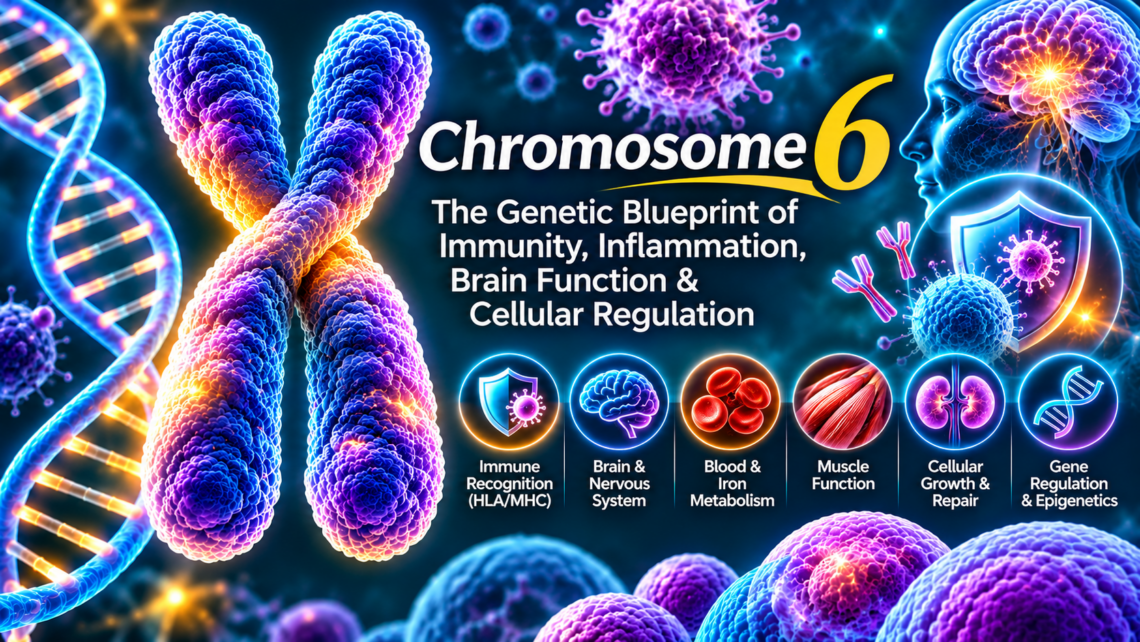
Chromosome 6: The Genetic Blueprint of Immunity, Inflammation, Brain Function & Cellular Recognition
Exploring the fascinating relationship between chromosome 6, immune recognition, inflammatory responses, neurological function, cellular communication and the body’s ability to distinguish self from non-self.
Introduction: The Sixth Chapter of Our Genetic Blueprint
Our DNA contains an extraordinary amount of information. Within every cell, chromosomes organise this information into structures that guide growth, development, cellular activity and the maintenance of life.
Among the 23 pairs of human chromosomes, Chromosome 6 occupies a particularly important position.
It contains genes involved in immune regulation, inflammation, neurological development, metabolism, cellular communication and the recognition of foreign substances.
Perhaps its most remarkable feature is the presence of the Major Histocompatibility Complex (MHC), known in humans as the Human Leukocyte Antigen (HLA) system.
This region of chromosome 6 plays a central role in how the immune system identifies proteins and other molecular fragments, recognises potential threats and coordinates immune responses.
The HLA system is also important in organ transplantation, autoimmune disease research, infectious disease susceptibility and the study of individual immune differences.
But chromosome 6 does much more than regulate immunity.
It also contains genes involved in iron metabolism, neurological function, blood clotting, cellular growth and the regulation of genetic information.
Let’s explore its structure, important genes, biological functions and fascinating connections to holistic wellbeing.
1. Understanding Chromosome 6
Humans normally have 46 chromosomes, arranged into 23 pairs. One chromosome in each pair is inherited from the mother and the other from the father.
Chromosome 6 contains approximately 171 million DNA base pairs and represents around 5.5–6% of the total DNA found in human cells.
It is estimated to contain approximately 1,000 to 1,100 protein-coding genes, although gene counts vary depending on the reference and counting methods used.
Like other chromosomes, chromosome 6 has two main arms:
- 6p (short arm): The smaller arm of the chromosome.
- 6q (long arm): The larger arm of the chromosome.
The letter p comes from the French word petit, meaning small, while q identifies the longer arm.
One of the most important regions is located on the short arm at position 6p21.3.
This is where the Major Histocompatibility Complex is found.
The MHC region contains a dense collection of genes, many of which participate in immune system function.
It is one of the most genetically variable regions of the human genome, meaning that considerable differences exist between individuals in the versions of HLA genes they inherit.
2. The Major Histocompatibility Complex: The Immune Recognition System
The Major Histocompatibility Complex is arguably the most fascinating feature of chromosome 6.
In humans, the MHC is commonly referred to as the Human Leukocyte Antigen system.
Its primary function is to help the immune system recognise molecular fragments and determine how immune cells should respond.
To understand its importance, it helps to consider how the immune system identifies potential threats.
Cells constantly produce proteins as part of their normal functioning. They also process proteins from pathogens, such as viruses and bacteria.
Certain HLA molecules display small fragments of these proteins on the cell surface.
These fragments are known as antigens or antigenic peptides.
Immune cells can then inspect the displayed fragments and determine whether an immune response may be necessary.
The HLA system therefore plays an essential role in communication between cells and the immune system.
HLA Class I: Monitoring the Internal Cellular Environment
HLA Class I molecules are encoded primarily by three genes:
- HLA-A
- HLA-B
- HLA-C
These molecules are present on almost all nucleated cells in the body.
They generally display peptide fragments derived from proteins produced inside cells.
These fragments can be inspected by CD8-positive cytotoxic T cells.
If a cell is infected by a virus or develops certain abnormal proteins, HLA Class I molecules can present fragments that help the immune system recognise the abnormal cellular activity.
This is an important part of the body’s defence against intracellular infections and certain abnormal cells.
HLA Class II: Coordinating Immune Responses
HLA Class II molecules are encoded by several genes, including:
- HLA-DP
- HLA-DQ
- HLA-DR
Unlike HLA Class I, these molecules are primarily expressed by specialised antigen-presenting cells, including dendritic cells, macrophages and B lymphocytes.
They generally present fragments derived from proteins taken up from outside the cell.
These fragments can be recognised by CD4-positive helper T cells.
Helper T cells then coordinate aspects of the adaptive immune response by communicating with other immune cells.
This can involve:
- Activating B lymphocytes.
- Supporting antibody production.
- Coordinating immune cell activity.
- Regulating inflammatory responses.
- Helping establish immune memory.
HLA Class III: Inflammation and Immune Signalling
The MHC region also contains a section known as HLA Class III.
Unlike Classes I and II, this region does not primarily encode antigen-presenting molecules.
Instead, it contains genes involved in other aspects of immune function and inflammation.
Examples include genes associated with:
- Complement proteins.
- Tumour necrosis factor.
- Lymphotoxin.
- Other immune-related signalling molecules.
This region demonstrates how chromosome 6 contributes to several different aspects of immune communication.
The MHC is not simply an immune recognition system. It is a complex network of genetic instructions that helps coordinate communication between cells and the immune system.
3. Important Genes Found on Chromosome 6
Chromosome 6 contains numerous genes with important biological functions.
The following examples illustrate some of its most interesting contributions.
| Gene | Primary biological role |
|---|---|
| HLA-A | Antigen presentation and immune recognition |
| HLA-B | Antigen presentation and immune regulation |
| HLA-C | Antigen presentation and interactions with natural killer cells |
| HLA-DRA | HLA Class II antigen presentation |
| HLA-DRB1 | Immune recognition and antigen presentation |
| HFE | Regulation of iron absorption and metabolism |
| TNF | Inflammatory signalling and immune regulation |
| C2 | Complement system and immune defence |
| C4A / C4B | Complement activation and immune responses |
| PARK2 (PRKN) | Cellular protein regulation and mitochondrial quality control |
| ATXN1 | Nervous system function and gene regulation |
| EPM2A | Regulation of glycogen metabolism in the brain |
| HLA-G | Immune regulation and maternal-fetal immune tolerance |
These genes demonstrate the remarkable diversity of chromosome 6, extending from immune recognition to neurological function and metabolic regulation.
4. Chromosome 6 and the Immune System
The immune system depends on the coordinated activity of many different cell types and signalling pathways.
Chromosome 6 contributes to this coordination through the HLA system and other immune-related genes.
The Recognition of Self and Non-Self
One of the immune system’s most important responsibilities is distinguishing between the body’s own structures and substances that may represent a threat.
HLA molecules help make this possible by presenting protein fragments to immune cells.
The immune system uses this information as part of a complex recognition process.
However, immune recognition is not determined by HLA molecules alone.
Other receptors, signalling pathways, regulatory cells and environmental influences also contribute.
Immune Diversity
HLA genes are among the most genetically variable genes in humans.
This variation means that different individuals can present different collections of antigenic peptides to their immune systems.
From an evolutionary perspective, this diversity is important because populations benefit from having a range of immune recognition capabilities.
Different HLA variants may influence how individuals respond to particular infections.
However, an HLA variant does not guarantee protection or susceptibility to a specific disease.
Organ Transplantation and Tissue Compatibility
The HLA system is especially important in organ and tissue transplantation.
Because HLA proteins vary considerably between individuals, the immune system may recognise transplanted tissue as foreign.
This can contribute to transplant rejection.
Before certain transplants, doctors therefore perform HLA typing to assess compatibility between donors and recipients.
The HLA system is also important in bone marrow and stem cell transplantation.
5. Chromosome 6 and Autoimmune Conditions
The HLA region is strongly associated with numerous autoimmune and immune-mediated conditions.
Autoimmune diseases occur when immune responses become directed against the body’s own tissues or structures.
However, autoimmune disease is complex.
Genetics may influence susceptibility, but environmental exposures, infections, hormonal influences, immune regulation and other biological factors can also contribute.
Some recognised HLA associations include:
Type 1 Diabetes
Certain HLA Class II variants, particularly combinations involving HLA-DQ and HLA-DR genes, are associated with an increased genetic susceptibility to type 1 diabetes.
In this condition, the immune system attacks insulin-producing beta cells in the pancreas.
This results in an inability to produce sufficient insulin.
HLA genes are important contributors to genetic susceptibility, but they do not independently determine whether someone will develop the condition.
Coeliac Disease
Coeliac disease is an immune-mediated condition triggered by exposure to gluten in genetically susceptible individuals.
Two important HLA combinations are:
- HLA-DQ2.
- HLA-DQ8.
These molecules can present gluten-derived peptides to immune cells, contributing to the inflammatory response associated with coeliac disease.
Most people with coeliac disease carry one of these HLA types, but many people who carry them never develop the condition.
Rheumatoid Arthritis
Certain HLA-DRB1 variants are associated with an increased risk of rheumatoid arthritis.
Rheumatoid arthritis is a chronic inflammatory autoimmune condition that primarily affects joints.
The disease involves complex interactions between genetic susceptibility, immune regulation and environmental influences.
Multiple Sclerosis
Certain HLA variants, particularly HLA-DRB1*15:01, are associated with increased susceptibility to multiple sclerosis.
Multiple sclerosis is an immune-mediated disease involving damage to myelin and other structures in the central nervous system.
The HLA region is an important part of the genetic landscape associated with this condition.
Ankylosing Spondylitis
HLA-B27 is one of the most recognised genetic markers associated with ankylosing spondylitis.
This is an inflammatory condition that primarily affects the spine and sacroiliac joints.
However, not everyone who carries HLA-B27 develops ankylosing spondylitis.
The condition involves additional genetic and environmental factors.
These examples demonstrate how chromosome 6 contributes to the complex relationship between genetics, immunity and inflammatory responses.
6. Chromosome 6 and Iron Metabolism
Another important gene on chromosome 6 is HFE, located at position 6p22.2.
HFE provides instructions for producing a protein involved in regulating iron metabolism.
Iron is essential for numerous biological processes, including:
- Oxygen transport.
- Energy production.
- DNA synthesis.
- Cellular metabolism.
- Normal blood cell development.
The body must carefully regulate iron absorption because excessive iron accumulation can damage tissues.
HFE participates in the regulation of hepcidin, a hormone that helps control how much iron enters the bloodstream.
Certain inherited changes affecting HFE can cause hereditary haemochromatosis.
This condition can result in excessive iron accumulation, potentially affecting the liver, pancreas, heart and other organs.
The HFE gene demonstrates that chromosome 6 contributes to important metabolic processes beyond immune regulation.
7. Chromosome 6 and Neurological Function
Chromosome 6 also contains genes involved in brain function and nervous system maintenance.
PARK2 (PRKN)
The PARK2 gene, now commonly referred to as PRKN, is located at 6q26.
It provides instructions for producing a protein called parkin.
Parkin is involved in cellular protein regulation and mitochondrial quality control.
Mitochondria are structures responsible for producing much of the energy required by cells.
They also participate in several other important cellular processes.
Parkin helps identify certain damaged proteins and participates in the removal of dysfunctional mitochondria through a process known as mitophagy.
Changes affecting PRKN can cause an inherited form of Parkinson’s disease, often associated with an earlier age of onset.
ATXN1
The ATXN1 gene is located at 6p22.3.
It provides instructions for producing ataxin-1, a protein involved in cellular regulation and gene expression.
Certain expansions of a repeated DNA sequence in ATXN1 can cause spinocerebellar ataxia type 1.
This is an inherited neurological condition that can progressively affect balance, coordination and movement.
EPM2A
The EPM2A gene is located at 6q24.3.
It provides instructions for producing laforin, a protein involved in regulating glycogen metabolism.
Changes affecting EPM2A can cause Lafora disease, a rare inherited form of progressive myoclonus epilepsy.
These examples demonstrate the importance of chromosome 6 in both neuronal function and cellular maintenance.
8. Chromosome 6 and Genetic Imprinting
One particularly interesting feature of chromosome 6 is the presence of genes affected by a process called genomic imprinting.
Genomic imprinting occurs when the activity of a gene depends on whether it was inherited from the mother or the father.
In certain regions, one parental copy is normally active while the other is largely switched off.
This is regulated through epigenetic mechanisms, including DNA methylation.
An important example is the 6q24 region.
Changes affecting the expression of genes in this region can cause 6q24-related transient neonatal diabetes mellitus.
This condition is associated with abnormal expression of imprinted genes and can result in diabetes during the neonatal period.
In many cases, the condition resolves during infancy, although some individuals may develop diabetes again later in life.
This illustrates how the regulation of genetic information can be just as important as the DNA sequence itself.
9. An Epigenetic Perspective: The Relationship Between Genes and Environment
Epigenetics describes biological mechanisms that influence gene activity without changing the underlying DNA sequence.
These mechanisms include:
- DNA methylation.
- Histone modifications.
- Chromatin remodelling.
- Regulatory RNA molecules.
Chromosome 6 provides particularly interesting examples of epigenetic regulation.
The 6q24 region demonstrates how DNA methylation can determine whether genes inherited from the mother or father are active.
The HLA region also demonstrates the importance of genetic variation and gene regulation in immune function.
Environmental factors such as infections, nutrition, stress and other exposures can influence biological signalling and immune activity.
However, it is important to understand that environmental influences do not simply switch individual HLA genes on or off in a predictable way.
The relationship between genetics, epigenetics and immune function is highly complex.
Our genetic blueprint provides the instructions, while gene regulation and environmental influences help shape how biological systems function.
10. Chromosome 6 Through a Holistic Wellbeing Perspective
From a holistic wellbeing perspective, chromosome 6 offers an opportunity to explore several interconnected dimensions of human biology.
These include immune recognition, inflammatory regulation, metabolic balance, neurological maintenance and the relationship between the body and its environment.
It is important to distinguish established genetic science from complementary and symbolic interpretations.
Immune Balance and Regulation
The HLA system demonstrates how important immune recognition is to human health.
The immune system must identify potential threats while maintaining tolerance towards the body’s own tissues.
General health practices that support normal immune function include:
- Maintaining a varied and balanced diet.
- Prioritising sufficient sleep.
- Engaging in regular physical activity.
- Avoiding smoking.
- Maintaining appropriate hydration.
- Seeking appropriate medical care when infections or immune-related concerns arise.
No lifestyle practice can specifically correct an HLA variant or guarantee protection against autoimmune disease.
Inflammation and Cellular Communication
The TNF gene and complement-related genes demonstrate the importance of inflammatory signalling.
Inflammation is a normal biological response that helps the body respond to injury, infection and other challenges.
However, excessive or prolonged inflammatory activity can contribute to tissue damage and chronic disease.
A holistic approach can consider the importance of general metabolic health, sleep, movement, nutrition and stress management.
Metabolic Balance and Iron Regulation
The HFE gene offers an opportunity to explore the importance of iron balance.
Iron is essential for oxygen transport and cellular energy production, but excessive accumulation can be harmful.
Iron supplementation should therefore not be taken unnecessarily, particularly when iron overload is a possibility.
Appropriate testing and clinical guidance are important when iron-related concerns arise.
Nervous System Maintenance
The PRKN and ATXN1 genes demonstrate chromosome 6’s involvement in neurological health.
The nervous system depends on effective cellular energy production, protein regulation and the maintenance of specialised nerve cells.
General practices that support neurological wellbeing include regular movement, sufficient sleep, balanced nutrition and avoiding harmful exposures.
11. An Esoteric and Symbolic Interpretation of Chromosome 6
Beyond conventional genetics, chromosome 6 can also be explored through a symbolic or esoteric lens.
This is not an established scientific interpretation of chromosome function. Rather, it is a reflective framework inspired by the biological processes associated with chromosome 6.
Considering its involvement in immune recognition, cellular identity, inflammation, communication and biological tolerance, several symbolic themes emerge.
The Principle of Identity
The HLA system helps the immune system recognise molecular fragments associated with the body’s own cells and potentially foreign substances.
Symbolically, this can represent identity, individuality and the understanding of what belongs to us.
It raises an interesting question:
How clearly do I recognise my own needs, values and personal boundaries?
The Principle of Discernment
The immune system must continually interpret biological information and distinguish between different molecular signals.
Symbolically, chromosome 6 can represent discernment: the ability to evaluate information and respond appropriately.
This can be explored through the question:
How do I distinguish between what supports my wellbeing and what undermines it?
The Principle of Protection
Immune recognition and inflammatory responses help protect the body against potential threats.
Symbolically, this can represent healthy boundaries, self-preservation and the ability to protect what is important.
The Principle of Tolerance
The immune system must not only recognise threats but also maintain tolerance towards the body’s own structures.
From a symbolic perspective, this can represent acceptance, balance and the ability to coexist with differences.
The Principle of Integration
The immune system communicates with many other biological systems.
Symbolically, chromosome 6 can represent integration: the ability to bring different parts of ourselves into a coordinated relationship.
These interpretations can be used as tools for personal reflection without suggesting that chromosome 6 determines personality, emotional patterns or spiritual development.
12. Supporting the Biological Systems Associated With Chromosome 6
Although no lifestyle practice can specifically strengthen or repair chromosome 6, several general wellbeing practices support the biological systems in which its genes participate.
Support immune health
- Eat a varied and balanced diet.
- Maintain consistent sleep routines.
- Engage in appropriate physical activity.
- Avoid smoking.
- Maintain recommended vaccinations.
- Seek medical advice for persistent or unusual infections.
Support metabolic health
- Maintain balanced nutritional habits.
- Avoid unnecessary supplementation.
- Monitor iron levels when clinically indicated.
- Maintain appropriate physical activity.
- Seek medical advice when metabolic concerns arise.
Support neurological health
- Prioritise sufficient sleep.
- Engage in regular movement.
- Participate in activities that encourage cognitive engagement.
- Make time for relaxation and recovery.
Support general cellular health
- Avoid tobacco exposure.
- Maintain adequate nutritional intake.
- Limit unnecessary exposure to harmful environmental substances.
- Prioritise rest and recovery.
- Maintain appropriate healthcare and screening routines.
These practices support general health and wellbeing rather than targeting any particular chromosome or gene.
13. Reflective Questions for Personal Wellbeing
The biological themes associated with chromosome 6 provide several interesting starting points for self-reflection.
Consider the following questions:
- How well do I recognise and respect my personal needs and boundaries?
- Do I create enough opportunities for rest and recovery?
- How do I respond when my body experiences stress or physical challenges?
- Am I supporting my immune and metabolic health through everyday habits?
- Can I distinguish between helpful and unhelpful influences in my environment?
- Where in my life could greater balance, tolerance and integration be beneficial?
These questions are not genetic assessments. They are intended to encourage greater awareness of the relationship between everyday choices and overall wellbeing.
Conclusion: A Blueprint of Recognition, Protection and Balance
Chromosome 6 is one of the most fascinating components of the human genetic blueprint.
Its genes contribute to immune recognition, inflammatory signalling, neurological function, iron metabolism, cellular maintenance and the regulation of genetic information.
From HLA-A, HLA-B and HLA-DRB1 to HFE, TNF, PRKN and ATXN1, chromosome 6 demonstrates how diverse biological processes depend on the coordinated activity of our genes.
Its Major Histocompatibility Complex is particularly remarkable because it helps the immune system interpret molecular information and coordinate responses to potential threats.
Perhaps its most interesting biological lesson is the importance of recognition and balance.
The body must recognise what is happening within its environment, respond appropriately to challenges and maintain tolerance towards its own structures.
Through the lens of holistic wellbeing, chromosome 6 offers an opportunity to explore the themes of identity, discernment, protection, tolerance and integration.
Understanding our biology can help us appreciate the extraordinary complexity of the human body and encourage a more informed, thoughtful approach to wellbeing.
Frequently Asked Questions About Chromosome 6
What does chromosome 6 do?
Chromosome 6 contains genes involved in immune recognition, inflammation, neurological function, iron metabolism, cellular maintenance and gene regulation.
How many genes are found on chromosome 6?
Chromosome 6 is estimated to contain approximately 1,000 to 1,100 protein-coding genes, although estimates vary depending on the reference and counting methods used.
What is the Major Histocompatibility Complex?
The Major Histocompatibility Complex is a region of chromosome 6 that contains genes involved in immune recognition and antigen presentation. In humans, it is commonly referred to as the HLA system.
Why is chromosome 6 important for the immune system?
It contains HLA genes that help cells present protein fragments to immune cells. This allows the immune system to recognise potential threats and coordinate appropriate responses.
Which important genes are located on chromosome 6?
Some important genes include HLA-A, HLA-B, HLA-C, HLA-DRA, HLA-DRB1, HFE, TNF, C2, C4A, C4B, PRKN, ATXN1 and EPM2A.
Is chromosome 6 associated with autoimmune diseases?
Yes. Certain HLA variants are associated with increased susceptibility to conditions such as type 1 diabetes, coeliac disease, rheumatoid arthritis and multiple sclerosis. However, genetic susceptibility does not mean that someone will necessarily develop these conditions.
What is HLA-B27?
HLA-B27 is a particular genetic variant of the HLA-B gene. It is associated with increased susceptibility to ankylosing spondylitis and certain other inflammatory conditions, but not everyone who carries it develops disease.
Is chromosome 6 involved in iron metabolism?
Yes. The HFE gene on chromosome 6 helps regulate iron metabolism. Certain inherited HFE variants can cause hereditary haemochromatosis, a condition associated with excessive iron accumulation.
Can lifestyle influence chromosome 6?
Lifestyle factors cannot normally change a person’s inherited chromosome 6 DNA sequence. However, environmental and lifestyle influences can affect immune activity, gene regulation and the biological systems in which chromosome 6 genes participate.
Curious About NLS Bioresonance Scanning?
What if you could explore your body’s energetic patterns from a different perspective?
At VitalPulse, we invite you to discover NLS (Non-Linear System) Bioresonance Scanning – an alternative wellness exploration approach designed to provide insights into energetic patterns and potential areas of imbalance within the body’s systems.
Whether you’re interested in understanding your wellbeing more deeply, exploring the body’s interconnected systems, or simply curious about complementary approaches to wellness, an NLS scan offers an opportunity to explore a different perspective.
Why not experience it for yourself?
✨ Explore your body’s energetic patterns.
✨ Discover a different perspective on your overall wellbeing.
✨ Identify areas you may wish to explore further as part of your personal wellness journey.
🎁 Take the First Step – Explore NLS Bioresonance!
👉 EXPLORE NLS BIORESONANCE SCANNING
VitalPulse – Explore Your Wellbeing.
Reconnect. Reflect. Realign.
Please note: NLS Bioresonance scanning is offered as a complementary wellness exploration service. It is not a medically validated diagnostic tool and does not diagnose, treat, cure or prevent disease. It is not a substitute for professional medical advice, diagnosis or treatment.
Important Medical Disclaimer
This article is intended for educational and general wellbeing purposes only. It does not provide medical diagnosis, treatment recommendations or genetic counselling.
HLA associations and genetic susceptibility do not establish a diagnosis. Genetic conditions require appropriate clinical assessment and, where indicated, genetic testing.
The holistic and symbolic interpretations presented in this article are reflective concepts and should not be confused with established genetic science.
For personal medical concerns, consult a qualified healthcare professional.
VitalPulse – Explore Your Wellbeing.
Reconnect. Reflect. Realign.