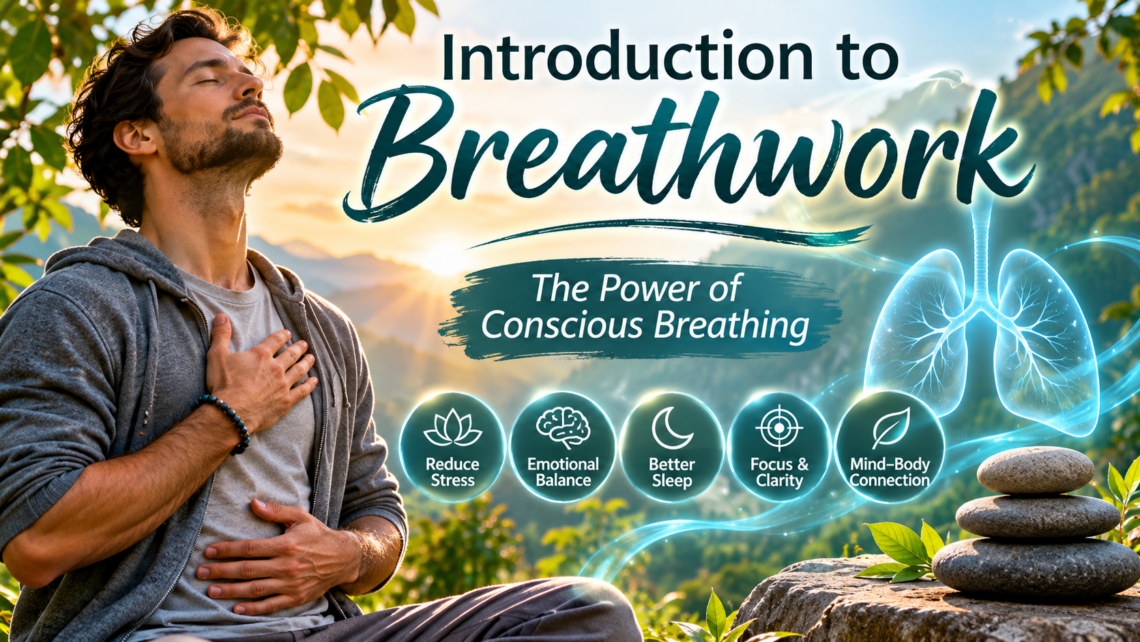
Introduction to Breathwork: The Power of Conscious Breathing
Table of Contents
Breathing is something we do every moment of every day, usually without giving it a second thought. It is automatic, continuous and essential to life. Yet, hidden within this simple biological process is an incredible opportunity to influence how we experience our bodies, manage stress and connect with ourselves.
Breathwork is the practice of consciously changing or directing your breathing patterns to support physical relaxation, emotional wellbeing and mental clarity.
In a world where stress, anxiety and constant stimulation have become part of everyday life, learning to work with your breath can be one of the simplest and most accessible tools for supporting your overall wellbeing.
Let’s explore what breathwork is, how it works and how you can begin incorporating it into your daily routine.
1. What Is Breathwork?
Breathwork refers to a variety of breathing techniques that involve intentionally controlling the rhythm, depth, pace or pattern of your breathing.
Unlike ordinary unconscious breathing, breathwork encourages you to become aware of your breath and use it as a tool for influencing your body’s physiological and psychological responses.
Different breathing techniques may be used to:
- Encourage relaxation and calmness.
- Support stress management.
- Improve awareness of the body.
- Promote emotional self-regulation.
- Develop mindfulness and concentration.
- Support healthy breathing habits.
- Encourage a greater sense of connection between mind and body.
Breathwork ranges from simple slow-breathing exercises to more structured practices involving rhythmic breathing, breath retention and guided breathing sessions.
You don’t need expensive equipment, special supplements or a particular environment to get started. Your breath is always with you.
2. The Connection Between Breathing and the Nervous System
One of the most interesting aspects of breathwork is its relationship with the autonomic nervous system.
The autonomic nervous system helps regulate many automatic bodily functions, including heart rate, digestion, blood pressure and breathing.
It has two major branches:
The Sympathetic Nervous System – Fight or Flight
The sympathetic nervous system prepares the body to respond to perceived threats, challenges or stressful situations.
When activated, you may experience:
- Increased heart rate.
- Faster or shallower breathing.
- Increased muscle tension.
- Heightened alertness.
- Reduced digestive activity.
This response is useful when we need to react quickly. However, prolonged stress can leave us feeling constantly tense, overwhelmed and exhausted.
The Parasympathetic Nervous System – Rest and Digest
The parasympathetic nervous system supports recovery, relaxation and many restorative bodily functions.
When this system is more active, the body may experience:
- A slower heart rate.
- Greater relaxation.
- Improved digestive activity.
- Reduced physiological arousal.
- A greater sense of calm.
Slow, comfortable breathing, particularly with a gentle and slightly longer exhalation, can influence autonomic activity and help promote relaxation.
The important principle: You cannot always control what happens around you, but learning to become aware of your breathing gives you one practical way to influence how you respond.
3. How Does Breathwork Work?
Breathing is closely connected to the brain, nervous system and cardiovascular system.
Every breath involves an exchange of gases. When you inhale, oxygen enters the lungs and passes into the bloodstream. When you exhale, carbon dioxide is removed.
However, breathing does more than simply supply oxygen.
The rate and depth of breathing also influence carbon dioxide levels in the blood. Carbon dioxide plays an important role in regulating blood acidity and influencing the delivery of oxygen to tissues.
This is why breathing excessively fast or deeply can sometimes cause dizziness, tingling, light-headedness or feelings of anxiety.
Conscious breathing techniques aim to encourage a more comfortable and regulated breathing pattern.
One particularly useful approach is slow, gentle breathing without forcing the lungs to take in excessive amounts of air.
4. Five Benefits of Practising Breathwork
Breathwork is not a cure for medical conditions, but research suggests that certain breathing practices may offer benefits for everyday wellbeing.
1. Stress Management
Slow breathing can help reduce physiological arousal and encourage a relaxation response.
Taking a few minutes to focus on your breathing can provide a welcome pause during a stressful day.
2. Emotional Awareness
Our breathing patterns often change with our emotions.
When we feel anxious, frustrated or overwhelmed, our breathing may become faster or more irregular.
Becoming aware of these changes can help us recognise emotional responses and create an opportunity to respond more mindfully.
3. Improved Mindfulness
Breathing provides a natural anchor for mindfulness.
By focusing on the sensation of air entering and leaving the body, we can bring our attention away from distracting thoughts and back into the present moment.
4. Better Sleep Preparation
Gentle breathing exercises before bedtime may help reduce mental and physical tension.
A relaxed breathing routine can become part of a calming nighttime ritual, helping prepare the mind and body for sleep.
5. Mind-Body Connection
Breathwork encourages us to become more aware of physical sensations, muscle tension and emotional states.
Over time, this awareness may help us recognise when we are holding tension, rushing through the day or neglecting our need for rest.
5. Understanding Different Types of Breathwork
There are many breathing techniques, each with a slightly different purpose.
Here are five beginner-friendly approaches.
A. Diaphragmatic Breathing (Belly Breathing)
Diaphragmatic breathing involves allowing the diaphragm to do more of the work during breathing.
Instead of lifting the shoulders and upper chest, the abdomen gently expands during inhalation.
How to practise:
- Sit comfortably or lie down.
- Place one hand on your chest and the other on your abdomen.
- Breathe gently through your nose.
- Allow your abdomen to expand naturally.
- Exhale slowly without forcing the air out.
- Continue for 3–5 minutes.
Purpose: Encourages comfortable breathing mechanics, relaxation and greater body awareness.
B. Box Breathing (Four-Square Breathing)
Box breathing is a structured technique often used to encourage focus and calmness.
It involves four equal breathing phases.
How to practise:
- Inhale gently for 4 seconds.
- Hold your breath comfortably for 4 seconds.
- Exhale for 4 seconds.
- Pause for 4 seconds.
- Repeat for 3–5 cycles.
Purpose: Encourages controlled breathing and focused attention.
If holding your breath feels uncomfortable, skip the holds and simply breathe slowly and naturally.
C. 4–6 Breathing
This is a simple technique that emphasises a slightly longer exhalation.
How to practise:
- Inhale gently through your nose for 4 seconds.
- Exhale slowly for 6 seconds.
- Repeat for 2–5 minutes.
Purpose: May encourage relaxation and support a calmer breathing rhythm.
Do not force the exhalation or continue if you feel uncomfortable.
D. Alternate Nostril Breathing (Nadi Shodhana)
Originating from traditional yogic practices, alternate nostril breathing involves breathing through one nostril at a time.
How to practise:
- Sit comfortably with your spine relaxed.
- Gently close your right nostril.
- Inhale through your left nostril.
- Switch nostrils and exhale through your right.
- Inhale through your right nostril.
- Switch again and exhale through your left.
- Continue gently for 2–3 minutes.
Purpose: Traditionally used in yoga to encourage balance, concentration and mindfulness.
E. Mindful Natural Breathing
Sometimes the best breathing exercise is simply observing your natural breath without trying to change it.
How to practise:
- Find a comfortable position.
- Close your eyes if you wish.
- Notice the sensation of breathing.
- Observe the movement of your abdomen and chest.
- Notice the temperature of the air entering and leaving your nostrils.
- Allow your breathing to remain natural.
- Whenever your mind wanders, gently return your attention to your breath.
Purpose: Develops mindfulness, self-awareness and a greater connection with the present moment.
6. Breathwork and the Emotional Body
Our emotional experiences and breathing patterns are closely connected.
Think about what happens when you become frightened. Your breathing may become shallow and rapid.
When you are upset, you might sigh repeatedly.
When you feel relaxed, your breathing often becomes slower and more comfortable.
This relationship works in both directions: emotional states influence breathing, while deliberately changing breathing patterns can influence how we feel.
From a holistic wellbeing perspective, breathwork can become a valuable practice for reconnecting with yourself.
It provides an opportunity to pause, acknowledge what you are experiencing and create space between an emotional reaction and your response.
Rather than suppressing emotions, mindful breathing encourages us to notice them without immediately judging or reacting to them.
7. Creating Your Own Daily Breathwork Routine
Consistency is more important than complexity.
You don’t need to spend an hour practising breathwork every day. Even a few minutes of conscious breathing can be a meaningful addition to your wellbeing routine.
Here is a simple beginner’s routine:
Morning – 3 Minutes
Practise gentle diaphragmatic breathing after waking up.
Focus on becoming aware of your body and starting the day without rushing.
Midday – 2 Minutes
Take a short breathing break.
Step away from your screen, relax your shoulders and practise slow, comfortable breathing.
Evening – 5 Minutes
Try 4–6 breathing or mindful natural breathing before bedtime.
Allow yourself to slow down and release some of the tension accumulated throughout the day.
Remember: Breathwork should never feel like a struggle. If you experience dizziness, tingling, breathlessness or discomfort, return to normal breathing and stop the exercise.
8. Important Safety Considerations
Although gentle breathing exercises are generally accessible to many people, not every breathwork technique is suitable for everyone.
Some intensive breathwork practices involve rapid breathing, prolonged breath retention or deliberate changes in carbon dioxide levels.
These techniques can cause dizziness, fainting, panic-like sensations and other adverse effects.
For beginners, it is best to start with gentle, comfortable breathing.
A few important precautions:
- Never force deep or rapid breathing.
- Avoid practising breath-holding exercises in water or while driving.
- Stop if you experience dizziness, chest pain, significant breathlessness or discomfort.
- If you have a respiratory or cardiovascular condition, consult an appropriate healthcare professional before starting structured breathwork.
- Avoid intensive breathwork during pregnancy unless specifically cleared by a qualified healthcare professional.
- Do not use breathwork as a replacement for medical treatment.
The objective is not to achieve the deepest breath or hold your breath for the longest time. It is to develop a comfortable, sustainable relationship with your breathing.
9. Breathwork as Part of Your Holistic Wellbeing Journey
At VitalPulse, we believe wellbeing is influenced by the relationship between different aspects of our lives.
Physical health, emotional balance, mental clarity, lifestyle choices and our environment all contribute to our overall wellbeing.
Breathwork can complement other healthy lifestyle practices, including:
- Mindfulness and meditation.
- Gentle physical movement.
- Adequate sleep and recovery.
- Balanced nutrition and hydration.
- Stress management.
- Spending time in nature.
- Developing greater emotional awareness.
The beauty of breathwork is its accessibility. You can practise it at home, at work, outdoors or whenever you need a moment to reconnect with yourself.
Your breath is always available as an opportunity to pause and become present.
Final Thoughts: Never Underestimate the Power of a Breath
We often search for complicated solutions to improve our wellbeing, overlooking some of the simplest tools available to us.
Breathing is one of them.
By learning to become more conscious of how we breathe, we can develop greater awareness of our bodies, emotions and responses to everyday stress.
You don’t need to master complicated techniques or transform your life overnight.
Start with just three minutes a day.
Breathe gently. Observe. Relax. Reconnect.
Sometimes, the first step towards better wellbeing is simply taking a moment to breathe.
VitalPulse – Explore Your Wellbeing.
Reconnect. Reflect. Realign.
Disclaimer: This article is intended for general educational and wellness purposes only. Breathwork is not a medical treatment and should not replace professional medical advice, diagnosis or treatment. Individual experiences and responses may vary.