Chromosome 10: The Genetic Blueprint of Growth, Development, Metabolism & Cellular Protection
Exploring the genes that influence how the body develops, regulates cell growth, processes nutrients and maintains essential biological functions.
Introduction
Every chromosome carries a collection of genetic instructions that contributes to the development and functioning of the human body. While some chromosomes are particularly well known for their roles in immunity, blood groups or neurological development, others contain genes that influence several major biological systems at once.
Chromosome 10 is one such chromosome.
It contains genes involved in cell growth regulation, embryonic development, kidney formation, skeletal development, nerve-cell development, hormone-related processes and metabolic regulation. Some of its genes act as important safeguards against uncontrolled cell growth, while others help coordinate the formation of organs and tissues before birth.
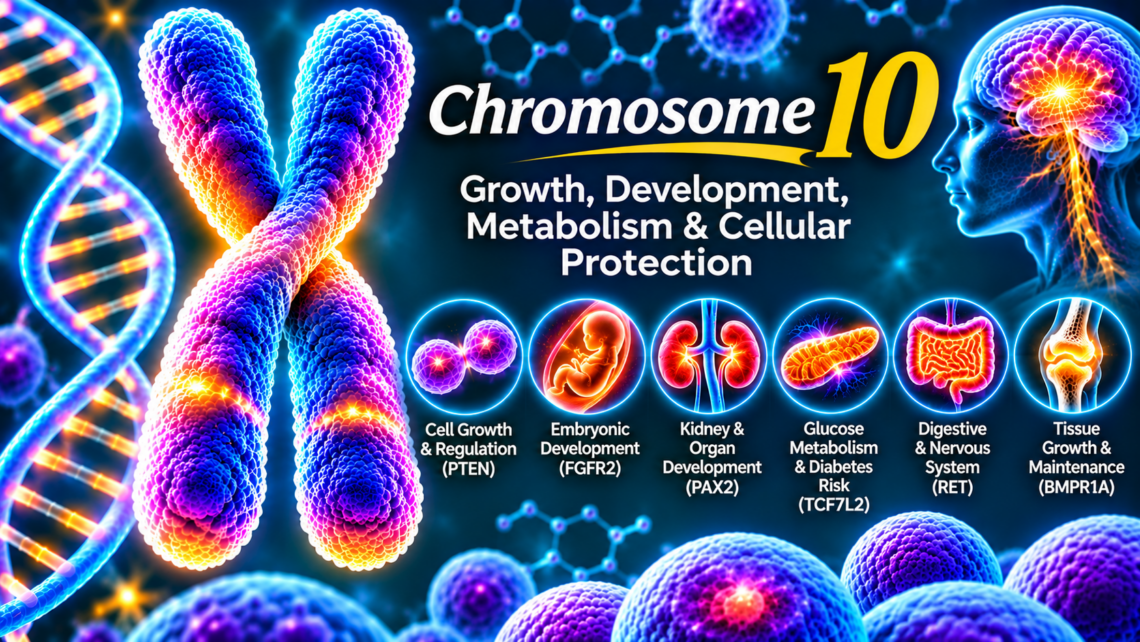
Among its best-known genes are PTEN, RET, FGFR2, PAX2, BMPR1A and TCF7L2. These genes illustrate the remarkable range of biological processes influenced by chromosome 10.
In this article, we explore the structure and functions of chromosome 10, its important genes, associated genetic conditions, its relationship with different body systems, and some complementary perspectives on its possible symbolic significance.
1. Understanding Chromosome 10
Humans normally have 46 chromosomes arranged into 23 pairs. Chromosome 10 is one of the 22 pairs of autosomes, meaning it is not a sex chromosome.
We inherit one copy from each biological parent.
Chromosome 10 contains more than 133 million DNA base pairs and represents approximately 4–4.5% of the DNA in our cells. Estimates of its protein-coding gene count vary, but it contains approximately 700–800 protein-coding genes according to MedlinePlus Genetics.
Like other chromosomes, chromosome 10 has two main arms:
- Short arm (p): The smaller section of the chromosome.
- Long arm (q): The larger section of the chromosome.
Genes are positioned at specific locations along these arms. Genetic changes may affect an individual gene, a larger section of DNA or the structure of the chromosome itself.
Chromosome 10 is particularly interesting because it contains genes with important roles in regulating cell growth, development and communication between cells.
2. The Major Biological Functions of Chromosome 10
Chromosome 10 contributes to several interconnected biological processes.
Cell Growth and Regulation
One of its most significant contributions is through the PTEN gene, which helps regulate cellular growth and division.
Cells need to grow and divide to replace damaged tissue, repair injuries and maintain normal bodily functions. However, this process must be carefully controlled.
PTEN helps regulate signalling pathways that influence cell growth, survival and proliferation.
Embryonic and Skeletal Development
Genes such as FGFR2 and PAX2 contribute to the development of tissues and organs during pregnancy.
They help coordinate processes involved in:
- Formation of the skull and facial structures.
- Development of the hands and feet.
- Formation of the kidneys and urinary system.
- Development of the eyes and ears.
- Differentiation of specialised cells and tissues.
Nervous System Development
The RET gene contributes to the development of nerve cells, particularly those involved in the nervous system of the intestine and the autonomic nervous system.
These systems help coordinate involuntary processes such as intestinal movement and other automatic bodily functions.
Metabolism and Blood Glucose Regulation
The TCF7L2 gene is involved in the regulation of gene expression and plays an important role in biological pathways associated with glucose metabolism and insulin secretion.
Certain variations in this gene are strongly associated with an increased risk of developing type 2 diabetes.
Cellular Signalling and Tissue Maintenance
Other genes on chromosome 10 participate in signalling pathways that influence cell differentiation, tissue development, cellular repair and the maintenance of normal biological structures.
Together, these functions make chromosome 10 an important contributor to the body’s ability to grow, adapt and maintain tissue integrity.
3. Important Genes Located on Chromosome 10
Chromosome 10 contains many genes, but several are particularly relevant to human health and biological development.
| Gene | Main biological function | Associated conditions or relevance |
|---|---|---|
| PTEN | Regulates cell growth, division and survival | PTEN hamartoma tumour syndrome; cancer biology |
| RET | Cell signalling and development of nerve cells | Hirschsprung disease; multiple endocrine neoplasia type 2 |
| FGFR2 | Growth-factor signalling, skeletal and tissue development | Apert syndrome; Crouzon syndrome; Pfeiffer syndrome |
| PAX2 | Development of kidneys, eyes, ears and nervous system | Renal coloboma syndrome |
| BMPR1A | Regulates cell growth and developmental signalling | Juvenile polyposis syndrome |
| TCF7L2 | Gene regulation and glucose metabolism | Genetic susceptibility to type 2 diabetes |
| CYP17A1 | Produces an enzyme involved in steroid hormone synthesis | 17-alpha-hydroxylase/17,20-lyase deficiency |
Let’s examine some of these genes in greater detail.
PTEN – The Cellular Growth Regulator
The PTEN gene is one of the most important tumour-suppressor genes located on chromosome 10.
It provides instructions for producing an enzyme that helps regulate a signalling pathway involved in cell growth, survival and proliferation.
PTEN acts as a biological brake on certain growth signals. By helping control these pathways, it reduces the likelihood of cells multiplying in an uncontrolled manner.
When PTEN function is significantly disrupted, cellular growth regulation may become impaired.
Inherited pathogenic PTEN variants can cause PTEN hamartoma tumour syndrome, a group of conditions that includes Cowden syndrome and Bannayan-Riley-Ruvalcaba syndrome.
People with these conditions may develop benign growths called hamartomas and have an increased risk of certain cancers.
PTEN is also frequently altered in various cancers through changes acquired during a person’s lifetime.
RET – Nerve Development and Cellular Communication
The RET gene provides instructions for producing a receptor protein involved in communication between cells.
It is particularly important during embryonic development, when specialised nerve cells form and migrate to their appropriate locations.
RET contributes to the development of:
- Enteric neurons, which regulate intestinal movement.
- Components of the autonomic nervous system.
- Certain kidney structures.
- Cells involved in reproductive development.
Changes in RET can have different consequences depending on how they affect the gene’s activity.
Some variants reduce RET function and can cause Hirschsprung disease, a condition in which nerve cells are missing from sections of the large intestine.
Other variants increase RET activity and can cause multiple endocrine neoplasia type 2, an inherited condition associated with tumours involving endocrine glands, particularly the thyroid and adrenal glands.
This demonstrates how different changes in the same gene can produce very different biological outcomes.
FGFR2 – Growth, Bone Formation and Development
FGFR2 stands for fibroblast growth factor receptor 2.
It provides instructions for producing a receptor that receives signals from fibroblast growth factors.
These signals help regulate:
- Cell growth and division.
- Cell differentiation.
- Bone formation.
- Tissue development.
- Wound healing.
- Embryonic development.
FGFR2 is particularly important in the formation of the skull, facial structures, hands and feet.
Certain activating variants in this gene can cause craniosynostosis syndromes, including Apert syndrome, Crouzon syndrome and Pfeiffer syndrome.
Craniosynostosis occurs when one or more of the fibrous joints between the bones of an infant’s skull close prematurely.
The particular condition depends on the nature and location of the genetic change.
PAX2 – Kidney and Eye Development
PAX2 is a transcription factor, meaning that its protein helps regulate the activity of other genes.
It plays an important role during embryonic development, particularly in the formation of:
- Kidneys.
- Urinary structures.
- Eyes.
- Ears.
- Parts of the central nervous system.
Pathogenic variants in PAX2 can cause renal coloboma syndrome, also known as papillorenal syndrome.
This condition can involve abnormalities of the optic nerve and kidneys. The severity varies between affected individuals.
PAX2 demonstrates the close relationship between genetic regulation and the coordinated development of different organs.
BMPR1A – Tissue Development and Growth Signalling
BMPR1A produces a receptor involved in the bone morphogenetic protein signalling pathway, which is part of the broader transforming growth factor beta (TGF-β) superfamily.
This pathway helps regulate cellular growth, differentiation and tissue development.
BMPR1A is particularly important in controlling signals that influence how cells grow and behave.
Pathogenic variants in BMPR1A can cause juvenile polyposis syndrome, an inherited condition characterised by the development of multiple polyps in the digestive tract.
Although the polyps are often benign, affected individuals may have an increased risk of gastrointestinal cancers.
TCF7L2 – Glucose Metabolism and Insulin Regulation
TCF7L2 is involved in the regulation of gene expression through the Wnt signalling pathway.
It has attracted considerable scientific interest because certain genetic variations are strongly associated with susceptibility to type 2 diabetes.
The gene is involved in biological processes affecting glucose regulation and pancreatic beta-cell function.
Pancreatic beta cells produce insulin, the hormone that helps regulate blood glucose levels.
It is important to understand that TCF7L2 variants do not automatically cause diabetes. Type 2 diabetes is a complex condition influenced by multiple genes, environmental factors and lifestyle-related influences.
CYP17A1 – Steroid Hormone Production
The CYP17A1 gene provides instructions for producing an enzyme involved in the synthesis of steroid hormones.
These hormones include precursors involved in the production of:
- Cortisol.
- Androgens.
- Oestrogens.
The enzyme performs important reactions in the adrenal glands and reproductive tissues.
Certain pathogenic variants in CYP17A1 can cause 17-alpha-hydroxylase/17,20-lyase deficiency, a rare inherited condition affecting steroid hormone production.
This illustrates chromosome 10’s contribution to endocrine and reproductive biology.
4. Genetic Conditions Associated with Chromosome 10
Changes affecting individual genes on chromosome 10 can contribute to specific inherited conditions.
Larger structural changes involving chromosome 10 can also affect multiple genes simultaneously.
Some recognised conditions include:
PTEN Hamartoma Tumour Syndrome
Caused by inherited pathogenic variants in PTEN.
It can involve multiple benign growths, macrocephaly (an unusually large head circumference), characteristic skin or mucosal findings and increased risks of certain cancers.
Hirschsprung Disease
Some cases are associated with variants in RET.
The condition involves an absence of nerve cells in part of the intestine, affecting the movement of stool through the digestive tract.
Symptoms commonly include severe constipation, abdominal swelling and intestinal obstruction.
Multiple Endocrine Neoplasia Type 2
Associated with activating variants in RET.
This inherited condition increases the risk of certain endocrine tumours, including medullary thyroid carcinoma and pheochromocytoma.
Apert Syndrome
Associated with specific activating variants in FGFR2.
It affects skull development and may involve premature fusion of skull bones, as well as differences in the development of the hands and feet.
Renal Coloboma Syndrome
Associated with pathogenic variants in PAX2.
It can affect kidney development and the optic nerve, sometimes leading to impaired kidney function and visual difficulties.
Juvenile Polyposis Syndrome
Associated with pathogenic variants in BMPR1A or SMAD4.
It is characterised by multiple polyps in the gastrointestinal tract and can increase the risk of gastrointestinal cancer.
Type 2 Diabetes Susceptibility
Certain variations in TCF7L2 are associated with an increased likelihood of developing type 2 diabetes.
However, these variants are risk factors rather than a diagnosis or guarantee that someone will develop the condition.
10q26 Deletion Syndrome
This chromosomal condition occurs when a segment of the long arm of chromosome 10 is missing.
The size of the deletion varies between individuals.
Possible features include:
- Developmental delay.
- Learning difficulties or intellectual disability.
- Growth differences.
- Speech and motor-development delays.
- Distinctive facial features.
- Skeletal or heart abnormalities.
- Genital or urinary abnormalities in some individuals.
The effects depend on which genes are included in the deleted segment.
Chromosome 10 changes can also include partial duplications, partial deletions, translocations and ring chromosome formations.
It is important to distinguish between a change affecting one gene and a structural chromosome abnormality involving a larger section of DNA.
5. Chromosome 10 and the Body’s Major Systems
The genes on chromosome 10 do not operate independently. Their biological functions connect with several major systems.
The Endocrine System
The endocrine system produces hormones that coordinate metabolism, growth, reproduction and other essential functions.
Chromosome 10 contributes through genes such as:
- RET, associated with endocrine tumour syndromes.
- CYP17A1, involved in steroid hormone synthesis.
- TCF7L2, involved in pathways associated with glucose regulation.
These genes illustrate the relationship between genetic information, hormone production and metabolic control.
The Digestive System
RET contributes to the development of the enteric nervous system, the network of nerves that regulates digestive movement.
BMPR1A is also relevant to the gastrointestinal tract because of its role in regulating cellular growth and its association with juvenile polyposis syndrome.
The Renal and Urinary Systems
PAX2 plays a particularly important role in kidney development.
Genetic changes affecting this gene can result in abnormalities involving both the kidneys and the optic nerve.
The Skeletal System
FGFR2 is essential for normal skeletal development.
Its signalling pathways influence the formation and growth of bones, including structures of the skull and limbs.
The Nervous System
RET contributes to the development of specialised nerve cells.
PAX2 also participates in embryonic development involving the central nervous system.
These genes demonstrate that chromosome 10 has important developmental connections with both the central and peripheral nervous systems.
The Cellular Growth and Repair System
PTEN and BMPR1A are involved in pathways that regulate cell growth and behaviour.
These pathways help maintain the balance between cellular development, differentiation and proliferation.
6. Chromosome 10, Epigenetics and Gene Expression
Genetics describes the DNA sequence inherited from our parents.
Epigenetics explores how gene activity can be regulated without changing the underlying DNA sequence.
One way to understand this is to imagine DNA as a library of instructions.
Genes contain the instructions, while epigenetic mechanisms help determine which instructions are more or less active in particular cells.
Important epigenetic mechanisms include:
- DNA methylation: Chemical modifications that can influence gene activity.
- Histone modification: Changes to proteins around which DNA is organised, influencing how accessible particular genes are.
- Non-coding RNA: RNA molecules that can regulate gene expression.
- Chromatin remodelling: Changes in how DNA is packaged and made accessible to cellular machinery.
These mechanisms are important because different cells need different genetic instructions.
For example, a kidney cell and a nerve cell contain essentially the same DNA, but they activate different sets of genes to perform their specialised functions.
Research into genes such as PTEN, FGFR2 and TCF7L2 also demonstrates how changes in gene regulation can influence biological processes.
Epigenetics is an active area of research in cancer biology, metabolism, development and ageing.
It is important to remember that epigenetic regulation is complex. It should not be interpreted as evidence that thoughts, emotions or particular wellbeing practices can directly switch individual chromosome 10 genes on or off in a predictable way.
7. A Holistic Wellbeing Perspective
From a holistic wellbeing perspective, chromosome 10 offers an opportunity to explore several interconnected themes:
- Growth and development.
- Cellular regulation.
- Metabolic balance.
- Hormonal communication.
- Structural integrity.
- Adaptation and repair.
These themes can be used as educational and reflective starting points.
They do not mean that chromosome 10 determines a person’s emotional characteristics, personality, energy patterns or overall wellbeing.
However, understanding the biological processes associated with chromosome 10 can help us appreciate how many different systems work together to maintain the body.
Growth and Regulation
PTEN reminds us that biological growth requires balance.
The body needs to build new cells, but it must also regulate when growth should slow down or stop.
As a holistic reflection, this can inspire questions about balance in everyday life.
Are we allowing enough time for development while also recognising when rest, recovery and boundaries are necessary?
Metabolic Balance
TCF7L2 introduces the relationship between genetic predisposition and glucose regulation.
Metabolic health is influenced by multiple factors, including genetics, nutrition, physical activity, sleep, age and other environmental influences.
A holistic approach considers these factors together rather than focusing on one isolated aspect of health.
Development and Structural Support
FGFR2 and PAX2 demonstrate how carefully coordinated development creates the structures that support everyday life.
From a reflective perspective, this can represent the importance of foundations, stability and gradual development.
Communication and Coordination
RET and BMPR1A are involved in signalling pathways that allow cells to receive and respond to information.
This provides an opportunity to reflect on communication and coordination, both biologically and in everyday life.
The body’s systems are interconnected. A change in one biological pathway can influence several other processes.
8. Chromosome 10: An Esoteric and Symbolic Perspective
The following section is a symbolic exploration for personal reflection. It is not established genetic science, and there is no scientifically demonstrated connection between chromosome 10 and Tarot archetypes, chakras or specific energetic patterns.
If we explore chromosome 10 through a symbolic or esoteric lens, several themes emerge from the biological functions of its genes.
These themes can provide inspiration for a reflective framework within holistic wellbeing education.
The Number 10 – Completion and a New Beginning
In numerological and Tarot traditions, the number 10 is often associated with completion, cycles and the transition into a new phase.
It represents the ending of one sequence and the beginning of another.
This symbolism can be explored alongside chromosome 10’s biological involvement in development, regulation and cellular processes.
Tarot Archetype: Wheel of Fortune – X
The tenth Major Arcana card in the Tarot is the Wheel of Fortune.
<The Wheel of Fortune> is traditionally associated with cycles, change, movement, opportunity and the changing circumstances of life.
As a symbolic comparison, this archetype offers an interesting reflection on chromosome 10’s involvement in biological regulation and metabolic processes.
The body is constantly adapting to changing internal and external conditions.
Growth, repair, hormonal signalling and metabolism are not static processes. They involve continuous adjustment and coordination.
The Wheel of Fortune can therefore serve as a metaphor for biological and personal cycles.
Tarot Archetype: The World – XXI
Another possible symbolic connection is The World, the twenty-first Major Arcana card.
The World represents integration, completion, wholeness and the relationship between different parts of a greater system.
Chromosome 10’s biological functions involve several interconnected systems, including the endocrine, digestive, renal, skeletal and nervous systems.
Symbolically, this can represent the importance of integration: individual parts working together to support a greater whole.
Symbolic Themes for Chromosome 10
For a personal reflection framework, chromosome 10 could be explored through the following themes:
- Balance: Finding equilibrium between growth and restraint.
- Cycles: Recognising periods of change, development and renewal.
- Structure: Building stable foundations.
- Integration: Understanding the relationship between different parts of life.
- Adaptation: Responding to changing circumstances.
- Regulation: Knowing when to act, pause, adjust or restore.
These are reflective associations rather than biological properties of the chromosome.
9. Supporting General Wellbeing
Although lifestyle practices cannot repair genetic variants or directly control individual chromosome 10 genes, general wellbeing habits can support the biological systems discussed in this article.
Support Metabolic Health
Because chromosome 10 includes genes associated with glucose regulation, metabolic health is a useful area to explore.
General approaches include:
- Eating a varied and balanced diet.
- Including fibre-rich foods.
- Choosing nutritious sources of protein.
- Limiting excessive consumption of highly processed foods and sugary drinks.
- Maintaining regular physical activity.
- Seeking appropriate medical screening when indicated.
Support Healthy Sleep
Sleep plays an important role in metabolic regulation, hormonal signalling, immune function and tissue maintenance.
Maintaining consistent sleep and waking times can help support normal physiological rhythms.
Encourage Regular Movement
Physical activity supports cardiovascular function, muscle strength, metabolic health and general wellbeing.
The appropriate level of activity depends on individual health, age and physical ability.
Support Digestive Health
A balanced diet containing sufficient fibre, appropriate fluid intake and regular movement can support normal digestive function.
Persistent digestive symptoms should be assessed by a qualified healthcare professional.
Maintain Preventive Health Care
Family history and certain inherited genetic variants can influence the need for specific screening or monitoring.
Anyone with a known inherited PTEN, RET, PAX2 or BMPR1A variant should discuss appropriate follow-up with a healthcare professional or genetic specialist.
10. Questions for Personal Reflection
The biological functions associated with chromosome 10 offer several useful questions for personal exploration.
- Where in my life am I experiencing growth or change?
- Do I recognise the importance of balance between activity and rest?
- What foundations am I building for my long-term wellbeing?
- How well do I respond when circumstances change?
- Am I paying attention to the interconnected nature of my physical, emotional and social wellbeing?
- What does personal growth mean to me?
- Where might I benefit from greater structure, stability or integration?
These questions are intended for self-reflection, not genetic assessment.
11. Frequently Asked Questions
What does chromosome 10 do?
Chromosome 10 contains genes involved in cellular growth regulation, embryonic development, kidney formation, skeletal development, nervous system function, hormone synthesis and glucose metabolism.
Which important genes are found on chromosome 10?
Some important genes include PTEN, RET, FGFR2, PAX2, BMPR1A, TCF7L2 and CYP17A1.
Is chromosome 10 associated with cancer?
Yes. Several genes on chromosome 10 are involved in cancer biology.
PTEN is an important tumour-suppressor gene, while inherited RET variants can increase the risk of certain endocrine tumours. Chromosome 10 deletions are also found in some cancers.
However, having chromosome 10 does not mean a person will develop cancer.
Is chromosome 10 associated with diabetes?
Certain variants in TCF7L2, a gene located on chromosome 10, are associated with increased susceptibility to type 2 diabetes.
The condition is multifactorial, meaning that genetic and environmental factors interact.
Does chromosome 10 affect kidney function?
Chromosome 10 contains the PAX2 gene, which plays an important role in kidney development. Pathogenic variants can cause renal coloboma syndrome, which may involve kidney abnormalities.
Is chromosome 10 connected to the digestive system?
Yes. RET contributes to the development of the enteric nervous system, which controls intestinal movement. BMPR1A is also important in gastrointestinal tissue regulation.
Can lifestyle changes influence chromosome 10?
Lifestyle practices do not change the inherited DNA sequence of chromosome 10. However, general health behaviours can influence metabolic health, hormonal regulation and other biological processes associated with genes on this chromosome.
Conclusion: Chromosome 10 and the Importance of Biological Balance
Chromosome 10 is an important part of the human genetic blueprint.
Its genes contribute to the regulation of cellular growth, the development of organs and tissues, metabolic processes, hormone production and communication between cells.
From PTEN’s role in cellular regulation to RET’s involvement in nerve development, FGFR2’s contribution to skeletal formation and TCF7L2’s association with glucose metabolism, chromosome 10 demonstrates how interconnected the body’s biological systems really are.
It also reminds us that genetics is not simply a collection of isolated instructions. It is a coordinated network of biological information that interacts with development, environment and everyday physiology.
From a holistic perspective, chromosome 10 provides a useful starting point for exploring themes of balance, growth, structure, adaptation and integration.
Understanding these connections can encourage a more informed and thoughtful approach to wellbeing.
Explore Your Wellbeing. Reconnect. Reflect. Realign.
References and Further Reading
The following resources provide reliable scientific information about chromosome 10 and its associated genes.
- MedlinePlus Genetics – Chromosome 10
https://medlineplus.gov/genetics/chromosome/10/ - MedlinePlus Genetics – PTEN Gene
https://medlineplus.gov/genetics/gene/pten/ - MedlinePlus Genetics – RET Gene
https://medlineplus.gov/genetics/gene/ret/ - MedlinePlus Genetics – FGFR2 Gene
https://medlineplus.gov/genetics/gene/fgfr2/ - MedlinePlus Genetics – PAX2 Gene
https://medlineplus.gov/genetics/gene/pax2/ - MedlinePlus Genetics – BMPR1A Gene
https://medlineplus.gov/genetics/gene/bmpr1a/ - MedlinePlus Genetics – 10q26 Deletion Syndrome
https://medlineplus.gov/genetics/condition/10q26-deletion-syndrome/ - The DNA Sequence and Comparative Analysis of Human Chromosome 10 – Nature
https://www.nature.com/articles/nature02462
Medical Disclaimer
This article is intended for general educational and wellbeing information only. It does not provide medical diagnosis, genetic counselling or treatment recommendations.
Genetic conditions can only be assessed through appropriate clinical evaluation and, where indicated, validated genetic testing. Genetic associations do not mean that a person will necessarily develop a particular condition.
The holistic and esoteric interpretations in this article are presented for personal reflection and are not scientifically established explanations of chromosome function.
Always consult a qualified healthcare professional regarding persistent symptoms, suspected genetic conditions or concerns about inherited health risks.
VitalPulse – Explore Your Wellbeing. Reconnect. Reflect. Realign.