Chromosome 18 – The Genetic Blueprint of Brain Development, Growth, Immunity, Metabolism & Cellular Regulation
Exploring the genes, biological functions and genetic conditions associated with Human Chromosome 18.
Introduction: Why Is Chromosome 18 Important?
Human DNA contains 23 pairs of chromosomes, with one chromosome in each pair inherited from each biological parent. These chromosomes carry the genetic instructions that guide our development, influence our characteristics and help regulate the biological processes that keep us alive.
Chromosome 18 is particularly interesting because it contains genes involved in brain development, cellular communication, immune regulation, metabolism, tissue growth and the maintenance of healthy organs.
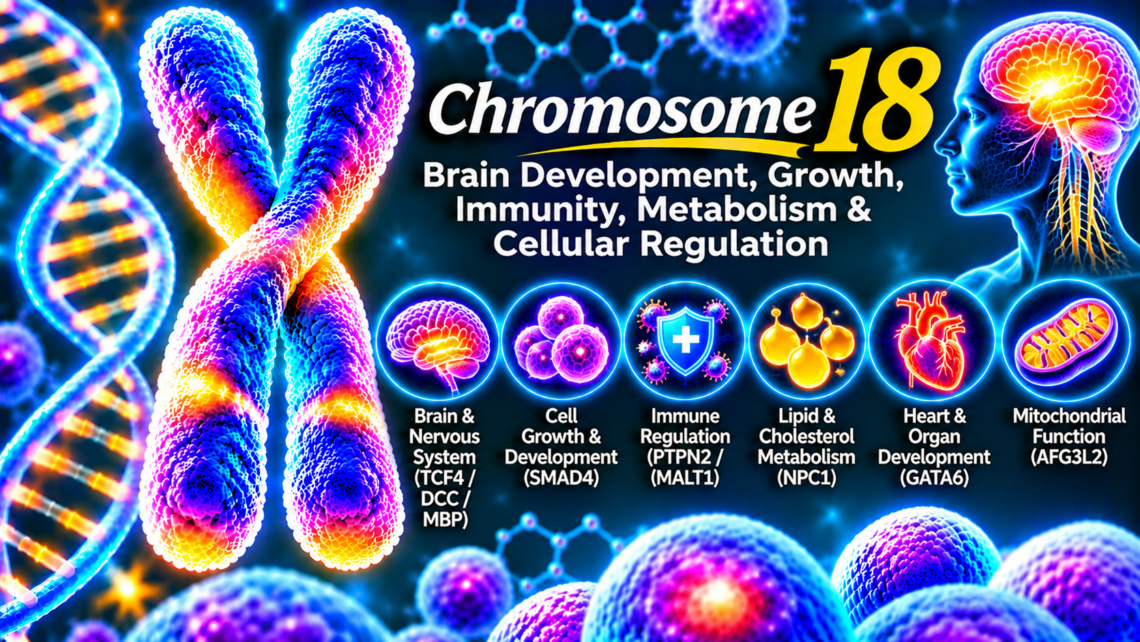
Some important genes located on Chromosome 18 include:
- SMAD4: Helps regulate cell growth, development and communication through the TGF-beta signalling pathway.
- TCF4: Plays an important role in brain development and the regulation of gene activity.
- NPC1: Helps cells transport and process cholesterol and other fats.
- MBP: Provides instructions for producing myelin basic protein, an important component of the protective covering around nerve fibres.
- GATA6: Helps regulate the development of the heart, pancreas and other organs.
- DCC: Contributes to the development of the nervous system and the guidance of growing nerve fibres.
- PTPN2: Helps regulate immune signalling and inflammatory responses.
- AFG3L2: Produces a protein involved in mitochondrial maintenance and function.
Chromosome 18 is also associated with several recognised genetic conditions, including Edwards syndrome (trisomy 18), 18p deletion syndrome, 18q deletion syndrome, Pitt-Hopkins syndrome and Niemann-Pick disease type C1.
One of its most interesting characteristics is the relationship between gene dosage and development. Having an additional or missing section of Chromosome 18 can affect multiple biological systems, depending on which genes are involved.
In this article, we explore the structure of Chromosome 18, its major genes, its connections to different body systems and its broader significance for human wellbeing.
1. Understanding Chromosome 18
Chromosome 18 is one of the 22 pairs of autosomes found in human cells.
It contains approximately 78 million DNA base pairs and represents about 2.5% of the total DNA in a typical human cell.
According to MedlinePlus Genetics, Chromosome 18 is estimated to contain approximately 200–300 protein-coding genes.
Like other chromosomes, it has two main arms:
- Short arm (p): The smaller arm.
- Long arm (q): The larger arm.
Genes are distributed across both arms, with important biological functions associated with different chromosomal regions.
| Chromosomal region | Important genes | Biological significance |
|---|---|---|
| 18q21.1 | SMAD4 | Cell signalling and growth regulation |
| 18q21.2 | TCF4 | Brain development and gene regulation |
| 18q11.2 | NPC1 | Cholesterol and lipid transport |
| 18q23 | MBP | Myelin and nervous system function |
| 18q11.2 | GATA6 | Heart and pancreatic development |
| 18q21.1 | PTPN2 | Immune signalling and inflammation |
| 18p11.21 | AFG3L2 | Mitochondrial function and neuronal health |
| 18q21.2 | DCC | Neuronal development and axon guidance |
Note: Chromosomal locations are approximate and may be represented differently depending on the reference genome and annotation system.
2. The Major Biological Functions of Chromosome 18
Chromosome 18 contributes to several important biological processes.
A. Brain Development and Nervous System Function
Several genes on Chromosome 18 are involved in the development and functioning of the nervous system.
One particularly important example is TCF4.
TCF4 produces a transcription factor, a protein that binds to DNA and helps regulate the activity of other genes.
It is involved in processes such as:
- Neuronal development.
- Cell differentiation.
- Brain development.
- Regulation of gene expression.
- Development of other tissues.
Another important gene is DCC, which produces a receptor involved in guiding growing nerve fibres during nervous system development.
DCC helps developing neurons respond to guidance signals, allowing nerve connections to form in the appropriate locations.
The MBP gene contributes to the formation of myelin, the protective insulating material surrounding many nerve fibres.
Together, these genes illustrate how Chromosome 18 contributes to the formation, organisation and functioning of the nervous system.
B. Cellular Growth and Development
The SMAD4 gene plays an important role in regulating cell growth and communication.
It produces a protein that participates in the transforming growth factor beta (TGF-beta) signalling pathway.
This pathway helps cells respond to signals from their surroundings.
It contributes to:
- Cell growth.
- Cell differentiation.
- Tissue development.
- Cellular communication.
- Regulation of cell division.
- Maintenance of normal tissue structure.
SMAD4 also functions as a tumour suppressor.
When its normal activity is disrupted, cellular growth regulation can be affected.
This demonstrates how important communication between cells is for maintaining healthy tissues.
C. Cholesterol and Lipid Metabolism
The NPC1 gene provides instructions for producing a protein involved in the movement of cholesterol and other fats within cells.
This protein is located in cellular compartments called lysosomes and endosomes.
These compartments help cells process, recycle and transport biological materials.
Cholesterol is essential for several biological functions, including:
- Maintaining cell membrane structure.
- Producing steroid hormones.
- Supporting the formation of bile acids.
- Maintaining normal nervous system function.
When NPC1 function is severely impaired, cholesterol and other lipids can accumulate inside cells.
Pathogenic variants in NPC1 cause Niemann-Pick disease type C1, a rare inherited metabolic disorder that can affect the nervous system and other organs.
D. Immune Regulation and Inflammatory Responses
The PTPN2 gene provides instructions for producing a protein called protein tyrosine phosphatase non-receptor type 2.
This protein helps regulate signalling pathways involved in immune activity and cellular communication.
Immune cells rely on carefully controlled signalling systems to identify threats and coordinate appropriate responses.
PTPN2 helps regulate several of these processes.
Certain genetic variations in PTPN2 have been associated with susceptibility to autoimmune and inflammatory conditions, including inflammatory bowel disease and type 1 diabetes.
However, these associations do not mean that an individual carrying a particular variant will necessarily develop an autoimmune condition.
E. Heart and Pancreatic Development
The GATA6 gene produces a transcription factor involved in the development of several organs.
It plays important roles in the development of:
- The heart.
- The pancreas.
- The lungs.
- The digestive system.
- Other tissues.
GATA6 helps regulate the activity of genes that guide cells as they develop into specialised tissues.
Pathogenic variants can cause congenital heart abnormalities and, in some cases, pancreatic developmental problems, including pancreatic agenesis.
This illustrates how a single gene can influence the formation of several different organs.
F. Mitochondrial Function and Cellular Energy
The AFG3L2 gene produces a protein that forms part of a mitochondrial protein-processing complex.
Mitochondria are structures inside cells that play a central role in energy production.
They also participate in:
- Cellular signalling.
- Regulation of programmed cell death.
- Calcium handling.
- Metabolic processes.
- Maintenance of cellular health.
AFG3L2 contributes to mitochondrial protein quality control.
This is particularly important in energy-demanding tissues such as the brain and nervous system.
Certain pathogenic variants in AFG3L2 are associated with neurological conditions, including spinocerebellar ataxia type 28.
G. Growth, Tissue Organisation and Development
Chromosome 18 contains several genes that help regulate how tissues develop and maintain their structure.
SMAD4 participates in growth and differentiation signalling, while GATA6 contributes to organ development.
TCF4 regulates gene activity during development, and DCC helps guide the formation of neuronal connections.
These genes demonstrate that healthy development depends on carefully coordinated biological instructions.
3. Important Genes Located on Chromosome 18
The following genes are particularly interesting because of their established roles in human biology.
| Gene | Primary function | Biological significance |
|---|---|---|
| SMAD4 | TGF-beta signalling | Cell growth and tissue development |
| TCF4 | Transcription regulation | Brain and nervous system development |
| NPC1 | Lipid transport | Cholesterol metabolism |
| MBP | Myelin protein production | Nerve insulation |
| GATA6 | Transcription regulation | Heart and pancreatic development |
| DCC | Cell-surface receptor | Neuronal guidance and development |
| PTPN2 | Signal regulation | Immune responses |
| AFG3L2 | Mitochondrial protein processing | Cellular energy and neuronal function |
| MALT1 | Immune signalling | Lymphocyte activation |
| SETBP1 | Gene regulation | Development and nervous system function |
SMAD4 – Cellular Communication and Growth Regulation
SMAD4 provides instructions for producing a protein involved in the TGF-beta signalling pathway.
When a TGF-beta signalling molecule binds to its receptor, a series of intracellular events activates SMAD proteins.
These proteins work together with SMAD4 to transmit signals to the cell nucleus.
The resulting protein complex influences the activity of selected genes.
SMAD4 therefore contributes to the regulation of cell growth, differentiation and development.
It also functions as a tumour suppressor.
Pathogenic variants in SMAD4 are associated with juvenile polyposis syndrome and juvenile polyposis-hereditary haemorrhagic telangiectasia syndrome.
TCF4 – Brain Development and Gene Regulation
TCF4 produces a transcription factor involved in controlling the activity of other genes.
It belongs to a group of proteins called E-proteins, which participate in several developmental processes.
TCF4 is active in the brain and other tissues.
It contributes to neuronal development, cell differentiation and the regulation of genes involved in nervous system function.
Pathogenic variants in TCF4 can cause Pitt-Hopkins syndrome, a rare neurodevelopmental condition.
NPC1 – Cholesterol Transport and Cellular Recycling
NPC1 produces a protein located in the membranes of lysosomes and endosomes.
These cellular compartments are involved in processing and recycling biological materials.
NPC1 contributes to the movement of cholesterol and other lipids within cells.
When NPC1 function is impaired, lipids can accumulate inside cells, particularly affecting the nervous system and other organs.
Pathogenic variants are associated with Niemann-Pick disease type C1.
MBP – Myelin and Nerve Communication
MBP produces myelin basic protein, one of the major proteins found in the myelin sheath.
Myelin surrounds many nerve fibres and helps electrical signals travel efficiently.
It is particularly important in the central nervous system, which consists of the brain and spinal cord.
Changes affecting MBP or its surrounding chromosomal region can contribute to abnormalities in myelin development and nervous system function.
GATA6 – Organ Development
GATA6 produces a transcription factor that helps regulate genes involved in embryonic development.
It is important for the formation of several organs, particularly the heart and pancreas.
Certain pathogenic variants can cause congenital heart defects and pancreatic abnormalities.
The effects depend on the specific genetic change and the developmental processes affected.
DCC – Neuronal Guidance and Development
DCC produces a receptor that helps developing nerve cells respond to guidance signals.
One of its important functions is responding to a signalling molecule called netrin-1.
This interaction helps guide growing nerve fibres towards their appropriate destinations.
DCC is therefore important for the organisation of developing neural pathways.
Certain genetic changes affecting DCC are associated with congenital mirror movements, in which a voluntary movement on one side of the body is accompanied by an involuntary similar movement on the other side.
PTPN2 – Immune Signalling
PTPN2 produces an enzyme that regulates the activity of several proteins involved in cellular signalling.
It helps control pathways used by immune cells to respond to signals.
Genetic variation in PTPN2 has been associated with susceptibility to certain autoimmune and inflammatory conditions.
Its role highlights the importance of balanced immune regulation rather than simply increasing immune activity.
AFG3L2 – Mitochondrial Maintenance
AFG3L2 produces a protein involved in mitochondrial protein quality control.
Mitochondria depend on specialised systems that help remove or process damaged and misfolded proteins.
AFG3L2 contributes to these systems and is particularly important for maintaining healthy mitochondrial function in nerve cells.
Pathogenic variants can cause neurological conditions involving impaired coordination and movement.
MALT1 – Immune System Communication
MALT1 produces a protein involved in signalling pathways that help activate certain immune cells.
It participates in the regulation of lymphocyte activity and inflammatory signalling.
MALT1 is also involved in a protein complex that helps transmit signals from immune receptors.
This makes it an important part of the body’s ability to coordinate immune responses.
SETBP1 – Development and Gene Regulation
SETBP1 produces a protein involved in regulating gene activity.
Certain pathogenic variants are associated with SETBP1-related neurodevelopmental disorders and other developmental conditions.
Changes in the amount or function of SETBP1 can affect speech, learning, behaviour and development.
4. Genetic Conditions Associated With Chromosome 18
Changes affecting Chromosome 18 can result in several inherited and chromosomal conditions.
Some involve individual genes, while others result from deletions, duplications or changes in the number of chromosome copies.
Edwards Syndrome – Trisomy 18
Trisomy 18 occurs when a person has three copies of Chromosome 18 instead of the usual two.
This additional genetic material disrupts normal development and can affect multiple organs and body systems.
Possible features include:
- Significant developmental differences.
- Low birth weight.
- Congenital heart abnormalities.
- Feeding difficulties.
- Kidney abnormalities.
- Characteristic hand and foot positioning.
- Growth restriction.
Most cases result from an additional chromosome present in the cells, although mosaic and partial forms also occur.
The condition is associated with substantial medical complexity and high mortality, but outcomes vary according to the type of trisomy and individual circumstances.
18p Deletion Syndrome
18p deletion syndrome occurs when part of the short arm of Chromosome 18 is missing.
The effects depend on the size and location of the deletion and the genes involved.
Possible features include:
- Developmental delay.
- Learning difficulties.
- Short stature.
- Distinctive facial characteristics.
- Low muscle tone.
- Hormonal or endocrine differences in some individuals.
- Brain and nervous system abnormalities in some cases.
18q Deletion Syndrome
18q deletion syndrome occurs when a section of the long arm of Chromosome 18 is missing.
The effects vary depending on the exact location and size of the deletion.
Possible features include:
- Developmental delay.
- Intellectual disability.
- Low muscle tone.
- Hearing difficulties.
- Foot abnormalities.
- Growth differences.
- Immune system differences.
- Brain and nervous system abnormalities.
Some individuals have deletions near the end of the chromosome, known as distal 18q deletion syndrome, while others have deletions closer to the centre of the chromosome.
Pitt-Hopkins Syndrome
Pitt-Hopkins syndrome is most commonly associated with pathogenic variants in TCF4.
It is a rare neurodevelopmental condition.
Possible features include:
- Significant developmental delay.
- Intellectual disability.
- Severe speech impairment.
- Distinctive facial characteristics.
- Breathing abnormalities.
- Movement and coordination differences.
- Gastrointestinal difficulties.
TCF4 plays an important role in regulating genes involved in nervous system development.
Niemann-Pick Disease Type C1
Niemann-Pick disease type C1 is associated with pathogenic variants in NPC1.
It is an inherited metabolic condition in which cholesterol and other lipids accumulate within cells.
Possible features include:
- Problems with balance and coordination.
- Difficulty with eye movements.
- Speech difficulties.
- Swallowing problems.
- Learning and memory changes.
- Progressive neurological symptoms.
- Liver or spleen enlargement in some individuals.
The age of onset and severity can vary considerably.
Juvenile Polyposis Syndrome
Juvenile polyposis syndrome can be associated with pathogenic variants in SMAD4 or BMPR1A.
SMAD4 is located on Chromosome 18, while BMPR1A is located on Chromosome 10.
The condition involves the development of multiple polyps in the gastrointestinal tract.
Some individuals with SMAD4-related juvenile polyposis also develop features of hereditary haemorrhagic telangiectasia.
Juvenile Polyposis-Hereditary Haemorrhagic Telangiectasia Syndrome
Certain pathogenic variants in SMAD4 can cause a condition that combines juvenile polyposis syndrome with hereditary haemorrhagic telangiectasia.
Hereditary haemorrhagic telangiectasia is a vascular condition involving abnormal connections between arteries and veins.
Possible features include:
- Recurrent nosebleeds.
- Small visible blood vessels on the skin or mucous membranes.
- Abnormal blood vessel connections in internal organs.
- Gastrointestinal polyps.
- Increased risk of bleeding.
Spinocerebellar Ataxia Type 28
Spinocerebellar ataxia type 28 is associated with pathogenic variants in AFG3L2.
It is a neurological condition that can affect coordination and movement.
Possible features include:
- Difficulty with balance.
- Unsteady walking.
- Problems coordinating voluntary movements.
- Abnormal eye movements.
- Speech difficulties.
The condition is associated with changes in mitochondrial function and neuronal health.
18q12 Deletion and GATA6-Related Developmental Conditions
Deletions involving the region containing GATA6 can affect normal organ development.
Pathogenic variants in GATA6 can cause congenital heart abnormalities and pancreatic developmental conditions.
The precise effects depend on the genes affected and the nature of the genetic change.
Tetrasomy 18p
Tetrasomy 18p occurs when a person has an additional abnormal chromosome containing two copies of the short arm of Chromosome 18.
This results in four copies of the genetic material from the short arm in affected cells.
Possible features include:
- Developmental delay.
- Intellectual disability.
- Low muscle tone.
- Feeding difficulties.
- Speech and communication differences.
- Skeletal or physical abnormalities.
The severity varies between individuals.
Ring Chromosome 18
Ring chromosome 18 occurs when the ends of Chromosome 18 break and join together to form a circular structure.
This can result in the loss of genetic material from the ends of the chromosome.
The effects depend on which genes are missing and how much genetic material has been affected.
Possible features include developmental delay, growth differences, learning difficulties and physical abnormalities.
5. Chromosome 18 and the Body Systems
Chromosome 18 demonstrates how genes located on one chromosome can influence several interconnected body systems.
| Body system | Relevant genes | Biological connection |
|---|---|---|
| Nervous system | TCF4, DCC, MBP, AFG3L2 | Brain development, nerve guidance and myelin |
| Immune system | PTPN2, MALT1 | Immune signalling and inflammatory regulation |
| Digestive system | SMAD4, NPC1 | Gastrointestinal growth regulation and lipid processing |
| Cardiovascular system | GATA6, SMAD4 | Heart development and cellular signalling |
| Endocrine system | GATA6, PTPN2 | Pancreatic development and metabolic regulation |
| Cellular metabolism | NPC1, AFG3L2 | Lipid transport and mitochondrial maintenance |
| Developmental system | TCF4, GATA6, DCC | Organ formation and neuronal development |
| Tissue regulation | SMAD4 | Cell growth, differentiation and tissue organisation |
These connections illustrate that the body functions as an interconnected biological network.
Genes do not operate independently. Their effects depend on the tissues in which they are active, the proteins they produce and the other biological pathways with which they interact.
6. Chromosome 18, Epigenetics and Gene Regulation
Epigenetics refers to processes that influence how genes are expressed without changing the underlying DNA sequence.
These processes help determine when particular genes are active, how strongly they are expressed and how cells respond to their environment.
Chromosome 18 contains several genes involved in regulating gene expression.
SMAD4 and Cellular Signalling
SMAD4 demonstrates how signals received at the cell surface can influence gene activity inside the nucleus.
When cells receive certain TGF-beta signals, SMAD proteins work together to transmit information to the DNA-regulating machinery.
This influences processes such as cell growth, differentiation and tissue development.
TCF4 and Transcription Regulation
TCF4 is a transcription factor.
It binds to particular DNA sequences and helps regulate the activity of other genes.
This is especially important during development, when cells need to activate different genetic programmes to become specialised tissues.
Chromatin and Gene Accessibility
DNA is packaged around proteins called histones, forming a structure known as chromatin.
Changes in chromatin organisation can influence how easily cellular machinery accesses particular genes.
This is one of the ways cells regulate genetic activity without changing the DNA sequence itself.
Epigenetic regulation is complex, and it should not be assumed that lifestyle practices can directly activate or deactivate a particular Chromosome 18 gene or correct an inherited genetic condition.
7. A Holistic Wellbeing Perspective
At VitalPulse, we explore wellbeing through the relationship between physical health, emotional balance, mental awareness and lifestyle influences.
Chromosome 18 offers an opportunity to reflect on several important biological themes: communication, development, metabolic balance, immune regulation and nervous system function.
The following connections are educational reflections, not methods of diagnosing or treating genetic conditions.
Nervous System Wellbeing
TCF4, DCC, MBP and AFG3L2 demonstrate how different genes contribute to the development and maintenance of the nervous system.
General practices that support nervous system wellbeing include:
- Maintaining consistent sleep routines.
- Engaging in regular physical activity.
- Eating a varied and balanced diet.
- Allowing time for rest and recovery.
- Maintaining social connections.
- Seeking professional assessment for persistent neurological symptoms.
Immune and Inflammatory Balance
PTPN2 and MALT1 illustrate the importance of carefully regulated immune signalling.
The immune system needs to respond effectively to threats while avoiding unnecessary or excessive inflammation.
General practices that support overall health include adequate sleep, balanced nutrition, regular movement and appropriate management of chronic health conditions.
These practices do not prevent or cure inherited autoimmune susceptibility.
Metabolic and Cellular Wellbeing
NPC1 and AFG3L2 demonstrate the importance of cellular processing systems.
Cells must transport nutrients, recycle materials and maintain their internal structures.
General metabolic wellbeing can be supported through:
- Balanced nutrition.
- Adequate hydration.
- Sustainable physical activity.
- Consistent sleep.
- Appropriate medical monitoring when needed.
Inherited metabolic conditions require specialised assessment and care.
Cardiovascular and Developmental Wellbeing
GATA6 demonstrates the importance of genetic regulation during heart development.
For general cardiovascular health, useful practices include regular physical activity, balanced nutrition, avoiding tobacco and monitoring blood pressure when appropriate.
Congenital heart conditions require individualised medical care.
Digestive Wellbeing
SMAD4 and NPC1 illustrate different aspects of cellular function relevant to the digestive system.
SMAD4 participates in tissue growth regulation, while NPC1 contributes to lipid transport within cells.
General digestive wellbeing can be supported through a varied diet, adequate fibre intake, hydration and sustainable eating habits.
Persistent digestive symptoms should be assessed by a healthcare professional.
8. Chromosome 18 and Tarot: A Symbolic Perspective
In the Tarot Major Arcana, the number XVIII corresponds to The Moon.
The Moon is traditionally associated with intuition, dreams, the subconscious, hidden influences, uncertainty and the exploration of what lies beneath the surface.
There is no established scientific relationship between Chromosome 18 and Tarot. The following interpretation is an esoteric reflection inspired by the biological themes explored in this article.
The Moon XVIII – The Unseen and the Inner World
Chromosome 18 contains genes involved in processes that are not always immediately visible.
Examples include:
- TCF4, which helps regulate gene activity during development.
- NPC1, which contributes to the movement of cholesterol within cells.
- MBP, which supports the protective covering around nerve fibres.
- SMAD4, which helps transmit signals between the cell surface and the nucleus.
Many of these processes happen continuously at a microscopic level, without conscious awareness.
The Moon can symbolically represent these hidden biological processes and the unseen influences that contribute to our experience of life.
The High Priestess II – Hidden Knowledge and Inner Awareness
The High Priestess represents intuition, inner wisdom and knowledge that is not immediately apparent.
This symbolism offers a metaphorical connection with the complex layers of genetic regulation.
Much of what happens within our cells is invisible to the conscious mind, yet it contributes to the functioning of the whole organism.
The High Priestess invites reflection on the value of curiosity, observation and listening to our experiences without assuming that every feeling has a specific biological or genetic explanation.
The Star XVII – Hope and Renewal
The Star represents hope, restoration and inspiration.
Its symbolic connection with Chromosome 18 can be explored through the importance of maintaining balance across different biological systems.
It encourages us to reflect on recovery, resilience and the conditions that support wellbeing.
The Moon and Personal Awareness
The Moon is not a symbol of illness or genetic uncertainty.
Instead, it can represent the journey of exploring what is not immediately visible.
What hidden patterns, assumptions or influences might be shaping the way you experience your wellbeing?
9. Reflective Questions
Take a moment to consider the following questions:
- How well do I understand the connections between my physical, mental and emotional wellbeing?
- What helps me maintain balance when life feels uncertain?
- Am I allowing enough time for rest, recovery and reflection?
- How do I respond to changes in my body and everyday energy?
- What role does curiosity play in my personal wellbeing journey?
- Which areas of my life would benefit from greater awareness and understanding?
These questions are intended for personal reflection, not genetic or psychological assessment.
10. Frequently Asked Questions About Chromosome 18
What does Chromosome 18 do?
Chromosome 18 contains genes involved in brain development, immune regulation, cholesterol metabolism, cellular growth, tissue development and mitochondrial function.
How many genes are found on Chromosome 18?
MedlinePlus Genetics estimates that Chromosome 18 contains approximately 200–300 protein-coding genes.
Which important genes are located on Chromosome 18?
Some important genes include SMAD4, TCF4, NPC1, MBP, GATA6, DCC, PTPN2, AFG3L2, MALT1 and SETBP1.
What is Edwards syndrome?
Edwards syndrome, also known as trisomy 18, occurs when a person has three copies of Chromosome 18 instead of the usual two.
It can affect multiple organs and systems and is associated with significant developmental and medical complications.
What is Pitt-Hopkins syndrome?
Pitt-Hopkins syndrome is a rare neurodevelopmental condition commonly caused by pathogenic variants in TCF4 on Chromosome 18.
It can involve developmental delay, intellectual disability, severe speech impairment and breathing abnormalities.
Does Chromosome 18 influence the immune system?
Yes. Genes such as PTPN2 and MALT1 contribute to immune signalling and the regulation of inflammatory responses.
Does Chromosome 18 influence cholesterol metabolism?
Yes. NPC1 plays an important role in the movement of cholesterol and other lipids within cells.
What is the difference between 18p and 18q deletion syndromes?
18p deletion syndrome occurs when part of the short arm of Chromosome 18 is missing.
18q deletion syndrome occurs when part of the long arm is missing.
The effects depend on which genes are affected and how much genetic material is lost.
Can lifestyle changes alter Chromosome 18?
Lifestyle changes do not rewrite the DNA sequence or correct inherited genetic conditions. However, general health practices can support normal biological functions and overall wellbeing.
11. Conclusion: The Importance of Communication, Development and Balance
Chromosome 18 is an important part of the human genetic blueprint.
Its genes contribute to brain development, immune regulation, cellular communication, cholesterol metabolism, mitochondrial function and the development of essential organs.
From TCF4’s role in nervous system development to SMAD4’s involvement in cellular signalling and NPC1’s contribution to cholesterol transport, Chromosome 18 demonstrates how interconnected biological processes are.
It also reminds us that changes in genetic material can influence several body systems at once, particularly during development.
From a holistic wellbeing perspective, Chromosome 18 encourages us to explore the relationship between communication, balance, adaptation and the unseen processes that sustain life.
Understanding our genetic blueprint does not mean that biology determines every aspect of our future. Instead, it offers another opportunity to appreciate the complexity of the human body and the many factors that contribute to wellbeing.
At VitalPulse, we believe that understanding the body is an ongoing journey of curiosity, awareness and personal exploration.
Explore Your Wellbeing. Reconnect. Reflect. Realign.
Curious About NLS Bioresonance Scanning?
What if you could explore your body’s energetic patterns from a different perspective?
At VitalPulse, we invite you to discover NLS (Non-Linear System) Bioresonance Scanning – an alternative wellness exploration approach designed to provide insights into energetic patterns and potential areas of imbalance within the body’s systems.
Whether you’re interested in understanding your wellbeing more deeply, exploring the body’s interconnected systems, or simply curious about complementary approaches to wellness, an NLS scan offers an opportunity to explore a different perspective.
Why not experience it for yourself?
✨ Explore your body’s energetic patterns.
✨ Discover a different perspective on your overall wellbeing.
✨ Identify areas you may wish to explore further as part of your personal wellness journey.
🎁 Take the First Step – Explore NLS Bioresonance!
👉 EXPLORE NLS BIORESONANCE SCANNING
VitalPulse – Explore Your Wellbeing.
Reconnect. Reflect. Realign.
Please note: NLS Bioresonance scanning is offered as a complementary wellness exploration service. It is not a medically validated diagnostic tool and does not diagnose, treat, cure or prevent disease. It is not a substitute for professional medical advice, diagnosis or treatment.
References and Further Reading
The following scientific resources provide additional information about Chromosome 18, its genes and associated conditions.
- MedlinePlus Genetics – Chromosome 18
https://medlineplus.gov/genetics/chromosome/18/ - MedlinePlus Genetics – SMAD4 Gene
https://medlineplus.gov/genetics/gene/smad4/ - MedlinePlus Genetics – TCF4 Gene
https://medlineplus.gov/genetics/gene/tcf4/ - MedlinePlus Genetics – NPC1 Gene
https://medlineplus.gov/genetics/gene/npc1/ - National Organization for Rare Disorders – Pitt-Hopkins Syndrome
https://rarediseases.org/ - GeneReviews – Juvenile Polyposis Syndrome
https://www.ncbi.nlm.nih.gov/books/ - Chromosome 18 Registry & Research Society
https://www.chromosome18.org/ - National Human Genome Research Institute – Chromosome Abnormalities
https://www.genome.gov/
Medical Disclaimer
This article is provided for general educational and wellbeing information only. It is not intended to diagnose, treat, cure or prevent any medical condition.
Genetic conditions require appropriate assessment by qualified healthcare professionals. The presence of a gene or genetic variant does not automatically mean that an individual will develop a particular condition.
Chromosomal deletions, duplications and additional chromosome copies can have different effects depending on the genes and regions involved.
The holistic and Tarot perspectives presented in this article are symbolic and reflective. They are not scientifically established explanations of chromosome function, genetic inheritance or disease.
VitalPulse promotes wellbeing education and personal exploration, not medical diagnosis.
VitalPulse – Explore Your Wellbeing. Reconnect. Reflect. Realign.