Chromosome 17 – The Genetic Blueprint of DNA Repair, Cancer Protection, Nervous System Function, Connective Tissue & Development
Exploring the genes, biological functions and genetic conditions associated with Human Chromosome 17.
Introduction: Why Is Chromosome 17 So Important?
Human DNA contains 23 pairs of chromosomes, with one chromosome in each pair inherited from each biological parent. These chromosomes carry the genetic instructions that guide our development, influence our characteristics and help regulate the biological processes that keep us alive.
Chromosome 17 is particularly fascinating because it contains several genes that play essential roles in protecting genetic information, regulating cell growth, maintaining the nervous system, supporting connective tissue and guiding human development.
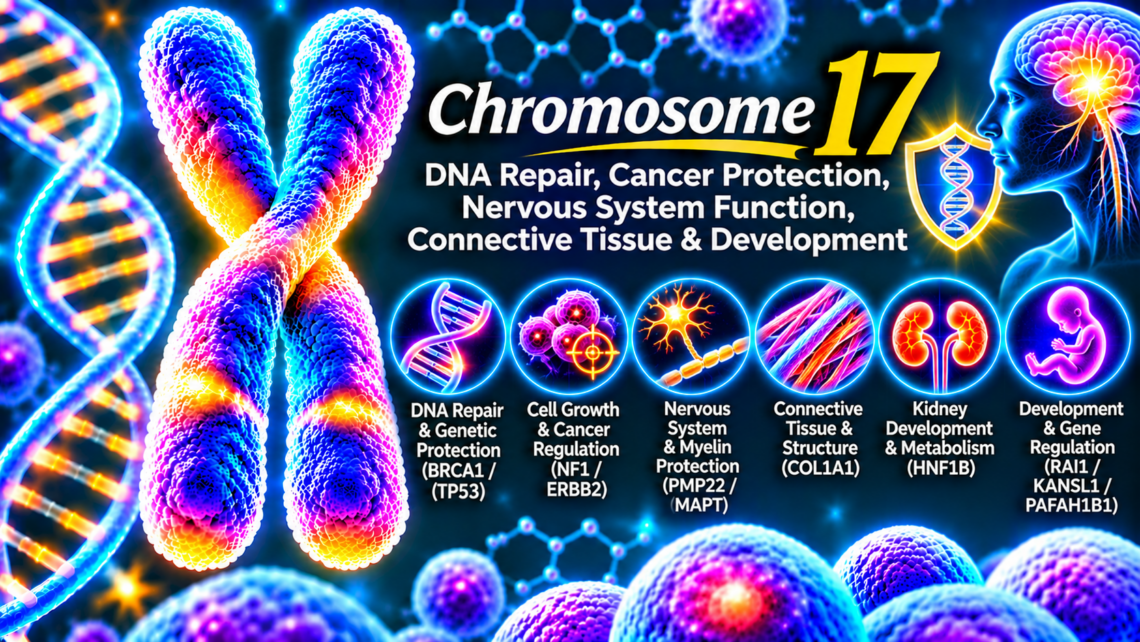
Some of its most important genes include:
- TP53: Helps protect cells from becoming cancerous by responding to DNA damage and abnormal cellular activity.
- BRCA1: Plays an important role in DNA repair and maintaining genetic stability.
- NF1: Helps regulate cell growth and communication within the nervous system.
- ERBB2 (HER2): Encodes a receptor involved in cellular growth and signalling.
- PMP22: Helps maintain the protective myelin covering around peripheral nerves.
- MAPT: Provides instructions for producing tau protein, which helps stabilise structures inside nerve cells.
- COL1A1: Produces an important component of type I collagen, a major structural protein.
- HNF1B: Helps regulate genes involved in kidney development and glucose metabolism.
Chromosome 17 is also associated with several important genetic conditions, including hereditary breast and ovarian cancer susceptibility, Li-Fraumeni syndrome, neurofibromatosis type 1, Charcot-Marie-Tooth disease type 1A and several developmental syndromes.
In this article, we explore the structure of Chromosome 17, its major genes, its connections to different body systems and its fascinating contribution to human biology.
1. Understanding Chromosome 17
Chromosome 17 is one of the 22 pairs of autosomes found in human cells.
It contains approximately 83 million DNA base pairs and represents between 2.5% and 3% of the total DNA in a typical human cell.
It is estimated to contain approximately 1,200–1,300 protein-coding genes.
Like other chromosomes, it has two main arms:
- Short arm (p): The smaller arm.
- Long arm (q): The larger arm.
Several important genes are distributed across these arms.
| Chromosomal region | Important genes | Biological significance |
|---|---|---|
| 17p13.1 | TP53 | DNA damage response and tumour suppression |
| 17p12 | PMP22 | Peripheral nerve myelin |
| 17q21.31 | MAPT, KANSL1 | Neuronal function and gene regulation |
| 17q21.31 | BRCA1 | DNA repair and genetic stability |
| 17q11.2 | NF1 | Cell growth regulation and nervous system |
| 17q12 | ERBB2, HNF1B | Cellular signalling, kidney development and metabolism |
| 17q21.33 | COL1A1 | Connective tissue and collagen structure |
One particularly interesting characteristic of Chromosome 17 is its involvement in both inherited genetic conditions and acquired genetic changes associated with cancer.
It demonstrates how the same chromosome can contain genes responsible for protecting cells, supporting development and maintaining the normal functioning of multiple organs.
2. The Major Biological Functions of Chromosome 17
Chromosome 17 contributes to several essential biological processes.
A. DNA Repair and Genetic Protection
One of the most important genes on Chromosome 17 is BRCA1.
BRCA1 produces a protein involved in maintaining the stability of DNA.
DNA is constantly exposed to factors that can cause damage, including normal cellular metabolism, environmental exposures and errors during DNA replication.
Cells have several repair mechanisms that help identify and correct this damage.
BRCA1 participates in the repair of certain types of DNA damage, particularly double-strand breaks through a process called homologous recombination.
This process helps maintain the integrity of genetic information.
Another major gene is TP53, which produces the p53 protein.
The p53 protein is often described as the guardian of the genome because it helps cells respond to DNA damage and other forms of cellular stress.
Depending on the circumstances, p53 can:
- Pause the cell cycle.
- Support DNA repair.
- Trigger cellular senescence.
- Initiate programmed cell death when damage cannot be adequately resolved.
Together, BRCA1 and TP53 illustrate the importance of cellular protection and genetic stability.
B. Cell Growth and Cancer Protection
Chromosome 17 contains several genes that help regulate cell growth.
The NF1 gene produces neurofibromin, a protein that acts as a tumour suppressor.
Neurofibromin helps regulate signalling pathways involved in cell growth and division, particularly the RAS pathway.
When NF1 function is disrupted, cellular growth regulation can become abnormal.
The TP53 gene also plays a major role in preventing the uncontrolled multiplication of damaged cells.
These genes demonstrate that healthy cellular activity depends on carefully regulated growth, division and repair.
It is important to understand that cancer is a complex disease. Changes in several genes and biological pathways may contribute to its development.
C. Nervous System Function and Myelin Protection
Chromosome 17 contains genes that contribute to the development and functioning of the nervous system.
One important example is PMP22.
PMP22 provides instructions for producing peripheral myelin protein 22, which is an important component of the myelin sheath surrounding certain peripheral nerve fibres.
Myelin acts as an insulating layer that helps electrical signals travel efficiently along nerves.
Changes in the number of PMP22 gene copies can affect peripheral nerve function.
Another important gene is MAPT, which produces tau protein.
Tau helps stabilise microtubules, which are structural components inside nerve cells.
These structures contribute to the movement of materials within neurons and help maintain their internal organisation.
Abnormal tau accumulation is associated with several neurodegenerative diseases.
D. Connective Tissue and Structural Support
The COL1A1 gene on Chromosome 17 produces one of the chains that form type I collagen.
Type I collagen is one of the most abundant structural proteins in the human body.
It contributes to the strength and organisation of:
- Bones.
- Skin.
- Tendons.
- Ligaments.
- Other connective tissues.
Collagen provides tissues with mechanical strength and helps them withstand physical stress.
Pathogenic variants in COL1A1 can cause certain forms of osteogenesis imperfecta and other connective tissue conditions.
E. Kidney Development and Metabolic Regulation
The HNF1B gene is particularly important in the development and functioning of several organs.
It encodes a transcription factor that regulates the activity of other genes.
HNF1B contributes to the development of the kidneys, pancreas, liver and reproductive system.
It is also involved in the regulation of glucose metabolism.
Pathogenic variants in HNF1B can cause a condition known as renal cysts and diabetes syndrome, also called MODY5.
Deletions involving the 17q12 region, which includes HNF1B, can also cause a broader developmental condition involving the kidneys, urinary system and other organs.
F. Cellular Growth Signalling
The ERBB2 gene, commonly known as HER2, produces a receptor protein found on the surface of certain cells.
This receptor belongs to the epidermal growth factor receptor family.
ERBB2 participates in signalling pathways that regulate:
- Cell growth.
- Cell division.
- Cell survival.
- Cellular differentiation.
When ERBB2 is amplified or overexpressed in certain cancers, the resulting increase in signalling can contribute to uncontrolled cellular growth.
HER2 is particularly well known in breast cancer research and treatment.
However, ERBB2 also has normal biological functions in healthy tissues.
G. Development and Gene Regulation
Chromosome 17 contains several genes involved in regulating development and the activity of other genes.
Examples include:
- KANSL1: Involved in chromatin regulation and gene expression.
- RAI1: Helps regulate the activity of other genes and contributes to circadian rhythms.
- PAFAH1B1: Important for neuronal migration and brain development.
- YWHAE: Produces a protein involved in cellular signalling and regulation.
These genes help demonstrate how genetic information must be carefully organised and regulated during development.
3. Important Genes Located on Chromosome 17
The following genes are particularly significant because of their established roles in human biology.
| Gene | Primary function | Biological significance |
|---|---|---|
| TP53 | Tumour suppression | DNA damage response and cellular protection |
| BRCA1 | DNA repair | Genetic stability |
| NF1 | Cell signalling regulation | Nervous system and cell growth |
| ERBB2 | Growth-factor receptor | Cellular growth and signalling |
| PMP22 | Peripheral myelin protein | Nerve signal transmission |
| MAPT | Tau protein production | Neuronal structure |
| COL1A1 | Type I collagen production | Connective tissue and bone |
| HNF1B | Transcription regulation | Kidney and pancreatic development |
| RAI1 | Gene regulation | Circadian rhythm and development |
| KANSL1 | Chromatin regulation | Development and gene expression |
| PAFAH1B1 | Neuronal development | Brain structure and neuronal migration |
| RARA | Retinoic acid receptor | Cell differentiation and development |
TP53 – The Guardian of the Genome
TP53 produces the p53 protein, one of the most extensively studied tumour suppressors in human biology.
Its role is to help protect cells from abnormal growth and the accumulation of genetic damage.
When cells experience DNA damage or other forms of stress, p53 can activate several protective responses.
These include temporarily stopping cell division, allowing repair processes to occur or triggering programmed cell death.
TP53 is frequently altered in human cancers, making it an important focus of cancer research.
Inherited pathogenic variants in TP53 can cause Li-Fraumeni syndrome, a hereditary cancer predisposition condition.
BRCA1 – DNA Repair and Genetic Stability
BRCA1 is one of the best-known genes involved in hereditary cancer susceptibility.
It produces a protein that participates in the repair of damaged DNA and helps maintain chromosome stability.
BRCA1 works with several other proteins involved in DNA repair and cellular regulation.
Inherited pathogenic variants in BRCA1 can increase the risk of developing certain cancers, particularly breast and ovarian cancer.
However, carrying a pathogenic BRCA1 variant does not mean that cancer is inevitable.
NF1 – Nervous System and Cell Growth Regulation
NF1 produces neurofibromin, a protein that helps regulate the RAS signalling pathway.
RAS proteins are involved in controlling cellular growth and division.
Neurofibromin acts as a negative regulator of this pathway, helping prevent excessive signalling.
Pathogenic variants in NF1 cause neurofibromatosis type 1, a genetic condition that can affect the skin, nervous system, eyes and bones.
ERBB2 (HER2) – Cellular Communication
ERBB2 produces a receptor involved in transmitting signals from outside the cell to its interior.
These signals influence how cells grow, divide and survive.
The HER2 protein is important in normal cellular communication, but increased ERBB2 gene activity can contribute to certain cancers.
HER2 status is therefore an important consideration in the diagnosis and treatment planning of some breast and other cancers.
PMP22 – Peripheral Nerve Protection
PMP22 produces a protein that contributes to the structure and function of peripheral myelin.
Myelin helps protect nerve fibres and supports efficient transmission of electrical signals.
Having an additional copy of PMP22 can cause Charcot-Marie-Tooth disease type 1A.
Having only one functional copy because of a deletion can cause hereditary neuropathy with liability to pressure palsies.
This illustrates how both increased and decreased gene dosage can affect biological function.
MAPT – Tau Protein and Neuronal Structure
MAPT produces tau protein, which helps stabilise microtubules inside nerve cells.
Microtubules provide structural support and help transport materials throughout neurons.
Abnormal changes in tau processing, modification or accumulation are associated with several neurodegenerative conditions, including certain forms of frontotemporal dementia and other tauopathies.
It is important to distinguish the normal function of tau from the abnormal accumulation associated with disease.
COL1A1 – Collagen and Connective Tissue
COL1A1 produces the alpha-1 chain of type I collagen.
This protein contributes to the strength and structural organisation of bones, skin, tendons and other connective tissues.
Pathogenic variants in COL1A1 can cause osteogenesis imperfecta, a genetic condition characterised by increased bone fragility.
HNF1B – Kidney and Pancreatic Development
HNF1B produces a transcription factor involved in regulating genes that guide the development and function of several organs.
It is particularly important in kidney and pancreatic biology.
Pathogenic variants can cause kidney abnormalities and a form of diabetes known as MODY5.
RAI1 – Circadian Rhythms and Development
RAI1 produces a protein involved in regulating gene expression.
It contributes to several biological processes, including brain development and the regulation of circadian rhythms.
Changes affecting RAI1 are associated with Smith-Magenis syndrome and Potocki-Lupski syndrome.
These conditions demonstrate how having too little or too much genetic material can affect development and biological timing.
KANSL1 – Chromatin and Gene Regulation
KANSL1 is involved in a protein complex that modifies chromatin and helps regulate gene expression.
Chromatin is the combination of DNA and proteins that packages genetic material inside the nucleus.
Changes affecting KANSL1 can cause Koolen-de Vries syndrome, a developmental condition involving differences in learning, communication and physical development.
PAFAH1B1 – Brain Development
PAFAH1B1, also known as LIS1, is important for the movement and positioning of neurons during brain development.
Neuronal migration is the process through which developing nerve cells move to their appropriate locations in the brain.
Pathogenic variants affecting PAFAH1B1 can cause lissencephaly, a condition in which the brain has an unusually smooth surface with fewer normal folds and grooves.
4. Genetic Conditions Associated With Chromosome 17
Changes affecting Chromosome 17 can result in a range of inherited and acquired conditions.
Some involve individual gene variants, while others result from deletions, duplications or rearrangements affecting larger chromosome regions.
Hereditary Breast and Ovarian Cancer Susceptibility
Inherited pathogenic variants in BRCA1 can increase the risk of developing certain cancers.
These include:
- Breast cancer.
- Ovarian cancer.
- Fallopian tube cancer.
- Primary peritoneal cancer.
- Certain other cancers.
BRCA1-related cancer susceptibility is inherited in an autosomal dominant pattern.
A person carrying a pathogenic variant has a 50% chance of passing that variant to each biological child.
However, inheritance of the variant does not guarantee that cancer will develop.
Li-Fraumeni Syndrome
Li-Fraumeni syndrome is associated with inherited pathogenic variants in TP53.
It is a rare hereditary cancer predisposition condition.
People with Li-Fraumeni syndrome have an increased risk of developing several types of cancer, including:
- Soft-tissue sarcomas.
- Bone sarcomas.
- Breast cancer.
- Brain tumours.
- Adrenocortical carcinoma.
- Certain blood cancers.
The condition demonstrates the importance of TP53 in protecting the body against abnormal cellular growth.
Neurofibromatosis Type 1
Neurofibromatosis type 1 is caused by pathogenic variants in NF1.
It is a genetic condition that can affect the nervous system, skin, eyes and bones.
Possible features include:
- Café-au-lait spots.
- Freckling in the underarms or groin.
- Neurofibromas along nerves.
- Optic pathway gliomas.
- Skeletal abnormalities.
- Learning and attention difficulties.
The severity varies considerably between individuals.
Charcot-Marie-Tooth Disease Type 1A
Charcot-Marie-Tooth disease type 1A is commonly caused by a duplication of a region on Chromosome 17p12 that includes PMP22.
This leads to an increased amount of PMP22 protein and disrupts normal peripheral myelin function.
Possible features include:
- Muscle weakness.
- Reduced muscle bulk.
- Foot deformities.
- Difficulty walking.
- Reduced sensation in the hands and feet.
- Reduced or absent reflexes.
Hereditary Neuropathy With Liability to Pressure Palsies
A deletion involving PMP22 can cause hereditary neuropathy with liability to pressure palsies.
This condition makes certain peripheral nerves unusually vulnerable to pressure or compression.
Possible symptoms include temporary numbness, tingling, weakness or loss of function in affected areas.
The symptoms often occur after relatively minor pressure on a nerve.
Smith-Magenis Syndrome
Smith-Magenis syndrome is usually caused by a deletion in the 17p11.2 region that includes RAI1.
It can also result from pathogenic variants in RAI1.
Possible features include:
- Developmental delay.
- Learning difficulties.
- Sleep disturbances.
- Behavioural differences.
- Speech and language difficulties.
- Characteristic physical features.
Disruption of circadian rhythm regulation is an important feature of the condition.
Potocki-Lupski Syndrome
Potocki-Lupski syndrome is generally associated with a duplication of the 17p11.2 region that includes RAI1.
Possible features include:
- Developmental delay.
- Speech and language difficulties.
- Intellectual disability.
- Sleep disturbances.
- Behavioural differences.
- Feeding difficulties.
It is particularly interesting because the region duplicated in Potocki-Lupski syndrome overlaps with the region commonly deleted in Smith-Magenis syndrome.
Koolen-de Vries Syndrome
Koolen-de Vries syndrome is associated with the loss of genetic material in the 17q21.31 region, commonly involving KANSL1.
Pathogenic variants in KANSL1 can also cause the condition.
Possible features include:
- Developmental delay.
- Intellectual disability.
- Speech and language difficulties.
- Low muscle tone.
- Differences in physical development.
- Distinctive behavioural characteristics.
Miller-Dieker Syndrome
Miller-Dieker syndrome is associated with deletions in the 17p13.3 region.
These deletions commonly affect PAFAH1B1 and YWHAE, along with other nearby genes.
The condition is characterised by lissencephaly, in which the brain has an unusually smooth appearance because normal folding has not developed properly.
Possible features include severe developmental delay, seizures, low muscle tone and feeding difficulties.
17q12 Deletion Syndrome
A deletion in the 17q12 region can affect several genes, particularly HNF1B and LHX1.
Possible features include:
- Kidney and urinary tract abnormalities.
- Diabetes, including MODY5.
- Developmental delays.
- Learning difficulties.
- Behavioural or psychiatric differences.
- Reproductive tract abnormalities in some individuals.
The effects can vary considerably between individuals.
Acute Promyelocytic Leukaemia
Chromosome 17 is involved in an important acquired genetic rearrangement associated with acute promyelocytic leukaemia.
This rearrangement involves chromosomes 15 and 17 and is written as t(15;17).
It creates a fusion between the PML gene on Chromosome 15 and the RARA gene on Chromosome 17.
The resulting PML-RARA fusion protein interferes with normal blood-cell maturation.
This causes immature white blood cells called promyelocytes to accumulate in the bone marrow.
Unlike inherited BRCA1 or TP53 variants, this rearrangement is generally an acquired change in blood-forming cells.
It is an important example of how chromosome rearrangements can alter the behaviour of cells during a person’s lifetime.
5. Chromosome 17 and the Body Systems
Chromosome 17 demonstrates how genes located on a single chromosome can influence several interconnected body systems.
| Body system | Relevant genes | Biological connection |
|---|---|---|
| Nervous system | NF1, PMP22, MAPT, PAFAH1B1 | Nerve function, myelin and brain development |
| Cardiovascular system | COL1A1, NF1 | Connective tissue structure and vascular-related complications |
| Integumentary system | NF1, COL1A1 | Skin pigmentation changes, connective tissue and skin structure |
| Skeletal system | COL1A1, NF1, RAI1 | Bone structure and development |
| Endocrine system | HNF1B, ERBB2 | Pancreatic development and cellular signalling |
| Reproductive system | BRCA1, HNF1B | Cancer susceptibility and reproductive development |
| Cellular protection | TP53, BRCA1, NF1 | DNA repair and regulation of cellular growth |
| Blood and immune system | TP53, RARA | Cellular protection and blood-cell differentiation |
| Circadian regulation | RAI1, MAPT | Biological timing and neuronal function |
These connections illustrate that the human body depends on a complex network of genetic instructions and biological pathways.
A single gene may have different effects in different tissues because its activity depends on the cellular environment and the other genes with which it interacts.
6. Chromosome 17, Epigenetics and Gene Regulation
Epigenetics describes processes that influence how genes are expressed without changing the underlying DNA sequence.
Chromosome 17 contains several genes involved in the regulation of genetic activity.
One example is KANSL1, which participates in chromatin-modifying processes.
Another is RAI1, which helps regulate the expression of other genes and contributes to circadian biology.
CREBBP, discussed in the Chromosome 16 article, is another example of a gene that influences chromatin and gene expression.
These examples demonstrate that genes do not operate independently.
Their activity is influenced by regulatory proteins, chemical modifications, chromatin structure and signals received from other parts of the cell.
DNA Repair and Epigenetic Regulation
BRCA1 and TP53 illustrate the relationship between genetic stability and gene regulation.
BRCA1 participates in DNA repair, while TP53 helps coordinate cellular responses to DNA damage.
When these systems function properly, they help protect the integrity of genetic information.
However, genetic variants, acquired cellular changes and environmental exposures can influence how these protective mechanisms work.
Epigenetic processes are important in many areas of biology, but lifestyle practices should not be presented as methods of correcting inherited genetic conditions or repairing specific genes.
7. A Holistic Wellbeing Perspective
At VitalPulse, we explore wellbeing through the relationship between physical health, emotional balance, mental awareness and lifestyle influences.
Chromosome 17 offers an interesting opportunity to reflect on the importance of protection, regulation, communication and structural support within the body.
The following connections are educational reflections, not methods of diagnosing or treating genetic conditions.
Nervous System Wellbeing
Genes such as NF1, PMP22 and MAPT demonstrate the importance of healthy nerve-cell function and communication.
General practices that support nervous system wellbeing include:
- Maintaining consistent sleep routines.
- Engaging in regular physical activity.
- Eating a varied and balanced diet.
- Allowing time for rest and recovery.
- Managing stress where possible.
- Seeking professional assessment for persistent neurological symptoms.
Inherited neurological conditions require appropriate specialist care.
Cellular Protection and General Health
TP53 and BRCA1 highlight the importance of DNA repair and cellular protection.
The body has many systems that help identify and respond to cellular damage.
General health practices include avoiding tobacco, protecting the skin from excessive ultraviolet exposure, limiting harmful environmental exposures where possible and following appropriate preventive healthcare recommendations.
These practices support general health but cannot guarantee cancer prevention or reverse inherited cancer susceptibility.
Connective Tissue and Structural Wellbeing
COL1A1 demonstrates the importance of collagen in maintaining the strength and organisation of connective tissue.
General musculoskeletal wellbeing can be supported through:
- Appropriate resistance exercise.
- Regular movement.
- Balanced nutrition.
- Adequate recovery.
- Attention to posture and ergonomics.
People with inherited connective tissue conditions may require individualised exercise guidance and medical monitoring.
Sleep and Circadian Rhythm
RAI1 is involved in gene regulation and biological timing.
Circadian rhythms help coordinate the body’s daily cycles, including sleep, hormone release, temperature regulation and metabolic activity.
General sleep-supporting practices include:
- Maintaining consistent sleep and wake times.
- Getting natural daylight during the day.
- Reducing bright light exposure before bedtime.
- Creating a comfortable sleeping environment.
- Allowing sufficient time for sleep.
Persistent sleep disturbances should be assessed when they interfere with daily functioning.
Hormonal and Metabolic Wellbeing
HNF1B demonstrates how genetic regulation contributes to pancreatic development and glucose metabolism.
General metabolic wellbeing can be supported through balanced nutrition, sustainable movement, adequate sleep and appropriate monitoring of blood glucose when medically indicated.
These practices do not correct inherited HNF1B-related conditions.
8. Chromosome 17 and Tarot: A Symbolic Perspective
In the Tarot Major Arcana, the number XVII corresponds to The Star.
The Star is traditionally associated with hope, renewal, healing, inspiration, clarity and the restoration of balance.
There is no established scientific relationship between Chromosome 17 and Tarot. The following interpretation is a symbolic reflection inspired by the biological themes explored in this article.
The Star XVII – Protection, Renewal and Restoration
Chromosome 17 contains several genes involved in protecting and maintaining the body’s biological systems.
Examples include:
- TP53, involved in the response to DNA damage.
- BRCA1, involved in DNA repair.
- NF1, involved in cellular growth regulation.
- COL1A1, involved in structural support.
- PMP22, involved in peripheral nerve protection.
The Star can symbolically represent the body’s remarkable capacity to maintain, repair and regulate itself.
It invites us to consider the importance of creating conditions that support restoration and wellbeing.
Justice XI – Balance and Accountability
Justice represents balance, fairness, truth and responsibility.
This offers a symbolic connection with the regulatory functions of genes such as TP53 and NF1.
These genes help maintain appropriate cellular activity by regulating growth and responding to abnormal conditions.
The symbolic lesson is that balance is not simply the absence of disruption. It also involves the systems that respond when something goes wrong.
The Tower XVI – Structural Change and Transformation
The Tower represents disruption, revelation and the rebuilding of foundations.
Chromosome 17 contains genes involved in structural organisation, cellular regulation and genetic stability.
This provides a metaphorical connection with the idea that established structures sometimes need to change.
The Tower invites us to reflect on how we respond to unexpected challenges and how we rebuild after periods of disruption.
The Star and Personal Renewal
The Star does not suggest that genetic conditions are spiritual lessons or that illness reflects a person’s emotional or spiritual state.
Instead, it offers a reflective perspective on protection, resilience and renewal.
What helps you restore balance when life becomes overwhelming, and what foundations support your sense of wellbeing?
9. Reflective Questions
Take a moment to consider the following questions:
- What helps me feel safe, supported and protected?
- How do I respond when my physical or emotional balance is disrupted?
- Which daily routines help me recover and restore my energy?
- Am I giving enough attention to sleep and nervous system wellbeing?
- What structures in my life provide stability?
- Where could I create more space for renewal and personal growth?
These questions are intended for personal reflection, not genetic or psychological assessment.
10. Frequently Asked Questions About Chromosome 17
What does Chromosome 17 do?
Chromosome 17 contains genes involved in DNA repair, cancer protection, nervous system function, connective tissue formation, cellular signalling, kidney development and circadian regulation.
Which important genes are located on Chromosome 17?
Some important genes include TP53, BRCA1, NF1, ERBB2, PMP22, MAPT, COL1A1, HNF1B, RAI1, KANSL1 and PAFAH1B1.
Is BRCA1 located on Chromosome 17?
Yes. BRCA1 is located on the long arm of Chromosome 17 and plays an important role in DNA repair and genetic stability.
Is TP53 located on Chromosome 17?
Yes. TP53 is located on the short arm of Chromosome 17. It produces the p53 tumour suppressor protein, which helps cells respond to DNA damage and abnormal growth signals.
What conditions are associated with Chromosome 17?
Some associated conditions include hereditary BRCA1-related cancer susceptibility, Li-Fraumeni syndrome, neurofibromatosis type 1, Charcot-Marie-Tooth disease type 1A, Smith-Magenis syndrome, Potocki-Lupski syndrome, Koolen-de Vries syndrome and Miller-Dieker syndrome.
Does Chromosome 17 influence the nervous system?
Yes. Genes such as NF1, PMP22, MAPT and PAFAH1B1 contribute to nerve-cell function, myelin formation, neuronal structure and brain development.
Does Chromosome 17 influence connective tissue?
Yes. COL1A1 produces a major component of type I collagen, which contributes to the strength and organisation of bones, skin, tendons and other connective tissues.
What is the relationship between Chromosomes 15 and 17?
Chromosomes 15 and 17 are involved in an important genetic rearrangement associated with acute promyelocytic leukaemia.
This rearrangement, known as t(15;17), creates a fusion between the PML gene on Chromosome 15 and the RARA gene on Chromosome 17.
Can lifestyle changes alter Chromosome 17?
Lifestyle changes do not rewrite the DNA sequence or correct inherited genetic conditions. However, general health practices can support normal biological functions and overall wellbeing.
11. Conclusion: Protection, Regulation and the Foundations of Life
Chromosome 17 is one of the most biologically significant chromosomes in the human genome.
Its genes contribute to DNA repair, tumour suppression, nervous system function, connective tissue structure, kidney development, cellular signalling and circadian regulation.
From TP53 and BRCA1’s roles in protecting genetic information to NF1’s involvement in cellular growth regulation and PMP22’s contribution to peripheral nerve function, Chromosome 17 demonstrates how essential genetic stability is to human health.
It also reminds us that the body is not a collection of independent systems. Every organ and tissue depends on complex networks of genes, proteins, signalling pathways and environmental influences.
From a holistic wellbeing perspective, Chromosome 17 encourages us to reflect on the importance of protection, balance, restoration and the foundations that support our lives.
At VitalPulse, we believe that understanding the body is an ongoing journey of curiosity, awareness and personal exploration.
Explore Your Wellbeing. Reconnect. Reflect. Realign.
Curious About NLS Bioresonance Scanning?
What if you could explore your body’s energetic patterns from a different perspective?
At VitalPulse, we invite you to discover NLS (Non-Linear System) Bioresonance Scanning – an alternative wellness exploration approach designed to provide insights into energetic patterns and potential areas of imbalance within the body’s systems.
Whether you’re interested in understanding your wellbeing more deeply, exploring the body’s interconnected systems, or simply curious about complementary approaches to wellness, an NLS scan offers an opportunity to explore a different perspective.
Why not experience it for yourself?
✨ Explore your body’s energetic patterns.
✨ Discover a different perspective on your overall wellbeing.
✨ Identify areas you may wish to explore further as part of your personal wellness journey.
🎁 Take the First Step – Explore NLS Bioresonance!
👉 EXPLORE NLS BIORESONANCE SCANNING
VitalPulse – Explore Your Wellbeing.
Reconnect. Reflect. Realign.
Please note: NLS Bioresonance scanning is offered as a complementary wellness exploration service. It is not a medically validated diagnostic tool and does not diagnose, treat, cure or prevent disease. It is not a substitute for professional medical advice, diagnosis or treatment.
References and Further Reading
The following scientific resources provide additional information about Chromosome 17, its genes and associated genetic conditions.
- MedlinePlus Genetics – Chromosome 17
https://medlineplus.gov/genetics/chromosome/17/ - MedlinePlus Genetics – TP53 Gene
https://medlineplus.gov/genetics/gene/tp53/ - MedlinePlus Genetics – BRCA1 Gene
https://medlineplus.gov/genetics/gene/brca1/ - MedlinePlus Genetics – NF1 Gene
https://medlineplus.gov/genetics/gene/nf1/ - MedlinePlus Genetics – Neurofibromatosis Type 1
https://medlineplus.gov/genetics/condition/neurofibromatosis-type-1/ - GeneReviews – Charcot-Marie-Tooth Hereditary Neuropathy Overview
https://www.ncbi.nlm.nih.gov/books/NBK1358/ - National Cancer Institute – Genetics of Breast and Gynecologic Cancers
https://www.cancer.gov/types/breast/hp/breast-ovarian-genetics-pdq - MedlinePlus Genetics – Chromosome 17 and Associated Chromosomal Conditions
https://medlineplus.gov/genetics/chromosome/17/
Medical Disclaimer
This article is provided for general educational and wellbeing information only. It is not intended to diagnose, treat, cure or prevent any medical condition.
Genetic conditions require appropriate assessment by qualified healthcare professionals. The presence of a gene or genetic variant does not automatically mean that an individual will develop a particular condition.
Inherited genetic variants must also be distinguished from acquired changes that occur in certain cells during a person’s lifetime, including some cancer-associated chromosome rearrangements.
The holistic and Tarot perspectives presented in this article are symbolic and reflective. They are not scientifically established explanations of chromosome function, genetic inheritance or disease.
VitalPulse promotes wellbeing education and personal exploration, not medical diagnosis.
VitalPulse – Explore Your Wellbeing. Reconnect. Reflect. Realign.