Chromosome 16 – The Genetic Blueprint of Kidney Function, Blood Health, Metabolism, Immunity & Cellular Regulation
Exploring the genes, biological functions and genetic conditions associated with Human Chromosome 16.
Introduction: Why Is Chromosome 16 Important?
Human DNA contains 23 pairs of chromosomes, with one chromosome in each pair inherited from each biological parent. These chromosomes carry the genetic instructions that help guide our development, biological characteristics and everyday biological functions.
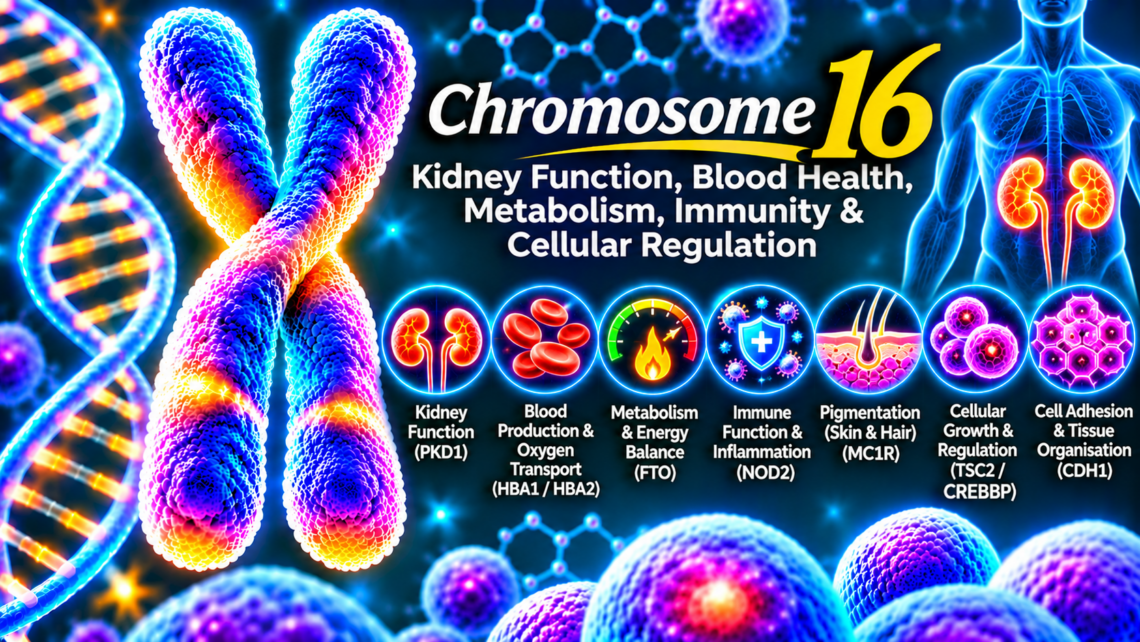
Chromosome 16 is particularly interesting because it contains genes involved in several essential processes, including kidney function, red blood cell production, metabolism, immune responses, pigmentation, connective tissue and cellular growth.
Some of its most significant genes include:
- PKD1: Involved in normal kidney structure and function.
- TSC2: Helps regulate cell growth and cellular signalling.
- HBA1 and HBA2: Provide instructions for alpha-globin, an important component of haemoglobin.
- CREBBP: Helps regulate the activity of many other genes.
- FTO: Associated with body weight regulation and metabolic traits.
- MC1R: Plays an important role in pigmentation.
- NOD2: Contributes to immune recognition and inflammatory responses.
- CDH1: Helps cells adhere to one another and maintain tissue organisation.
Chromosome 16 also contains regions where structural changes can affect multiple genes simultaneously, sometimes resulting in complex developmental or medical conditions.
In this article, we explore the structure of Chromosome 16, its important genes, its connections to different body systems and the conditions associated with genetic changes.
1. Understanding Chromosome 16
Chromosome 16 is one of the 22 pairs of autosomes found in human cells.
It contains more than 90 million DNA base pairs and represents almost 3% of the total DNA in a typical human cell.
It is estimated to contain approximately 800–900 protein-coding genes, although the precise number depends on the reference genome and gene-annotation methods used.
Like other chromosomes, Chromosome 16 has two main arms:
- Short arm (p): The smaller arm.
- Long arm (q): The larger arm.
Several important genes are concentrated on the short arm, particularly in the region known as 16p13.3.
This region includes PKD1, TSC2, CREBBP and the alpha-globin gene cluster.
The chromosome also contains regions with duplicated DNA sequences. These repeated segments make certain areas particularly complex from a genetic and structural perspective.
2. The Major Biological Functions of Chromosome 16
Chromosome 16 contributes to a wide variety of biological functions.
A. Kidney Function and Fluid Balance
One of the best-known genes on Chromosome 16 is PKD1.
It provides instructions for producing a protein called polycystin-1, which works together with polycystin-2, produced by the PKD2 gene on Chromosome 4.
These proteins participate in cellular signalling and help maintain normal kidney tissue organisation and function.
The kidneys perform several essential functions:
- Filtering waste products from the blood.
- Regulating fluid balance.
- Maintaining electrolyte levels.
- Helping regulate blood pressure.
- Supporting acid-base balance.
- Producing hormones involved in red blood cell production.
Pathogenic variants in PKD1 are a major cause of autosomal dominant polycystic kidney disease.
This condition involves the development of fluid-filled cysts in the kidneys, which can progressively affect kidney structure and function.
B. Blood Production and Oxygen Transport
Chromosome 16 contains two important genes involved in haemoglobin production:
- HBA1
- HBA2
These genes provide instructions for producing alpha-globin, one of the protein components of haemoglobin.
Haemoglobin is found inside red blood cells and is responsible for transporting oxygen from the lungs to tissues throughout the body.
Normal haemoglobin production requires the appropriate balance of alpha-globin and beta-globin chains.
When alpha-globin production is reduced or disrupted, it can result in alpha-thalassaemia.
This demonstrates the importance of Chromosome 16 in maintaining normal blood production and oxygen transport.
C. Cellular Growth and Regulation
The TSC2 gene provides instructions for producing a protein called tuberin.
Tuberin works together with hamartin, produced by TSC1 on Chromosome 9.
Together, these proteins form part of a regulatory complex that helps control the mTOR signalling pathway.
The mTOR pathway is involved in:
- Cell growth.
- Protein production.
- Nutrient sensing.
- Cellular metabolism.
- Cell survival.
- Regulation of cellular activity.
When this regulatory system is disrupted, cells may grow or behave abnormally.
Pathogenic variants in TSC2 are associated with tuberous sclerosis complex, a genetic condition that can cause non-cancerous growths in multiple organs.
D. Metabolism and Body Weight Regulation
Chromosome 16 contains the FTO gene, which has been extensively studied in relation to body weight and metabolic characteristics.
Common variations in and around FTO are associated with differences in body mass index and susceptibility to obesity at a population level.
However, these genetic variations do not determine an individual’s weight.
Body weight is influenced by many interacting factors, including:
- Food intake.
- Physical activity.
- Sleep.
- Hormonal regulation.
- Environmental influences.
- Other genetic factors.
- Social and behavioural circumstances.
FTO is also involved in biological processes that influence RNA modification and gene regulation.
Its significance illustrates how genetic variation can contribute to complex traits without acting as a single determining factor.
E. Immune Function and Inflammatory Responses
The NOD2 gene on Chromosome 16 plays an important role in the innate immune system.
It provides instructions for producing a protein that helps cells recognise certain bacterial components.
This recognition contributes to immune signalling and the regulation of inflammatory responses.
NOD2 is particularly relevant to the intestinal immune environment.
Certain genetic variants in NOD2 are associated with an increased susceptibility to Crohn’s disease, a form of inflammatory bowel disease.
However, Crohn’s disease is complex and involves many genetic, immune, microbial and environmental factors.
F. Pigmentation and Skin Protection
The MC1R gene is involved in regulating melanin production.
Melanin is the pigment responsible for much of the natural colour variation in human skin, hair and eyes.
MC1R influences the balance between two main forms of melanin:
- Eumelanin: Generally associated with brown and black pigmentation and greater protection against ultraviolet radiation.
- Pheomelanin: Generally associated with red and yellow pigmentation.
Certain MC1R variations are associated with red hair, freckles, fair skin and increased sensitivity to sunlight.
This gene demonstrates how genetic variation contributes to natural differences in human appearance.
G. Cell Adhesion and Tissue Organisation
The CDH1 gene provides instructions for producing E-cadherin, a protein that helps cells adhere to neighbouring cells.
E-cadherin is important for maintaining the organisation and integrity of epithelial tissues.
These tissues form protective and functional coverings throughout the body, including the skin and the lining of many internal organs.
CDH1 also plays an important role in regulating how cells maintain their normal structural relationships.
Certain inherited pathogenic variants in CDH1 are associated with hereditary diffuse gastric cancer and lobular breast cancer susceptibility.
3. Important Genes Located on Chromosome 16
The following genes illustrate the diversity of biological functions associated with Chromosome 16.
| Gene | Primary function | Biological significance |
|---|---|---|
| PKD1 | Produces polycystin-1 | Kidney structure and function |
| TSC2 | Produces tuberin | Cellular growth and mTOR regulation |
| HBA1 | Produces alpha-globin | Haemoglobin and oxygen transport |
| HBA2 | Produces alpha-globin | Haemoglobin and oxygen transport |
| CREBBP | Produces a transcriptional coactivator | Gene regulation and development |
| FTO | RNA modification and regulation | Metabolic traits and body weight |
| MC1R | Melanocortin receptor | Pigmentation |
| NOD2 | Immune recognition | Innate immunity and inflammation |
| CDH1 | Produces E-cadherin | Cell adhesion and tissue organisation |
| FOXF1 | Transcription factor | Lung and gastrointestinal development |
| ABCC6 | Produces a cellular transport protein | Mineralisation and connective tissue health |
PKD1 – Kidney Structure and Function
PKD1 produces polycystin-1, a protein involved in cellular signalling.
It works with polycystin-2 to support normal cellular function in kidney tissue.
When PKD1 contains certain pathogenic variants, the resulting changes can lead to autosomal dominant polycystic kidney disease.
This condition is characterised by the development of multiple kidney cysts.
Over time, these cysts can enlarge the kidneys and interfere with normal kidney function.
TSC2 – Cellular Growth and the mTOR Pathway
TSC2 produces tuberin, a protein that forms part of the TSC1-TSC2 regulatory complex.
This complex helps control mTORC1, a major signalling pathway involved in cell growth and metabolism.
The pathway responds to factors such as nutrient availability and growth signals.
TSC2 is therefore important in maintaining appropriate regulation of cellular growth.
Pathogenic variants can cause tuberous sclerosis complex, which may affect the brain, kidneys, skin, heart and lungs.
HBA1 and HBA2 – Oxygen Transport
HBA1 and HBA2 are part of the alpha-globin gene cluster.
They provide instructions for producing alpha-globin chains, which combine with other globin chains to form haemoglobin.
Haemoglobin enables red blood cells to transport oxygen.
Deletions or other pathogenic changes affecting these genes can reduce alpha-globin production and cause alpha-thalassaemia.
The severity depends on how many alpha-globin gene copies are affected and the nature of the genetic changes.
CREBBP – Gene Expression and Development
CREBBP produces a protein known as CREB-binding protein.
This protein acts as a transcriptional coactivator, helping regulate the activity of many genes.
It also has histone acetyltransferase activity, which contributes to the regulation of chromatin structure and gene expression.
CREBBP is important during embryonic development and in the functioning of multiple tissues.
Pathogenic variants are associated with Rubinstein-Taybi syndrome, a condition that can involve developmental differences, intellectual disability, characteristic physical features and other medical complications.
FTO – Metabolic Regulation
FTO is involved in the regulation of RNA through chemical modifications that influence how genetic information is processed.
Common genetic variations in this region have been associated with body weight and obesity susceptibility.
It is important to understand that FTO does not operate independently.
Metabolic characteristics emerge from interactions between multiple genes, hormonal pathways, environmental conditions and lifestyle factors.
MC1R – Melanin Production
MC1R produces the melanocortin 1 receptor, which is found primarily on the surface of pigment-producing cells called melanocytes.
When activated, this receptor stimulates processes that favour eumelanin production.
Different forms of MC1R are associated with variations in skin and hair pigmentation.
The gene also has functions in certain immune and inflammatory pathways.
NOD2 – Immune Recognition
NOD2 produces a protein involved in recognising components of bacterial cell walls.
It helps initiate immune signalling when certain bacterial molecules are detected.
NOD2 is particularly relevant to intestinal immune function and the regulation of inflammatory responses.
Certain variants are associated with increased susceptibility to Crohn’s disease.
CDH1 – Cell Adhesion
CDH1 produces E-cadherin, a protein that helps neighbouring cells remain connected.
It contributes to the structural organisation of epithelial tissues and helps maintain normal tissue architecture.
Pathogenic variants can disrupt normal cell adhesion and are associated with hereditary diffuse gastric cancer and lobular breast cancer susceptibility.
FOXF1 – Lung and Gastrointestinal Development
FOXF1 is a transcription factor involved in the development of the lungs and gastrointestinal tract.
It helps regulate genes involved in the formation of pulmonary mesenchyme, the embryonic tissue that contributes to lung structures and blood vessels.
Pathogenic changes affecting FOXF1 can cause alveolar capillary dysplasia with misalignment of pulmonary veins, a rare and serious developmental condition affecting the blood vessels of the lungs.
ABCC6 – Cellular Transport and Tissue Mineralisation
ABCC6 provides instructions for producing a protein involved in transporting substances across cell membranes.
The protein is particularly important in the liver and contributes indirectly to the regulation of mineralisation in connective tissues.
Pathogenic variants in ABCC6 are associated with pseudoxanthoma elasticum, a condition that can affect the skin, eyes and cardiovascular system.
4. Genetic Conditions Associated With Chromosome 16
Changes affecting Chromosome 16 can be associated with several inherited and chromosomal conditions.
Some result from changes in individual genes, while others involve deletions, duplications or rearrangements affecting larger sections of the chromosome.
Autosomal Dominant Polycystic Kidney Disease
Autosomal dominant polycystic kidney disease is commonly associated with pathogenic variants in PKD1 or PKD2.
PKD1 is located on Chromosome 16, while PKD2 is located on Chromosome 4.
The condition causes fluid-filled cysts to develop in the kidneys.
Possible features include:
- Enlarged kidneys.
- High blood pressure.
- Blood in the urine.
- Kidney stones.
- Abdominal or flank discomfort.
- Progressive loss of kidney function.
The severity and progression vary between individuals.
Tuberous Sclerosis Complex
Tuberous sclerosis complex can result from pathogenic variants in TSC1 or TSC2.
TSC2 is located on Chromosome 16.
The condition can cause non-cancerous growths, known as hamartomas, in different organs.
Possible manifestations include:
- Skin changes.
- Seizures.
- Brain lesions.
- Kidney angiomyolipomas.
- Lung involvement.
- Developmental and learning differences.
The condition varies considerably in severity.
Alpha-Thalassaemia
Alpha-thalassaemia results from reduced or absent production of alpha-globin chains.
The HBA1 and HBA2 genes on Chromosome 16 are central to this process.
Possible features depend on the number of affected alpha-globin gene copies.
They can range from no noticeable symptoms or mild anaemia to severe forms of anaemia and serious complications.
Rubinstein-Taybi Syndrome
Rubinstein-Taybi syndrome is commonly associated with pathogenic variants or deletions involving CREBBP on Chromosome 16.
A smaller proportion of cases involve EP300 on Chromosome 22.
Possible features include:
- Developmental delay.
- Intellectual disability.
- Short stature.
- Broad thumbs and big toes.
- Distinctive facial characteristics.
- Feeding difficulties.
- Other developmental and medical differences.
Crohn’s Disease Susceptibility
Certain NOD2 variants are associated with increased susceptibility to Crohn’s disease.
Crohn’s disease is a chronic inflammatory bowel disease that can affect different parts of the digestive tract.
However, NOD2 is only one part of a much larger genetic and immunological picture.
Having a particular NOD2 variant does not mean that someone will necessarily develop Crohn’s disease.
Hereditary Diffuse Gastric Cancer and Lobular Breast Cancer
Certain inherited pathogenic variants in CDH1 can increase susceptibility to hereditary diffuse gastric cancer and lobular breast cancer.
These conditions involve changes in cellular adhesion and tissue organisation.
Individuals with a relevant family history may benefit from genetic counselling and appropriate risk assessment.
Pseudoxanthoma Elasticum
Pseudoxanthoma elasticum is associated with pathogenic variants in ABCC6.
It can affect elastic tissues, particularly in the skin, eyes and cardiovascular system.
Possible features include characteristic skin changes, retinal abnormalities and vascular complications.
16p11.2 Deletion and Duplication Syndromes
The 16p11.2 region contains several genes involved in development and neurological function.
A deletion or duplication in this region can influence development, communication, learning, behaviour and body weight.
Possible features include:
- Developmental delay.
- Speech and language difficulties.
- Intellectual disability.
- Autism spectrum characteristics.
- Seizures in some individuals.
- Differences in body weight.
The effects vary considerably, and some individuals have relatively mild features.
Trisomy 16 and Mosaic Trisomy 16
Trisomy 16 occurs when a cell contains three copies of Chromosome 16 instead of the usual two.
Full trisomy 16 is generally incompatible with survival beyond pregnancy.
In mosaic trisomy 16, only some cells contain the additional chromosome.
The effects can vary and may include:
- Restricted growth before birth.
- Developmental differences.
- Congenital heart abnormalities.
- Other structural or medical complications.
Chromosome 16 and Certain Blood Cancers
Chromosome 16 can also be involved in acquired genetic rearrangements associated with acute myeloid leukaemia.
One example is an inversion involving Chromosome 16, written as inv(16), which can create a fusion between CBFB and MYH11.
This is an acquired change in blood-forming cells, not normally an inherited chromosome abnormality.
It can interfere with the normal development and maturation of blood cells.
5. Chromosome 16 and the Body Systems
Chromosome 16 demonstrates how genes distributed across one chromosome can contribute to many interconnected body systems.
| Body system | Relevant genes | Biological connection |
|---|---|---|
| Urinary system | PKD1 | Kidney structure and function |
| Cardiovascular system | PKD1, ABCC6 | Kidney-related blood pressure regulation and vascular tissue health |
| Blood and circulatory system | HBA1, HBA2 | Haemoglobin and oxygen transport |
| Endocrine and metabolic systems | FTO, TSC2 | Metabolic regulation and cellular nutrient signalling |
| Immune system | NOD2 | Innate immune recognition |
| Integumentary system | MC1R | Skin and hair pigmentation |
| Digestive system | NOD2, CDH1, FOXF1 | Intestinal immune function, cell adhesion and development |
| Respiratory system | FOXF1 | Lung development |
| Cellular regulation | CREBBP, TSC2 | Gene expression and cell growth |
These connections illustrate that the body functions as an interconnected biological network.
A change in one genetic pathway can influence several tissues and organs, depending on where a gene is active and what role its protein performs.
6. Chromosome 16, Epigenetics and Gene Regulation
Epigenetics describes processes that influence gene activity without changing the underlying DNA sequence.
Although Chromosome 16 is not primarily known for a major imprinted region like Chromosome 15, it contains genes that participate in important epigenetic and gene-regulatory processes.
One particularly interesting example is CREBBP.
The CREBBP protein helps regulate gene expression through interactions with transcription factors and histone acetylation.
Histones are proteins around which DNA is packaged.
Chemical modifications to histones can influence how accessible particular sections of DNA are to the cellular machinery responsible for reading genes.
This means that gene expression depends not only on the DNA sequence itself, but also on how genetic information is organised and regulated.
Other genes, including TSC2, contribute to signalling pathways that respond to nutrients, growth factors and cellular conditions.
These mechanisms demonstrate the complex relationship between genetic information and the biological environment.
Importantly, lifestyle practices cannot be assumed to correct inherited pathogenic variants or reverse genetic conditions.
7. A Holistic Wellbeing Perspective
At VitalPulse, we explore wellbeing through the relationship between physical health, emotional balance, mental awareness and lifestyle influences.
Chromosome 16 provides an opportunity to consider how different biological systems work together.
The following connections are educational reflections, not methods of diagnosing or treating genetic conditions.
Kidney and Fluid-Balance Wellbeing
The kidneys help maintain the body’s internal balance by regulating fluid levels, electrolytes, waste removal and blood pressure.
General practices that support kidney health include:
- Maintaining appropriate hydration.
- Managing blood pressure.
- Eating a balanced diet.
- Avoiding unnecessary use of medications that can affect kidney function.
- Seeking medical advice for persistent urinary symptoms.
- Having appropriate kidney-function assessments when recommended.
People with inherited kidney conditions require individualised medical monitoring.
Blood and Oxygen Transport
HBA1 and HBA2 demonstrate how important haemoglobin production is for oxygen transport.
General blood health is supported by adequate nutrition, including sufficient iron, vitamin B12 and folate.
However, these nutrients do not correct inherited alpha-globin gene changes.
Persistent fatigue, unexplained breathlessness or symptoms of anaemia should be assessed by a healthcare professional.
Metabolic Wellbeing
The FTO gene provides an example of how genetic variation can contribute to metabolic characteristics.
General metabolic wellbeing can be supported through:
- Regular physical activity.
- Balanced nutrition.
- Adequate sleep.
- Sustainable eating habits.
- Stress management.
- Attention to overall health rather than focusing only on body weight.
Genetics is one influence among many.
Immune and Digestive Wellbeing
NOD2 highlights the relationship between the immune system and the digestive tract.
The intestinal environment contains a complex community of microorganisms that interact with the immune system.
General digestive wellbeing can be supported through a varied diet, appropriate fibre intake, hydration and consistent eating habits.
Persistent digestive symptoms or suspected inflammatory bowel disease require appropriate medical assessment.
Skin and Environmental Protection
MC1R contributes to natural differences in pigmentation and sensitivity to ultraviolet radiation.
Practical skin protection includes:
- Using appropriate sunscreen.
- Wearing protective clothing.
- Seeking shade during intense sunlight.
- Monitoring unusual skin changes.
- Having suspicious lesions assessed professionally.
Cellular Growth and Repair
TSC2 and CREBBP demonstrate how important cellular regulation is for maintaining normal biological function.
Cells constantly receive signals that influence growth, repair, protein production and survival.
Adequate sleep, balanced nutrition and regular movement support general health, although they cannot replace specialised care for inherited cellular-regulation disorders.
8. Chromosome 16 and Tarot: A Symbolic Perspective
In the Tarot Major Arcana, the number XVI corresponds to The Tower.
The Tower is traditionally associated with disruption, revelation, structural change and the rebuilding of foundations.
There is no established scientific relationship between Chromosome 16 and Tarot. The following interpretation is a symbolic reflection inspired by the biological themes explored in this article.
The Tower XVI – Structure, Disruption and Reorganisation
Chromosome 16 contains genes involved in maintaining important biological structures and regulatory systems.
Examples include:
- PKD1, associated with kidney structure and function.
- TSC2, involved in regulating cellular growth.
- HBA1 and HBA2, involved in maintaining normal haemoglobin production.
- CDH1, involved in cell adhesion and tissue organisation.
The Tower can symbolically represent what happens when an established structure is disrupted.
In a reflective context, this may invite us to consider the foundations on which we build our physical, emotional and mental wellbeing.
It also reminds us that change sometimes requires us to reconsider patterns that no longer support us.
The Emperor IV – Structure and Regulation
The Emperor represents organisation, stability, boundaries and structure.
This symbolism offers a metaphorical connection with Chromosome 16’s involvement in cellular regulation, tissue organisation and the maintenance of biological systems.
It invites reflection on the structures that support everyday life:
- Healthy routines.
- Consistent habits.
- Personal boundaries.
- Stability.
- Responsibility.
- Sustainable self-care.
Temperance XIV – Balance and Integration
Temperance represents balance, moderation and the integration of different elements.
This offers a symbolic connection with the way Chromosome 16 contributes to several interconnected biological systems.
Kidney function, blood production, metabolism and immune regulation all depend on complex interactions.
Temperance encourages us to consider how different aspects of our lives can work together rather than compete for attention.
The Tower and Personal Transformation
The symbolic relationship between The Tower and Chromosome 16 is not about interpreting genetic conditions as personal or spiritual lessons.
Instead, it encourages reflection on the importance of structure, adaptation and rebuilding.
What foundations in your life support your wellbeing, and which may need attention or change?
9. Reflective Questions
Take a moment to consider these questions:
- What daily habits help me maintain physical balance?
- How well do I support my body through nutrition, hydration and rest?
- Which structures or routines create stability in my life?
- How do I respond when familiar patterns are disrupted?
- Am I paying attention to the interconnected nature of my physical wellbeing?
- What changes could help me build stronger foundations for the future?
These questions are intended for personal reflection, not genetic or psychological assessment.
10. Frequently Asked Questions About Chromosome 16
What does Chromosome 16 do?
Chromosome 16 contains genes involved in kidney function, blood production, metabolism, immune responses, pigmentation, cellular growth and tissue organisation.
Which important genes are found on Chromosome 16?
Some important genes include PKD1, TSC2, HBA1, HBA2, CREBBP, FTO, MC1R, NOD2, CDH1, FOXF1 and ABCC6.
Is polycystic kidney disease associated with Chromosome 16?
Yes. Pathogenic variants in PKD1, located on Chromosome 16, are a major cause of autosomal dominant polycystic kidney disease.
Is alpha-thalassaemia associated with Chromosome 16?
Yes. The HBA1 and HBA2 genes, which provide instructions for producing alpha-globin, are located on Chromosome 16. Changes affecting these genes can cause alpha-thalassaemia.
Does Chromosome 16 influence body weight?
The FTO gene on Chromosome 16 contains common genetic variations associated with body weight and obesity susceptibility. However, weight is influenced by many genetic, environmental and lifestyle factors.
Is tuberous sclerosis associated with Chromosome 16?
Yes. Tuberous sclerosis complex can be caused by pathogenic variants in TSC2 on Chromosome 16 or TSC1 on Chromosome 9.
Does Chromosome 16 influence pigmentation?
Yes. The MC1R gene contributes to melanin production and natural differences in skin and hair pigmentation.
Can Chromosome 16 affect the immune system?
Yes. NOD2 plays an important role in recognising bacterial components and regulating innate immune responses. Certain variants are associated with susceptibility to Crohn’s disease.
Can lifestyle changes alter Chromosome 16?
Lifestyle changes do not rewrite the DNA sequence or correct inherited genetic conditions. However, general lifestyle habits can support overall health and influence some biological processes involved in metabolism and gene regulation.
11. Conclusion: The Importance of Biological Structure and Regulation
Chromosome 16 is a remarkable part of the human genetic blueprint.
Its genes contribute to kidney function, blood production, oxygen transport, immune responses, metabolism, pigmentation and cellular growth.
From the PKD1 gene’s role in kidney biology to the HBA genes’ contribution to haemoglobin production, Chromosome 16 demonstrates how a single chromosome can influence multiple systems throughout the body.
It also highlights the importance of cellular regulation. Genes such as TSC2 and CREBBP help coordinate processes that allow cells to grow, communicate and function appropriately.
From a holistic wellbeing perspective, Chromosome 16 encourages us to consider the importance of balance, structure and interconnectedness.
Understanding our genetic blueprint does not mean that our biology determines every aspect of our lives. Instead, it offers another way to appreciate the complexity of the human body and the many factors that contribute to wellbeing.
At VitalPulse, we believe that knowledge creates opportunities for greater awareness and more informed choices.
Explore Your Wellbeing. Reconnect. Reflect. Realign.
Curious About NLS Bioresonance Scanning?
What if you could explore your body’s energetic patterns from a different perspective?
At VitalPulse, we invite you to discover NLS (Non-Linear System) Bioresonance Scanning – an alternative wellness exploration approach designed to provide insights into energetic patterns and potential areas of imbalance within the body’s systems.
Whether you’re interested in understanding your wellbeing more deeply, exploring the body’s interconnected systems, or simply curious about complementary approaches to wellness, an NLS scan offers an opportunity to explore a different perspective.
Why not experience it for yourself?
✨ Explore your body’s energetic patterns.
✨ Discover a different perspective on your overall wellbeing.
✨ Identify areas you may wish to explore further as part of your personal wellness journey.
🎁 Take the First Step – Explore NLS Bioresonance!
👉 EXPLORE NLS BIORESONANCE SCANNING
VitalPulse – Explore Your Wellbeing.
Reconnect. Reflect. Realign.
Please note: NLS Bioresonance scanning is offered as a complementary wellness exploration service. It is not a medically validated diagnostic tool and does not diagnose, treat, cure or prevent disease. It is not a substitute for professional medical advice, diagnosis or treatment.
References and Further Reading
The following scientific resources provide additional information about Chromosome 16, its genes and associated conditions.
- MedlinePlus Genetics – Chromosome 16
https://medlineplus.gov/genetics/chromosome/16/ - MedlinePlus Genetics – PKD1 Gene
https://medlineplus.gov/genetics/gene/pkd1/ - GeneReviews – Tuberous Sclerosis Complex
https://www.ncbi.nlm.nih.gov/books/NBK1220/ - GeneReviews – Alpha-Thalassemia
https://www.ncbi.nlm.nih.gov/books/NBK1435/ - GeneReviews – Rubinstein-Taybi Syndrome
https://www.ncbi.nlm.nih.gov/books/NBK1526/ - MedlinePlus Genetics – MC1R Gene
https://medlineplus.gov/genetics/gene/mc1r/ - MedlinePlus Genetics – FOXF1 Gene
https://medlineplus.gov/genetics/gene/foxf1/ - Nature – The Sequence and Analysis of Duplication-Rich Human Chromosome 16
https://www.nature.com/articles/nature03187
Medical Disclaimer
This article is provided for general educational and wellbeing information only. It is not intended to diagnose, treat, cure or prevent any medical condition.
Genetic conditions require appropriate assessment by qualified healthcare professionals. The presence of a gene or genetic variant does not automatically mean that an individual will develop a particular condition.
The holistic and Tarot perspectives presented in this article are symbolic and reflective. They are not scientifically established explanations of chromosome function, genetic inheritance or disease.
VitalPulse promotes wellbeing education and personal exploration, not medical diagnosis.
VitalPulse – Explore Your Wellbeing. Reconnect. Reflect. Realign.