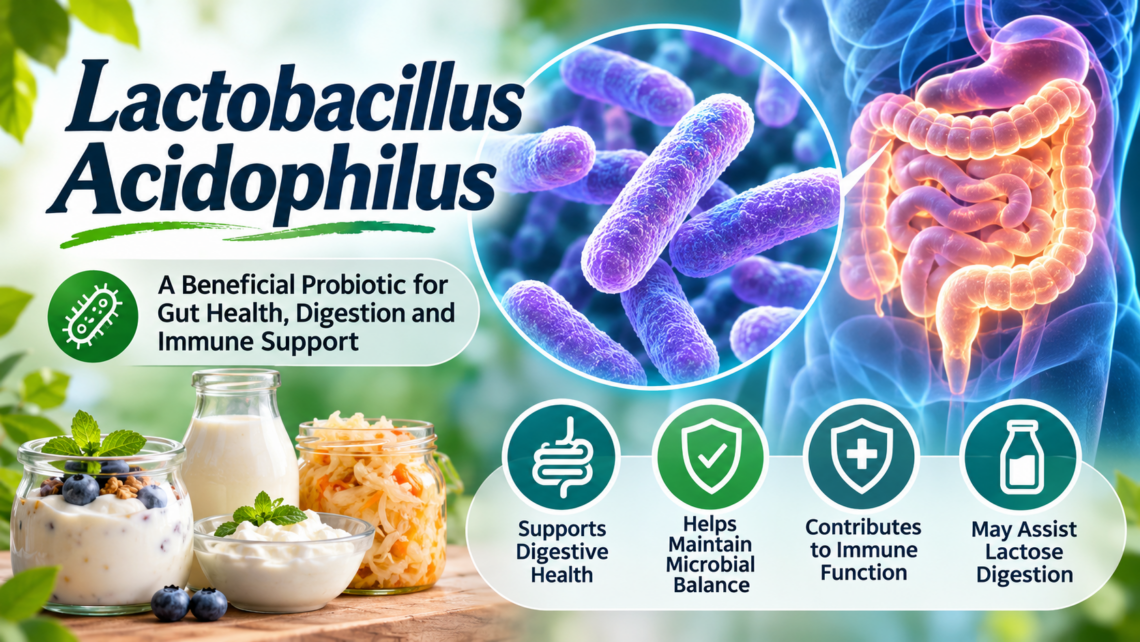
Lactobacillus Acidophilus: Understanding Its Role in Gut Health, Digestion and Immune Function
Table of Contents
The human digestive system is home to trillions of microorganisms, including bacteria, fungi and other microbes. Together, these organisms form what is known as the gut microbiome.
While some microorganisms can contribute to disease, many play essential roles in maintaining digestive balance, supporting immune function and helping the body process nutrients.
One of the best-known beneficial bacteria is Lactobacillus acidophilus.
This naturally occurring microorganism is associated with the human gastrointestinal tract and is also used in fermented foods and probiotic supplements.
But what exactly does Lactobacillus acidophilus do? How does it support gut health, and why is it frequently included in probiotic formulations?
Let’s explore.
1. What Is Lactobacillus Acidophilus?
Lactobacillus acidophilus is a species of beneficial lactic acid-producing bacteria.
Its name provides an interesting clue about its characteristics:
- Lacto: Associated with milk and lactic acid.
- Bacillus: Refers to its rod-like shape.
- Acidophilus: Means acid-loving.
These bacteria produce lactic acid by fermenting certain carbohydrates. This helps create an acidic environment that can influence the growth and activity of other microorganisms.
Lactobacillus acidophilus is commonly used in probiotic products because certain strains have demonstrated potential benefits for digestive and intestinal health.
2. The Importance of Gut Microbiome Balance
Your gut microbiome is a complex ecosystem.
A balanced microbiome helps support several important biological processes, including:
- Digestion and nutrient metabolism.
- Production of certain vitamins and metabolites.
- Protection against potentially harmful microorganisms.
- Communication with the immune system.
- Maintenance of the intestinal barrier.
When the composition or function of the gut microbiome changes significantly, a condition known as dysbiosis may occur.
Factors that can influence the microbiome include:
- Antibiotic use.
- Dietary patterns.
- Chronic stress.
- Poor sleep.
- Alcohol consumption.
- Gastrointestinal infections.
- Certain medications.
- Changes in intestinal movement.
Lactobacillus acidophilus is one of several microorganisms being studied for its potential role in maintaining microbial balance.
3. How Does Lactobacillus Acidophilus Work?
Lactobacillus acidophilus may influence the digestive environment through several mechanisms.
A. Production of Lactic Acid
It converts certain carbohydrates into lactic acid.
This contributes to an acidic environment that may make conditions less favourable for some unwanted microorganisms.
B. Competition with Unwanted Bacteria
Beneficial bacteria can compete with other microorganisms for nutrients and attachment sites along the intestinal lining.
This is one way the gut microbiome helps resist colonisation by potentially harmful microbes.
C. Supporting the Intestinal Barrier
Certain probiotic strains have demonstrated effects on intestinal barrier function in laboratory and clinical research.
The intestinal barrier is important because it regulates what passes from the digestive tract into the bloodstream.
D. Interaction with the Immune System
The gut and immune system are closely connected.
Certain Lactobacillus strains can interact with immune cells and influence immune signalling. However, these effects vary between strains and individuals.
4. Potential Health Benefits
Research into Lactobacillus acidophilus has identified several areas of potential benefit.
Digestive Health
Some probiotic strains may help support digestive function and improve certain gastrointestinal symptoms.
Potential areas of benefit include:
- Occasional bloating.
- Changes in bowel habits.
- Antibiotic-associated diarrhoea.
- Certain forms of digestive discomfort.
However, results are inconsistent, and benefits depend on the specific strain and condition being investigated.
Lactose Digestion
One particularly interesting application involves lactose digestion.
Some strains of Lactobacillus acidophilus produce an enzyme called beta-galactosidase, which helps break down lactose.
This may improve lactose digestion in certain fermented dairy products and probiotic preparations.
Intestinal Microbial Balance
Lactobacillus acidophilus may contribute to maintaining a favourable microbial environment by producing lactic acid and competing with other microorganisms.
It is important to understand that taking probiotics does not necessarily permanently change the composition of your gut microbiome.
Immune System Support
The digestive tract contains a significant portion of the body’s immune activity.
Certain probiotic strains interact with immune pathways and may influence immune responses.
However, Lactobacillus acidophilus should not be viewed as an immune booster or treatment for infections.
Vaginal Microbial Health
Lactobacillus species also play an important role in maintaining the vaginal microbiome.
Certain strains have been investigated for their potential to support vaginal microbial balance.
However, not every Lactobacillus acidophilus supplement provides these benefits, and probiotic supplements should not replace appropriate treatment for vaginal infections.
5. Natural Food Sources of Lactobacillus Acidophilus
You don’t necessarily need supplements to introduce beneficial bacteria into your diet.
Certain fermented foods may contain live microorganisms, including Lactobacillus species.
Examples include:
Natural Yoghurt
Some yoghurt products contain live cultures, including Lactobacillus acidophilus. Check the product label for the specific cultures used.
Kefir
Kefir is a fermented milk drink containing a diverse community of bacteria and yeasts.
Fermented Vegetables
Certain fermented vegetables contain lactic acid bacteria, depending on their preparation and storage.
Cultured Dairy Products
Some traditionally fermented dairy products contain live bacterial cultures.
An important distinction: not every fermented food contains Lactobacillus acidophilus specifically. Processing, pasteurisation and storage can also affect whether live cultures remain.
6. Prebiotics: Feeding Your Beneficial Bacteria
Introducing beneficial bacteria is only one part of supporting gut health.
Another important factor is providing microorganisms with suitable nutrients.
This is where prebiotics come in.
Prebiotics are substances, often specific types of dietary fibre, that are selectively utilised by beneficial microorganisms in the body.
Examples include:
- Onions.
- Garlic.
- Asparagus.
- Oats.
- Green bananas.
- Chicory root.
- Legumes.
- Certain vegetables.
Some prebiotic fibres help support the production of short-chain fatty acids by intestinal microorganisms.
These compounds, particularly butyrate, play important roles in intestinal health.
The bigger picture: A diverse, fibre-rich diet can help support a healthy microbial ecosystem rather than relying on a single probiotic organism.
7. What Is the Difference Between Probiotics, Prebiotics and Postbiotics?
These three terms are often confused.
Probiotics: Live microorganisms that provide a health benefit when administered in adequate amounts.
Prebiotics: Substances selectively utilised by host microorganisms, conferring a health benefit.
Postbiotics: Preparations of inanimate microorganisms and/or their components that provide a health benefit.
Lactobacillus acidophilus is an example of a probiotic microorganism when used in an appropriate formulation with demonstrated benefits.
Prebiotics provide nourishment for certain beneficial microorganisms, while postbiotics refer to beneficial preparations containing inanimate microorganisms or their components.
All three are areas of growing interest in microbiome research.
8. Should You Take a Lactobacillus Acidophilus Supplement?
Probiotic supplements are widely available, but choosing one requires some consideration.
Not all probiotic products are identical.
When evaluating a supplement, consider:
- Strain identification: Look for the full strain designation, not just the species name.
- Live culture count: Check the CFU (colony-forming units) and whether the amount is guaranteed until expiry.
- Storage requirements: Some products require refrigeration.
- Product quality: Choose reputable manufacturers with appropriate quality controls.
- Intended purpose: Look for evidence supporting the particular strain for the health concern you want to address.
More bacteria do not automatically mean better results.
People with severely weakened immune systems or serious underlying illnesses should consult a healthcare professional before using probiotic supplements.
9. Supporting Your Gut Microbiome Naturally
A healthy gut microbiome is influenced by your overall lifestyle.
Here are some practical ways to support it:
- Eat a variety of plant foods: Different fibres provide nutrients for different microorganisms.
- Include fermented foods: Consider yoghurt with live cultures or other fermented foods if tolerated.
- Stay hydrated: Adequate fluid intake supports normal digestive function.
- Prioritise sleep: Sleep patterns are connected to gut microbial activity.
- Manage stress: The gut and nervous system communicate through the gut-brain axis.
- Exercise regularly: Moderate physical activity supports general metabolic and digestive health.
- Avoid unnecessary antibiotics: Antibiotics can disrupt the microbiome, but should always be taken when medically indicated.
Consistency is more important than chasing individual supplements or miracle solutions.
10. The Gut-Brain Connection
The relationship between the gut and brain is one of the most fascinating areas of modern health research.
The gut-brain axis is a communication network involving:
- The central nervous system.
- The enteric nervous system.
- The vagus nerve.
- Hormonal signalling.
- Immune pathways.
- Microbial metabolites.
Gut microorganisms can influence this communication through substances they produce and their interactions with intestinal and immune cells.
Some probiotic strains are being investigated for potential effects on mood, stress and neurological processes.
However, it is important not to assume that Lactobacillus acidophilus specifically can treat anxiety, depression or neurological disorders.
Research into the gut-brain connection is promising but still developing.
Conclusion: Small Microorganisms, Big Biological Significance
Lactobacillus acidophilus is an interesting example of how microscopic organisms contribute to the complex ecosystem inside the human body.
From producing lactic acid to competing with potentially harmful microorganisms and interacting with the immune system, this bacterium has several important biological characteristics.
However, gut health is not dependent on one particular microorganism.
It is the result of a complex relationship between diet, lifestyle, digestion, immunity and the thousands of microbial species living within us.
Rather than focusing exclusively on introducing one beneficial bacterium, a more sustainable approach is to create an environment in which a diverse and balanced microbiome can thrive.
Your gut health is part of your overall wellbeing. Nurture the ecosystem, and support the body as a whole.
Frequently Asked Questions
1. Is Lactobacillus acidophilus naturally found in the human body?
Yes. It has been identified in the gastrointestinal tract and other body sites, although its abundance varies between individuals.
2. Can Lactobacillus acidophilus help with bloating?
Some probiotic strains may improve certain digestive symptoms, but results vary. Persistent bloating should be investigated rather than automatically attributed to an imbalance of gut bacteria.
3. Does Lactobacillus acidophilus kill Candida?
It is not an established treatment for Candida infections. Some Lactobacillus strains have demonstrated antimicrobial effects in laboratory research, but this does not establish that oral acidophilus supplements can treat candidiasis.
4. Can I take Lactobacillus acidophilus every day?
Many healthy adults tolerate probiotics, but suitability depends on the product, strain and individual circumstances. Daily supplementation is not necessary for everyone.
5. Is Lactobacillus acidophilus the same as Lactobacillus rhamnosus?
No. They are different bacterial species, although both belong to the broader Lactobacillus group.
References and Further Reading
- National Institutes of Health (NIH) – Probiotics: Health Professional Fact Sheet: https://ods.od.nih.gov/factsheets/Probiotics-HealthProfessional/
- World Health Organization (WHO): https://www.who.int/
- International Scientific Association for Probiotics and Prebiotics (ISAPP): https://isappscience.org/
- Hill et al. (2014). The ISAPP consensus statement on the scope and appropriate use of the term probiotic. Nature Reviews Gastroenterology & Hepatology.
VITALPULSE | EXPLORE YOUR WELLBEING
Reconnect. Reflect. Realign.
Disclaimer: This article is intended for educational purposes only and does not constitute medical advice, diagnosis or treatment. Probiotics are not substitutes for appropriate medical care. Consult a qualified healthcare professional about persistent digestive symptoms or before starting supplementation.


You May Also Like
Chromosome 13: The Genetic Blueprint of DNA Repair, Vision, Copper Metabolism & Cellular Protection
Alternative & Integrative Health: A Holistic Approach to Improving Your Quality of Life