Trapped Emotions: Understanding Their Hidden Impact on Your Health
How Unresolved Emotional Experiences Can Influence Your Mind, Nervous System and Physical Wellbeing
Table of Contents
Introduction
Have you ever experienced a difficult period in your life, only to find that the emotional effects seem to linger long after the situation has passed?
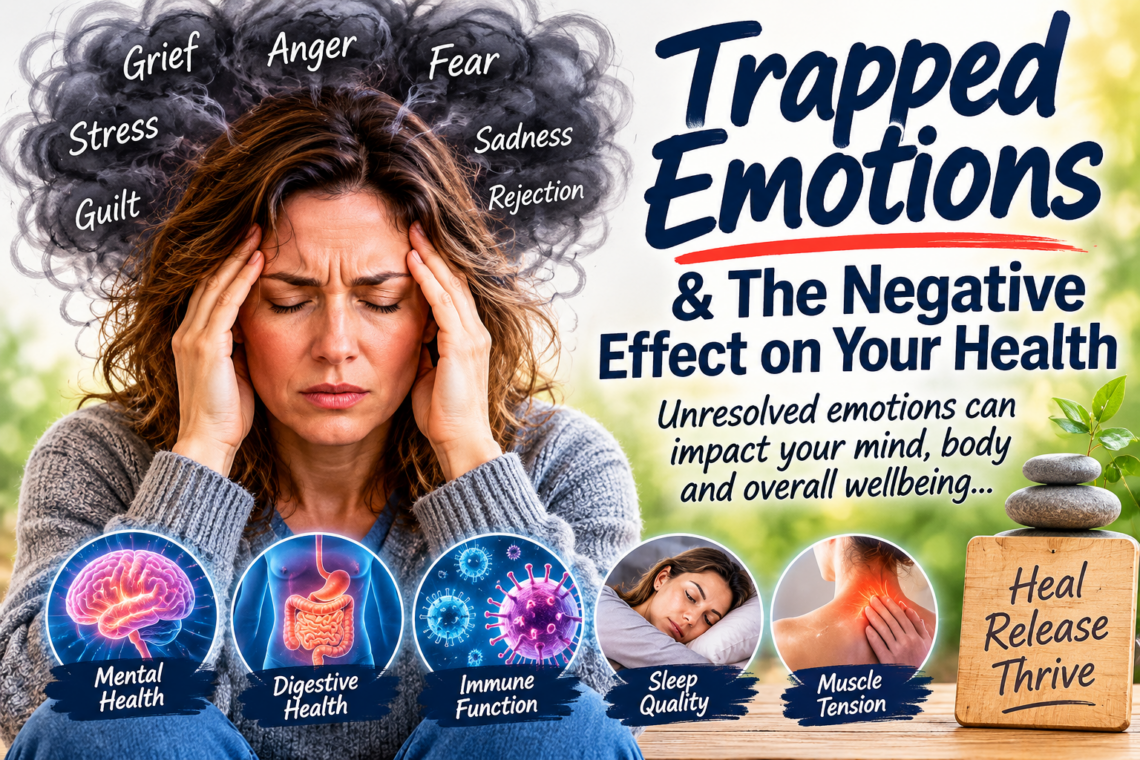
Perhaps you have experienced grief, disappointment, anger, fear, guilt, rejection or prolonged stress. You may believe you have moved on, yet certain situations still trigger strong emotional reactions. Sometimes, these experiences can even appear to influence how you feel physically.
This brings us to the concept of trapped emotions.
The term trapped emotions is commonly used in holistic wellness to describe unresolved emotional experiences that continue to influence a person’s thoughts, behaviours and emotional responses.
Although emotions do not literally become trapped inside individual organs or tissues, unresolved emotional stress can have real physiological effects. Research into psychoneuroimmunology, stress physiology and the mind-body connection helps us understand how emotional experiences can influence physical health.
Understanding this relationship is an important step towards developing a healthier relationship with ourselves.
1. What Are Trapped Emotions?
Emotions are natural biological and psychological responses to our experiences.
Fear, sadness, anger, happiness, excitement and disappointment all serve important purposes. They help us interpret situations, respond to our environment and communicate our needs.
Ideally, emotions are acknowledged, processed and gradually integrated into our experiences.
However, certain circumstances can make emotional processing difficult.
Examples include:
- Childhood trauma or difficult family experiences.
- The loss of a loved one.
- Divorce, separation or relationship difficulties.
- Emotional or physical abuse.
- Suppressed anger and resentment.
- Long-term financial or occupational stress.
- Feelings of rejection, shame or abandonment.
- Experiences that leave us feeling powerless or unsafe.
When we repeatedly suppress or avoid difficult emotions, the associated stress responses and emotional patterns may persist.
For example, someone who has experienced betrayal may develop difficulties trusting others. Someone who has experienced prolonged stress may remain unusually alert to potential threats, even when their immediate environment is safe.
These are examples of how unresolved experiences can continue influencing our present lives.
2. The Mind-Body Connection
Our brains and bodies are in constant communication.
The nervous system, endocrine system and immune system interact to coordinate our responses to internal and external challenges.
When we experience emotional distress, the brain processes the situation and activates physiological responses.
One important mechanism is the stress response.
When the brain perceives a threat, it can activate the sympathetic nervous system and the hypothalamic-pituitary-adrenal (HPA) axis.
This can result in:
- Increased heart rate.
- Changes in blood pressure.
- Increased muscle tension.
- Changes in breathing patterns.
- Release of stress hormones such as cortisol and adrenaline.
- Temporary changes in digestive activity.
- Alterations in immune system signalling.
These responses are useful when dealing with immediate danger.
The problem arises when stress becomes prolonged or recovery between stressful experiences is insufficient.
Chronic stress can contribute to a condition known as allostatic load — the cumulative physiological burden associated with repeatedly adapting to stress.
Over time, this may negatively influence several areas of health.
3. How Unresolved Emotional Stress Can Affect Physical Health
Emotional experiences do not directly cause every physical symptom or disease. However, prolonged psychological stress can influence bodily functions and may contribute to existing health difficulties.
The Nervous System
Long-term emotional distress can contribute to nervous system dysregulation.
Some individuals experience persistent hyperarousal, where the body remains in a heightened state of alertness.
Possible experiences include:
- Feeling constantly tense or restless.
- Difficulty relaxing.
- Increased sensitivity to noise or stimulation.
- Sleep disturbances.
- Muscle tightness.
- Irritability.
- Difficulty concentrating.
Others may experience a shutdown or withdrawal response, characterised by emotional numbness, exhaustion or disconnection.
Learning to recognise these patterns is an important part of nervous system regulation.
The Digestive System
The gut and brain communicate through a complex network known as the gut-brain axis.
This communication involves the vagus nerve, hormones, immune signalling and the enteric nervous system.
Stress can influence digestive movement, gut sensitivity and the perception of discomfort.
Some people experience worsening symptoms during stressful periods, including:
- Bloating.
- Excessive burping.
- Abdominal discomfort.
- Changes in bowel movements.
- Nausea.
- Increased sensitivity to certain foods.
Stress is not the only possible cause of these symptoms, but it can be an important contributing factor.
The Muscular System
Have you ever noticed that your shoulders tighten when you are anxious or that your jaw clenches when you are frustrated?
Emotional stress frequently manifests through muscular tension.
Common areas include:
- Neck and shoulders.
- Jaw and facial muscles.
- Upper back.
- Lower back.
- Abdominal muscles.
When muscle tension becomes habitual, it may contribute to headaches, muscular discomfort and restricted movement.
The Immune System
The relationship between psychological stress and immune function is complex.
Short-term stress can temporarily enhance certain immune responses. However, prolonged stress may disrupt normal immune regulation and contribute to chronic low-grade inflammation.
This does not mean that unresolved emotions directly create infections or autoimmune diseases.
Rather, emotional wellbeing is one of several factors that can influence the body’s ability to maintain physiological balance.
Sleep and Recovery
Unresolved emotional distress can make it difficult for the mind and body to settle.
You may find yourself:
- Replaying conversations.
- Worrying about the future.
- Thinking about past experiences.
- Waking frequently during the night.
- Feeling exhausted despite sleeping.
Poor sleep can then increase emotional sensitivity, creating a cycle in which stress affects sleep and inadequate sleep makes stress harder to manage.
4. Common Emotional Patterns and Their Effects
Different emotional experiences can influence how we think, behave and respond to stressful situations.
Consider the following examples:
Fear: Can contribute to hypervigilance, avoidance behaviours and persistent anxiety.
Anger: When repeatedly suppressed, may contribute to frustration, irritability and muscular tension.
Grief: Can affect sleep, appetite, concentration, motivation and emotional resilience.
Guilt: May contribute to rumination, self-criticism and difficulty accepting oneself.
Shame: Can influence self-esteem, social confidence and relationships.
Resentment: May keep us mentally connected to painful experiences and make it difficult to move forward.
Loneliness: Prolonged social isolation can contribute to psychological distress and negatively influence stress physiology.
These are possible associations, not fixed rules. Everyone processes emotional experiences differently.
5. Can Emotions Become Stored in the Body?
The expression “the body keeps the score” is often used to describe how experiences can leave lasting effects on the body.
There is a scientific basis for understanding how emotional experiences influence bodily responses.
For example:
- The brain can associate particular situations with previous experiences of danger.
- Muscles can develop habitual patterns of tension.
- Stress responses can become easily activated.
- Emotional memories can trigger physical sensations.
- The autonomic nervous system can become conditioned to respond to certain triggers.
This helps explain why someone may experience a racing heart, stomach discomfort or muscular tension when reminded of a difficult experience.
However, this should not be confused with the idea that individual emotions are physically stored in specific organs.
The body does not have a scientifically established storage system for individual emotions.
The more accurate explanation is that emotional memories, learned responses and physiological adaptations can influence how the body functions.
6. Emotional Suppression Versus Emotional Processing
There is an important difference between suppressing an emotion and processing it.
Emotional suppression involves attempting to push away, ignore or conceal an emotional experience.
For example, someone might repeatedly tell themselves:
- I shouldn’t feel this way.
- I need to be strong.
- I cannot let anyone know I’m hurting.
- It happened years ago, so I should be over it.
- Thinking about it won’t change anything.
Although suppression can sometimes help us function during difficult circumstances, consistently avoiding emotional experiences may prevent us from understanding and resolving the underlying distress.
Emotional processing, on the other hand, involves acknowledging what happened, recognising how it affected us and gradually developing healthier ways of responding.
This does not mean reliving every painful experience or forcing ourselves to confront trauma before we are ready.
Emotional healing should happen at a pace that feels safe and manageable.
7. Practical Ways to Release Emotional Stress
There is no single technique that works for everyone. Emotional wellbeing generally improves through consistent practices that support psychological safety, self-awareness and healthy stress regulation.
1. Present-Moment Awareness
Mindfulness helps us recognise thoughts, emotions and physical sensations without immediately reacting to them.
Take a few minutes each day to observe:
- What am I feeling?
- What thoughts are occupying my mind?
- Where am I holding physical tension?
- What might I need right now?
The objective is not to eliminate emotions but to become more aware of them.
2. Journaling
Writing can help organise thoughts and make difficult experiences easier to understand.
Consider these questions:
- What experience am I still struggling with?
- What emotions does it bring up?
- What did I need at the time that I did not receive?
- What can I learn from this experience?
- What would moving forward look like?
You do not need to write perfectly. Honest reflection is more important than finding the right words.
3. Breathing Exercises
Slow, comfortable breathing can help support relaxation.
Try this simple exercise:
- Sit comfortably.
- Relax your shoulders and jaw.
- Breathe gently through your nose.
- Allow your exhalation to be slightly longer than your inhalation.
- Continue for two to five minutes.
Avoid forcing deep breaths or holding your breath. Stop if you feel dizzy or uncomfortable.
4. Gentle Movement
Physical movement can help reduce muscular tension and support emotional wellbeing.
Consider:
- Walking.
- Gentle stretching.
- Yoga.
- Tai chi.
- Light mobility exercises.
The objective is not intense exercise but reconnecting with your body through comfortable movement.
5. Rebuilding Emotional Safety
Sometimes emotional healing begins with creating an environment in which you feel safe enough to relax.
This may involve:
- Establishing healthy boundaries.
- Reducing unnecessary stress.
- Spending time in nature.
- Maintaining supportive relationships.
- Allowing yourself to rest.
- Learning to say no.
- Seeking professional support when needed.
6. Professional Emotional Support
Psychological therapies such as cognitive behavioural therapy (CBT), trauma-focused therapy and other evidence-based approaches can help people understand and process difficult experiences.
For individuals affected by significant trauma, working with a qualified mental health professional can provide a safe and structured environment for recovery.
8. The Role of Holistic Wellbeing
Emotional wellbeing cannot be separated entirely from physical wellbeing.
A holistic approach considers the interaction between several important areas:
Physical wellbeing: Nutrition, hydration, movement and sleep.
Emotional wellbeing: Understanding feelings, processing difficult experiences and developing emotional resilience.
Mental wellbeing: Managing thoughts, improving self-awareness and developing healthier perspectives.
Nervous system wellbeing: Supporting relaxation, recovery and the ability to respond appropriately to stress.
Environmental wellbeing: Creating surroundings that support rest, safety and a sense of connection.
These areas influence one another.
For example, poor sleep can make emotional regulation more difficult, while ongoing emotional stress can interfere with sleep.
Improving one area can positively influence the others.
9. Letting Go Does Not Mean Forgetting
One of the biggest misconceptions about emotional healing is that we must forget the past to move forward.
This is not necessarily true.
Some experiences will always remain part of our personal history.
Healing does not require pretending that something never happened, excusing harmful behaviour or forcing forgiveness.
It means gradually changing our relationship with those experiences so that they no longer dominate our present lives.
We can acknowledge what happened without allowing it to define who we are.
We can recognise pain without becoming consumed by it.
And we can learn from the past without continuously living in it.
Conclusion: Your Emotional Wellbeing Matters
The connection between emotional experiences and physical health is an important part of understanding the human body.
Although the concept of trapped emotions is often discussed in holistic wellness, it is important to distinguish between metaphorical descriptions and established biological mechanisms.
Unresolved emotional distress, chronic stress and psychological trauma can influence the nervous system, digestive function, muscular tension, sleep and immune regulation.
Our bodies respond to more than just what we eat, how much we exercise or how well we sleep. Our experiences, relationships, thoughts and emotional environment also matter.
Taking care of your emotional wellbeing is not a sign of weakness. It is an important part of taking care of your overall health.
Sometimes, the first step towards healing is simply allowing yourself to acknowledge what you have been carrying.
You cannot change everything that happened to you, but you can begin changing how you care for yourself today.
A Moment of Reflection
Take a few minutes to consider these questions:
- Is there an experience from my past that still causes emotional discomfort?
- Are there emotions I regularly suppress rather than acknowledge?
- Do I notice physical tension when I experience certain emotions?
- What situations make me feel unsafe, anxious or overwhelmed?
- What small change could I make today to support my emotional wellbeing?
Remember: You do not need to resolve everything at once. Progress begins with awareness.
Disclaimer: This article is intended for educational and general wellbeing purposes only. It does not provide medical or psychological diagnosis or treatment. Emotional distress and physical symptoms can have many underlying causes. Persistent or concerning symptoms should be evaluated by an appropriately qualified healthcare professional. Do not discontinue prescribed treatment in favour of emotional release techniques or complementary therapies.
VitalPulse – Explore Your Wellbeing.
Reconnect. Reflect. Realign.