Neuralgia: Understanding Nerve Pain, Its Causes, Symptoms and Ways to Find Relief
Table of Contents
Neuralgia is a type of pain that originates from irritated, damaged or malfunctioning nerves. Unlike ordinary muscular or joint pain, neuralgia develops along the pathways of the nervous system and can produce sensations ranging from sharp electric shocks to burning, stabbing, tingling or persistent aching.
For some people, the pain appears suddenly and disappears just as quickly. For others, it becomes a recurring or chronic condition that interferes with sleep, concentration, movement and everyday activities.
Understanding neuralgia is an important first step towards identifying its underlying cause and exploring appropriate treatment options.
1. What Is Neuralgia?
Neuralgia refers to pain that occurs along the course of a nerve or within the area supplied by that nerve.
The nervous system communicates through electrical and chemical signals. Sensory nerves transmit information about temperature, pressure, touch and pain from different parts of the body to the brain.
When a nerve becomes irritated, compressed, inflamed or damaged, it may send abnormal pain signals even when there is no obvious injury to the surrounding tissue.
This can result in neuropathic pain, a term used to describe pain caused by a lesion or disease affecting the somatosensory nervous system.
Neuralgia can affect almost any part of the body, including:
- The face and jaw.
- The head and scalp.
- The neck and shoulders.
- The back and spine.
- The chest and rib cage.
- The arms, hands, legs and feet.
2. Common Symptoms of Neuralgia
Neuralgia can feel very different depending on which nerve is affected.
Common symptoms include:
- Sharp, stabbing pain: Sudden, intense pain that feels like being pricked with a needle.
- Electric shock sensations: Brief bursts of shooting or jolting pain.
- Burning sensations: Persistent heat or burning along a nerve pathway.
- Tingling and pins and needles: Unusual sensations in the affected area.
- Numbness: Reduced or altered sensation.
- Sensitivity to touch: Even light contact from clothing or fingertips may trigger discomfort.
- Radiating pain: Pain that travels from one area into another.
- Muscle discomfort: Associated muscle tightness or protective tension may develop around painful areas.
Symptoms may occur continuously or in episodes. Certain movements, positions, coughing, sneezing or even touching the skin can sometimes trigger pain.
3. What Causes Neuralgia?
Neuralgia is not a single disease. It is a symptom that can develop for several different reasons.
Some common contributing factors include:
Nerve Compression
Pressure from surrounding structures can irritate a nerve. This may occur because of spinal disc problems, degenerative changes, muscle tension or anatomical narrowing.
Injury or Trauma
Physical injuries, surgery and accidents can damage nerves or surrounding tissues.
Infections
Certain infections can affect nerves. Shingles, caused by the varicella-zoster virus, is a well-known example. It can produce persistent nerve pain even after the skin rash disappears.
Diabetes
Diabetes can damage peripheral nerves over time, resulting in diabetic neuropathy.
Inflammation
Inflammatory processes can affect nerve structures or the tissues surrounding them.
Vitamin Deficiencies
Deficiencies in certain nutrients, particularly vitamin B12, can contribute to nerve dysfunction.
Autoimmune and Neurological Conditions
Multiple sclerosis and certain autoimmune disorders can affect the nervous system and produce neuropathic pain.
Metabolic and Systemic Conditions
Kidney disease, thyroid disorders and other metabolic disturbances may also contribute to nerve dysfunction.
Sometimes, despite appropriate investigation, the precise cause remains unidentified.
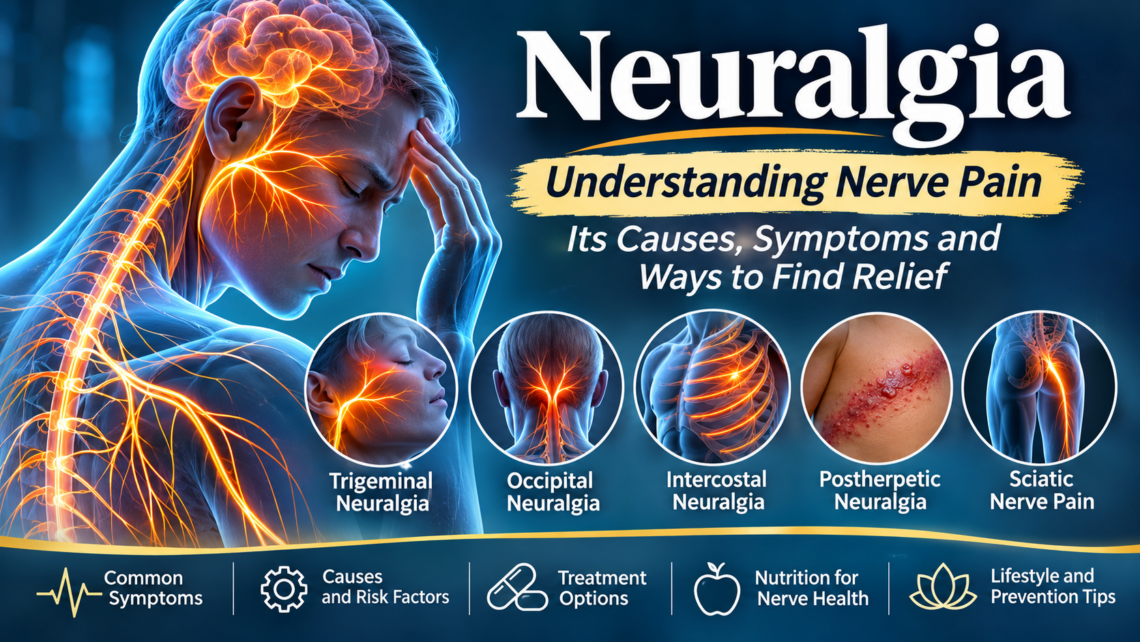
4. Different Types of Neuralgia
Several recognised forms of neuralgia affect different nerves and regions of the body.
Trigeminal Neuralgia
Affects the trigeminal nerve, which supplies sensation to the face. It can cause sudden, severe electric-shock-like pain in the cheek, jaw, forehead or around the eye.
Occipital Neuralgia
Involves irritation of the occipital nerves at the back of the head. Symptoms may include shooting pain from the upper neck towards the scalp, tenderness and sensitivity behind the ears or around the head.
Intercostal Neuralgia
Affects the nerves running between the ribs. It can produce burning, stabbing or shooting pain around the chest or upper abdomen.
Postherpetic Neuralgia
A complication of shingles in which nerve pain persists after the characteristic skin rash has healed.
Sciatic Nerve Pain
Sciatica describes pain associated with irritation or compression of the sciatic nerve roots. Pain can travel from the lower back through the buttock and down the leg.
5. The Relationship Between Neuralgia, Muscles and the Spine
The spine plays an important role in protecting the spinal cord and providing pathways for nerves that extend throughout the body.
The cervical spine, located in the neck, contains nerve roots that supply sensation and movement to the shoulders, arms and hands.
When the cervical spine experiences mechanical stress, disc degeneration or nerve root compression, symptoms may develop in areas beyond the neck itself.
Muscles can also contribute to discomfort.
For example:
- Tight neck muscles may aggravate existing neck pain.
- Poor posture can increase mechanical stress on the cervical spine.
- Jaw clenching may contribute to tension around the head, face and neck.
- Prolonged computer use may increase muscular fatigue.
- Restricted movement can create additional discomfort.
It is important to distinguish muscular pain from nerve pain. They can occur together, but they are not necessarily the same condition.
6. How Is Neuralgia Diagnosed?
Correct diagnosis is important because treatment depends on the underlying cause.
A healthcare professional may consider:
Medical History: When did the pain begin? Is it sharp, burning or electric? What makes it worse or better?
Physical Examination: Testing sensation, reflexes, muscle strength, movement and areas of tenderness.
Neurological Assessment: Evaluating whether particular nerves or nerve pathways are affected.
Blood Tests: These may investigate diabetes, vitamin B12 deficiency, thyroid problems and other metabolic conditions.
Imaging: MRI or CT scans may be appropriate when nerve compression, spinal abnormalities or other structural problems are suspected.
Nerve Conduction Studies: These tests measure how electrical signals travel through peripheral nerves and may help identify certain nerve disorders.
Not everyone with neuralgia requires every investigation.
7. Treatment and Management Options
There is no single treatment that works for every type of neuralgia. Management depends on the affected nerve, the cause and the severity of symptoms.
Medical Treatment
Depending on the diagnosis, treatment may include:
- Prescription medications specifically used for neuropathic pain.
- Anti-inflammatory medication where inflammation is contributing.
- Treatment of underlying infections or metabolic conditions.
- Local anaesthetic or nerve-block injections.
- Specialist procedures in selected cases.
Some commonly prescribed neuropathic pain medicines include gabapentin, pregabalin and certain antidepressants. These require appropriate medical assessment and supervision.
Physiotherapy and Movement
A physiotherapist may recommend:
- Gentle mobility exercises.
- Postural correction.
- Strengthening exercises.
- Neck and shoulder rehabilitation.
- Nerve mobilisation techniques where appropriate.
Exercises should be tailored to the individual. Aggressive stretching or manipulation may aggravate certain nerve conditions.
Lifestyle and Supportive Approaches
Everyday habits can influence pain levels and overall nervous system function.
Prioritise Sleep: Poor sleep can increase pain sensitivity and make chronic pain harder to manage.
Maintain Gentle Physical Activity: Walking and appropriate movement may help reduce stiffness and support general wellbeing.
Manage Stress: Chronic stress can increase muscular tension and influence how the brain processes pain signals.
Eat a Balanced Diet: Adequate protein, vitamins, minerals and essential nutrients support normal nerve function.
Avoid Excessive Alcohol: Alcohol can contribute to peripheral nerve damage, particularly with prolonged heavy consumption.
Review Ergonomics: Ensure your workstation, chair and monitor encourage a comfortable posture.
8. Nutrition and Nerve Health
The nervous system depends on several nutrients to maintain normal function.
Some important nutrients include:
Vitamin B12: Supports nerve maintenance and myelin formation.
Vitamin B1: Supports normal energy metabolism and nerve function.
Vitamin B6: Involved in neurotransmitter production.
Folate (B9): Supports cellular processes and nervous system function.
Magnesium: Involved in nerve signalling and muscle function.
Omega-3 Fatty Acids: Important components of cell membranes.
Vitamin D: Supports normal muscle and nervous system function.
A balanced diet can help maintain nutritional health, but supplements should not be assumed to treat neuralgia.
One important consideration is vitamin B6: excessive supplementation can itself cause peripheral neuropathy. More is not necessarily better.
9. The Nervous System, Stress and Pain Sensitivity
Pain is not simply a signal travelling from an injured body part to the brain. It is a complex experience involving the nervous system, sensory processing, emotions and the body’s response to perceived threats.
When someone experiences persistent pain, the nervous system can sometimes become increasingly sensitive.
This is known as central sensitisation.
In some cases, the nervous system becomes more responsive to ordinary sensory signals, meaning that relatively minor stimulation can produce disproportionate discomfort.
Stress, anxiety, poor sleep and prolonged physical tension may contribute to increased pain sensitivity.
This does not mean that the pain is imaginary. The pain is real, but the nervous system’s processing of sensory information may have changed.
Gentle breathing exercises, relaxation, mindfulness and appropriate psychological support can form part of a broader pain-management strategy.
10. Can Neuralgia Be Prevented?
Not every form of neuralgia can be prevented, particularly when it results from genetic, neurological or unavoidable medical conditions.
However, several habits may reduce certain risk factors:
- Maintain good posture and ergonomic working conditions.
- Avoid prolonged repetitive movements without breaks.
- Manage diabetes and other chronic conditions.
- Address nutritional deficiencies.
- Avoid excessive alcohol consumption.
- Protect the spine from unnecessary strain.
- Seek medical attention for persistent unexplained nerve pain.
- Keep vaccinations up to date where recommended, including shingles vaccination for eligible individuals.
11. When Should You Seek Medical Attention?
Persistent or worsening nerve pain should be evaluated by a healthcare professional.
Seek emergency medical attention if neuralgia-like symptoms occur alongside:
- Sudden weakness or numbness on one side of the body.
- Facial drooping or difficulty speaking.
- Sudden severe headache.
- New loss of bladder or bowel control, especially with back pain or leg weakness.
- Chest pressure or pain accompanied by shortness of breath, sweating or faintness.
These symptoms may indicate serious conditions that require urgent assessment.
12. A Holistic Perspective: Supporting the Body While Understanding the Cause
At VitalPulse, we believe that wellbeing involves understanding the relationship between the physical body, nervous system, lifestyle and emotional wellbeing.
Neuralgia provides an opportunity to explore how different aspects of health interact.
A holistic approach may consider:
Physical Wellbeing: Spinal health, muscular balance, movement and posture.
Nutritional Wellbeing: Adequate intake of essential vitamins and minerals.
Nervous System Regulation: Relaxation, breathing and stress management.
Sleep and Recovery: Supporting the body’s natural restorative processes.
Emotional Wellbeing: Recognising how prolonged discomfort and stress affect quality of life.
Complementary wellbeing practices may help support relaxation and general quality of life. However, techniques such as bioresonance or energy-based therapies have not been established as diagnostic or effective treatments for neuralgia and should never replace appropriate medical investigation or treatment.
The most important principle is to understand the underlying cause rather than simply trying to suppress the symptoms.
Final Thoughts
Neuralgia can be an extremely uncomfortable and sometimes debilitating experience. Its symptoms can affect everyday activities, sleep, concentration and emotional wellbeing.
However, understanding the type of nerve pain, identifying potential underlying causes and finding an appropriate management strategy can make a meaningful difference.
The nervous system is complex, and persistent pain deserves attention rather than dismissal.
Listen to your body, investigate persistent symptoms and take a balanced approach to your wellbeing.
VitalPulse – Explore Your Wellbeing
Reconnect. Reflect. Realign.
VitalPulse promotes holistic wellbeing education and self-awareness. Our content is intended for educational purposes and is not a substitute for professional medical advice, diagnosis or treatment.
Website: www.vitalpulse.co.za