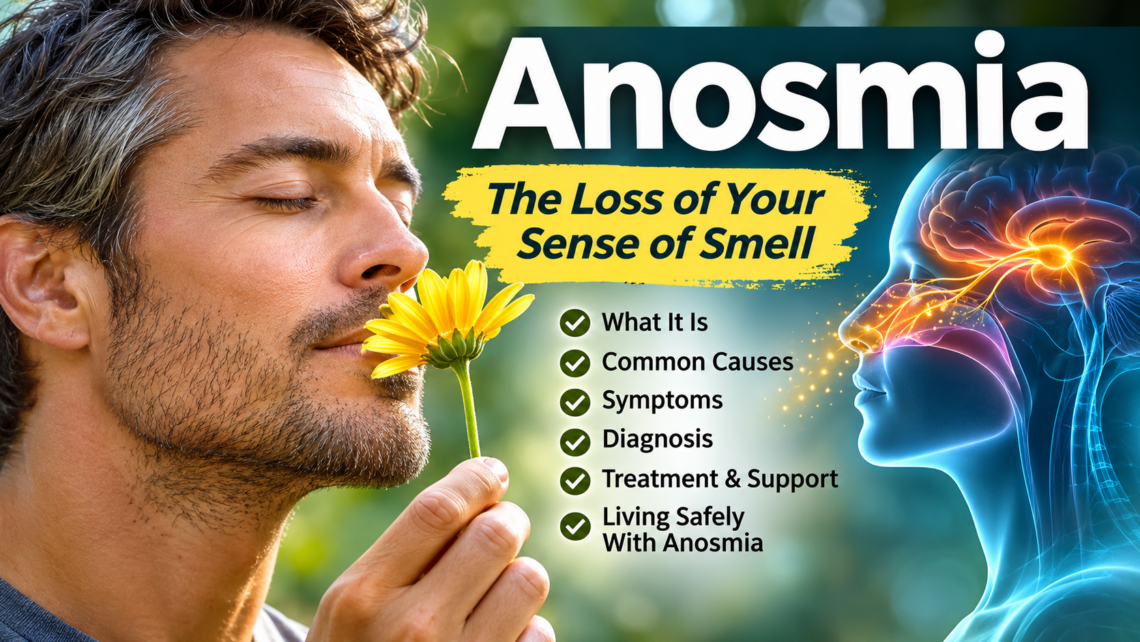
Anosmia: Understanding the Loss of Your Sense of Smell
Understanding the causes, symptoms, diagnosis and ways to support your olfactory health.
Table of Contents
Introduction
Imagine waking up in the morning and being unable to smell your coffee, freshly prepared food, flowers or the familiar scents around your home. For someone living with anosmia, this is an everyday reality.
Anosmia is the medical term for the complete loss of the sense of smell. Although it may initially seem like a minor inconvenience, our ability to smell plays an important role in everyday life. It influences how we experience food, helps us recognise potential dangers and contributes to our memories, emotions and overall quality of life.
Anosmia can develop suddenly or gradually. In some cases, it is temporary and resolves when an underlying infection or inflammation improves. In other cases, it can persist for months or even become permanent.
Understanding what causes anosmia is the first step towards identifying possible solutions and supporting the body’s recovery.
1. What Is Anosmia?
Anosmia occurs when the body’s olfactory system (the sensory system responsible for detecting smells) is unable to properly identify odours.
When we breathe in, microscopic airborne molecules enter the nasal passages and interact with specialised olfactory receptor cells located high inside the nasal cavity.
These receptors convert chemical signals into electrical impulses, which travel through the olfactory nerve to the brain. The brain then interprets these signals as recognisable smells.
This process allows us to distinguish between thousands of different odours.
When something interferes with this communication pathway, our ability to smell can become reduced or disappear completely.
There are several related conditions:
- Anosmia: Complete loss of the sense of smell.
- Hyposmia: Reduced ability to detect smells.
- Parosmia: Distorted perception of smells, where familiar odours may suddenly smell unpleasant or different.
- Phantosmia: Detecting smells that are not actually present.
These conditions can have different underlying causes and may require different approaches to treatment.
2. What Causes Anosmia?
There are several possible reasons why someone may lose their sense of smell. Some affect the nasal passages, while others interfere with the sensory nerves or the brain’s ability to process smell.
Respiratory infections
One of the most common causes is an upper respiratory infection.
Colds, influenza and COVID-19 can affect the olfactory system through inflammation, swelling or damage to the cells involved in detecting smells.
In some cases, the loss of smell disappears as the infection resolves. However, some people experience persistent smell disturbances long after recovering.
Chronic sinusitis
Sinusitis involves inflammation of the sinus cavities and surrounding nasal passages.
Chronic inflammation can cause swelling, congestion and the accumulation of mucus, preventing odour molecules from reaching the olfactory receptors.
People with chronic sinusitis may experience:
- Nasal congestion.
- Facial pressure or discomfort.
- Reduced sense of smell.
- Headaches.
- Postnasal drip.
- Difficulty breathing through the nose.
Allergic rhinitis
Allergic rhinitis occurs when the immune system reacts to environmental allergens such as pollen, dust mites, mould spores or animal dander.
This reaction causes inflammation and swelling inside the nasal passages.
When the nasal lining becomes swollen, airflow and the movement of odour molecules towards the olfactory receptors may be restricted.
Repeated or persistent inflammation can contribute to reduced smell sensitivity.
Nasal polyps
Nasal polyps are soft, non-cancerous growths that develop inside the nasal passages or sinuses.
Larger polyps can obstruct airflow and prevent smells from reaching the olfactory receptors.
They are often associated with chronic sinus inflammation and allergic conditions.
Head injuries
The olfactory nerves are delicate structures that can be damaged during head injuries.
Trauma may stretch, tear or damage the nerves responsible for transmitting smell signals to the brain.
Depending on the extent of the injury, the resulting loss of smell may be temporary or permanent.
Smoking and environmental chemicals
Exposure to cigarette smoke, industrial chemicals, solvents and other airborne irritants can negatively affect the nasal lining and olfactory function.
Long-term smoking is associated with impaired smell sensitivity.
Certain occupational exposures may also contribute to olfactory dysfunction.
Medication-related causes
Some medications can interfere with the sense of smell.
If you notice changes after starting a new medication, discuss this with your healthcare professional. Never discontinue prescribed medication without medical guidance.
Neurological conditions
In less common cases, changes in smell can be associated with neurological conditions such as Parkinson’s disease and Alzheimer’s disease.
This does not mean that losing your sense of smell indicates that you have one of these conditions. However, persistent or unexplained changes deserve appropriate medical assessment.
3. Why Is the Sense of Smell So Important?
Smell is much more than simply detecting pleasant or unpleasant odours.
It contributes to several important functions.
Taste and food enjoyment
Much of what we experience as flavour actually comes from our sense of smell. This is why food can seem bland when someone has anosmia, even when their basic ability to detect sweet, salty, sour, bitter and umami tastes remains intact.
Memory and emotions
The olfactory system has close connections with brain regions involved in memory and emotional processing, including the amygdala and hippocampus.
This helps explain why certain smells can trigger vivid memories and emotional responses.
Personal safety
Our sense of smell acts as an early warning system. It can alert us to:
- Smoke and potential fires.
- Gas leaks.
- Spoiled food.
- Chemical fumes.
- Other potentially hazardous substances.
Appetite and nutrition
When food loses much of its flavour, eating can become less enjoyable. Some people with anosmia experience reduced appetite, changes in eating habits or nutritional difficulties.
4. Common Symptoms Associated With Anosmia
The primary symptom is the inability to detect smells.
However, depending on the underlying cause, other symptoms may include:
- Reduced enjoyment of food.
- Difficulty identifying familiar fragrances.
- Nasal congestion or obstruction.
- Frequent sneezing.
- Runny nose or postnasal drip.
- Sinus pressure or facial discomfort.
- Altered perception of familiar smells.
- Reduced appetite.
- Changes in eating habits.
The combination of symptoms can provide useful clues about whether the problem originates in the nasal passages, sinuses or olfactory nervous system.
5. How Is Anosmia Diagnosed?
Anosmia is a symptom rather than a disease in itself. Therefore, identifying the underlying cause is important.
A healthcare professional may investigate:
Medical history: Establishing when the loss of smell started, whether it developed suddenly or gradually, and whether it followed an infection, injury or medication change.
Nasal examination: Checking for inflammation, congestion, nasal polyps or other obstructions.
Smell testing: Specialised tests can assess whether someone can detect and identify different odours.
Imaging: In selected cases, CT or MRI scans may be considered to investigate structural or neurological causes.
An ear, nose and throat specialist (ENT) may be recommended when symptoms persist or the underlying cause is unclear.
6. Supporting Olfactory Health and Recovery
Treatment depends on what is causing the loss of smell. There is no single treatment that works for every person.
However, several approaches may help support recovery.
Address underlying inflammation
If anosmia is associated with allergic rhinitis or chronic sinusitis, managing the underlying inflammation may improve airflow and olfactory function.
Depending on the diagnosis, a healthcare professional may recommend:
- Appropriate allergy treatment.
- Saline nasal rinses.
- Medicated nasal sprays.
- Treatment for chronic sinus disease.
Saline rinses should only be prepared using sterile, distilled or previously boiled and cooled water.
Smell training
Smell training, also known as olfactory training, is a technique used to help stimulate the olfactory system.
It involves regularly exposing yourself to a selection of distinct scents while consciously concentrating on recognising and remembering each smell.
Commonly used scents include:
- Rose.
- Lemon.
- Eucalyptus.
- Clove.
A typical approach involves smelling each scent gently for approximately 20 seconds, twice daily.
Consistency is important. Training is generally continued for several months, and improvement is not guaranteed. However, research suggests it can help some people, particularly those experiencing post-viral smell loss.
Support overall health
General health practices can contribute to overall wellbeing:
- Eat a balanced diet containing a variety of nutrients.
- Stay adequately hydrated.
- Avoid cigarette smoke and unnecessary chemical exposure.
- Maintain good nasal and oral hygiene.
- Address persistent allergies and sinus problems.
- Prioritise adequate sleep and physical activity.
These measures support general health but should not be considered a direct cure for anosmia.
7. The Connection Between Anosmia and the Nervous System
The sense of smell is closely connected to the nervous system.
Unlike many other sensory experiences, olfactory information has particularly direct connections with brain regions involved in memory, emotion and behavioural responses.
This relationship helps explain why smells can influence how we feel and why certain fragrances can evoke powerful memories.
The olfactory system also has a remarkable capacity for regeneration. Olfactory receptor neurons can renew themselves under normal conditions, although recovery depends on the nature and extent of the damage.
When the olfactory system is affected by inflammation, infection or injury, its ability to detect and transmit signals may become disrupted.
Understanding this relationship highlights the importance of protecting the nasal passages, avoiding harmful exposures and investigating persistent changes in smell.
8. Living Safely With Anosmia
For people who have completely lost their sense of smell, everyday safety requires additional attention.
Consider these practical precautions:
- Install smoke detectors and test them regularly.
- Ensure gas appliances are properly maintained and consider appropriate gas detection alarms.
- Check food expiry dates and storage times rather than relying on smell.
- Label refrigerated leftovers with preparation dates.
- Ask someone else to check questionable food.
- Be particularly cautious around chemical products and fumes.
These small adjustments can help reduce risks associated with the loss of an important sensory warning system.
9. When Should You Seek Medical Advice?
Temporary smell loss can occur during common respiratory infections. However, persistent or unexplained changes should not be ignored.
Consider seeking medical assessment if:
- Your sense of smell does not return after a few weeks.
- You experience sudden or unexplained smell loss.
- Symptoms are progressively worsening.
- You have persistent nasal obstruction or sinus problems.
- You experience recurrent nosebleeds or one-sided nasal symptoms.
- Your loss of smell follows a head injury.
Important: Sudden smell loss following a head injury, particularly with severe headache, confusion, neurological symptoms or clear fluid draining from the nose, requires urgent medical assessment. Seek emergency help for sudden neurological symptoms such as facial weakness, speech difficulty or one-sided weakness.
Conclusion: Rediscovering the Importance of Smell
Anosmia can affect far more than our ability to appreciate pleasant fragrances. It influences how we experience food, connect with memories, respond emotionally and recognise potential environmental dangers.
Although many cases are associated with temporary infections or treatable nasal conditions, persistent smell loss deserves proper investigation.
The good news is that some people regain their sense of smell naturally, while others may benefit from treating the underlying condition or undertaking structured smell training.
The most important step is understanding the cause rather than simply treating the symptom.
At VitalPulse, we believe that wellbeing begins with awareness, education and a better understanding of the interconnected systems that influence our health.
Reconnect. Reflect. Realign.
Explore Your Wellbeing with VitalPulse.
Medical Disclaimer
This article is intended for general educational and informational purposes only. It is not intended to diagnose, treat or replace professional medical advice. Anosmia can have several underlying causes, some of which require medical investigation. Always consult a qualified healthcare professional regarding persistent or unexplained loss of smell. Do not discontinue prescribed medication or begin treatment without appropriate medical guidance.


