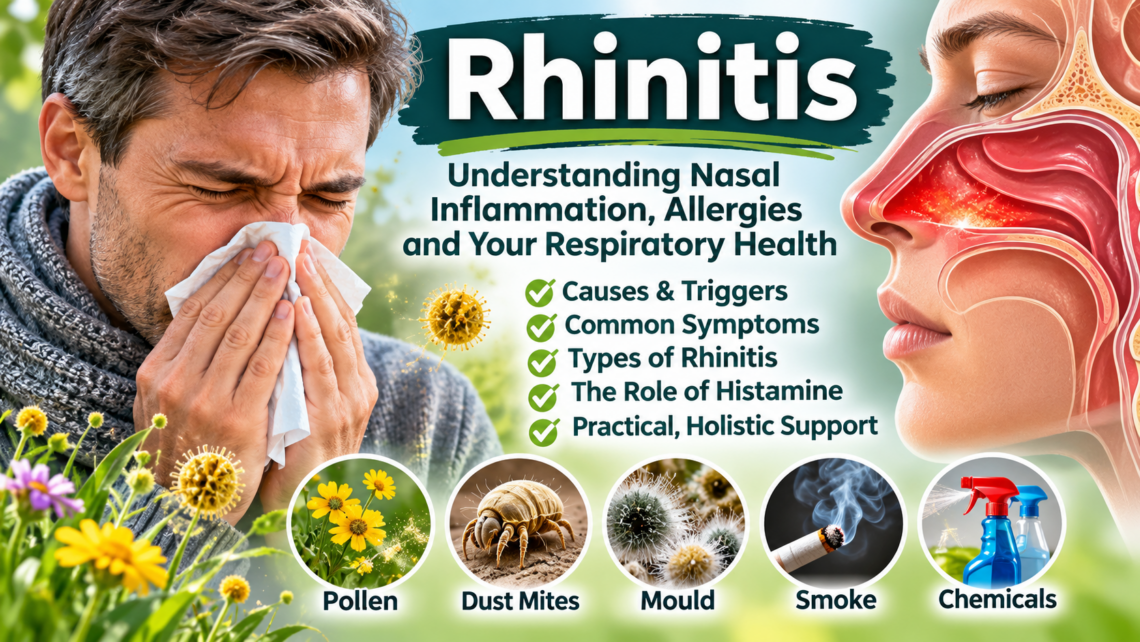
Rhinitis: Understanding Nasal Inflammation, Allergies and Your Respiratory Health
Understanding why your nose becomes irritated, congested or runny – and what you can do to support better nasal health.
Table of Contents
Introduction
A constantly blocked nose, frequent sneezing, an itchy sensation inside the nostrils or a persistent runny nose can be more than just an inconvenience. For many people, these symptoms are part of a condition known as rhinitis.
Rhinitis is the inflammation or irritation of the mucous membranes lining the inside of the nose. It can affect people of all ages and may be triggered by allergens, environmental irritants, infections, hormonal changes and other underlying factors.
Although rhinitis is often associated with seasonal allergies, not every case is allergy-related. Understanding the different types of rhinitis and identifying potential triggers is an important first step towards managing symptoms and supporting respiratory wellbeing.
1. What Exactly Is Rhinitis?
The inside of your nose is lined with a specialised mucous membrane responsible for filtering, warming and humidifying the air you breathe.
This lining contains tiny blood vessels, mucus-producing cells and immune cells that help protect your respiratory system against airborne particles, microorganisms and environmental irritants.
When this tissue becomes inflamed, it can produce symptoms such as:
- Nasal congestion or a blocked nose.
- Excessive sneezing.
- A runny nose.
- Itching inside the nose.
- Postnasal drip (mucus running down the back of the throat).
- Reduced sense of smell.
- Throat irritation and coughing.
Rhinitis can be temporary or persistent, depending on its cause.
2. The Different Types of Rhinitis
Understanding which type of rhinitis you may be experiencing can help identify the most appropriate management approach.
Allergic Rhinitis
Allergic rhinitis occurs when the immune system reacts to substances that are normally harmless, known as allergens.
Common triggers include:
- House dust mites.
- Pollen from trees, grasses and weeds.
- Mould spores.
- Animal dander.
- Certain occupational allergens.
During an allergic reaction, the immune system releases chemicals, including histamine, which contribute to inflammation and irritation.
Common symptoms include sneezing, itchy eyes, an itchy nose, watery nasal discharge and congestion.
Allergic rhinitis can be seasonal or occur throughout the year.
Non-Allergic Rhinitis
Non-allergic rhinitis produces symptoms similar to allergic rhinitis but is not caused by a typical allergic immune response.
Possible triggers include:
- Cigarette smoke.
- Air pollution.
- Strong perfumes and fragrances.
- Cleaning chemicals.
- Changes in temperature or humidity.
- Cold air.
- Spicy foods.
- Certain medications.
People with non-allergic rhinitis may experience congestion, sneezing and excessive nasal discharge without the characteristic itching associated with allergies.
Infectious Rhinitis
Infectious rhinitis is commonly associated with viral respiratory infections, particularly the common cold.
Symptoms may include nasal congestion, sneezing, a runny nose, sore throat and coughing.
It generally improves as the infection resolves.
Chronic Rhinitis
Chronic rhinitis refers to persistent or recurring nasal inflammation and symptoms lasting for an extended period.
It may be associated with ongoing allergen exposure, environmental irritants or other underlying nasal conditions.
Persistent symptoms deserve proper assessment, particularly when they interfere with sleep, breathing or everyday activities.
3. What Happens Inside the Nose During Rhinitis?
The nasal passages play an important role in protecting the respiratory system.
When an irritant or allergen enters the nose, several processes can occur:
1. Immune activation
The immune system recognises an allergen or irritant and initiates an inflammatory response.
2. Release of inflammatory chemicals
In allergic rhinitis, immune cells release histamine and other inflammatory mediators.
3. Increased blood flow
Blood vessels in the nasal lining expand, causing the tissue to swell.
4. Increased mucus production
The mucous membranes may produce additional secretions to help trap and remove irritating particles.
5. Nasal congestion
Swelling and increased mucus can narrow the nasal passages, making breathing through the nose more difficult.
This explains why someone can experience a completely blocked nose even without having a large amount of mucus.
4. The Connection Between Rhinitis and Histamine
Histamine is a naturally occurring chemical involved in several important bodily processes, including immune responses, digestion and regulation of certain physiological functions.
During an allergic reaction, specialised immune cells called mast cells release histamine.
Histamine can cause:
- Itching and irritation.
- Sneezing.
- Increased mucus production.
- Swelling of nasal tissues.
- Watery eyes.
This is why antihistamine medications are commonly used to manage allergic rhinitis.
It is important to understand that histamine is not inherently harmful. It is part of the body’s normal defence system. Problems arise when inflammatory responses are excessive or triggered unnecessarily.
5. The Gut, Immune System and Allergies
The digestive system and immune system are closely connected.
A large proportion of the body’s immune activity is associated with tissues surrounding the gastrointestinal tract.
The gut microbiome – the community of microorganisms living in the digestive system – contributes to immune regulation and helps maintain the intestinal environment.
Researchers are investigating how differences in gut microbiome composition may influence allergic conditions.
Several factors contribute to a healthy gut environment:
- Eating a varied, nutrient-rich diet.
- Including fibre-rich vegetables and fruits.
- Consuming appropriate sources of dietary protein.
- Maintaining adequate hydration.
- Getting sufficient sleep.
- Avoiding unnecessary antibiotic use.
Although gut health is important for overall wellbeing, there is currently insufficient evidence that treating gut imbalances alone can cure rhinitis.
6. Environmental Factors That Can Make Rhinitis Worse
Our immediate environment can have a significant influence on nasal health.
Some common household and environmental triggers include:
Dust and dust mites
Dust mites are microscopic organisms commonly found in bedding, carpets, upholstered furniture and soft furnishings.
Mould
Mould releases airborne spores that may irritate the respiratory system or trigger allergic symptoms in sensitive individuals.
Cigarette smoke
Tobacco smoke contains numerous irritating chemicals that can inflame the nasal lining and worsen respiratory symptoms.
Cleaning products
Bleach, strong detergents, aerosols and fragranced cleaning products can irritate sensitive nasal passages.
Dry air
Low humidity can contribute to dryness and irritation of the nasal membranes.
Air pollution
Dust, vehicle emissions and other airborne pollutants can aggravate existing nasal inflammation.
Identifying and reducing exposure to personal triggers can make a meaningful difference.
7. Rhinitis and the Respiratory System
The nose is the first major point of entry for air travelling into the respiratory system.
Healthy nasal passages help:
- Filter airborne particles.
- Warm incoming air.
- Add moisture to inhaled air.
- Support normal breathing patterns.
- Protect the lower respiratory tract.
When nasal congestion becomes persistent, people may begin breathing through their mouths, particularly during sleep.
This can contribute to dry mouth, throat irritation and disturbed sleep.
Postnasal drip can also cause throat clearing and coughing.
However, persistent coughing should not automatically be attributed to rhinitis. Conditions such as asthma, gastro-oesophageal reflux and respiratory infections may also contribute.
8. A Holistic Approach to Supporting Nasal Health
A holistic approach considers the interaction between environmental exposure, respiratory health, immune function, nutrition and lifestyle.
The following strategies may help support nasal comfort and general wellbeing.
A. Reduce Environmental Triggers
Start by examining your surroundings.
- Wash bedding regularly.
- Reduce dust accumulation.
- Clean carpets and upholstered furniture.
- Address dampness and visible mould.
- Avoid cigarette smoke.
- Minimise exposure to strong fragrances and cleaning chemicals.
- Ventilate indoor spaces appropriately.
If you suspect a particular allergen, identifying it through an appropriate allergy assessment may help.
B. Support Nasal Hygiene
Saline nasal sprays can help moisturise nasal passages and remove irritants.
Saline nasal irrigation may also help relieve congestion and remove allergens and mucus.
Important: Always use sterile, distilled or previously boiled and cooled water for nasal irrigation. Never use untreated tap water.
Avoid excessive or aggressive rinsing, especially when nasal passages are already irritated or very dry.
C. Maintain Adequate Hydration
Water supports normal mucus production and helps maintain the body’s fluid balance.
Adequate hydration is particularly important when dealing with dry indoor environments.
Avoid assuming that drinking excessive amounts of water will resolve nasal inflammation. The aim is to maintain normal hydration.
D. Improve Indoor Humidity
Very dry air can aggravate nasal irritation.
A clean humidifier may help when indoor humidity is low. However, excessive humidity can encourage mould and dust mite growth.
A relative humidity level of approximately 40–50% is generally a reasonable target for indoor comfort.
E. Prioritise Sleep and Recovery
Poor sleep can affect immune regulation and overall inflammatory balance.
Consider:
- Maintaining consistent sleep times.
- Keeping the bedroom clean and dust-controlled.
- Avoiding smoke and strong fragrances.
- Elevating the head slightly if postnasal drip is disturbing sleep.
F. Focus on Nutritional Foundations
A balanced diet provides nutrients required for normal immune function and tissue maintenance.
Include:
- Colourful vegetables and fruit.
- Adequate protein.
- Whole grains and fibre.
- Healthy fats.
- A variety of nutrient-dense foods.
There is no universally proven rhinitis diet. Restrictive diets and unnecessary food elimination are best avoided unless a genuine intolerance or allergy has been identified.
9. When Should You Seek Medical Advice?
Although many cases of rhinitis are manageable, persistent symptoms should not be ignored.
Consider medical assessment if:
- Symptoms continue for several weeks.
- Nasal congestion is affecting sleep.
- You frequently experience sinus pressure or facial pain.
- Your sense of smell has changed.
- You experience recurring nosebleeds.
- Symptoms are predominantly on one side.
- You have persistent coughing or breathing difficulties.
- Over-the-counter treatments are not helping.
Seek urgent medical attention if you experience significant breathing difficulty, swelling of the tongue or throat, or other signs of a severe allergic reaction.
A healthcare professional may recommend allergy testing, examination of the nasal passages or other investigations depending on your symptoms.
Treatment options may include antihistamines, corticosteroid nasal sprays, saline preparations and other therapies appropriate to the underlying cause.
10. Understanding the Difference Between Rhinitis and Sinusitis
Rhinitis and sinusitis are related but different conditions.
| Rhinitis | Sinusitis |
|---|---|
| Inflammation of the nasal lining | Inflammation of the sinuses |
| Sneezing and itching are common | Facial pressure and pain may occur |
| Runny or blocked nose | Nasal congestion and discharge |
| Often allergy-related | Often follows a viral infection |
| May occur without sinus infection | May occur with or without nasal inflammation |
The two conditions can occur together. This is sometimes referred to as rhinosinusitis.
Conclusion: Listen to What Your Respiratory System Is Telling You
Rhinitis is a common condition, but persistent nasal irritation, congestion and inflammation can significantly affect quality of life.
Understanding the underlying triggers is more useful than simply trying to suppress individual symptoms.
By paying attention to environmental conditions, reducing exposure to irritants, supporting normal nasal hygiene, maintaining good nutrition and prioritising recovery, you can take practical steps towards better respiratory wellbeing.
Your respiratory system works continuously to protect you. Giving it the right environment and support is an important part of looking after your overall health.
VitalPulse Reflection
Explore Your Wellbeing. Reconnect. Reflect. Realign.
Take a moment to consider your own respiratory health:
- Do you experience frequent nasal congestion, sneezing or irritation?
- Are your symptoms worse indoors, outdoors or at particular times of the day?
- Could dust, mould, smoke or cleaning chemicals be contributing?
- Do you experience dry nasal passages or excessive mucus production?
- What small environmental or lifestyle changes could you introduce this week?
Sometimes, improving wellbeing begins with becoming more aware of the everyday factors influencing how we feel.
Curious About NLS Bioresonance Scanning?
What if you could explore your body’s energetic patterns from a different perspective?
At VitalPulse, we invite you to discover NLS (Non-Linear System) Bioresonance Scanning – an alternative wellness exploration approach designed to provide insights into energetic patterns and potential areas of imbalance within the body’s systems.
Whether you’re interested in understanding your wellbeing more deeply, exploring the body’s interconnected systems, or simply curious about complementary approaches to wellness, an NLS scan offers an opportunity to explore a different perspective.
Why not experience it for yourself?
✨ Explore your body’s energetic patterns.
✨ Discover a different perspective on your overall wellbeing.
✨ Identify areas you may wish to explore further as part of your personal wellness journey.
🎁 Take the First Step – Explore NLS Bioresonance!
👉 EXPLORE NLS BIORESONANCE SCANNING
VitalPulse – Explore Your Wellbeing.
Reconnect. Reflect. Realign.
Please note: NLS Bioresonance scanning is offered as a complementary wellness exploration service. It is not a medically validated diagnostic tool and does not diagnose, treat, cure or prevent disease. It is not a substitute for professional medical advice, diagnosis or treatment.
Disclaimer: This article is intended for general educational and wellness purposes only. It does not provide medical diagnosis or replace professional medical advice, assessment or treatment. Persistent or concerning respiratory symptoms should be evaluated by a qualified healthcare professional.
VitalPulse – Explore Your Wellbeing.


You May Also Like

Geopathic Stress: Could Your Living Environment Be Affecting Your Physical Wellbeing?
Major Histocompatibility Complex (MHC): Understanding the Body’s Cellular Identity and Immune Recognition System
