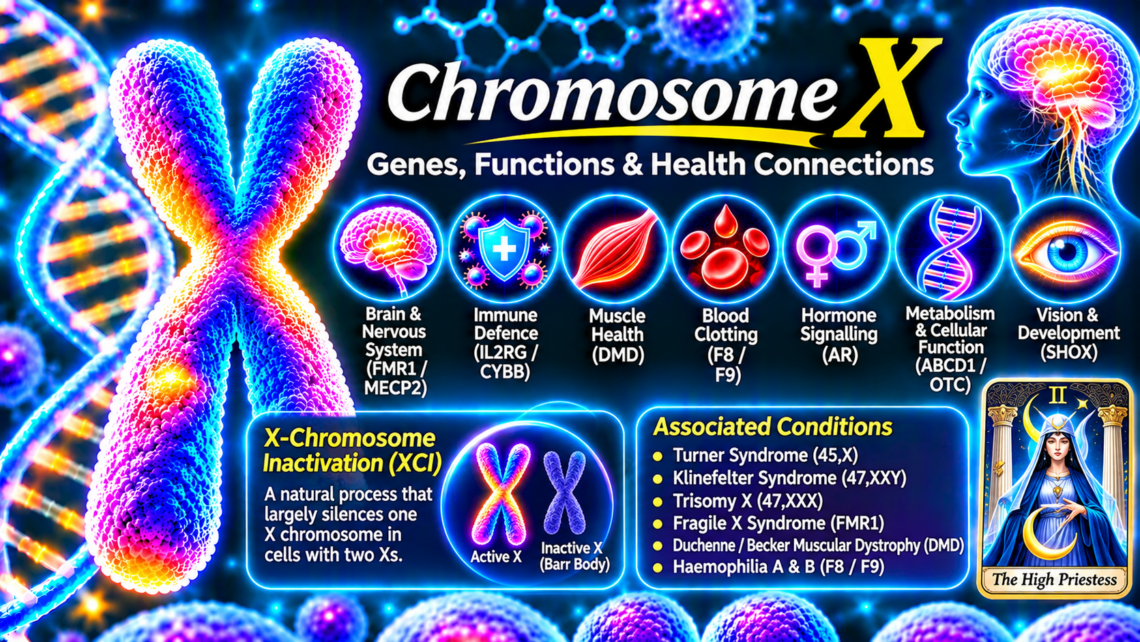
Chromosome X: The Genetic Blueprint of Brain Function, Immunity, Hormones, Muscle Health & Human Development
Exploring the genes, biological functions and genetic conditions associated with the human X chromosome.
Introduction: More Than a Sex Chromosome
Chromosome X is one of the two human sex chromosomes, alongside the Y chromosome. It is often discussed in connection with biological sex development, but its influence extends far beyond reproduction.
The X chromosome contains genes involved in brain development, nerve communication, immune function, muscle integrity, blood clotting, hormone signalling, vision and cellular metabolism.
Every typical human cell contains at least one X chromosome. Individuals with a typical XX chromosome pattern generally have two X chromosomes, while individuals with a typical XY pattern generally have one X chromosome and one Y chromosome. However, variations in sex chromosome patterns and development also occur.
One of the most remarkable features of Chromosome X is its ability to undergo a process called X-chromosome inactivation. This mechanism helps balance the activity of X-linked genes in cells containing two X chromosomes.
Understanding Chromosome X provides an opportunity to explore the relationship between genetics, development, cellular regulation and human wellbeing.
1. Understanding Chromosome X
Chromosome X is considerably larger than the Y chromosome and contains a much greater number of genes.
Some important facts include:
| Feature | Description |
|---|---|
| Chromosome type | Sex chromosome |
| Approximate length | 155 million DNA base pairs |
| Percentage of cellular DNA | Approximately 5% |
| Estimated protein-coding genes | Approximately 900–1,400 |
| Main biological roles | Development, neurological function, immunity, muscle health and reproduction |
| Chromosome regions | Short arm (Xp) and long arm (Xq) |
| Special mechanism | X-chromosome inactivation |
Gene counts vary depending on the reference genome and annotation method.
Chromosome X contains genes that are essential for many biological processes. Some are active in nearly every tissue, while others have more specialised functions.
An important distinction is that not every gene on Chromosome X is involved in sex development. Many contribute to fundamental cellular functions shared by people of different sexes.
2. X-Chromosome Inactivation: The Body’s Genetic Balancing Mechanism
One of the most fascinating aspects of Chromosome X is a process known as X-chromosome inactivation (XCI).
In most cells of individuals with two X chromosomes, one X chromosome becomes largely inactive early in embryonic development.
This prevents many X-linked genes from producing an excessive double dose of their gene products.
The inactive chromosome becomes condensed into a structure called a Barr body, which can be observed in the cell nucleus.
How does X-inactivation work?
In early development, cells generally inactivate one of their two X chromosomes. In many tissues, the choice is largely random:
- Some cells keep the X chromosome inherited from the mother active.
- Other cells keep the X chromosome inherited from the father active.
- As cells divide, their descendants generally maintain the same inactivation pattern.
This creates a biological mosaic, with different groups of cells expressing genes from different parental X chromosomes.
However, X-inactivation is not complete. Some genes escape inactivation and remain active on both X chromosomes. Many escape genes are located in regions shared with the Y chromosome, known as pseudoautosomal regions.
Why is this important?
X-inactivation helps explain why people with two X chromosomes can have different patterns of gene expression, even when they carry the same genetic variant.
It also helps explain why some individuals who carry an X-linked genetic variant experience symptoms while others do not.
In some cases, one X chromosome is preferentially inactivated across a large proportion of cells. This is called skewed X-inactivation and can influence the severity or presentation of certain genetic conditions.
X-inactivation is therefore an important example of how the body regulates genetic information beyond the DNA sequence itself.
3. Important Genes Located on Chromosome X
Chromosome X contains numerous genes with important roles in human development and physiology.
The following genes illustrate its influence across different body systems.
| Gene | Main function | Biological significance |
|---|---|---|
| DMD | Produces dystrophin | Muscle structure and stability |
| FMR1 | Produces FMRP | Brain development and synaptic regulation |
| MECP2 | Regulates gene expression | Nervous system development |
| F8 | Produces clotting factor VIII | Blood coagulation |
| F9 | Produces clotting factor IX | Blood coagulation |
| G6PD | Supports cellular redox balance | Protection against oxidative stress |
| ABCD1 | Transports fatty acids into peroxisomes | Fatty acid metabolism |
| OTC | Supports the urea cycle | Ammonia metabolism |
| IL2RG | Part of several immune signalling receptors | Immune system development |
| CYBB | Component of NADPH oxidase | Immune-cell defence |
| IDS | Produces iduronate-2-sulfatase | Lysosomal metabolism |
| AR | Produces the androgen receptor | Hormone signalling |
| SHOX | Supports skeletal development | Bone growth and stature |
| TLR7 | Recognises certain viral RNA patterns | Innate immune recognition |
DMD – Muscle Structure and Stability
The DMD gene provides instructions for producing dystrophin, a protein that helps stabilise muscle fibres during contraction and relaxation.
Dystrophin connects the internal structural framework of muscle cells to a protein complex at the cell membrane.
When dystrophin is absent or significantly reduced, muscle fibres become more vulnerable to damage.
Variants in DMD can cause:
- Duchenne muscular dystrophy
- Becker muscular dystrophy
- Other dystrophin-related muscle conditions
These conditions demonstrate the importance of genetic instructions in maintaining healthy muscle tissue.
FMR1 – Brain Development and Communication
The FMR1 gene produces a protein called fragile X messenger ribonucleoprotein (FMRP).
FMRP helps regulate the production of other proteins, particularly at synapses — the specialised connections through which nerve cells communicate.
When FMR1 function is disrupted, neurological development and communication between nerve cells can be affected.
A particular expansion of repeated DNA sequences within FMR1 causes Fragile X syndrome.
FMR1 is also associated with premutation-related conditions, including fragile X-associated tremor/ataxia syndrome (FXTAS) and fragile X-associated primary ovarian insufficiency (FXPOI).
MECP2 – Nervous System Regulation
MECP2 plays an important role in regulating gene expression in the nervous system.
It helps cells interpret chemical modifications to DNA and organise patterns of gene activity that are important for neurological development.
Certain MECP2 variants cause Rett syndrome, a neurological condition that primarily affects girls and women, although other presentations can occur.
MECP2 demonstrates how changes in gene regulation can influence the development and function of the brain.
F8 and F9 – Blood Clotting
The F8 and F9 genes provide instructions for producing clotting factors VIII and IX.
These proteins work together with other components of the coagulation system to help form stable blood clots.
Changes in these genes can cause:
- Haemophilia A (F8)
- Haemophilia B (F9)
Both conditions can result in prolonged bleeding and, in more severe cases, spontaneous bleeding into muscles and joints.
G6PD – Cellular Protection Against Oxidative Stress
The G6PD gene provides instructions for producing glucose-6-phosphate dehydrogenase.
This enzyme helps cells generate NADPH, a molecule required to maintain protective antioxidant systems.
Red blood cells depend particularly heavily on this pathway because they have limited alternative ways of producing NADPH.
G6PD deficiency can make red blood cells more vulnerable to oxidative damage, potentially resulting in haemolytic anaemia.
ABCD1 – Fatty Acid Metabolism
The ABCD1 gene produces a protein involved in transporting certain fatty acids into peroxisomes.
Peroxisomes are specialised cellular structures involved in breaking down very-long-chain fatty acids and carrying out other metabolic functions.
Variants in ABCD1 cause X-linked adrenoleukodystrophy (X-ALD), a condition that can affect the nervous system and adrenal glands.
OTC – Ammonia Metabolism
The OTC gene provides instructions for producing ornithine transcarbamylase, an enzyme involved in the urea cycle.
The urea cycle helps the body convert toxic ammonia, produced during protein metabolism, into urea for elimination.
OTC deficiency can result in the accumulation of ammonia in the bloodstream, potentially causing serious neurological complications.
IL2RG – Immune System Development
The IL2RG gene produces the common gamma chain, a component shared by several cytokine receptors.
These receptors help regulate the development, survival and communication of immune cells.
Certain IL2RG variants cause X-linked severe combined immunodeficiency (X-SCID), a serious condition involving impaired immune function.
CYBB – Immune-Cell Defence
The CYBB gene provides instructions for producing a component of the NADPH oxidase complex.
This complex helps certain immune cells generate reactive oxygen species used to destroy microorganisms.
Variants in CYBB can cause X-linked chronic granulomatous disease, in which immune cells have difficulty eliminating certain bacteria and fungi.
IDS – Lysosomal Metabolism
The IDS gene produces an enzyme called iduronate-2-sulfatase.
This enzyme helps break down specific complex carbohydrates called glycosaminoglycans within lysosomes.
Variants in IDS cause mucopolysaccharidosis type II, also known as Hunter syndrome.
AR – Hormone Signalling
The AR gene produces the androgen receptor, a protein that allows cells to respond to hormones such as testosterone and dihydrotestosterone.
Androgen signalling contributes to reproductive development, secondary sex characteristics, bone health, muscle physiology and other processes.
Certain AR variants cause androgen insensitivity syndrome, in which the body’s cells respond differently to androgen hormones.
SHOX – Skeletal Development
The SHOX gene plays an important role in bone development and normal growth.
It is located in the pseudoautosomal region shared by the X and Y chromosomes, meaning that it is not subject to the usual X-inactivation pattern.
Having only one functional copy of SHOX can contribute to short stature and skeletal abnormalities in Turner syndrome.
4. Genetic Conditions Associated with Chromosome X
Changes involving Chromosome X can affect individual genes, chromosome structure or the total number of sex chromosomes.
Some conditions are inherited, while others arise through spontaneous genetic or chromosomal changes.
Turner Syndrome (45,X)
Turner syndrome occurs when one X chromosome is completely or partially missing or altered in some or all cells.
Common features may include:
- Short stature
- Reduced ovarian function
- Delayed or absent puberty without hormone treatment
- Fertility difficulties
- Certain heart and kidney abnormalities
- Skeletal differences
Some individuals have mosaic Turner syndrome, meaning that different populations of cells contain different chromosome patterns.
The SHOX gene contributes to some of the skeletal and growth characteristics associated with the condition.
Trisomy X (47,XXX)
Trisomy X occurs when an individual has an additional X chromosome.
Some individuals have no obvious symptoms, while others may experience:
- Tall stature
- Speech or language delays
- Learning difficulties
- Motor coordination challenges
- Anxiety or emotional difficulties
- Reduced ovarian function in some cases
The effects vary considerably between individuals.
Klinefelter Syndrome (47,XXY)
Klinefelter syndrome involves an additional X chromosome in individuals with a typical male developmental pattern.
Possible features include:
- Reduced testosterone production
- Smaller testes
- Reduced fertility
- Taller-than-average stature
- Reduced muscle mass
- Breast tissue development
- Learning or language difficulties in some individuals
Some people have mosaic forms, such as 46,XY/47,XXY.
Fragile X Syndrome
Fragile X syndrome is caused by an expansion of CGG repeats in the FMR1 gene.
This expansion can lead to reduced or absent production of FMRP, affecting brain development and function.
Possible features include:
- Developmental delays
- Intellectual disability
- Learning difficulties
- Attention-related challenges
- Anxiety
- Differences in communication and social interaction
Fragile X syndrome can affect individuals of different sexes, although its presentation and severity can vary.
Duchenne and Becker Muscular Dystrophy
Both conditions result from variants in the DMD gene.
Duchenne muscular dystrophy usually causes progressive muscle weakness beginning in childhood.
Becker muscular dystrophy is generally milder and progresses more slowly, although severity varies.
The conditions demonstrate the importance of dystrophin in maintaining muscle-cell integrity.
Haemophilia A and B
Haemophilia A and B are caused by changes in F8 and F9, respectively.
They affect the blood’s ability to clot properly and can result in prolonged bleeding, bruising and bleeding into joints or muscles.
G6PD Deficiency
G6PD deficiency is a genetic condition affecting the ability of red blood cells to protect themselves against oxidative stress.
Many individuals have no symptoms unless exposed to particular triggers, such as certain medicines, infections or fava beans.
X-Linked Adrenoleukodystrophy
X-linked adrenoleukodystrophy is caused by variants in ABCD1.
It affects the metabolism of very-long-chain fatty acids and can damage the nervous system and adrenal glands.
The condition has different forms and presentations, including childhood cerebral disease and adult-onset neurological involvement.
Other X-Linked Conditions
Additional conditions associated with genes on Chromosome X include:
- Rett syndrome (MECP2)
- Hunter syndrome (IDS)
- X-linked severe combined immunodeficiency (IL2RG)
- Chronic granulomatous disease (CYBB)
- Ornithine transcarbamylase deficiency (OTC)
- Androgen insensitivity syndrome (AR)
These examples demonstrate how a single chromosome contributes to a remarkably wide range of biological functions.
5. Understanding X-Linked Inheritance
X-linked inheritance refers to the transmission of genetic variants located on the X chromosome.
Because individuals with a typical XY chromosome pattern have only one X chromosome, a variant affecting an X-linked gene may have a more direct effect.
Individuals with two X chromosomes have two copies of most X-linked genes, although X-inactivation and other biological factors influence how variants are expressed.
X-linked recessive inheritance
In a typical X-linked recessive pattern, a variant in one copy of a gene may cause a condition in an individual with only one X chromosome.
An individual with two X chromosomes may have one altered copy and one working copy, but this does not guarantee that they will be symptom-free.
Skewed X-inactivation, the specific gene involved and other genetic factors can influence the clinical presentation.
Examples include haemophilia A, haemophilia B and Duchenne muscular dystrophy.
X-linked dominant inheritance
In X-linked dominant conditions, a disease-associated variant in one copy of a gene can be sufficient to cause a condition.
Examples include Rett syndrome and certain other X-linked disorders.
The effects can vary between individuals, including between people with different sex chromosome patterns.
Why fathers cannot pass an X-linked variant to their sons
A father typically passes his X chromosome to his daughters and his Y chromosome to his sons.
Therefore, an X-linked variant carried by a father is not passed directly to his sons through the paternal X chromosome.
A mother passes one of her X chromosomes to each child, so an X-linked variant may be transmitted through either sons or daughters.
Understanding these patterns is important when assessing inherited conditions and family history.
6. Chromosome X and the Body’s Major Systems
The X chromosome contributes to several interconnected biological systems.
Nervous System and Brain Health
Genes such as FMR1 and MECP2 are essential for normal neurological development and the regulation of communication between nerve cells.
Other X-linked genes contribute to neuronal structure, signalling and brain function.
This makes Chromosome X an important part of the genetic framework underlying neurological development.
Musculoskeletal Health
The DMD gene is essential for muscle-fibre stability, while SHOX contributes to skeletal growth and development.
Genetic changes affecting these genes can influence muscle strength, physical development and skeletal structure.
Immune System Function
Genes such as IL2RG, CYBB and TLR7 contribute to immune-cell development, signalling and pathogen recognition.
The X chromosome therefore has an important role in both innate and adaptive immune processes.
Blood and Circulation
The F8 and F9 genes contribute to the coagulation cascade, while G6PD helps protect red blood cells against oxidative damage.
These functions demonstrate the chromosome’s involvement in blood health and cellular resilience.
Hormonal and Reproductive Health
The AR gene plays an important role in androgen signalling, while X-linked genes and chromosome structure can influence ovarian development and reproductive function.
Chromosome X is therefore involved in several aspects of hormonal and reproductive biology.
Metabolism and Cellular Maintenance
Genes such as ABCD1, OTC and IDS support important metabolic pathways.
Their functions include fatty acid processing, ammonia detoxification and the breakdown of complex molecules inside cells.
7. Chromosome X, Epigenetics and Gene Expression
Genetics describes the DNA sequence inherited by an individual. Epigenetics explores mechanisms that influence how genes are used without changing the underlying DNA sequence.
Chromosome X provides one of the most studied examples of epigenetic regulation through X-chromosome inactivation.
The role of XIST
The XIST gene produces a long non-coding RNA molecule that plays a central role in initiating X-chromosome inactivation.
Rather than producing a protein, XIST RNA helps coat the chromosome that is being silenced and recruits molecular processes that establish and maintain its inactive state.
This process involves several layers of chromatin modification and gene regulation.
DNA methylation and chromatin structure
Chemical modifications to DNA and associated proteins help maintain the inactive state of much of the chromosome.
These mechanisms influence which genes remain active and which become largely silenced.
However, some genes escape X-inactivation, and the extent of escape can vary between genes, tissues and individuals.
Why epigenetics matters
X-inactivation demonstrates that biological function is influenced not only by which genes are present, but also by how those genes are regulated.
It is a useful example of the relationship between inherited genetic information, cellular development and gene expression.
8. A Holistic Wellbeing Perspective: Exploring the Functions of Chromosome X
From a holistic wellbeing perspective, Chromosome X offers an opportunity to explore several interconnected aspects of human biology.
It is important to distinguish between the established biological functions of X-linked genes and broader complementary interpretations. General wellbeing practices cannot correct inherited genetic variants, reverse chromosome abnormalities or guarantee changes in gene expression.
Nevertheless, understanding the systems supported by Chromosome X can help us appreciate the importance of caring for the body as a whole.
Neurological Wellbeing
Genes such as FMR1 and MECP2 contribute to nervous system development and function.
General practices that support neurological wellbeing include:
- Maintaining a consistent sleep routine
- Engaging in regular physical activity
- Supporting adequate nutrition
- Practising stress-management techniques
- Maintaining meaningful social connections
- Participating in mentally stimulating activities
These practices support general health but do not prevent or treat genetic neurological conditions.
Muscular and Physical Wellbeing
The DMD gene highlights the importance of structural support within muscle tissue.
General physical wellbeing can be supported through appropriate movement, sufficient recovery, balanced nutrition and activities suited to individual ability.
For people with diagnosed muscular disorders, exercise and rehabilitation should be guided by appropriately qualified healthcare professionals.
Immune Wellbeing
Genes such as IL2RG, CYBB and TLR7 contribute to different aspects of immune function.
General immune health is supported by:
- Adequate sleep
- Balanced nutrition
- Appropriate physical activity
- Good hygiene
- Recommended vaccinations
- Management of underlying health conditions
These measures support normal immune function but do not correct inherited immune deficiencies.
Metabolic Wellbeing
Genes such as ABCD1, OTC and IDS demonstrate the complexity of cellular metabolism.
General metabolic wellbeing involves supporting the body’s energy balance, nutritional requirements, hydration and overall health.
People with inherited metabolic disorders may require specialised dietary or medical management.
Hormonal and Reproductive Wellbeing
The X chromosome contributes to hormone signalling and reproductive development.
Understanding hormonal health involves looking at multiple interacting systems, including the endocrine organs, reproductive organs, nervous system and metabolic pathways.
Persistent menstrual irregularities, fertility concerns, unexplained hormonal symptoms or developmental differences deserve appropriate clinical assessment.
9. Chromosome X and the Tarot: The High Priestess
An esoteric interpretation — symbolic rather than scientific.
Within the VitalPulse exploration of chromosomes and Tarot archetypes, Chromosome X can be approached through the archetype of The High Priestess (II).
This is a proposed symbolic association for the sex chromosomes, rather than an established assignment in the original 22-autosome framework.
The High Priestess represents hidden knowledge, inner patterns, intuition, duality and the unseen processes that influence what becomes visible.
These themes offer an interesting symbolic parallel to some of the biological features of Chromosome X.
The Hidden Blueprint
Much of the genetic information carried by Chromosome X operates beyond conscious awareness.
Genes regulate cellular processes, developmental pathways and biological functions without requiring conscious direction.
The High Priestess symbolically represents this hidden layer of information — the unseen processes that influence the expression of life.
Duality and Balance
X-chromosome inactivation introduces an intriguing symbolic theme of duality.
In cells containing two X chromosomes, one is generally largely inactivated, while the other remains active. This creates a regulated relationship between two inherited sets of genetic information.
The symbolism of The High Priestess can represent the relationship between two complementary sources of information and the balance between what is expressed and what remains largely silent.
This is a metaphor, not a claim that Tarot archetypes influence chromosome behaviour.
The Inner World
The High Priestess is associated with reflection, intuition and inner awareness.
In a wellbeing context, this can encourage us to explore the less visible aspects of our lives: emotional patterns, inherited family narratives, unconscious habits and the relationship between our internal experiences and external behaviour.
Suggested Symbolic Correspondences
| High Priestess symbolism | Chromosome X reflection |
|---|---|
| Hidden knowledge | Genetic information |
| Duality | Two X chromosomes in typical XX patterns |
| Inner balance | X-chromosome inactivation |
| Unseen influences | Gene regulation |
| Intuition | Self-reflection and awareness |
| Mystery | The complexity of genetic inheritance |
The High Priestess offers a contemplative lens through which to explore Chromosome X, but these connections remain symbolic and are not supported as biological relationships by genetics.
10. Reflective Questions for Personal Wellbeing
Exploring Chromosome X can inspire reflection on the relationship between biology, development and personal wellbeing.
Consider the following questions:
- How well do I understand the relationship between my physical and neurological wellbeing?
- Am I supporting my body with adequate rest, movement and nutrition?
- What inherited family health patterns might be worth understanding?
- How do I respond to changes in my physical or emotional wellbeing?
- What hidden habits or patterns might be influencing my everyday choices?
- How can I become more attentive to my body’s needs without becoming overly critical of myself?
These questions are intended to encourage awareness rather than self-diagnosis.
11. Frequently Asked Questions About Chromosome X
What is the main function of Chromosome X?
Chromosome X contains genes involved in many essential biological processes, including neurological development, immune function, muscle integrity, blood clotting, metabolism and reproductive development.
Do all humans have an X chromosome?
Yes. Humans typically have at least one X chromosome in their cells, although sex chromosome patterns can vary.
What is X-chromosome inactivation?
X-chromosome inactivation is a process in which one of the two X chromosomes in most cells of individuals with two X chromosomes becomes largely inactive. This helps regulate the activity of X-linked genes.
What is a Barr body?
A Barr body is the condensed form of an largely inactive X chromosome found in the nucleus of many cells containing two or more X chromosomes.
Why are X-linked conditions more common in males?
Individuals with a typical XY chromosome pattern have only one X chromosome. A disease-associated variant in an X-linked gene may therefore have a direct effect because there is no second copy of that gene on another X chromosome.
However, individuals with two X chromosomes can also develop X-linked conditions and may experience significant symptoms.
Can women carry X-linked genetic conditions?
Yes. Depending on the gene, variant, X-inactivation pattern and other factors, individuals with two X chromosomes may be carriers or may experience symptoms themselves.
Is Fragile X syndrome the same as having a fragile chromosome?
Fragile X syndrome is caused by an expansion of repeated DNA sequences in the FMR1 gene. The condition is not simply the result of the entire X chromosome being structurally fragile.
Can lifestyle changes repair Chromosome X?
No. Nutrition, exercise, sleep and stress management cannot repair inherited chromosome abnormalities or remove disease-causing genetic variants.
However, healthy lifestyle practices can support general physical and psychological wellbeing.
Conclusion: The Remarkable Complexity of Chromosome X
Chromosome X is far more than a chromosome associated with biological sex. It contains genes that contribute to neurological development, immune defence, muscle structure, blood clotting, hormone signalling and cellular metabolism.
Its remarkable ability to undergo X-chromosome inactivation also demonstrates how the body carefully regulates genetic information.
From the perspective of modern genetics, Chromosome X reminds us that human biology is a complex network of interconnected processes. From a symbolic perspective, The High Priestess offers a contemplative representation of hidden patterns, duality and the unseen influences that shape our experience.
Understanding these connections encourages a more informed appreciation of the relationship between genetics, biological function and personal wellbeing.
At VitalPulse, our aim is to explore wellbeing through education, reflection and a balanced understanding of the human body.
Explore Your Wellbeing. Reconnect. Reflect. Realign.
Curious About NLS Bioresonance Scanning?
What if you could explore your body’s energetic patterns from a different perspective?
At VitalPulse, we invite you to discover NLS (Non-Linear System) Bioresonance Scanning – an alternative wellness exploration approach designed to provide insights into energetic patterns and potential areas of imbalance within the body’s systems.
Whether you’re interested in understanding your wellbeing more deeply, exploring the body’s interconnected systems, or simply curious about complementary approaches to wellness, an NLS scan offers an opportunity to explore a different perspective.
Why not experience it for yourself?
✨ Explore your body’s energetic patterns.
✨ Discover a different perspective on your overall wellbeing.
✨ Identify areas you may wish to explore further as part of your personal wellness journey.
🎁 Take the First Step – Explore NLS Bioresonance!
👉 EXPLORE NLS BIORESONANCE SCANNING
VitalPulse – Explore Your Wellbeing.
Reconnect. Reflect. Realign.
Please note: NLS Bioresonance scanning is offered as a complementary wellness exploration service. It is not a medically validated diagnostic tool and does not diagnose, treat, cure or prevent disease. It is not a substitute for professional medical advice, diagnosis or treatment.
References and Further Reading
- MedlinePlus Genetics – X Chromosome
- National Human Genome Research Institute – X Chromosome Facts
- MedlinePlus Genetics – Turner Syndrome
- MedlinePlus Genetics – Fragile X Syndrome
- MedlinePlus Genetics – Duchenne and Becker Muscular Dystrophy
- National Center for Biotechnology Information – Genetics: X-Linked Inheritance
- National Human Genome Research Institute – Sex-Linked Inheritance
Medical Disclaimer
This article is intended for general educational and wellbeing exploration purposes only. It does not provide medical advice, genetic counselling, diagnosis or treatment recommendations.
Genetic conditions can vary considerably between individuals. Anyone concerned about a possible inherited condition, family history or genetic test result should consult an appropriately qualified healthcare professional or genetic counsellor.
Complementary and holistic wellbeing practices should not replace evidence-based medical care.
VitalPulse – Explore Your Wellbeing. Reconnect. Reflect. Realign.


You May Also Like
Chromosome 21 – The Genetic Blueprint of Brain Development, Immune Function, Blood Health, Metabolism & Cellular Regulation
Intestinal Dysbiosis: Understanding Your Gut Microbiome and How to Restore Balance Naturally
