Follicular Cysts: Understanding Their Causes, Symptoms, Diagnosis & Natural Ways to Support Reproductive Health
Understanding how follicular cysts develop, why they occur, and how to support the body’s natural hormonal and reproductive balance.
Follicular cysts are among the most common types of ovarian cysts. They develop as part of the menstrual cycle when a small fluid-filled sac, known as a follicle, does not release its egg as expected. Although discovering an ovarian cyst can be worrying, most follicular cysts are harmless, temporary and resolve naturally without medical intervention.
However, understanding why these cysts develop, how hormones influence their formation, and which symptoms to look out for can help women make informed decisions about their reproductive health.
In this article, we explore follicular cysts from a physiological, hormonal and holistic wellbeing perspective.
1. What Is a Follicular Cyst?
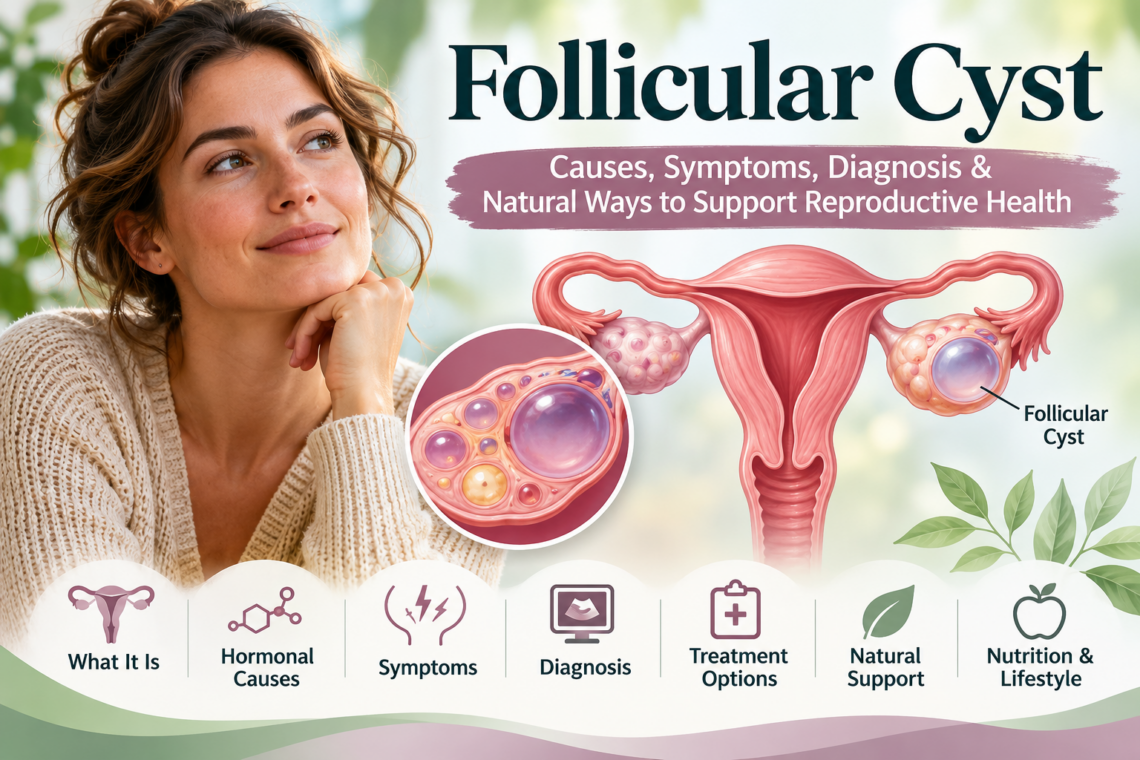
A follicular cyst is a type of functional ovarian cyst that develops when a normal ovarian follicle fails to rupture and release an egg during ovulation.
During a typical menstrual cycle, several follicles begin developing inside the ovaries. Each follicle contains an immature egg and is surrounded by fluid-producing cells.
As the menstrual cycle progresses, one dominant follicle usually matures. In response to hormonal signals, this follicle eventually ruptures, releasing the egg into the fallopian tube. This process is called ovulation.
Sometimes, however, the follicle does not rupture. Instead, it continues to grow and accumulate fluid, forming a follicular cyst.
Follicular cysts are generally:
- Non-cancerous (benign).
- Fluid-filled rather than solid.
- Associated with the normal ovulatory process.
- Usually found in women of reproductive age.
- Often temporary, resolving within one to three menstrual cycles.
Most follicular cysts do not cause serious complications and are discovered incidentally during pelvic examinations or ultrasound scans.
2. How Do Follicular Cysts Develop?
The development of a follicular cyst is closely connected to the hormonal processes that regulate ovulation.
The menstrual cycle depends on communication between the hypothalamus, pituitary gland and ovaries. This is known as the hypothalamic-pituitary-ovarian (HPO) axis.
The process involves several hormones:
Follicle-Stimulating Hormone (FSH)
FSH is produced by the pituitary gland and stimulates ovarian follicles to grow and mature during the first part of the menstrual cycle.
Luteinising Hormone (LH)
LH is another pituitary hormone. A surge in LH normally triggers the mature follicle to rupture and release its egg.
Oestrogen
Developing follicles produce oestrogen, particularly oestradiol. This hormone helps regulate the menstrual cycle and prepares the uterine lining for potential pregnancy.
When the LH surge does not trigger normal follicular rupture, the follicle may continue growing and become a fluid-filled cyst.
This is why follicular cysts are classified as functional cysts: they arise from the normal structures and processes involved in ovulation.
3. Common Causes and Contributing Factors
Follicular cysts are not necessarily caused by an underlying illness. They can develop as a result of temporary variations in normal hormonal activity.
Several factors may contribute to their formation.
Hormonal Fluctuations
Changes in the balance of reproductive hormones can affect follicular development and ovulation.
If the hormonal signals responsible for triggering ovulation are disrupted, the dominant follicle may fail to release its egg.
Irregular Ovulation
Women who experience irregular menstrual cycles may occasionally develop functional ovarian cysts.
Irregular ovulation can be associated with several factors, including hormonal disturbances, significant changes in body weight and certain reproductive conditions.
Polycystic Ovary Syndrome (PCOS)
PCOS is a hormonal and metabolic condition that can interfere with normal ovulation.
Although PCOS involves multiple small ovarian follicles, these are not the same as follicular cysts. The two conditions should not be confused.
Fertility Treatments
Certain fertility medications stimulate ovarian follicle development. This can increase the likelihood of developing ovarian cysts or enlarged follicles.
Pregnancy
Functional ovarian cysts can occasionally be identified during early pregnancy. Some cysts are related to the corpus luteum rather than the follicular phase.
4. Symptoms of Follicular Cysts
Many follicular cysts produce no noticeable symptoms and disappear without the woman ever knowing they existed.
When symptoms occur, they may include:
- Dull or aching pelvic pain.
- Discomfort on one side of the lower abdomen.
- A sensation of pelvic pressure or heaviness.
- Abdominal bloating.
- Changes in menstrual timing.
- Irregular menstrual bleeding.
- Discomfort during sexual intercourse.
- Frequent urination if a cyst presses against the bladder.
Symptoms can vary depending on the size and position of the cyst.
A larger cyst may produce more noticeable pressure or discomfort, while a small cyst may remain completely asymptomatic.
When to Seek Urgent Medical Attention
Although complications are uncommon, an ovarian cyst can occasionally rupture or contribute to ovarian torsion (twisting of the ovary).
Seek immediate medical attention if you experience:
- Sudden, severe pelvic or abdominal pain.
- Pain accompanied by fever or vomiting.
- Dizziness, fainting or significant weakness.
- Rapid breathing or signs of shock.
- Severe abdominal pain accompanied by heavy bleeding.
These symptoms may indicate a medical emergency and should not be managed with home remedies.
5. How Are Follicular Cysts Diagnosed?
The most common method of identifying a follicular cyst is a pelvic ultrasound.
An ultrasound allows healthcare professionals to examine the ovaries, assess the cyst’s size and appearance, and determine whether it is fluid-filled or contains more complex structures.
Depending on the circumstances, additional investigations may include:
Pelvic Examination
A healthcare professional may identify tenderness or an enlarged ovary during a physical examination.
Pregnancy Test
A pregnancy test may be recommended to exclude pregnancy-related causes of pelvic pain.
Hormonal Blood Tests
FSH, LH, oestradiol and other hormone measurements may be considered when menstrual irregularities or underlying hormonal conditions are suspected.
Follow-Up Ultrasound
A repeat ultrasound may be recommended after several weeks or menstrual cycles to establish whether the cyst is shrinking or has disappeared.
6. Conventional Treatment Options
Most uncomplicated follicular cysts do not require active treatment.
Because they are functional cysts, many resolve naturally within one to three menstrual cycles.
Treatment depends on factors such as:
- The size of the cyst.
- Its ultrasound appearance.
- The severity of symptoms.
- Whether it is growing or shrinking.
- The woman’s age and menopausal status.
Observation and Monitoring
For uncomplicated cysts, healthcare professionals often recommend a watch-and-wait approach with follow-up examinations when appropriate.
Pain Management
Mild discomfort may be managed with suitable pain-relieving medication, depending on individual circumstances.
Hormonal Contraceptives
Hormonal contraceptives may be prescribed in some circumstances to prevent ovulation and reduce the formation of new functional cysts.
However, evidence does not show that combined oral contraceptives speed up the resolution of an existing functional ovarian cyst.
Surgery
Surgical intervention is generally reserved for cysts that are persistent, unusually large, suspicious in appearance or associated with complications.
7. The Relationship Between Hormonal Balance and Reproductive Health
From a holistic wellbeing perspective, ovarian health cannot be considered independently of the body’s broader hormonal regulatory systems.
The reproductive system communicates with several other physiological systems, particularly:
- The hypothalamus and pituitary gland.
- The thyroid gland.
- The adrenal glands.
- The liver.
- The digestive system.
- The nervous system.
These systems contribute to hormonal production, regulation, metabolism and elimination.
The Role of the Liver
The liver plays an important role in metabolising hormones, including oestrogens.
It converts hormones into substances that can subsequently be processed and eliminated through the digestive and urinary systems.
Supporting general liver health through balanced nutrition, adequate hydration and limiting excessive alcohol consumption contributes to overall metabolic wellbeing.
The Role of the Digestive System
The digestive system also participates in hormone regulation.
Gut bacteria contribute to the metabolism and recycling of certain oestrogens through a collection of microbial genes and enzymes sometimes referred to as the estrobolome.
Maintaining healthy digestive function is therefore relevant to broader hormonal wellbeing.
However, there is no established evidence that improving gut health directly eliminates follicular cysts.
The Role of the Nervous System
The hypothalamus integrates information from the nervous system and regulates reproductive hormone signalling.
Significant physical or psychological stress can influence hypothalamic signalling and interfere with normal ovulation.
This is one reason why prolonged stress, inadequate energy intake and excessive physical activity can contribute to menstrual irregularities.
8. Natural Ways to Support Ovarian and Hormonal Health
Although no particular diet, supplement or natural remedy has been proven to dissolve follicular cysts, healthy lifestyle habits can support general reproductive and metabolic health.
1. Maintain Balanced Nutrition
A varied diet containing vegetables, fruit, whole grains, healthy fats and adequate protein supports normal metabolic and hormonal functions.
Nutrient-rich foods include:
- Leafy green vegetables.
- Broccoli and cauliflower.
- Berries and citrus fruits.
- Avocados.
- Nuts and seeds.
- Eggs and legumes.
- Oily fish.
Cruciferous vegetables contain compounds involved in normal oestrogen metabolism, although eating them has not been shown to treat ovarian cysts.
2. Support Healthy Blood Sugar Regulation
Blood sugar regulation is particularly relevant to women with insulin resistance or PCOS.
Frequent consumption of highly refined carbohydrates and sugary foods may contribute to metabolic disturbances in susceptible individuals.
Consider:
- Combining carbohydrates with protein and fibre.
- Eating regular, balanced meals.
- Choosing whole grains where possible.
- Limiting excessive added sugars.
- Incorporating regular physical activity.
3. Prioritise Sleep
Sleep contributes to the regulation of several hormones and supports normal metabolic function.
Aim for approximately seven to nine hours of sleep per night where possible.
Maintaining consistent sleeping and waking times can also support the body’s natural circadian rhythm.
4. Manage Chronic Stress
Chronic stress can influence the hypothalamic-pituitary-adrenal axis and interact with reproductive hormone signalling.
Gentle activities that may support nervous system regulation include:
- Slow, comfortable breathing exercises.
- Walking outdoors.
- Meditation.
- Gentle yoga.
- Mindfulness.
- Maintaining a consistent daily routine.
These practices support general wellbeing but should not be considered treatments for ovarian cysts.
5. Maintain Appropriate Physical Activity
Regular moderate exercise supports cardiovascular health, insulin sensitivity and metabolic function.
Walking, swimming, cycling and gentle strength training are practical options.
If an ovarian cyst is large or painful, strenuous exercise and activities that worsen symptoms should be avoided until medically assessed.
9. Nutrients Involved in Reproductive Health
Several vitamins and minerals contribute to normal reproductive, endocrine and metabolic functions.
| Nutrient | Role in the Body | Food Sources |
|---|---|---|
| Magnesium | Supports normal muscle and nerve function | Nuts, seeds, leafy greens |
| Zinc | Supports normal cell division and reproductive function | Meat, seafood, pumpkin seeds |
| Vitamin D | Involved in endocrine and immune function | Oily fish, fortified foods |
| Vitamin B6 | Contributes to normal hormonal regulation | Poultry, potatoes, bananas |
| Folate | Supports cell division and DNA synthesis | Leafy greens, legumes |
| Selenium | Supports thyroid function and antioxidant enzymes | Fish, eggs, Brazil nuts |
A balanced diet is generally the best starting point for obtaining these nutrients.
Supplementation should be based on individual nutritional needs rather than the assumption that a particular deficiency is responsible for an ovarian cyst.
Important: No vitamin, mineral, tissue salt or herbal preparation has been clinically established as a treatment for follicular cysts.
10. Follicular Cysts and the Menstrual Cycle
Understanding the relationship between follicular cysts and the menstrual cycle can help explain why these cysts develop.
A typical menstrual cycle involves several stages:
Menstruation
The uterine lining sheds, marking the beginning of a new menstrual cycle.
Follicular Phase
FSH stimulates ovarian follicles to develop. One follicle generally becomes dominant and produces increasing amounts of oestrogen.
Ovulation
An LH surge triggers the release of the mature egg.
Luteal Phase
The ruptured follicle transforms into the corpus luteum, which produces progesterone to support the uterine lining.
A follicular cyst develops when the dominant follicle fails to rupture and release its egg.
Because ovulation may be delayed or absent during that cycle, menstrual timing can sometimes be affected.
11. Follicular Cysts vs Other Types of Ovarian Cysts
Not all ovarian cysts develop for the same reasons. Understanding the differences is important because their management and potential complications can vary.
| Type of Cyst | How It Develops |
|---|---|
| Follicular cyst | Develops when a follicle fails to release its egg |
| Corpus luteum cyst | Develops when the corpus luteum fills with fluid or blood |
| Dermoid cyst | Develops from germ cells and may contain different types of tissue |
| Endometrioma | Develops when endometrial-like tissue grows within the ovary |
| Cystadenoma | Develops from cells on the ovarian surface |
The distinction matters because functional cysts are generally temporary, while other types may persist and require different management.
12. A Holistic Perspective: Looking Beyond the Cyst
At VitalPulse, we believe in exploring wellbeing through a broader understanding of the body’s interconnected systems.
An ovarian cyst can be viewed within the context of reproductive health, hormonal communication, metabolic function, digestive health and nervous system regulation.
Rather than focusing exclusively on the presence of a cyst, a holistic wellbeing approach can explore questions such as:
- Are menstrual cycles generally regular?
- Are there signs of hormonal disturbances?
- Is sleep adequate and restorative?
- Is the body receiving sufficient nutrients?
- Are blood sugar levels being regulated effectively?
- Is chronic stress affecting daily wellbeing?
- Are there underlying conditions that require medical investigation?
This broader perspective can help identify areas where lifestyle changes and appropriate healthcare support may improve overall wellbeing.
It is important, however, to distinguish between supporting the body’s general health and treating a diagnosed medical condition. NLS, bioresonance, energy balancing and complementary wellbeing practices have not been clinically established as methods of diagnosing or treating ovarian cysts. They should never replace appropriate medical assessment or ultrasound monitoring.
Frequently Asked Questions (FAQs)
1. Are follicular cysts dangerous?
Most follicular cysts are benign and resolve naturally. However, larger cysts can occasionally rupture or contribute to ovarian torsion, which requires urgent medical attention.
2. Can a follicular cyst disappear on its own?
Yes. Most uncomplicated follicular cysts resolve spontaneously within one to three menstrual cycles.
3. Can follicular cysts affect menstruation?
Yes. Because follicular cysts develop when normal ovulation does not occur, they may be associated with delayed periods, irregular bleeding or changes in menstrual timing.
4. Can stress cause follicular cysts?
Stress does not directly cause follicular cysts. However, significant or prolonged stress can affect hypothalamic signalling and disrupt normal ovulation, potentially contributing to menstrual irregularities.
5. Can follicular cysts affect fertility?
An isolated follicular cyst generally does not cause permanent infertility. However, the underlying reason for irregular or absent ovulation may affect fertility in some women.
6. Can diet dissolve an ovarian cyst?
There is no reliable scientific evidence that a particular diet can dissolve an existing follicular cyst. Balanced nutrition can nevertheless support overall metabolic and reproductive health.
7. What size is considered a large follicular cyst?
Size alone does not determine whether a cyst is dangerous. In premenopausal women, simple cysts are commonly monitored according to their size, ultrasound appearance and symptoms. Cysts measuring 10 cm or more generally warrant specialist assessment.
8. Can follicular cysts become cancerous?
Typical follicular cysts are benign and do not ordinarily transform into cancer. However, an ovarian mass that does not have the typical appearance of a simple functional cyst needs appropriate assessment.
9. Can follicular cysts cause bloating?
Yes. Larger cysts can create pelvic pressure and abdominal bloating, although bloating can have many other causes.
10. Should every follicular cyst be treated?
No. Most uncomplicated follicular cysts only require observation or follow-up imaging, depending on their size, appearance and symptoms.
Conclusion: Supporting Reproductive Health Through Awareness
Follicular cysts are a common part of the spectrum of ovarian changes associated with the menstrual cycle. Although their discovery can be concerning, most are harmless and resolve naturally.
Understanding the hormonal mechanisms behind their development, recognising potential symptoms and knowing when to seek medical attention are important steps towards protecting reproductive health.
A balanced lifestyle, adequate nutrition, restorative sleep, stress management and regular physical activity can all contribute to general hormonal and metabolic wellbeing.
Ultimately, the goal is not simply to focus on an individual symptom or finding, but to understand the body as an interconnected system while using appropriate medical care when necessary.
Explore your wellbeing. Reconnect. Reflect. Realign.
VitalPulse – Explore Your Wellbeing.
Medical Disclaimer
This article is intended for educational and informational purposes only. It does not constitute medical advice, diagnosis or treatment. Follicular cysts should be evaluated by a qualified healthcare professional when symptoms occur or when a cyst is identified on imaging. Complementary and holistic wellbeing practices should not replace conventional medical assessment, treatment or follow-up.
References & Further Reading
- American College of Obstetricians and Gynecologists – Ovarian Cysts: https://www.acog.org/womens-health/faqs/ovarian-cysts
- NHS – Ovarian Cyst: https://www.nhs.uk/conditions/ovarian-cyst/
- Mayo Clinic – Ovarian Cysts: Symptoms and Causes: https://www.mayoclinic.org/diseases-conditions/ovarian-cysts/symptoms-causes/syc-20353405
- NCBI Bookshelf – Medical and Scientific Literature: https://www.ncbi.nlm.nih.gov/books/