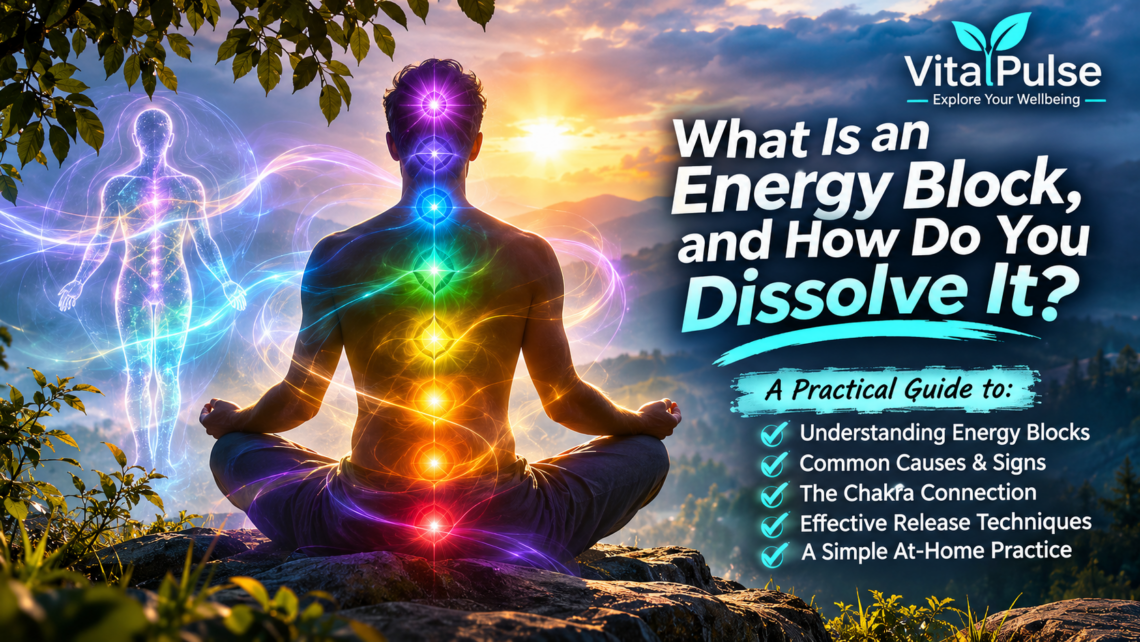
What Is an Energy Block, and How Do You Dissolve It?
Understanding energetic stagnation, emotional patterns and the journey towards inner balance
Reconnect. Reflect. Realign.
Table of Contents
Have you ever felt stuck, emotionally drained, disconnected from yourself or as though something inside you simply isn’t flowing?
Perhaps you feel tension in certain areas of your body, struggle to let go of past experiences, experience recurring emotional patterns or find yourself carrying a heaviness that you cannot quite explain.
In energy healing, these experiences are sometimes described as energy blocks.
The concept of an energy block suggests that the natural flow of energy within the body can become restricted, stagnant or imbalanced. From a holistic perspective, this may be associated with unresolved emotions, prolonged stress, limiting beliefs, difficult experiences or a disconnection between the mind, body and spirit.
But what exactly is an energy block? How does it develop, and more importantly, how can we begin to release it?
Let’s explore.
1. Understanding Energy Blocks
An energy block is traditionally described in energy healing as an area where the natural movement or balance of the body’s subtle energy is believed to be disrupted.
Different healing traditions have different ways of explaining this concept.
In Traditional Chinese Medicine, the concept of Qi (life energy) describes the movement of energy through pathways known as meridians.
In Indian Ayurvedic traditions, Prana refers to the vital life force, while the chakra system describes energy centres associated with different aspects of human experience.
Other holistic approaches use the term biofield to describe a proposed energetic environment associated with living organisms.
Although these systems differ in their explanations, they share a common theme: wellbeing involves balance, connection and the harmonious functioning of the whole person.
It is important to understand that energy blocks, as described in these traditions, are not established medical diagnoses. Their existence as measurable physical obstructions has not been scientifically demonstrated.
However, the experiences people associate with energetic stagnation can be meaningful starting points for exploring emotional wellbeing, stress, body awareness and personal growth.
2. How Do Energy Blocks Develop?
From an energy-healing perspective, blocks are often associated with experiences that disrupt our sense of inner balance.
These may include:
Unresolved emotional experiences
Difficult experiences, grief, disappointment, rejection and emotional pain can leave us feeling as though we are carrying something from the past.
When emotions are continually suppressed or avoided, they may influence our thoughts, behaviours and physical experience.
Chronic stress and emotional overload
When we spend extended periods under pressure, our nervous system can remain in a heightened state of alertness.
This can affect sleep, muscle tension, digestion, concentration and our ability to relax.
In energy healing, this may be interpreted as an imbalance or restriction in the body’s energetic flow.
Limiting beliefs and negative thought patterns
Thoughts such as:
- I am not good enough.
- I don’t deserve happiness.
- Nothing ever works out for me.
- I am not worthy of love.
- I have no control over my life.
Repeated negative thinking can influence our emotional responses, confidence and everyday decisions.
Lack of connection with ourselves
Constantly focusing on responsibilities, external expectations and the needs of others can cause us to neglect our own emotional and physical wellbeing.
We may lose touch with what we need, what we feel and what genuinely matters to us.
Environmental and lifestyle influences
Poor sleep, lack of movement, unhealthy routines, social isolation and an overwhelming environment can all contribute to feeling depleted and disconnected.
From a holistic perspective, these factors are worth considering when exploring our overall sense of balance.
3. Recognising the Signs of an Energy Block
Energy healing traditions associate different forms of energetic imbalance with various physical, emotional and mental experiences.
You may recognise some of the following:
Emotional signs
- Feeling emotionally heavy or overwhelmed.
- Difficulty letting go of past experiences.
- Recurring feelings of anger, sadness or frustration.
- Feeling disconnected from yourself.
- Struggling to express your emotions.
Mental signs
- Persistent negative thought patterns.
- Difficulty concentrating.
- Feeling mentally exhausted.
- Lack of motivation or inspiration.
- Repeatedly questioning your self-worth.
Physical experiences
- Muscle tension and bodily discomfort.
- Feeling physically exhausted.
- Restlessness or difficulty relaxing.
- Changes in sleep patterns.
- Feeling tense or uncomfortable during periods of stress.
These experiences are not proof of an energy block. They can have many possible explanations, including medical, psychological and lifestyle-related causes.
The purpose of recognising them is not to label yourself as energetically blocked, but to become more aware of what your body and emotions may be communicating.
4. The Seven Chakras and Energetic Imbalance
One of the most widely recognised systems in energy healing is the seven-chakra system.
Chakras are traditionally described as energy centres associated with different aspects of our physical, emotional and spiritual experiences.
Here is a simplified overview:
1. Root Chakra – Muladhara
Associated theme: Safety, stability and grounding.
Traditionally associated with:
- Security and survival.
- Financial and physical stability.
- Belonging and connection.
- Feeling grounded.
When experiencing difficulties in these areas, energy-healing traditions may describe the root chakra as imbalanced.
2. Sacral Chakra – Svadhisthana
Associated theme: Emotions, creativity and relationships.
Traditionally associated with:
- Emotional expression.
- Creativity and inspiration.
- Pleasure and enjoyment.
- Healthy relationships.
3. Solar Plexus Chakra – Manipura
Associated theme: Confidence, identity and personal power.
Traditionally associated with:
- Self-esteem.
- Motivation and determination.
- Personal boundaries.
- Confidence and independence.
4. Heart Chakra – Anahata
Associated theme: Love, compassion and connection.
Traditionally associated with:
- Giving and receiving love.
- Forgiveness.
- Compassion.
- Emotional connection.
5. Throat Chakra – Vishuddha
Associated theme: Communication and self-expression.
Traditionally associated with:
- Speaking your truth.
- Authentic communication.
- Expressing emotions.
- Setting boundaries.
6. Third Eye Chakra – Ajna
Associated theme: Intuition, awareness and perception.
Traditionally associated with:
- Self-reflection.
- Inner awareness.
- Clarity and insight.
- Intuition.
7. Crown Chakra – Sahasrara
Associated theme: Spiritual connection and consciousness.
Traditionally associated with:
- Spiritual awareness.
- Meaning and purpose.
- Connection to something greater.
- Inner peace.
The chakra system can be used as a reflective framework to explore different areas of your life. It should not be interpreted as an anatomical map or a scientifically established explanation for physical symptoms.
5. How Can You Dissolve an Energy Block?
The process of releasing an energy block is often described as restoring balance and encouraging the natural movement of energy.
Rather than forcing something to happen, energy healing encourages a gentle process of awareness, release and reconnection.
Here are seven practices you can explore.
1. Breathwork: Reconnect With Your Body
Breathing is one of the simplest ways to reconnect with the present moment.
When we experience stress, our breathing patterns can become shallow and rapid.
Gentle, controlled breathing can help encourage relaxation and support nervous system regulation.
Try this simple breathing exercise:
- Find a comfortable seated position.
- Relax your shoulders and jaw.
- Breathe gently through your nose for approximately four seconds.
- Exhale slowly for approximately six seconds.
- Repeat for three to five minutes.
Do not force your breathing or hold your breath. If you feel dizzy or uncomfortable, return to your natural breathing pattern.
As you breathe, imagine releasing unnecessary tension with every exhalation.
2. Meditation: Create Space for Emotional Awareness
Meditation provides an opportunity to observe thoughts and emotions without immediately reacting to them.
Sometimes, what we interpret as an energetic block may be connected to thoughts or emotions that we have not given ourselves time to acknowledge.
Try sitting quietly for five to ten minutes.
Ask yourself:
- What am I currently feeling?
- What has been weighing on my mind?
- Is there something I am avoiding?
- What do I need to let go of?
- What would help me feel more balanced?
You do not need to find immediate answers.
Simply creating space to observe your internal experience can be valuable.
3. Emotional Release: Allow Yourself to Feel
Emotional healing does not mean suppressing uncomfortable emotions or pretending everything is fine.
It means allowing yourself to acknowledge what you are experiencing without judgement.
Journaling can be particularly helpful.
Write down whatever comes to mind, without worrying about grammar, structure or whether your thoughts make sense.
You could explore:
- Experiences you have struggled to move beyond.
- Situations where you feel unheard or misunderstood.
- Relationships that leave you emotionally exhausted.
- Expectations you place on yourself.
- Things you wish you could express.
Remember that releasing an emotion does not mean forgetting what happened or excusing someone else’s behaviour.
Sometimes, moving forward begins with acknowledging what happened.
4. Gentle Movement: Encourage Physical Relaxation
Our emotional experiences and physical sensations are closely connected.
Stress can contribute to muscle tension, restlessness and changes in how we experience our bodies.
Gentle movement can help us reconnect with physical sensations and support general wellbeing.
Consider incorporating:
- Walking in nature.
- Gentle stretching.
- Yoga.
- Tai Chi.
- Slow, mindful movement.
You do not need an intense exercise routine.
Even ten minutes of gentle movement can provide an opportunity to slow down and reconnect.
5. Sound and Vibration: Explore Sound Healing
Sound healing is used in various holistic traditions to encourage relaxation, meditation and a sense of energetic harmony.
Common approaches include:
- Singing bowls.
- Tuning forks.
- Gentle instrumental music.
- Mantras and chanting.
- Nature sounds.
The experience of listening to calming sounds can help create a relaxing environment and support mindfulness.
Some energy-healing traditions also associate particular frequencies with specific energetic effects. However, claims that particular frequencies can directly dissolve physical or energetic blockages have not been established scientifically.
You can still explore sound as a relaxation and meditation practice without needing to accept every energetic explanation.
6. Energy Healing Practices: Reconnect With Your Energetic Self
Practices such as Reiki, chakra meditation, therapeutic touch and other energy-healing approaches aim to encourage relaxation, balance and a sense of connection.
Depending on the tradition, practitioners may use gentle touch, hand positioning, visualisation or focused intention.
During an energy-healing session, you may be encouraged to relax, become aware of bodily sensations and reflect on areas of emotional tension.
Experiences vary between individuals.
These approaches can be explored as complementary wellbeing practices, but they should not replace medical assessment or evidence-based treatment.
7. Lifestyle Alignment: Support Your Overall Wellbeing
Sometimes the most meaningful changes are also the simplest.
Consider whether your everyday habits support the person you want to become.
Focus on:
- Getting sufficient sleep.
- Drinking enough water.
- Eating balanced, nourishing meals.
- Spending time outdoors.
- Maintaining healthy relationships.
- Creating boundaries around stressful situations.
- Making time for activities you enjoy.
- Reducing unnecessary mental and emotional overload.
Energy healing is not simply about what happens during a session. It can also be about how we approach our everyday lives.
6. The Connection Between Energy Healing and Bioresonance
At VitalPulse, we explore wellbeing through a holistic lens, recognising the importance of the relationship between the mind, body and our subjective experience of energy.
Bioresonance and NLS (Non-Linear System) technologies are sometimes incorporated into complementary wellness practices.
These systems use electronic measurements and software-based interpretations that practitioners may use to explore patterns within their particular energetic or informational framework.
Some practitioners interpret these readings through concepts such as resonance, frequency and energetic balance.
However, it is important to distinguish these interpretations from established clinical measurements. NLS and bioresonance assessments have not been scientifically validated as reliable methods for detecting energy blocks, diagnosing disease or identifying specific emotional conditions.
At VitalPulse, our approach is centred on exploration, reflection and wellbeing education rather than medical diagnosis.
We believe that understanding yourself is an important part of taking a more conscious approach to your wellbeing.
7. A Simple Energy Release Exercise You Can Practise at Home
Here is a gentle exercise combining breathing, visualisation and self-reflection.
The 10-Minute Reconnection Practice
Step 1 – Create your space (1 minute)
Find a quiet place where you will not be disturbed.
Sit comfortably and allow your body to relax.
Step 2 – Ground yourself (2 minutes)
Close your eyes if comfortable.
Notice the sensation of your feet touching the floor.
Bring your attention to the present moment.
Step 3 – Conscious breathing (3 minutes)
Breathe gently and naturally.
With every exhalation, imagine releasing tension, worry and unnecessary emotional weight.
Step 4 – Visualisation (2 minutes)
Imagine a gentle, warm light surrounding your body.
Visualise this light moving through you, bringing a sense of calm, clarity and balance.
There is no right or wrong way to visualise. This is simply an imaginative relaxation exercise.
Step 5 – Reflection (2 minutes)
Ask yourself:
- What am I holding onto?
- What can I begin to release?
- What do I need more of in my life?
- What is one small thing I can change today?
Finish by taking a few natural breaths and gently returning your attention to your surroundings.
Repeat this practice whenever you feel the need to slow down and reconnect with yourself.
8. Energy Healing Is a Journey, Not a Quick Fix
One of the biggest misconceptions about energy healing is that an energetic imbalance can simply be removed in a single session.
Personal wellbeing is more complex than that.
Emotional experiences, stress, lifestyle habits, relationships and physical health can all influence how we feel.
There is no universal technique that will resolve every difficulty.
Sometimes what we need is rest. Sometimes we need to change an unhealthy pattern, establish boundaries, process difficult emotions or seek professional support.
The journey towards greater balance is often gradual.
Rather than searching for something that needs to be fixed, consider developing a better understanding of yourself.
You do not have to force yourself into balance. You can begin by creating the conditions that support it.
Final Thoughts: Reconnect. Reflect. Realign.
Whether you approach energy healing through chakra work, meditation, breathwork, biofield exploration or simply becoming more conscious of your everyday experiences, the underlying invitation is the same:
Slow down. Pay attention. Reconnect with yourself.
An energy block can be a useful metaphor for those areas of life where we feel stuck, disconnected or overwhelmed.
By developing greater awareness of our thoughts, emotions, physical experiences and lifestyle choices, we can begin making changes that support a healthier relationship with ourselves.
At VitalPulse, we believe wellbeing is not about chasing perfection. It is about exploring what helps you feel more balanced, connected and aligned.
Your journey towards wellbeing begins with awareness.
Reconnect. Reflect. Realign.
Disclaimer
The information provided in this article is intended for general wellness education and informational purposes only. Energy blocks, chakras and subtle energy systems are concepts found in various holistic and traditional healing practices and are not established medical diagnoses. Energy healing, bioresonance and NLS assessments are complementary wellness approaches and are not substitutes for medical diagnosis, treatment or professional healthcare advice. Always consult a qualified healthcare professional regarding persistent physical or emotional symptoms.
VitalPulse – Explore Your Wellbeing.