Multiple Sclerosis (MS): Understanding the Condition, Supporting Your Nervous System & Living Well
Table of Contents
Introduction: When the Nervous System Comes Under Attack
Our nervous system is one of the most remarkable communication networks in the human body. Every movement, sensation, thought and physical response depends on messages travelling between the brain, spinal cord and the rest of the body.
But what happens when this communication network becomes disrupted?
Multiple Sclerosis (MS) is a chronic, immune-mediated disease that affects the central nervous system (CNS), which consists of the brain and spinal cord. It can interfere with the protective covering of nerve fibres, known as myelin, disrupting the transmission of electrical signals throughout the body.
For some people, MS causes relatively mild symptoms that develop gradually. For others, it can lead to significant physical, cognitive and neurological challenges.
Although there is currently no cure for MS, modern medicine offers treatments that can reduce disease activity, manage symptoms and help many people maintain a good quality of life.
At VitalPulse, we believe in looking at wellbeing from a broader perspective. Understanding the nervous system, supporting everyday health, managing stress, maintaining good nutrition and creating a supportive environment can all form part of a person’s overall wellbeing journey.
Let’s explore what MS is, what happens inside the body, possible contributing factors and practical ways to support overall health.
1. What Exactly Is Multiple Sclerosis?
Multiple Sclerosis is an inflammatory disease in which the immune system mistakenly attacks components of the central nervous system.
Under normal circumstances, the immune system protects the body against harmful microorganisms. In MS, immune activity causes inflammation and damage to the myelin sheath surrounding nerve fibres.
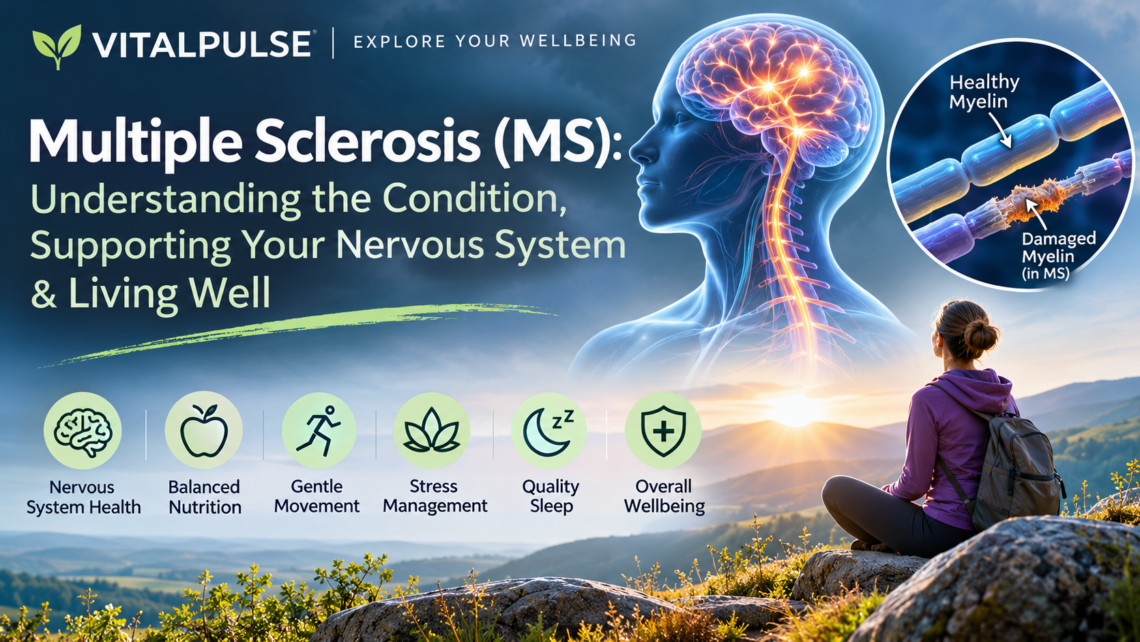
Myelin acts much like the insulation around an electrical cable. It helps nerve impulses travel quickly and efficiently.
When this protective coating becomes damaged, communication between the brain and the body can become disrupted.
Over time, some people also develop damage to the underlying nerve fibres themselves.
Understanding Myelin
Think of a nerve cell as an electrical cable:
- Healthy myelin: Protects the nerve fibre and allows signals to travel efficiently.
- Damaged myelin: Slows down or disrupts electrical communication.
- Nerve damage: Can result in more permanent difficulties with movement, sensation and other neurological functions.
Areas of inflammation and scarring are commonly called lesions or plaques. These can develop in different parts of the brain and spinal cord, which helps explain why MS symptoms vary considerably between individuals.
2. Common Signs and Symptoms of Multiple Sclerosis
Because MS can affect different areas of the central nervous system, symptoms can vary significantly from one person to another.
Some people experience occasional flare-ups, while others experience symptoms that gradually become more persistent.
Neurological Symptoms
- Numbness or tingling in the hands, feet, arms or legs.
- Muscle weakness and reduced coordination.
- Difficulty walking or maintaining balance.
- Muscle stiffness, spasms and involuntary movements.
- Tremors or difficulty controlling movements.
Vision-Related Symptoms
- Blurred vision.
- Double vision.
- Pain when moving the eyes.
- Partial or temporary loss of vision, sometimes associated with optic neuritis (inflammation of the optic nerve).
Energy and Cognitive Symptoms
- Persistent or overwhelming fatigue.
- Brain fog and difficulty concentrating.
- Memory difficulties.
- Slower information processing.
- Changes in mood, anxiety or depression.
Other Physical Symptoms
- Bladder urgency or difficulty emptying the bladder.
- Constipation or bowel dysfunction.
- Dizziness and vertigo.
- Chronic nerve pain.
- Sexual dysfunction.
One particularly challenging symptom is MS-related fatigue. This is not simply ordinary tiredness. It can be an overwhelming sense of exhaustion that interferes with everyday activities, even after adequate sleep.
Importantly, these symptoms are not exclusive to MS. Many other conditions can produce similar symptoms, so proper medical investigation is essential.
3. What Causes Multiple Sclerosis?
The exact cause of MS is not fully understood. Current research suggests that it develops through a combination of genetic susceptibility, immune-system activity and environmental influences.
Rather than having one single cause, MS appears to involve several interacting biological processes.
1. Immune System Dysfunction
In MS, immune cells mistakenly recognise components of the central nervous system as targets.
This triggers inflammatory activity that damages myelin and, in some cases, the nerve fibres themselves.
2. Genetic Susceptibility
MS is not directly inherited in a simple parent-to-child pattern. However, certain genetic variations can increase susceptibility.
Having a close relative with MS increases the risk compared with the general population.
3. Epstein-Barr Virus (EBV)
One of the most significant discoveries in MS research concerns the Epstein-Barr virus.
EBV is an extremely common virus that causes infectious mononucleosis (glandular fever) in some people.
Research has found a strong association between previous EBV infection and the subsequent development of MS. However, most people infected with EBV never develop MS, meaning other factors must also be involved.
4. Vitamin D and Sunlight Exposure
Research has identified an association between low vitamin D levels and increased MS risk.
Vitamin D plays several important roles in immune regulation, bone health and cellular function.
However, vitamin D supplementation has not been established as a treatment for MS, and excessive supplementation can be harmful.
5. Smoking
Smoking is an established modifiable risk factor associated with an increased likelihood of developing MS and worsening disease progression.
Avoiding tobacco smoke is an important part of protecting long-term health.
6. Environmental Influences
Researchers are continuing to investigate how factors such as childhood environment, geographical location, obesity during adolescence, viral exposure and other environmental influences may contribute to MS susceptibility.
The important point is that MS is multifactorial. It cannot be explained by one nutritional deficiency, one infection or one environmental exposure.
4. Understanding the Different Types of MS
MS is generally classified according to how the disease behaves over time.
Relapsing-Remitting Multiple Sclerosis (RRMS)
This is the most common initial disease pattern.
People experience periods of new or worsening neurological symptoms, known as relapses, followed by periods of partial or complete recovery called remission.
Secondary Progressive Multiple Sclerosis (SPMS)
Some people initially diagnosed with RRMS eventually develop a more progressive disease pattern.
Symptoms and disability may gradually worsen over time, sometimes with occasional relapses.
Primary Progressive Multiple Sclerosis (PPMS)
This form involves a gradual worsening of neurological function from the beginning, rather than clearly defined relapses and recovery periods.
The rate of progression varies between individuals.
Understanding the type of MS is important because treatment approaches and management strategies differ.
5. How Is Multiple Sclerosis Diagnosed?
There is no single test that can independently confirm MS.
Diagnosis requires a combination of clinical assessments, medical history and specialised investigations.
A neurologist may recommend:
- MRI scans: Used to identify characteristic lesions in the brain and spinal cord.
- Neurological examinations: Assessing reflexes, muscle strength, coordination, sensation and vision.
- Lumbar puncture: A sample of cerebrospinal fluid may be examined for evidence of immune activity, including oligoclonal bands.
- Evoked potential tests: Measuring how quickly the nervous system responds to visual, sensory or auditory stimulation.
- Blood tests: Used to investigate other conditions that may produce similar symptoms.
Other neurological, inflammatory, infectious and nutritional conditions may need to be excluded before a diagnosis is established.
Early assessment is important because appropriate treatment can help reduce the risk of accumulating neurological damage.
6. The Gut-Brain Connection and Immune Health
One interesting area of ongoing MS research is the relationship between the digestive system, gut microbiome and immune regulation.
The gut is home to trillions of microorganisms, collectively known as the gut microbiome.
These microorganisms contribute to:
- Digestion and nutrient metabolism.
- Production of certain vitamins and metabolites.
- Maintenance of the intestinal barrier.
- Communication with the immune system.
- Regulation of inflammatory processes.
Researchers have identified differences in the gut microbiome of some people with MS compared with healthy individuals.
However, it is not yet clear exactly how these differences contribute to the development or progression of MS.
Why Does This Matter?
The digestive system and immune system are closely connected.
The gut environment supports normal immune function, while disturbances in the microbiome may influence immune signalling.
This does not mean that repairing intestinal permeability or eliminating certain foods can cure MS.
Rather, maintaining digestive health is one aspect of supporting general wellbeing.
Practical steps include:
- Eating a varied diet rich in vegetables and fibre.
- Including fermented foods if tolerated.
- Drinking sufficient water.
- Avoiding unnecessary antibiotic use.
- Addressing persistent digestive problems with appropriate medical guidance.
- Maintaining regular eating habits.
The gut-brain connection is an exciting field of research, but it is important to distinguish emerging scientific findings from established MS treatments.
7. Supporting the Nervous System Naturally
Although lifestyle changes cannot reverse the underlying autoimmune process or replace disease-modifying treatment, they can contribute to general health and help manage certain symptoms.
Let’s look at some practical approaches.
A. Anti-Inflammatory Eating and Proper Nutrition
There is currently no scientifically established diet that cures MS or reliably prevents its progression.
However, a balanced, nutrient-dense eating pattern supports cardiovascular health, digestive function, energy metabolism and general wellbeing.
Consider incorporating:
- Leafy green vegetables: Spinach, kale, broccoli and other greens provide folate, fibre and antioxidants.
- Colourful vegetables: Carrots, beetroot, peppers and sweet potatoes provide a range of beneficial plant compounds.
- Quality protein: Eggs, fish, legumes, chicken and other protein sources support tissue maintenance.
- Healthy fats: Olive oil, nuts, seeds and avocado provide unsaturated fats.
- Whole grains: Oats, brown rice and wholegrain bread provide fibre and sustained energy.
- Fruit: Berries, citrus fruits and other seasonal fruit provide vitamins, minerals and plant compounds.
Nutritional areas worth discussing with a healthcare professional include:
- Vitamin D.
- Vitamin B12.
- Folate.
- Iron.
- Magnesium.
- Calcium.
These nutrients support normal physiological processes, but supplementation should be based on individual needs, dietary intake and appropriate testing.
Avoid extreme elimination diets, prolonged fasting or restrictive detox programmes without professional guidance.
B. Vitamin D and Bone Health
Vitamin D contributes to calcium absorption, immune function and normal muscle function.
People with MS may experience reduced mobility, spend less time outdoors or have other factors that affect bone health.
Maintaining adequate vitamin D and calcium intake is therefore important.
Practical recommendations:
- Enjoy sensible outdoor daylight exposure.
- Include vitamin D-containing foods where possible.
- Discuss vitamin D testing with a healthcare professional.
- Consider supplementation when indicated.
- Maintain appropriate weight-bearing activity where mobility permits.
Vitamin D should not be regarded as a standalone MS treatment. High doses can cause toxicity and should be avoided unless medically supervised.
C. Gentle Movement and Exercise
Movement is important for maintaining muscle strength, mobility, flexibility, cardiovascular health and balance.
Depending on individual abilities, suitable activities may include:
- Walking.
- Swimming or water-based exercise.
- Gentle stretching.
- Adapted yoga.
- Pilates.
- Balance exercises.
- Light resistance training.
Exercise should be adapted to the person’s mobility, fatigue levels and physical limitations.
Some people with MS are sensitive to heat, and elevated body temperature can temporarily worsen existing symptoms. This is sometimes called Uhthoff’s phenomenon.
Practical suggestions include:
- Exercise in a cool environment.
- Avoid overheating.
- Take regular breaks.
- Keep water nearby.
- Use shorter exercise sessions if necessary.
- Work with a physiotherapist familiar with neurological conditions.
Regular exercise is recommended for people with MS and can be beneficial when appropriately adapted.
D. Nervous System Regulation and Stress Management
Living with a chronic neurological condition can create considerable emotional and physical stress.
Stress does not cause MS, and there is no conclusive evidence that eliminating stress prevents disease progression.
However, learning to manage stress can improve emotional wellbeing, sleep and quality of life.
Consider introducing:
Present-Moment Awareness
Take a few minutes each day to become aware of your body, breathing and surroundings.
Gentle Breathing
Practise slow, comfortable breathing without forcing deep inhalations or breath retention.
Mindfulness
Bring attention to the present moment rather than constantly anticipating future symptoms or worrying about what might happen.
Relaxation
Enjoy quiet activities, gentle music, time outdoors or other calming practices.
Emotional Support
Talking to a counsellor, joining a support group or connecting with trusted people can help reduce the emotional burden of chronic illness.
E. Prioritising Quality Sleep
Sleep is essential for recovery, cognitive function, hormonal regulation and general health.
People with MS may experience sleep disturbances due to pain, muscle spasms, bladder problems, anxiety or other symptoms.
Practical sleep-supporting habits include:
- Maintaining consistent sleeping and waking times.
- Keeping the bedroom cool and comfortable.
- Limiting caffeine later in the day.
- Reducing excessive screen exposure before bedtime.
- Creating a relaxing evening routine.
- Addressing persistent pain or bladder symptoms with a healthcare professional.
Good sleep hygiene may improve general wellbeing, although it does not directly treat MS lesions.
8. Managing Fatigue: One of the Biggest Challenges of MS
Fatigue is among the most common and challenging symptoms associated with MS.
It can affect physical energy, concentration, motivation and the ability to complete everyday tasks.
Unlike ordinary tiredness, MS-related fatigue may occur even when someone has slept sufficiently.
Some practical strategies include:
- Pace your activities: Break larger tasks into smaller activities.
- Prioritise important tasks: Schedule demanding activities when energy levels are highest.
- Take regular breaks: Rest before becoming completely exhausted.
- Stay hydrated: Dehydration can contribute to tiredness.
- Maintain a balanced diet: Avoid relying heavily on refined sugars for energy.
- Manage body temperature: Avoid excessive heat where it aggravates symptoms.
- Investigate other causes: Anaemia, thyroid disorders, sleep problems, infections and medication side effects can also contribute to fatigue.
An important consideration is that fatigue should not automatically be attributed to MS. Other treatable causes should be investigated.
9. Complementary Therapies and Holistic Wellbeing
Many people living with MS explore complementary approaches alongside conventional medical treatment.
At VitalPulse, we recognise the importance of looking at the whole person rather than focusing exclusively on individual symptoms.
However, complementary therapies must be approached responsibly, particularly when dealing with a complex neurological condition.
Some approaches that may support aspects of wellbeing include:
Mindfulness and Meditation
May help with stress management, emotional wellbeing and relaxation.
Yoga and Gentle Movement
May help some individuals with flexibility, balance, mood and fatigue when appropriately adapted.
Massage and Relaxation Therapies
May help with muscular tension and relaxation, although techniques should be adapted to individual needs and physical limitations.
Nutritional Support
Working with a qualified nutrition professional can help identify dietary gaps and develop sustainable eating habits.
NLS and Bioresonance Approaches
Some individuals explore bioresonance and NLS technologies as complementary wellness approaches.
It is important to understand that these technologies have not been clinically established as diagnostic tools or treatments for MS. They cannot reliably identify MS lesions, measure disease progression or demonstrate that myelin is being repaired.
Any such approach should be considered complementary to general wellbeing support, never a replacement for neurological assessment or evidence-based treatment.
A Word About Supplements
There is currently insufficient reliable evidence that dietary supplements can prevent MS relapses, repair myelin or stop disease progression.
Be particularly cautious of products marketed as immune boosters, heavy-metal detoxification protocols or neurological regeneration remedies.
More is not necessarily better, and some supplements can interact with prescribed medication.
10. Conventional Medical Treatment: What Are the Options?
Although there is currently no cure for MS, medical treatment has advanced considerably.
Treatment generally focuses on three areas:
1. Disease-Modifying Therapies (DMTs)
These medications aim to reduce inflammatory disease activity, decrease relapse frequency and, depending on the treatment and disease type, slow the accumulation of disability.
Examples include:
- Interferon beta.
- Glatiramer acetate.
- Dimethyl fumarate.
- Teriflunomide.
- Fingolimod.
- Ocrelizumab.
- Natalizumab.
The appropriate treatment depends on the type of MS, disease activity, medical history and individual circumstances.
2. Treatment of Relapses
Significant relapses may be treated with high-dose corticosteroids to speed up recovery.
These medications do not necessarily change the long-term course of the disease.
3. Symptom Management and Rehabilitation
Depending on individual needs, treatment may include:
- Physiotherapy.
- Occupational therapy.
- Medication for muscle spasms.
- Neuropathic pain management.
- Bladder and bowel management.
- Psychological support.
- Mobility and rehabilitation assistance.
Early diagnosis and appropriate treatment can make an important difference to long-term outcomes.
11. Practical Daily Wellbeing Checklist
Living with MS often means learning to listen to your body and adapting your lifestyle to changing needs.
Here is a simple checklist to help establish supportive daily habits.
- Drink sufficient water throughout the day.
- Eat balanced meals containing vegetables, protein and healthy fats.
- Include gentle movement appropriate to your abilities.
- Take short breaks and manage your energy.
- Spend some time practising mindfulness or relaxation.
- Avoid overheating if heat aggravates your symptoms.
- Prioritise consistent, restorative sleep.
- Take prescribed medication as directed.
- Make time for enjoyable activities and social connection.
- Record any significant changes in symptoms.
Remember that consistency is more important than perfection. Not every day will look the same, and adapting your routine to your energy levels is perfectly acceptable.
12. When Should You Seek Medical Attention?
New neurological symptoms should never be ignored.
Seek medical assessment if you experience unexplained:
- Persistent numbness or tingling.
- New muscle weakness.
- Unexplained visual disturbances.
- Problems with balance or coordination.
- Changes in bladder or bowel function.
- Persistent neurological symptoms.
A sudden loss of vision, sudden weakness or numbness, facial drooping, or sudden difficulty speaking or walking requires emergency assessment because these can be signs of a stroke.
Do not assume that new or worsening symptoms are automatically an MS relapse. Infections, fever and other medical conditions can temporarily worsen existing neurological symptoms.
Final Thoughts: Supporting the Body Through Understanding
Multiple Sclerosis reminds us how interconnected the human body truly is.
The brain, nervous system, immune system, digestive system and metabolic processes all work together to maintain our health and everyday functioning.
Although MS is a complex neurological condition that cannot currently be cured, there are many ways to support general health, manage symptoms and improve quality of life.
The journey is not about finding one miracle supplement, one special diet or one treatment that promises to fix everything.
It is about understanding your body, working with appropriate healthcare professionals, making informed decisions and building sustainable habits that support your overall wellbeing.
At VitalPulse, we believe that wellbeing is an ongoing journey of reconnection, reflection and realignment.
Explore your wellbeing. Understand your body. Take small steps towards a healthier, more balanced life.
Curious About NLS Bioresonance Scanning?
What if you could explore your body’s energetic patterns from a different perspective?
At VitalPulse, we invite you to discover NLS (Non-Linear System) Bioresonance Scanning – an alternative wellness exploration approach designed to provide insights into energetic patterns and potential areas of imbalance within the body’s systems.
Whether you’re interested in understanding your wellbeing more deeply, exploring the body’s interconnected systems, or simply curious about complementary approaches to wellness, an NLS scan offers an opportunity to explore a different perspective.
Why not experience it for yourself?
✨ Explore your body’s energetic patterns.
✨ Discover a different perspective on your overall wellbeing.
✨ Identify areas you may wish to explore further as part of your personal wellness journey.
🎁 Take the First Step – Explore NLS Bioresonance!
👉 EXPLORE NLS BIORESONANCE SCANNING
VitalPulse – Explore Your Wellbeing.
Reconnect. Reflect. Realign.
Please note: NLS Bioresonance scanning is offered as a complementary wellness exploration service. It is not a medically validated diagnostic tool and does not diagnose, treat, cure or prevent disease. It is not a substitute for professional medical advice, diagnosis or treatment.
Further Reading & Scientific Resources
- National Institute of Neurological Disorders and Stroke – Multiple Sclerosis
- NHS – Multiple Sclerosis
- NICE – Multiple Sclerosis in Adults: Management
- Multiple Sclerosis International Federation
- National Center for Complementary and Integrative Health
- MS Society – Living Well with MS
IMPORTANT HEALTH DISCLAIMER
This article is intended for educational and general wellbeing purposes only. It does not constitute medical advice, diagnosis or treatment. Multiple Sclerosis is a complex neurological condition requiring appropriate assessment and ongoing medical care.
Nutritional changes, supplements and complementary wellness approaches should be discussed with a qualified healthcare professional. Never discontinue or replace prescribed MS medication with alternative therapies.
VITALPULSE | EXPLORE YOUR WELLBEING
Reconnect. Reflect. Realign.


You May Also Like

Food & Monosodium Glutamate (MSG): Understanding Monosodium Glutamate, Its Effects on the Body & How to Make Informed Food Choices

Follicular Cysts: Understanding Their Causes, Symptoms, Diagnosis & Natural Ways to Support Reproductive Health