Human Chromosome Functions: Understanding the Roles of All 23 Human Chromosome Pairs
Understanding the genetic blueprint behind human development, biological processes, cellular communication and overall wellbeing.
Human Chromosome Functions: The Genetic Blueprint of Human Life
Every human cell contains an extraordinary amount of biological information. Within the nucleus of most cells lies a carefully organised collection of genetic material known as chromosomes.
Chromosomes carry DNA, which contains the instructions that help the body develop, function, maintain itself and respond to its environment.
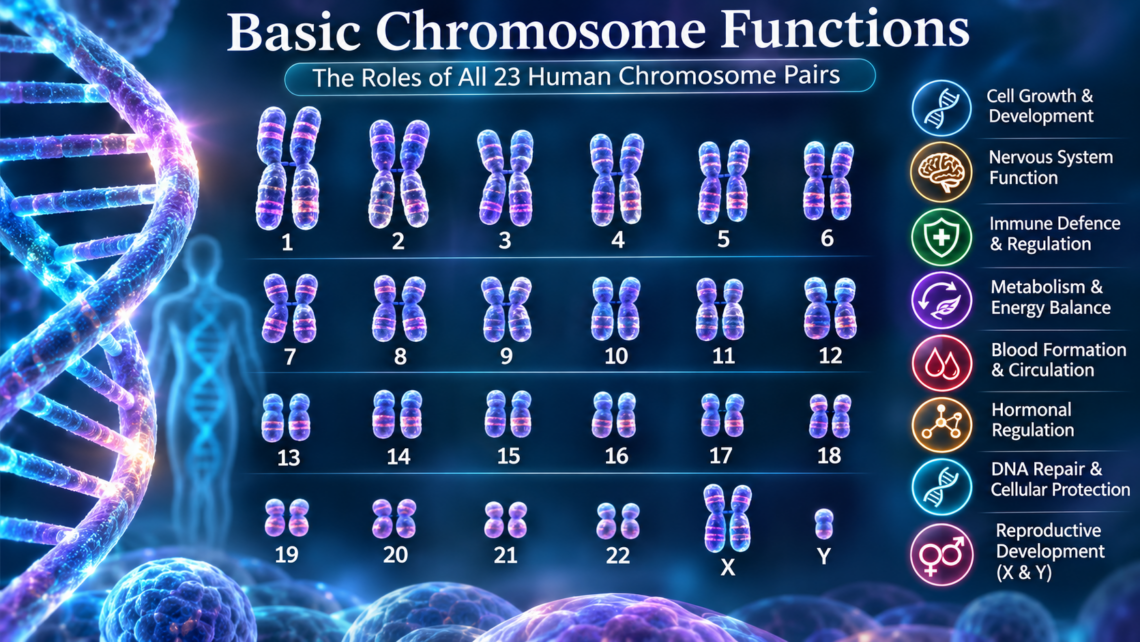
Humans typically have 46 chromosomes arranged in 23 pairs:
- Chromosomes 1–22 are known as autosomes.
- The 23rd pair consists of the sex chromosomes, X and Y.
- One chromosome in each pair is inherited from the biological mother and the other from the biological father.
Each chromosome contains hundreds or thousands of genes. These genes provide instructions for producing proteins and functional RNA molecules involved in virtually every biological process.
However, chromosomes do not operate independently. They form an interconnected genetic system in which different genes and regulatory regions work together to coordinate the body’s activities.
Understanding the basic functions of all 23 chromosome pairs provides an interesting introduction to human genetics and the biological foundations of wellbeing.
What Do Chromosomes Actually Do?
Before exploring individual chromosomes, it is useful to understand their fundamental responsibilities.
1. Store and Protect Genetic Information
Chromosomes organise and package DNA into structures that fit inside the cell nucleus. DNA is wrapped around proteins called histones, helping maintain its structure and accessibility.
2. Provide Instructions for Protein Production
Genes contain instructions used by cells to produce proteins. Proteins perform countless functions, including building tissues, transporting substances, supporting immune responses and regulating chemical reactions.
3. Regulate Biological Processes
Genes influence how cells grow, divide, specialise and communicate. Some genes act as regulators, controlling when other genes become active or inactive.
4. Support Growth and Development
Chromosomal genes contribute to the development of organs, tissues, bones, muscles, the nervous system and other structures.
5. Maintain Cellular Function
Genes contribute to DNA repair, cellular metabolism, energy production, immune regulation and the maintenance of healthy cells.
6. Pass Genetic Information Between Generations
During reproduction, chromosomes carry hereditary information from parents to offspring. Specialised cell division processes ensure that genetic material is distributed into reproductive cells.
The Basic Functions of All Human Chromosomes
The following overview explores the major biological contributions associated with each chromosome.
An important distinction: Each chromosome contains many genes with different responsibilities. The functions described below are broad areas represented by genes located on that chromosome, not exclusive functions performed by the chromosome as a whole.
Chromosome 1 – Cellular Growth, Development and Nervous System Function
Chromosome 1 is the largest human chromosome and contains a substantial portion of the human genetic blueprint.
It carries genes involved in numerous biological processes, including:
- Cellular growth and development.
- Nervous system development and function.
- Regulation of gene activity.
- Immune system processes.
- DNA repair and cellular maintenance.
- Metabolism and cellular signalling.
Some genes on chromosome 1 contribute to brain development and the communication between nerve cells.
Basic biological focus: Cellular development, genetic regulation, nervous system function and tissue maintenance.
Chromosome 2 – Organ Development, Metabolism and Cellular Organisation
Chromosome 2 contains genes involved in the development and maintenance of various organs and tissues.
Its genetic contributions include:
- Embryonic and skeletal development.
- Nervous system development.
- Cellular metabolism.
- Muscle and connective tissue function.
- Regulation of cellular growth.
- Immune system activity.
Chromosome 2 also contains genes involved in important developmental signalling pathways that help coordinate how cells grow and differentiate.
Basic biological focus: Organ formation, structural development, metabolism and cellular organisation.
Chromosome 3 – Immune Function, Brain Activity and Cellular Regulation
Chromosome 3 contains genes associated with a wide range of biological activities.
Important areas include:
- Immune system regulation.
- Nervous system development.
- Cellular communication.
- Blood vessel development.
- Regulation of cell growth.
- DNA repair and cellular protection.
Some genes on chromosome 3 participate in the regulation of inflammation and immune responses.
Basic biological focus: Immune regulation, nervous system activity, cellular communication and tissue maintenance.
Chromosome 4 – Brain Development, Skeletal Structure and Physical Development
Chromosome 4 contains genes involved in several important developmental processes.
These include:
- Brain and nervous system development.
- Skeletal formation.
- Muscle development.
- Cellular growth and differentiation.
- Metabolic regulation.
- Tissue maintenance.
One particularly well-known gene located on chromosome 4 is HTT, which provides instructions for producing the huntingtin protein, important for normal cellular and neuronal function.
Basic biological focus: Neurological development, skeletal structure, muscle function and cellular maintenance.
Chromosome 5 – Growth Regulation, Immune Function and Development
Chromosome 5 contains genes that contribute to the development and regulation of several body systems.
Its functions include:
- Growth and developmental processes.
- Immune system regulation.
- Blood cell development.
- Nervous system function.
- Cellular communication.
- Regulation of tissue formation.
Genes on chromosome 5 also contribute to the production of proteins involved in controlling inflammation and cellular responses.
Basic biological focus: Growth, immune regulation, blood development and tissue formation.
Chromosome 6 – Immune Recognition and Genetic Defence
Chromosome 6 is particularly important because it contains the major histocompatibility complex (MHC).
In humans, this region is commonly referred to as the human leukocyte antigen (HLA) system.
The HLA system plays a central role in helping the immune system distinguish between the body’s own cells and foreign substances.
Its functions include:
- Recognition of foreign proteins and antigens.
- Immune system activation.
- Regulation of immune responses.
- Communication between immune cells.
- Involvement in autoimmune susceptibility.
- Participation in inflammatory processes.
Chromosome 6 also contains genes involved in brain development, metabolism and cellular regulation.
Basic biological focus: Immune recognition, antigen presentation, immune coordination and inflammatory regulation.
Chromosome 7 – Development, Cellular Communication and Nervous System Function
Chromosome 7 contains genes involved in the development and functioning of various tissues and organs.
Its contributions include:
- Brain and nervous system development.
- Lung development and function.
- Immune system regulation.
- Cellular signalling.
- Metabolic processes.
- Growth and tissue maintenance.
One important gene on chromosome 7 is CFTR, which helps regulate the movement of chloride and other ions across cell membranes. This is particularly important for maintaining the appropriate consistency of mucus and other bodily secretions.
Basic biological focus: Cellular transport, organ development, nervous system function and immune activity.
Chromosome 8 – Cellular Growth, Metabolism and Gene Regulation
Chromosome 8 contains genes that influence how cells grow, divide and respond to biological signals.
Important functions include:
- Regulation of cellular growth.
- Cell division and differentiation.
- Metabolic activity.
- Nervous system development.
- Immune system processes.
- DNA repair and cellular regulation.
Chromosome 8 also contains genes involved in the regulation of cellular signalling pathways.
Basic biological focus: Cellular growth, metabolic regulation, tissue development and genetic control.
Chromosome 9 – Blood Group Characteristics, Immune Function and Cellular Regulation
Chromosome 9 contains genes involved in several important physiological processes.
One of its best-known contributions is the ABO gene, which determines the ABO blood group system.
Other functions include:
- Blood cell characteristics.
- Immune system regulation.
- Cellular growth and division.
- Nervous system development.
- Metabolic processes.
- Regulation of cellular signalling.
Chromosome 9 also contains genes involved in controlling cell growth and maintaining normal cellular activity.
Basic biological focus: Blood group characteristics, immune function, cellular regulation and metabolism.
Chromosome 10 – Endocrine Regulation, Metabolism and Cellular Growth
Chromosome 10 contains genes associated with the regulation of several biological processes.
These include:
- Hormone-related signalling.
- Cellular growth and development.
- Metabolic regulation.
- Nervous system function.
- Kidney development.
- Regulation of cell division.
An important example is RET, a gene involved in the development of the nervous system and certain endocrine tissues.
Basic biological focus: Hormonal signalling, metabolism, organ development and cellular growth regulation.
Chromosome 11 – Blood Formation, Insulin Regulation and Metabolism
Chromosome 11 contains several important genes involved in blood production and metabolic regulation.
Some of its major biological contributions include:
- Haemoglobin production.
- Red blood cell development.
- Insulin production.
- Blood glucose regulation.
- Cellular growth and development.
- Immune system function.
Two particularly important genetic regions are the haemoglobin gene clusters and the INS gene, which provides instructions for producing insulin.
Basic biological focus: Blood formation, oxygen transport, glucose regulation and metabolic activity.
Chromosome 12 – Metabolism, Immune Regulation and Tissue Development
Chromosome 12 contains genes involved in many important cellular and physiological activities.
These include:
- Metabolic regulation.
- Immune system function.
- Nervous system development.
- Cellular growth and differentiation.
- Tissue formation.
- Regulation of gene expression.
Genes on chromosome 12 contribute to the production of proteins involved in metabolism, cellular signalling and the maintenance of normal tissue function.
Basic biological focus: Metabolism, immune activity, cellular communication and tissue development.
Chromosome 13 – Cell Growth Control, Nervous System Development and Organ Formation
Chromosome 13 contains genes involved in development, cellular regulation and the maintenance of normal biological processes.
Important functions include:
- Regulation of cell growth.
- Brain and nervous system development.
- Eye development.
- Skeletal development.
- Cellular repair and maintenance.
- Regulation of cell division.
One particularly important gene is RB1, which helps regulate the cell cycle and prevents uncontrolled cellular growth.
Basic biological focus: Cellular growth control, organ development, nervous system function and cellular protection.
Chromosome 14 – Immune System Function and Antibody Production
Chromosome 14 has an important role in the adaptive immune system.
It contains the immunoglobulin heavy-chain gene region, which is essential for producing antibodies.
Its biological contributions include:
- Antibody production.
- Immune recognition.
- B-cell development and function.
- Regulation of immune responses.
- Nervous system development.
- Cellular growth and differentiation.
Antibodies help the immune system recognise and respond to specific foreign substances.
Basic biological focus: Antibody production, adaptive immunity, immune recognition and cellular development.
Chromosome 15 – Brain Function, Genetic Imprinting and Metabolic Regulation
Chromosome 15 contains genes involved in neurological development and several important biological processes.
Its functions include:
- Brain development and function.
- Nervous system communication.
- Regulation of appetite and energy balance.
- Genetic imprinting.
- Cellular metabolism.
- Growth and development.
An interesting feature of chromosome 15 is that certain genes are subject to genomic imprinting.
This means that the activity of particular genes can depend on whether they were inherited from the biological mother or father.
Basic biological focus: Neurological function, genetic imprinting, appetite regulation and development.
Chromosome 16 – Kidney Function, Blood Production and Metabolism
Chromosome 16 contains genes involved in several important physiological processes.
Its biological contributions include:
- Kidney development and function.
- Red blood cell production.
- Haemoglobin regulation.
- Metabolic activity.
- Immune system function.
- Cellular growth and development.
One important gene is HBA1, which provides instructions for producing part of the haemoglobin protein used to transport oxygen in the blood.
Chromosome 16 also contains genes involved in kidney filtration and the maintenance of normal cellular structures.
Basic biological focus: Kidney function, oxygen transport, metabolism and cellular maintenance.
Chromosome 17 – Cancer Protection, Nervous System Function and Cellular Repair
Chromosome 17 contains a number of important genes involved in protecting cells and maintaining normal biological function.
Its functions include:
- Regulation of cellular growth.
- DNA repair.
- Nervous system development.
- Immune system activity.
- Cell-cycle regulation.
- Tissue development and maintenance.
Two particularly important genes are:
- TP53: Helps regulate cellular responses to DNA damage and can trigger cell-cycle arrest or programmed cell death.
- BRCA1: Participates in DNA repair and helps maintain genomic stability.
Basic biological focus: DNA repair, cellular protection, growth regulation and nervous system development.
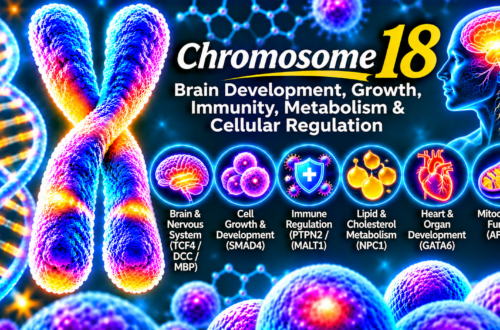
Chromosome 18 – Brain Development, Growth and Organ Formation
Chromosome 18 contains genes involved in the development and functioning of multiple organs and tissues.
Its contributions include:
- Brain development.
- Nervous system function.
- Skeletal development.
- Immune regulation.
- Cellular growth and differentiation.
- Organ formation.
Genes on chromosome 18 participate in biological pathways that help coordinate tissue development and normal cellular activity.
Basic biological focus: Neurological development, skeletal formation, organ development and cellular regulation.
Chromosome 19 – Immune Defence, Cholesterol Metabolism and Cellular Communication
Chromosome 19 is particularly gene-rich and contains many genes involved in important metabolic and regulatory functions.
Its biological contributions include:
- Cholesterol and lipid metabolism.
- Immune system regulation.
- Inflammatory responses.
- Cellular communication.
- Nervous system function.
- Regulation of gene expression.
One important gene is LDLR, which provides instructions for producing the low-density lipoprotein receptor.
This receptor helps cells remove LDL cholesterol from the bloodstream.
Chromosome 19 also contains genes involved in immune recognition and the regulation of inflammatory processes.
Basic biological focus: Lipid metabolism, immune defence, inflammation and cellular communication.
Chromosome 20 – Metabolic Regulation, Immune Function and Cellular Maintenance
Chromosome 20 contains genes involved in the regulation of several essential biological processes.
These include:
- Glucose and metabolic regulation.
- Immune system activity.
- Cellular growth and differentiation.
- Nervous system development.
- Hormonal signalling.
- Regulation of cellular processes.
One important gene located on chromosome 20 is HNF4A, which plays a role in regulating genes involved in glucose metabolism and the functioning of pancreatic beta cells.
Basic biological focus: Glucose regulation, metabolism, immune activity and cellular maintenance.
Chromosome 21 – Brain Development, Nervous System Function and Cellular Regulation
Chromosome 21 is one of the smallest human chromosomes and contains genes involved in several important developmental processes.
Its functions include:
- Brain and nervous system development.
- Cellular growth and differentiation.
- Immune system activity.
- Regulation of oxidative stress.
- Metabolic processes.
- Development of various organs and tissues.
One important gene is SOD1, which provides instructions for producing an enzyme involved in protecting cells against harmful superoxide molecules.
Chromosome 21 is also well known because an additional copy of this chromosome causes Down syndrome (trisomy 21).
Basic biological focus: Neurological development, cellular protection, metabolism and developmental regulation.
Chromosome 22 – Immune Function, Nervous System Development and Cellular Communication
Chromosome 22 is one of the smallest human autosomes.
Despite its relatively small size, it contains genes involved in many important biological functions.
These include:
- Immune system regulation.
- Nervous system development.
- Cellular communication.
- Development of connective tissues.
- Heart and blood vessel development.
- Regulation of cellular growth.
Chromosome 22 also contains genes involved in the development and maintenance of structures supporting normal nerve function.
Basic biological focus: Immune regulation, neurological development, connective tissue and cellular communication.
The Sex Chromosomes: X and Y
The final chromosome pair differs from the other 22 pairs because it consists of the sex chromosomes.
These chromosomes contribute to sexual development, reproductive biology and many other physiological processes.
Importantly, their functions extend far beyond determining biological sex.
Chromosome X – Development, Immunity and Essential Cellular Functions
The X chromosome is considerably larger than the Y chromosome and contains hundreds of genes involved in numerous biological processes.
Its contributions include:
- Brain and nervous system development.
- Immune system regulation.
- Blood clotting.
- Muscle function.
- Cellular metabolism.
- Reproductive development.
- Regulation of various biological processes.
Several important genes are located on the X chromosome.
For example:
- F8: Involved in blood clotting through the production of coagulation factor VIII.
- DMD: Provides instructions for producing dystrophin, an important protein for muscle function.
- MECP2: Plays an important role in regulating gene activity and nervous system development.
In people with two X chromosomes, one X chromosome is generally inactivated in each cell to balance gene expression. However, some genes escape this inactivation.
Basic biological focus: Nervous system development, muscle function, immune activity, blood clotting and reproductive biology.
Chromosome Y – Male Sexual Development and Sperm Production
The Y chromosome is considerably smaller than the X chromosome and contains fewer genes.
Its best-known role is its contribution to typical male sexual development.
Important functions include:
- Testicular development.
- Regulation of male reproductive development.
- Sperm production.
- Male fertility.
- Regulation of certain reproductive processes.
One particularly important gene is SRY, which typically initiates the developmental pathway that leads to testis formation during embryonic development.
Other genes on the Y chromosome are involved in sperm production and male reproductive function.
Basic biological focus: Testicular development, sperm production and reproductive biology.
Understanding How the Chromosomes Work Together
Although each chromosome contains its own collection of genetic information, the human body does not operate through isolated genetic instructions.
Instead, chromosomes work together through interconnected biological networks.
For example:
The Immune System
Immune function involves genes distributed across several chromosomes.
Chromosome 6 contains the HLA region, chromosome 14 contains important antibody-producing gene regions, and chromosomes 2, 7, 9 and others contribute additional immune-related genes.
Together, these genes help coordinate immune recognition, defence and regulation.
The Nervous System
Brain and nervous system function depend on genes distributed throughout the genome.
Chromosomes 1, 4, 7, 15, 17, 21 and X contain important examples of genes involved in neurological development and function.
Metabolism and Energy Regulation
Metabolic processes depend on numerous genes involved in enzyme production, cellular transport, hormone signalling and energy utilisation.
Chromosomes 10, 11, 12, 16, 19 and 20 contain examples of genes involved in these processes.
Cellular Protection and Repair
Maintaining the integrity of DNA is essential for healthy cellular function.
Chromosomes 1, 3, 13, 17 and others contain genes involved in DNA repair, cell-cycle regulation and cellular protection.
This illustrates why understanding the entire genetic system is more meaningful than looking at individual chromosomes in isolation.
Chromosomes and the Exploration of Wellbeing
At VitalPulse, we are interested in exploring the body’s interconnected biological systems and understanding the many factors that contribute to overall wellbeing.
Genetics offers an interesting perspective because it provides insight into the biological instructions underlying cellular activity, development, metabolism and physiological regulation.
When exploring chromosomes, it is useful to consider three interconnected levels:
1. Genetic Information
The DNA sequence contains the inherited instructions that influence biological characteristics and cellular functions.
2. Gene Expression
Not every gene is active in every cell. Different cells activate different genes depending on their function, developmental stage and surrounding conditions.
3. Cellular Activity
The proteins and functional RNA molecules produced through gene expression participate in the biological processes that keep the body functioning.
These three levels help illustrate how genetic information is translated into biological activity.
It is also important to recognise that genetics is only one part of the larger wellbeing picture. Lifestyle, nutrition, environmental exposures, sleep, stress and many other factors can influence how biological systems function.
An Important Note About NLS Bioresonance and Chromosomes
Some complementary and energy-based wellbeing approaches explore chromosomes and genetic structures as part of broader assessments of the body’s biological and energetic organisation.
At VitalPulse, we are interested in exploring these concepts through a holistic wellbeing perspective.
However, an important distinction must be maintained:
Conventional genetics uses laboratory-based methods such as DNA sequencing, genetic testing and chromosome analysis to investigate genetic information and chromosomal changes.
NLS bioresonance scanning is a different approach. Its readings should not be interpreted as direct measurements of DNA, proof of genetic abnormalities or confirmation of chromosome-related diseases.
NLS assessments are not scientifically validated methods for identifying genetic mutations, diagnosing chromosomal disorders or determining the functioning of individual genes.
Our intention is to encourage curiosity, self-awareness and further exploration while respecting the distinction between established genetic science and complementary wellbeing interpretations.
Final Thoughts: The Remarkable Complexity of Human Genetics
The 23 pairs of human chromosomes represent an extraordinary biological information system.
From the development of the brain and immune system to blood production, metabolism, cellular repair and reproduction, chromosomes contain the genetic instructions that help coordinate human biology.
No single chromosome works alone. Every chromosome contributes to a larger network of genetic information, gene regulation and cellular activity.
Understanding these connections can help us appreciate just how interconnected the human body really is.
The more we explore human biology, the more we discover that wellbeing is not the responsibility of one organ, one system or one biological process. It is the result of countless interconnected processes working together.
At VitalPulse, we believe that understanding these connections is an important part of exploring your wellbeing.
Explore Your Wellbeing. Reconnect. Reflect. Realign.
VitalPulse – Your journey towards greater wellbeing awareness begins with curiosity.
Curious About NLS Bioresonance Scanning?
What if you could explore your body’s energetic patterns from a different perspective?
At VitalPulse, we invite you to discover NLS (Non-Linear System) Bioresonance Scanning – an alternative wellness exploration approach designed to provide insights into energetic patterns and potential areas of imbalance within the body’s systems.
Whether you’re interested in understanding your wellbeing more deeply, exploring the body’s interconnected systems, or simply curious about complementary approaches to wellness, an NLS scan offers an opportunity to explore a different perspective.
Why not experience it for yourself?
✨ Explore your body’s energetic patterns.
✨ Discover a different perspective on your overall wellbeing.
✨ Identify areas you may wish to explore further as part of your personal wellness journey.
🎁 Take the First Step – Explore NLS Bioresonance!
👉 EXPLORE NLS BIORESONANCE SCANNING
VitalPulse – Explore Your Wellbeing.
Reconnect. Reflect. Realign.
Please note: NLS Bioresonance scanning is offered as a complementary wellness exploration service. It is not a medically validated diagnostic tool and does not diagnose, treat, cure or prevent disease. It is not a substitute for professional medical advice, diagnosis or treatment.
Disclaimer
This article is intended for educational and general informational purposes only. It does not provide medical advice, diagnosis or treatment recommendations. Chromosome functions described here are simplified overviews of complex genetic processes. Individual genetic characteristics and health outcomes depend on numerous interacting factors. Consult a qualified healthcare professional or genetic counsellor for questions about genetic testing, inherited conditions or chromosomal abnormalities.
Further Reading and Scientific References
- National Human Genome Research Institute – What is a Chromosome?
- MedlinePlus Genetics – Chromosomes and Mitochondrial DNA
- National Human Genome Research Institute – Chromosome Abnormalities Fact Sheet
- MedlinePlus Genetics – What Is a Gene?
- National Human Genome Research Institute – X Chromosome Facts


You May Also Like
TMJ Disorders: Understanding Jaw Pain, Muscle Tension and the Mind-Body Connection
The Hidden Secrets of Water: The Work of Dr. Masaru Emoto and the Connection Between Water, Consciousness, Bioresonance & Energy Healing