Chromosome 14: The Genetic Blueprint of Brain Development, Lung Function, Immunity & Cellular Protection
Exploring the genes that influence neurological development, thyroid function, respiratory health, protein regulation, immune cell formation and the body’s ability to maintain biological balance.
Introduction
What connects the development of the brain, the functioning of the lungs, the regulation of thyroid hormones, the production of antibodies and the body’s ability to protect itself against abnormal cellular growth?
An important part of the answer lies in Chromosome 14.
Chromosome 14 contains a fascinating collection of genes involved in several essential biological processes. Some contribute to brain development and neurological function, while others regulate thyroid activity, protect lung tissue, process proteins and help the immune system recognise potential threats.
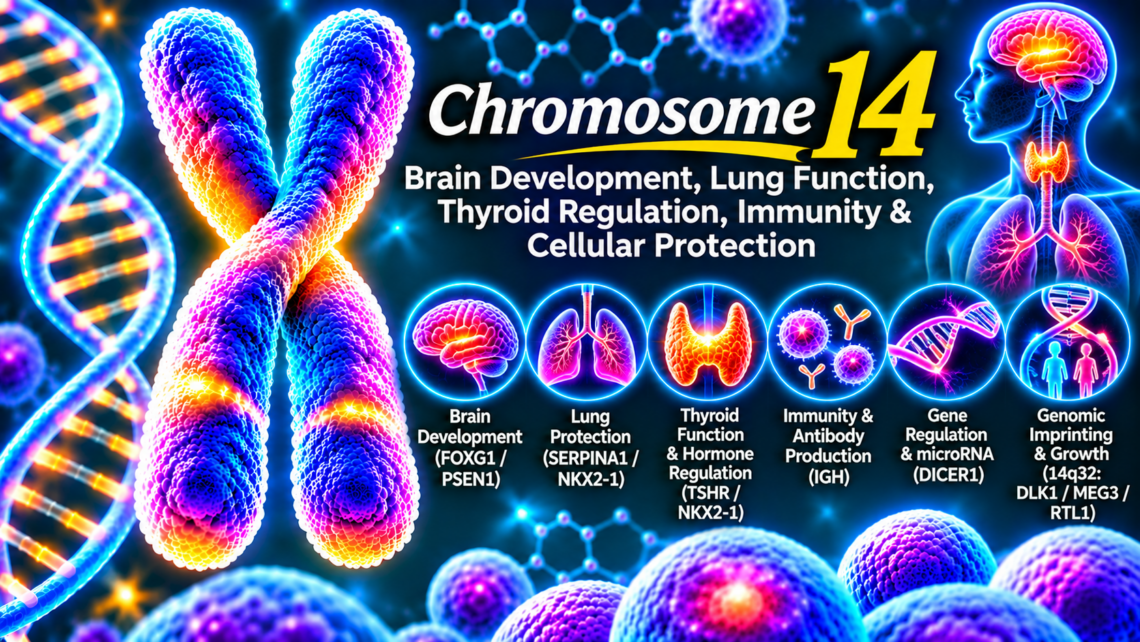
Among its best-known genes are SERPINA1, FOXG1, DICER1, NKX2-1, TSHR, PSEN1 and the immunoglobulin heavy-chain (IGH) gene region.
Chromosome 14 is also particularly interesting because it contains an important region where gene activity is influenced by whether genetic material was inherited from the mother or the father. This phenomenon, known as genomic imprinting, plays a significant role in growth and development.
Changes involving chromosome 14 can be associated with conditions such as alpha-1 antitrypsin deficiency, DICER1-related tumour predisposition, FOXG1 syndrome, Temple syndrome, Kagami-Ogata syndrome and certain blood cancers.
In this article, we explore the structure and biological functions of chromosome 14, its important genes, associated genetic conditions, its relationship with different body systems, and complementary perspectives on its possible symbolic significance.
1. Understanding Chromosome 14
Humans normally have 46 chromosomes arranged into 23 pairs. Chromosome 14 is one of the 22 pairs of autosomes, meaning it is not a sex chromosome.
We inherit one copy from each biological parent.
Chromosome 14 contains more than 107 million DNA base pairs and represents approximately 3.5% of the total DNA in our cells. It contains an estimated 800–900 protein-coding genes.
Chromosome 14 is an acrocentric chromosome. This means its centromere is positioned close to one end, creating a very short p arm and a much longer q arm.
Its structure includes:
- Short arm (p): A small region containing repetitive DNA and ribosomal RNA gene clusters.
- Long arm (q): The larger section containing most of chromosome 14’s protein-coding genes.
Some particularly important genes and regions include:
- SERPINA1: Produces alpha-1 antitrypsin, a protein that helps protect tissues from excessive enzyme activity.
- FOXG1: Plays a major role in early brain development.
- DICER1: Helps produce microRNAs involved in gene regulation.
- NKX2-1: Contributes to the development and function of the brain, lungs and thyroid.
- TSHR: Helps regulate thyroid hormone production.
- PSEN1: Participates in protein processing and cellular signalling.
- IGH region: Contains genes that provide the building blocks for antibody production.
- 14q32 imprinted region: Contains genes involved in growth and developmental regulation.
These genes illustrate the diversity of chromosome 14’s biological functions.
2. The Major Biological Functions of Chromosome 14
Chromosome 14 contributes to several interconnected biological processes.
Brain Development and Neurological Function
FOXG1 is one of the most important developmental genes on chromosome 14.
It produces a transcription factor that helps regulate the formation of the developing brain, particularly the telencephalon, which eventually gives rise to much of the cerebrum.
The cerebrum is involved in language, voluntary movement, sensory processing, learning and memory.
PSEN1 also contributes to neurological biology through its role in processing proteins involved in cellular communication and brain function.
Respiratory Protection
SERPINA1 produces alpha-1 antitrypsin, a protein that helps protect lung tissue from enzymes released during inflammation.
This protection is particularly important in the lungs, where immune cells release enzymes such as neutrophil elastase to help defend against infection.
Alpha-1 antitrypsin helps prevent these enzymes from damaging healthy lung structures.
Thyroid Function and Hormonal Regulation
Chromosome 14 contains genes involved in thyroid development and function.
NKX2-1 contributes to the development of the thyroid gland and helps regulate the production of thyroid-related proteins.
TSHR produces the thyroid-stimulating hormone receptor, which receives signals from the pituitary gland and stimulates thyroid hormone production.
Immune System Development
The immunoglobulin heavy-chain region, commonly known as the IGH locus, is located on chromosome 14.
It contains gene segments that immune cells rearrange to produce different antibody molecules.
This process is essential for the adaptive immune system’s ability to recognise a wide range of foreign substances.
Protein Processing and Gene Regulation
DICER1 produces an enzyme involved in processing microRNA precursors.
MicroRNAs are small RNA molecules that regulate the activity of other genes.
This process influences cell development, growth, differentiation and many other biological functions.
Growth and Development
The 14q32 region contains imprinted genes involved in fetal development, growth and metabolism.
The activity of some genes in this region depends on whether they were inherited from the mother or father.
This makes chromosome 14 an important example of parent-of-origin gene regulation.
3. Important Genes Located on Chromosome 14
Chromosome 14 contains hundreds of genes. Several are particularly significant for human health and biological development.
| Gene or region | Main biological function | Associated conditions or relevance |
|---|---|---|
| SERPINA1 | Produces alpha-1 antitrypsin, which protects tissues from excessive protease activity | Alpha-1 antitrypsin deficiency |
| FOXG1 | Regulates early brain development | FOXG1 syndrome |
| DICER1 | Processes microRNAs involved in gene regulation | DICER1-related tumour predisposition syndrome |
| NKX2-1 | Regulates development and function of the brain, lungs and thyroid | Brain-lung-thyroid syndrome |
| TSHR | Receives thyroid-stimulating hormone signals | Congenital hypothyroidism; thyroid hormone resistance or hyperthyroidism in certain genetic contexts |
| PSEN1 | Participates in protein processing and cellular signalling | Familial early-onset Alzheimer’s disease |
| IGH locus | Provides gene segments used to produce antibody heavy chains | Antibody diversity; rearrangements in certain blood cancers |
| DLK1 | Regulates growth and development | Temple syndrome; central precocious puberty |
| MEG3 | Produces a long non-coding RNA involved in gene regulation | 14q32 imprinting disorders |
| RTL1 | Contributes to fetal and placental development | Kagami-Ogata syndrome and 14q32 imprinting biology |
Let’s explore some of these genes in greater detail.
SERPINA1 – Alpha-1 Antitrypsin and Tissue Protection
The SERPINA1 gene provides instructions for producing a protein called alpha-1 antitrypsin.
This protein belongs to a group known as serine protease inhibitors, or serpins.
Its primary role is to regulate enzymes that break down proteins.
One particularly important target is neutrophil elastase, an enzyme released by certain white blood cells during inflammatory responses.
Neutrophil elastase helps defend the body against microorganisms, but excessive activity can damage healthy tissue.
Alpha-1 antitrypsin helps control this enzyme and protect the lungs from unnecessary destruction.
It is primarily produced by the liver and released into the bloodstream.
Pathogenic variants in SERPINA1 can cause alpha-1 antitrypsin deficiency.
This inherited condition can affect both the lungs and liver.
Possible respiratory effects include:
- Early-onset emphysema.
- Progressive shortness of breath.
- Reduced lung function.
- Increased susceptibility to chronic obstructive pulmonary disease (COPD).
Possible liver effects include:
- Liver inflammation.
- Fibrosis.
- Cirrhosis.
- Increased risk of certain liver complications.
Alpha-1 antitrypsin deficiency demonstrates how a genetic variation affecting one protective protein can influence several organ systems.
FOXG1 – Brain Development and Neural Organisation
FOXG1 stands for forkhead box G1.
It provides instructions for producing a transcription factor that regulates the activity of other genes.
FOXG1 is particularly important during embryonic brain development.
It helps coordinate the development of the telencephalon, the embryonic structure that gives rise to much of the cerebral hemispheres.
The cerebrum is involved in:
- Voluntary movement.
- Language.
- Sensory perception.
- Learning.
- Memory.
- Higher cognitive functions.
FOXG1 helps regulate the growth, differentiation and organisation of developing brain cells.
Pathogenic variants or deletions affecting FOXG1 can cause FOXG1 syndrome.
This rare neurodevelopmental condition can involve:
- Significant developmental delay.
- Limited or absent speech.
- Abnormal movements.
- Seizures.
- Changes in muscle tone.
- Structural abnormalities of the brain.
- Difficulties with motor coordination.
FOXG1 demonstrates how precisely controlled gene expression is essential for normal brain development.
DICER1 – MicroRNA Processing and Cellular Regulation
DICER1 provides instructions for producing an enzyme called Dicer.
Dicer plays an important role in processing small RNA molecules known as microRNAs.
MicroRNAs help regulate gene expression by influencing how messenger RNA molecules are used to produce proteins.
This process is important because cells need to control which proteins they produce, when they produce them and in what quantities.
DICER1 therefore contributes to:
- Cell growth.
- Cell differentiation.
- Embryonic development.
- Tissue maintenance.
- Regulation of gene expression.
Pathogenic variants in DICER1 can cause DICER1-related tumour predisposition syndrome.
People with this inherited condition may have an increased risk of certain rare tumours, including:
- Pleuropulmonary blastoma, a rare childhood lung tumour.
- Certain ovarian sex cord-stromal tumours.
- Cystic nephroma, a kidney tumour.
- Thyroid nodules and certain thyroid tumours.
- Other uncommon tumour types.
The condition demonstrates the importance of microRNA processing in maintaining normal cellular regulation.
NKX2-1 – The Brain, Lungs and Thyroid
NKX2-1 is a transcription factor that regulates the activity of other genes.
It is particularly important in the development and functioning of three major biological systems:
- The brain.
- The lungs.
- The thyroid gland.
In the brain, NKX2-1 contributes to the development of specific regions involved in movement and neurological function.
In the lungs, it helps regulate the development of specialised cells involved in respiratory function and surfactant production.
Pulmonary surfactant is a substance that reduces surface tension inside the lungs, helping the tiny air sacs called alveoli remain open during breathing.
In the thyroid gland, NKX2-1 helps regulate genes involved in thyroid development and hormone production.
Pathogenic variants in NKX2-1 can cause brain-lung-thyroid syndrome, also known as NKX2-1-related disorder.
Possible features include:
- Movement abnormalities, particularly chorea.
- Low muscle tone.
- Developmental differences.
- Respiratory problems.
- Congenital hypothyroidism.
Not everyone with an NKX2-1 variant develops all three groups of symptoms.
NKX2-1 is a particularly interesting example of how one gene can influence several seemingly unrelated organs.
TSHR – Thyroid Hormone Regulation
TSHR provides instructions for producing the thyroid-stimulating hormone receptor.
This receptor is found primarily on thyroid cells.
The pituitary gland releases thyroid-stimulating hormone (TSH), which binds to TSHR and signals the thyroid gland to produce thyroid hormones.
The main thyroid hormones are:
- T4 (thyroxine): The major hormone released by the thyroid gland.
- T3 (triiodothyronine): The more biologically active thyroid hormone.
Thyroid hormones influence:
- Metabolic rate.
- Body temperature.
- Heart function.
- Growth and development.
- Brain development.
- Energy use.
Certain pathogenic variants in TSHR can cause thyroid disorders.
Variants that reduce receptor activity can contribute to congenital hypothyroidism or thyroid resistance.
Other activating variants can cause hyperthyroidism.
TSHR demonstrates the importance of receptor-based communication in endocrine regulation.
PSEN1 – Protein Processing and Brain Health
PSEN1 stands for presenilin 1.
It provides instructions for producing a protein that forms part of a larger protein-processing complex called gamma-secretase.
Gamma-secretase helps cut certain membrane-associated proteins into smaller fragments.
One of its targets is amyloid precursor protein (APP).
The processing of APP can produce amyloid-beta peptides, which are associated with the formation of amyloid plaques in Alzheimer’s disease.
Certain inherited pathogenic variants in PSEN1 can cause familial early-onset Alzheimer’s disease.
This form of Alzheimer’s disease often develops earlier than the more common late-onset form.
PSEN1 is also involved in other cellular signalling pathways, including processes important for development.
Its role illustrates how changes in protein processing can have consequences for neurological health.
It is important to remember that Alzheimer’s disease is complex and involves multiple genetic, biological and environmental factors. Not all cases are associated with inherited PSEN1 variants.
IGH – Antibody Production and Immune Diversity
The immunoglobulin heavy-chain region, or IGH locus, is located at chromosome 14q32.
It contains gene segments that developing B lymphocytes use to construct antibody heavy chains.
B lymphocytes are specialised white blood cells that play an important role in adaptive immunity.
Antibodies are proteins that recognise specific antigens, such as components of viruses, bacteria and other foreign substances.
During B-cell development, gene segments in the IGH region undergo a process called V(D)J recombination.
This process rearranges selected genetic segments to create a diverse collection of antibody receptors.
The result is an immune system capable of recognising a vast range of different antigens.
The IGH region is also involved in certain acquired chromosomal rearrangements associated with blood cancers.
For example, translocations involving IGH and other chromosomes occur in many cases of multiple myeloma and certain lymphomas.
These rearrangements can place growth-regulating genes under the influence of powerful antibody gene regulatory elements.
This may contribute to abnormal cell growth.
The IGH region demonstrates the importance of chromosome 14 in immune system development and cellular regulation.
4. Chromosome 14 and Genomic Imprinting
One of the most fascinating aspects of chromosome 14 is the presence of an important imprinted region on its long arm, particularly at 14q32.
Genomic imprinting is a process in which certain genes are expressed differently depending on whether they were inherited from the mother or father.
Most genes are expressed from both inherited copies.
Imprinted genes are different: one copy is normally active while the other is naturally silenced or expressed at a much lower level in particular tissues.
This parent-of-origin regulation is essential for normal growth and development.
Important genes and regulatory elements in the 14q32 region include:
- DLK1: Involved in growth and developmental signalling.
- MEG3: Produces a long non-coding RNA involved in gene regulation.
- RTL1: Contributes to fetal and placental development.
- DIO3: Produces an enzyme involved in thyroid hormone metabolism.
- MEG8: Produces a long non-coding RNA involved in the imprinted region’s regulatory network.
Why Does Genomic Imprinting Matter?
Imagine receiving two copies of a genetic instruction: one from your mother and one from your father.
For most genes, both copies can contribute to normal biological function.
For certain imprinted genes, however, the body uses chemical marks to determine which parental copy should be active.
This means that the parental origin of a genetic copy can influence its biological effect.
When the normal imprinting pattern is disrupted, growth and development can be affected.
Two important conditions associated with chromosome 14 imprinting abnormalities are Temple syndrome and Kagami-Ogata syndrome.
Temple Syndrome
Temple syndrome, also known as maternal uniparental disomy 14 syndrome or TS14, is associated with abnormal regulation of the imprinted 14q32 region.
It can occur when both copies of chromosome 14 are inherited from the mother, when imprinting marks are abnormal, or through certain deletions involving the region.
Possible features include:
- Restricted growth before and after birth.
- Low muscle tone.
- Feeding difficulties during infancy.
- Short stature.
- Early-onset puberty.
- Increased tendency towards obesity in later life.
The specific presentation varies between individuals.
Kagami-Ogata Syndrome
Kagami-Ogata syndrome is associated with abnormal regulation of the same imprinted region, but with a different pattern of gene activity.
It can result from paternal uniparental disomy of chromosome 14, abnormal imprinting or certain deletions involving the region.
Possible features include:
- A small, bell-shaped chest.
- Short ribs.
- Abdominal wall abnormalities.
- Excess amniotic fluid during pregnancy.
- Distinctive facial features.
- Developmental difficulties.
These two conditions demonstrate how the parental origin and regulation of genetic material can influence development even when the DNA sequence itself is not necessarily altered.
5. Genetic Conditions Associated with Chromosome 14
Changes affecting individual genes or larger sections of chromosome 14 can contribute to several inherited and developmental conditions.
Alpha-1 Antitrypsin Deficiency
Associated with pathogenic variants in SERPINA1.
The condition can affect the lungs and liver.
Reduced or abnormal alpha-1 antitrypsin activity can allow enzymes such as neutrophil elastase to damage lung tissue.
Certain variants can also cause abnormal protein accumulation in liver cells.
FOXG1 Syndrome
Associated with pathogenic variants or deletions affecting FOXG1.
It is a rare neurodevelopmental condition involving impaired brain development, developmental delays, movement abnormalities and other neurological features.
DICER1-Related Tumour Predisposition Syndrome
Associated with pathogenic variants in DICER1.
It increases the risk of certain rare tumours, particularly involving the lungs, kidneys, ovaries and thyroid.
Brain-Lung-Thyroid Syndrome
Associated with pathogenic variants in NKX2-1.
It can affect movement and neurological function, respiratory health and thyroid activity.
Thyroid Disorders
Associated with certain variants in TSHR.
Depending on the effect of the variant, thyroid hormone production may be reduced or increased.
Familial Early-Onset Alzheimer’s Disease
Certain inherited pathogenic variants in PSEN1 can cause early-onset familial Alzheimer’s disease.
This is a relatively rare inherited form of the condition and should be distinguished from the much more common late-onset form.
Temple Syndrome
Associated with abnormalities affecting the imprinted 14q32 region.
It can involve restricted growth, low muscle tone, short stature, feeding difficulties and early puberty.
Kagami-Ogata Syndrome
Also associated with abnormalities affecting the imprinted 14q32 region.
It can involve characteristic chest and abdominal abnormalities, prenatal complications and developmental difficulties.
Ring Chromosome 14 Syndrome
This condition occurs when chromosome 14 breaks in two places and its ends join to form a ring-shaped chromosome.
The resulting chromosome may lose genetic material near its ends.
Possible features include:
- Recurrent seizures.
- Developmental delays.
- Intellectual disability.
- Changes in muscle tone.
- Other neurological and physical differences.
The severity depends partly on which genes are lost and whether the ring chromosome is present in all cells or only some cells.
Multiple Myeloma and Other Blood Cancers
Chromosome 14 is particularly important in the biology of certain blood cancers because of the location of the IGH region.
Acquired chromosomal rearrangements involving IGH can occur in:
- Multiple myeloma.
- Burkitt lymphoma.
- Follicular lymphoma.
- Other B-cell malignancies.
These rearrangements are generally acquired during a person’s lifetime and are not the same as inheriting an abnormal chromosome 14.
6. Chromosome 14 and the Body’s Major Systems
The genes on chromosome 14 do not operate independently. Their functions connect with several major biological systems.
The Nervous System
FOXG1 is essential for early brain development.
NKX2-1 contributes to the development of particular brain regions involved in movement and neurological function.
PSEN1 participates in protein processing and pathways relevant to brain health.
The Respiratory System
SERPINA1 helps protect lung tissue from excessive protease activity.
NKX2-1 contributes to lung development and the production of pulmonary surfactant.
Together, these genes demonstrate chromosome 14’s involvement in both respiratory development and tissue protection.
The Endocrine System
NKX2-1 contributes to thyroid development, while TSHR receives signals that regulate thyroid hormone production.
DIO3, located in the imprinted 14q32 region, participates in thyroid hormone metabolism.
These genes illustrate how chromosome 14 contributes to hormonal regulation and metabolic processes.
The Immune System
The IGH region is essential for the development of antibody diversity.
B lymphocytes use the genetic segments in this region to produce a wide variety of antibody receptors.
This allows the adaptive immune system to recognise many different antigens.
The Liver and Protein Regulation System
SERPINA1 is primarily produced in the liver.
ATP-related liver functions are not the focus of chromosome 14, but SERPINA1 demonstrates the importance of hepatic protein production and secretion.
Abnormal alpha-1 antitrypsin processing can result in liver complications.
Cellular Growth and Regulation
DICER1 helps regulate gene expression through microRNA processing.
The imprinted 14q32 region contains genes involved in growth and development.
The IGH region is also relevant to cellular growth regulation because acquired rearrangements can contribute to blood cancers.
7. Chromosome 14, Epigenetics and Gene Expression
Genetics describes the DNA sequence inherited from our parents.
Epigenetics explores how gene activity can be regulated without changing the underlying DNA sequence.
Several mechanisms are involved:
- DNA methylation: Chemical modifications that can influence whether particular genes are active or less active.
- Histone modification: Changes to proteins around which DNA is packaged, influencing gene accessibility.
- Non-coding RNA: RNA molecules that regulate gene expression without producing proteins.
- Chromatin remodelling: Changes in how DNA is organised and accessed by cellular machinery.
Genomic Imprinting and DNA Methylation
The 14q32 region provides a particularly important example of genomic imprinting.
DNA methylation marks help distinguish the maternal and paternal copies of certain genes.
These marks contribute to the regulation of genes such as DLK1 and MEG3.
When the normal imprinting pattern is disrupted, gene expression can change.
This is one of the mechanisms involved in Temple syndrome and Kagami-Ogata syndrome.
MicroRNA and Gene Regulation
DICER1 provides another important example of genetic regulation.
It processes precursor microRNAs into mature microRNA molecules.
These small RNA molecules help regulate the activity of other genes.
This is important because cells need to control protein production precisely during development, tissue maintenance and normal cellular activity.
Epigenetics and Cellular Identity
Different cells in the body contain essentially the same DNA, but they express different combinations of genes.
A brain cell, lung cell, thyroid cell and immune cell all have specialised functions.
Epigenetic regulation helps determine which genetic instructions are active in each cell type.
This is essential for normal development and the maintenance of specialised tissues.
It is important to remember that epigenetic regulation is complex. It does not mean that thoughts, emotions or particular wellbeing practices can directly switch individual chromosome 14 genes on or off in a predictable way.
8. A Holistic Wellbeing Perspective
From a holistic wellbeing perspective, chromosome 14 offers an opportunity to explore several interconnected themes:
- Respiratory protection.
- Brain development and neurological function.
- Hormonal communication.
- Immune recognition.
- Growth and development.
- Protein regulation.
- Biological balance.
These themes can serve as educational and reflective starting points.
They do not mean that chromosome 14 determines a person’s personality, emotional characteristics or energetic state.
Respiratory Protection and Resilience
SERPINA1 highlights the importance of protecting delicate tissues.
The lungs must allow oxygen to enter the bloodstream while maintaining a delicate structure that supports efficient gas exchange.
Alpha-1 antitrypsin helps protect this structure from excessive enzyme activity.
As a reflective theme, this can inspire questions about resilience, protection and maintaining healthy foundations.
Brain Development and Awareness
FOXG1 and NKX2-1 demonstrate the complexity of brain development.
The brain depends on carefully coordinated genetic instructions to develop its specialised structures.
From a holistic perspective, this can encourage reflection on learning, awareness and the importance of supporting neurological wellbeing.
Hormonal Communication and Balance
TSHR and NKX2-1 illustrate the importance of communication within the endocrine system.
Hormones help coordinate metabolism, growth, temperature regulation and energy use.
A holistic approach considers sleep, nutrition, movement, stress and appropriate medical care as interconnected aspects of wellbeing.
Immune Recognition and Individuality
The IGH region demonstrates how the immune system develops an enormous variety of antibody receptors.
This can serve as a symbolic starting point for exploring recognition, discernment and the ability to respond appropriately to changing circumstances.
Inheritance and Personal Development
The imprinted region on chromosome 14 introduces the concept of parent-of-origin effects.
As a reflective metaphor, this can inspire questions about inherited family patterns, personal foundations and the relationship between what we receive and what we develop ourselves.
This is not evidence that genomic imprinting carries psychological or spiritual memories.
9. Chromosome 14: An Esoteric and Symbolic Perspective
The following section is a symbolic exploration for personal reflection. There is no scientifically established connection between chromosome 14 and Tarot archetypes, numerology, chakras or specific energetic patterns.
If we explore chromosome 14 through an esoteric lens, several themes emerge from its biological functions.
These include moderation, balance, integration, protection, communication and the relationship between inherited foundations and personal development.
The Number 14 – Integration and Moderation
The number 14 can be explored symbolically through the themes of balance, adaptation and integration.
It combines the symbolism of 1 and 4:
- 1: Individuality, beginnings, initiative and direction.
- 4: Structure, stability, foundations and organisation.
Together, these numbers can represent the integration of personal direction with a stable foundation.
This offers an interesting reflective comparison with chromosome 14, whose genes contribute to the coordination of several biological systems.
This is symbolic interpretation rather than a biological property of the chromosome.
Tarot Archetype: Temperance – XIV
The fourteenth Major Arcana card in the Tarot is Temperance.
Temperance is traditionally associated with:
- Balance.
- Moderation.
- Integration.
- Patience.
- Harmony.
- Adaptation.
- The blending of different elements.
The card depicts an angel carefully transferring liquid between two vessels.
Symbolically, this represents the importance of finding an appropriate balance between different forces.
There is an interesting comparison with chromosome 14’s biological functions.
Consider:
- SERPINA1 and the regulation of enzymes that protect lung tissue.
- TSHR and the regulation of thyroid hormone production.
- DICER1 and the careful control of gene expression.
- The 14q32 imprinted region and its parent-specific regulation.
These biological processes depend on coordination and appropriate regulation.
Temperance can therefore serve as a metaphor for balance and integration.
Tarot Archetype: The Hierophant – V
Another possible symbolic connection is The Hierophant, the fifth Major Arcana card.
The Hierophant is traditionally associated with:
- Learning.
- Knowledge.
- Tradition.
- Inherited systems.
- Guidance.
- Established structures.
Chromosome 14’s imprinted region offers an interesting symbolic starting point.
Certain genes are regulated according to whether they were inherited from the mother or father.
This can be explored metaphorically as the relationship between inheritance, foundations and development.
The biological process of genomic imprinting does not, however, transmit beliefs, memories or personality traits.
Tarot Archetype: The Star – XVII
The Star is associated with hope, renewal, inspiration and restoration.
This card can be explored alongside chromosome 14’s contribution to respiratory protection and neurological development.
As a symbolic reflection, The Star can represent the importance of hope, recovery and maintaining a sense of direction during periods of change.
Symbolic Themes for Chromosome 14
For a personal reflection framework, chromosome 14 could be explored through:
- Balance: Finding equilibrium between different aspects of life.
- Integration: Bringing different experiences together.
- Moderation: Recognising the value of appropriate limits.
- Inheritance: Understanding the foundations passed between generations.
- Communication: Developing clearer connections with others.
- Protection: Maintaining healthy boundaries.
- Adaptation: Responding thoughtfully to changing circumstances.
These themes may be useful in journaling, mindfulness and personal development activities.
10. Supporting General Wellbeing
Lifestyle practices cannot repair inherited genetic variants or directly control individual chromosome 14 genes.
However, general wellbeing habits can support the biological systems discussed in this article.
Support Respiratory Health
General approaches include:
- Avoiding smoking and second-hand smoke.
- Reducing exposure to harmful airborne pollutants where possible.
- Maintaining appropriate physical activity.
- Seeking medical attention for persistent respiratory symptoms.
- Following prescribed treatment for diagnosed lung conditions.
People with alpha-1 antitrypsin deficiency require individualised medical monitoring and care.
Support Brain Health
The brain benefits from a combination of physical, mental and social wellbeing practices.
Useful approaches include:
- Maintaining consistent sleep habits.
- Participating in regular physical activity.
- Learning new skills.
- Maintaining supportive social connections.
- Managing stress where possible.
- Seeking medical assessment for neurological symptoms.
These habits support general brain health but do not correct inherited FOXG1 or PSEN1 variants.
Support Thyroid Health
Thyroid function is influenced by several biological factors.
Appropriate approaches include maintaining a balanced diet, avoiding unnecessary high-dose iodine supplements and seeking medical evaluation when symptoms suggest a possible thyroid disorder.
People with diagnosed thyroid conditions should follow their prescribed treatment and monitoring plans.
Support Immune Health
General measures include:
- Eating a varied and balanced diet.
- Getting adequate sleep.
- Maintaining regular physical activity.
- Staying appropriately vaccinated.
- Practising good hygiene.
- Seeking medical care when infections or immune-related symptoms persist.
Maintain Preventive Health Care
Some inherited conditions associated with chromosome 14 require specific screening or monitoring.
People with known pathogenic variants in SERPINA1, DICER1, NKX2-1 or PSEN1 should discuss their individual circumstances with a qualified healthcare professional or genetic specialist.
Genetic counselling can help explain inherited risks and appropriate testing options.
11. Questions for Personal Reflection
The biological functions associated with chromosome 14 offer several useful questions for personal exploration.
- Where in my life could I benefit from greater balance?
- Am I allowing enough space for learning and personal development?
- What inherited family patterns would I like to understand more deeply?
- How do I respond when different aspects of my life feel out of balance?
- What does protection and resilience mean to me?
- Am I creating enough space for rest, recovery and reflection?
- How can I improve communication with myself and others?
- What would integration and harmony look like in my everyday life?
These questions are intended for personal reflection, not genetic assessment.
12. Frequently Asked Questions
What does chromosome 14 do?
Chromosome 14 contains genes involved in brain development, respiratory protection, thyroid function, immune system development, protein processing and growth regulation.
Which important genes are found on chromosome 14?
Some important genes include SERPINA1, FOXG1, DICER1, NKX2-1, TSHR, PSEN1 and the immunoglobulin heavy-chain gene region.
Is chromosome 14 associated with lung conditions?
Yes. SERPINA1 produces alpha-1 antitrypsin, which helps protect lung tissue. Pathogenic variants can cause alpha-1 antitrypsin deficiency, increasing the risk of lung disease.
NKX2-1 also contributes to lung development and function.
Is chromosome 14 associated with brain development?
Yes. FOXG1 is particularly important in early brain development. NKX2-1 and PSEN1 also contribute to neurological biology.
Does chromosome 14 influence thyroid function?
Yes. NKX2-1 contributes to thyroid development, while TSHR receives signals that stimulate thyroid hormone production. DIO3 is also involved in thyroid hormone metabolism.
Is chromosome 14 involved in immunity?
Yes. The IGH region contains gene segments used by developing B lymphocytes to produce antibody heavy chains. This is essential for antibody diversity and adaptive immunity.
What is genomic imprinting on chromosome 14?
Genomic imprinting is a process in which certain genes are expressed differently depending on whether they were inherited from the mother or father.
Chromosome 14 contains an important imprinted region at 14q32, which plays a role in growth and development.
What are Temple syndrome and Kagami-Ogata syndrome?
Both are rare conditions associated with abnormal regulation of imprinted genes in the 14q32 region.
Temple syndrome is generally associated with maternal-pattern gene expression, while Kagami-Ogata syndrome is associated with paternal-pattern gene expression.
Is chromosome 14 associated with cancer?
Yes. DICER1 and PSEN1 are relevant to particular inherited disease processes, while the IGH region is involved in acquired chromosomal rearrangements associated with multiple myeloma and certain lymphomas.
Can lifestyle changes influence chromosome 14?
Lifestyle practices do not change the inherited DNA sequence of chromosome 14. However, general health behaviours can support respiratory, neurological, endocrine and immune system function.
Conclusion: Chromosome 14 and the Importance of Balance
Chromosome 14 is an important part of the human genetic blueprint.
Its genes contribute to brain development, respiratory protection, thyroid regulation, immune system diversity, protein processing and the regulation of growth.
From SERPINA1’s role in protecting lung tissue to FOXG1’s contribution to brain development, NKX2-1’s involvement in the brain, lungs and thyroid, and the IGH region’s role in antibody production, chromosome 14 demonstrates the diversity of biological processes encoded within our DNA.
Its imprinted region adds another fascinating dimension, showing how the parental origin of genetic information can influence development.
From a holistic perspective, chromosome 14 provides a useful starting point for exploring themes of balance, integration, moderation, inheritance and resilience.
The symbolic message of Temperance is particularly relevant: wellbeing involves more than focusing on individual parts. It also involves recognising the relationships between different systems and finding ways to support the whole.
Understanding genetics and exploring wellbeing from multiple perspectives can deepen our appreciation of the complexity of human life.
Explore Your Wellbeing. Reconnect. Reflect. Realign.
Curious About NLS Bioresonance Scanning?
What if you could explore your body’s energetic patterns from a different perspective?
At VitalPulse, we invite you to discover NLS (Non-Linear System) Bioresonance Scanning – an alternative wellness exploration approach designed to provide insights into energetic patterns and potential areas of imbalance within the body’s systems.
Whether you’re interested in understanding your wellbeing more deeply, exploring the body’s interconnected systems, or simply curious about complementary approaches to wellness, an NLS scan offers an opportunity to explore a different perspective.
Why not experience it for yourself?
✨ Explore your body’s energetic patterns.
✨ Discover a different perspective on your overall wellbeing.
✨ Identify areas you may wish to explore further as part of your personal wellness journey.
🎁 Take the First Step – Explore NLS Bioresonance!
👉 EXPLORE NLS BIORESONANCE SCANNING
VitalPulse – Explore Your Wellbeing.
Reconnect. Reflect. Realign.
Please note: NLS Bioresonance scanning is offered as a complementary wellness exploration service. It is not a medically validated diagnostic tool and does not diagnose, treat, cure or prevent disease. It is not a substitute for professional medical advice, diagnosis or treatment.
References and Further Reading
The following resources provide reliable scientific information about chromosome 14 and its associated genes.
- MedlinePlus Genetics – Chromosome 14
https://medlineplus.gov/genetics/chromosome/14/ - MedlinePlus Genetics – SERPINA1 Gene
https://medlineplus.gov/genetics/gene/serpina1/ - MedlinePlus Genetics – FOXG1 Gene
https://medlineplus.gov/genetics/gene/foxg1/ - MedlinePlus Genetics – DICER1 Gene
https://medlineplus.gov/genetics/gene/dicer1/ - NCBI Gene – NKX2-1
https://www.ncbi.nlm.nih.gov/gene/7080 - MedlinePlus Genetics – TSHR Gene
https://medlineplus.gov/genetics/gene/tshr/ - GeneReviews – DICER1-Related Tumor Predisposition
https://www.ncbi.nlm.nih.gov/books/NBK196157/ - GeneReviews – Temple Syndrome
https://www.ncbi.nlm.nih.gov/books/NBK621564/ - GeneReviews – Kagami-Ogata Syndrome
https://www.ncbi.nlm.nih.gov/books/NBK608430/ - The DNA Sequence and Analysis of Human Chromosome 14 – Nature
https://www.nature.com/articles/nature01348
Medical Disclaimer
This article is intended for general educational and wellbeing information only. It does not provide medical diagnosis, genetic counselling or treatment recommendations.
Genetic conditions can only be assessed through appropriate clinical evaluation and, where indicated, validated genetic testing. Genetic associations do not mean that a person will necessarily develop a particular condition.
The holistic and esoteric interpretations in this article are presented for personal reflection and are not scientifically established explanations of chromosome function.
Always consult a qualified healthcare professional regarding persistent symptoms, suspected genetic conditions or concerns about inherited health risks.
VitalPulse – Explore Your Wellbeing. Reconnect. Reflect. Realign.