Blog
-
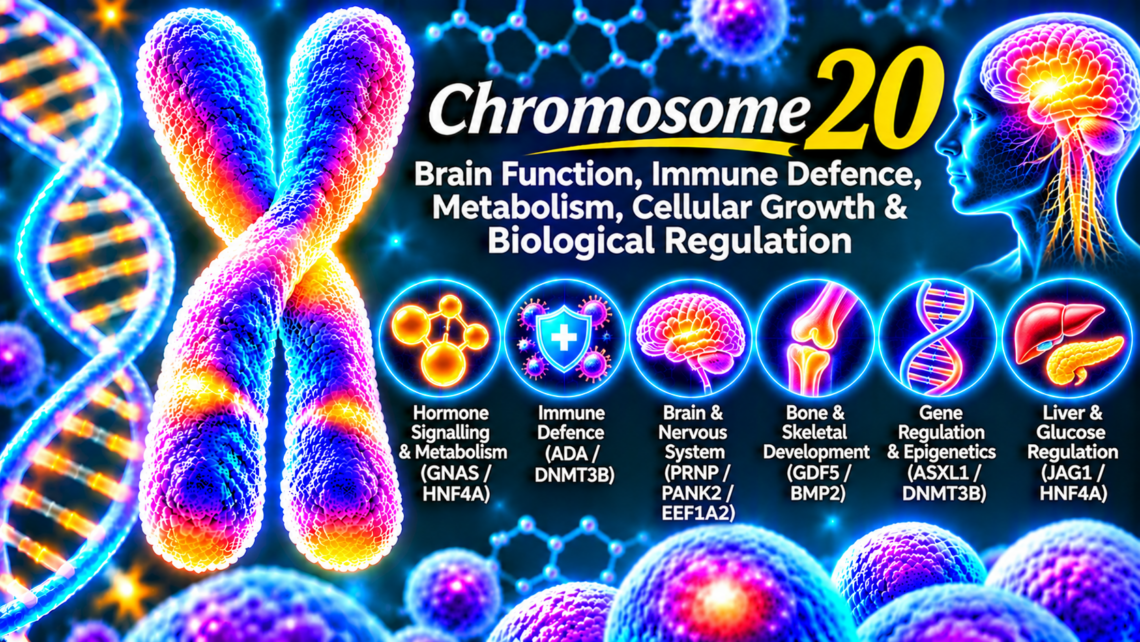
Chromosome 20 – The Genetic Blueprint of Brain Function, Immune Defence, Metabolism, Cellular Growth & Biological Regulation
Discover the genes that help regulate hormone signalling, immune function, neurological development, bone formation and cellular communication. Introduction: Exploring the Importance of Chromosome 20 Chromosome 20 is a relatively small but biologically important human chromosome. It contains genes involved in brain development, nerve-cell communication, immune responses, blood sugar regulation, bone formation and the control of cellular growth. Some of its genes help regulate how cells respond to insulin, while others influence the development of the nervous system, the formation of blood cells and the body’s ability to recognise abnormal cellular activity. One particularly interesting feature of Chromosome 20 is its involvement in several important signalling pathways. These pathways help coordinate…
-
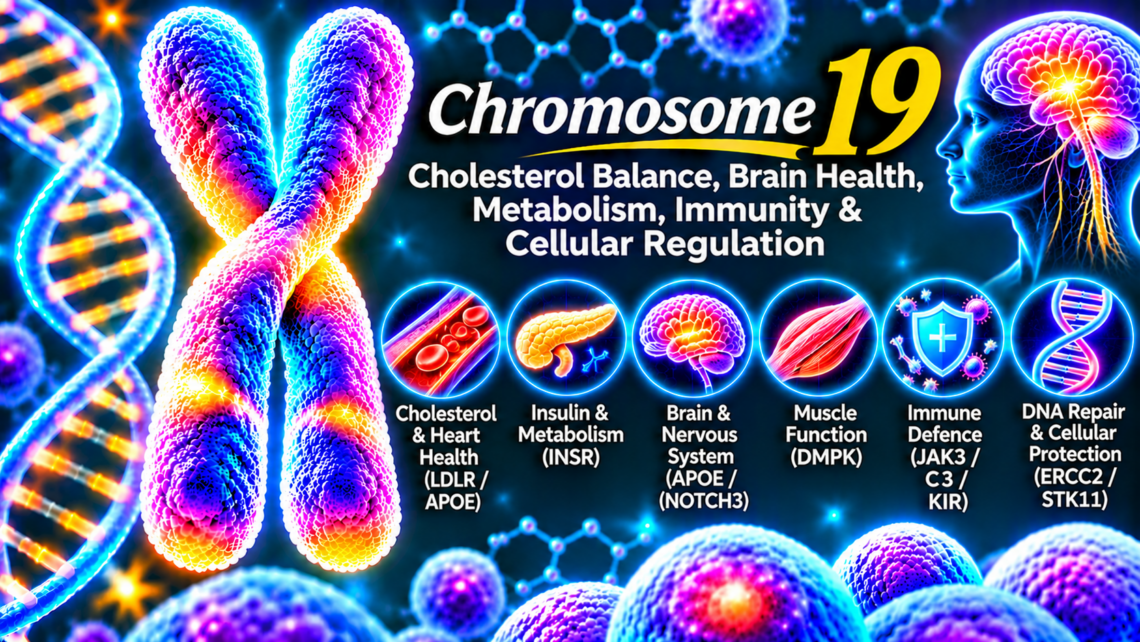
Chromosome 19 – The Genetic Blueprint of Cholesterol Balance, Brain Health, Metabolism, Immunity & Cellular Regulation
Explore the genes that help regulate cholesterol, insulin, brain function, muscle activity, immune defence and cellular health. Introduction: Why Is Chromosome 19 So Important? Chromosome 19 is one of the most genetically concentrated chromosomes in the human genome. Although relatively small, it contains an extraordinary collection of genes involved in cholesterol transport, insulin signalling, neurological function, muscle activity, immune defence and cellular regulation. Some of its genes influence how the body processes fats and sugars. Others help regulate blood vessels, protect against infection, maintain muscle function and control how cells grow and communicate. One particularly fascinating feature of Chromosome 19 is its unusually high gene density. It demonstrates how a…
-
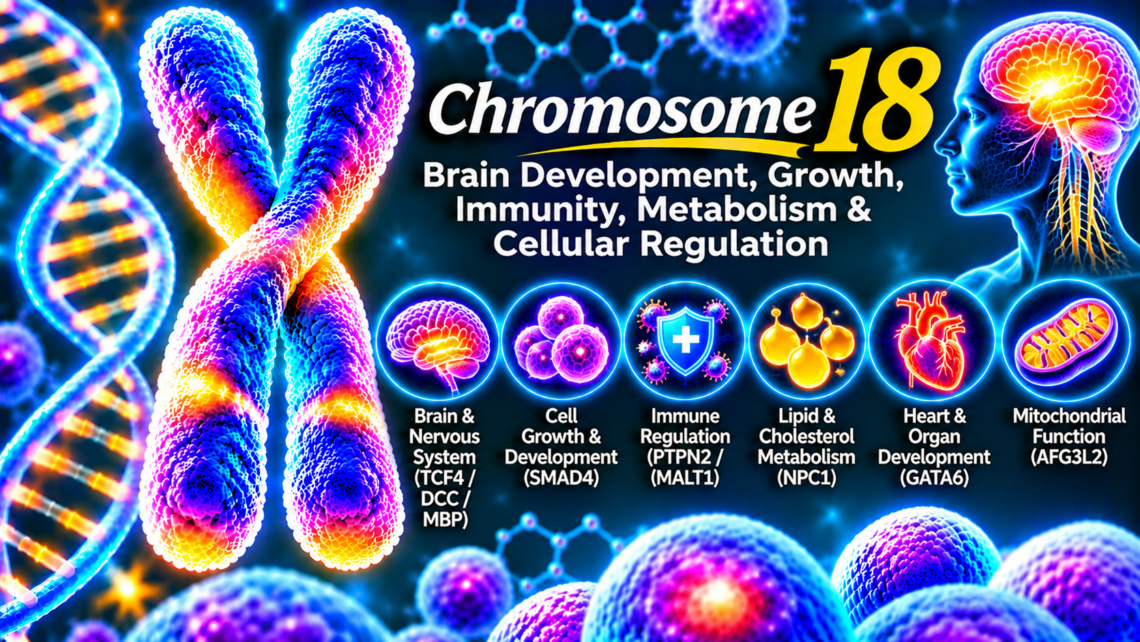
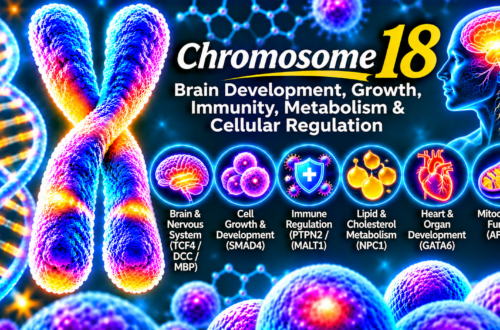
Chromosome 18 – The Genetic Blueprint of Brain Development, Growth, Immunity, Metabolism & Cellular Regulation
Exploring the genes, biological functions and genetic conditions associated with Human Chromosome 18. Introduction: Why Is Chromosome 18 Important? Human DNA contains 23 pairs of chromosomes, with one chromosome in each pair inherited from each biological parent. These chromosomes carry the genetic instructions that guide our development, influence our characteristics and help regulate the biological processes that keep us alive. Chromosome 18 is particularly interesting because it contains genes involved in brain development, cellular communication, immune regulation, metabolism, tissue growth and the maintenance of healthy organs. Some important genes located on Chromosome 18 include: Chromosome 18 is also associated with several recognised genetic conditions, including Edwards syndrome (trisomy 18), 18p…
-
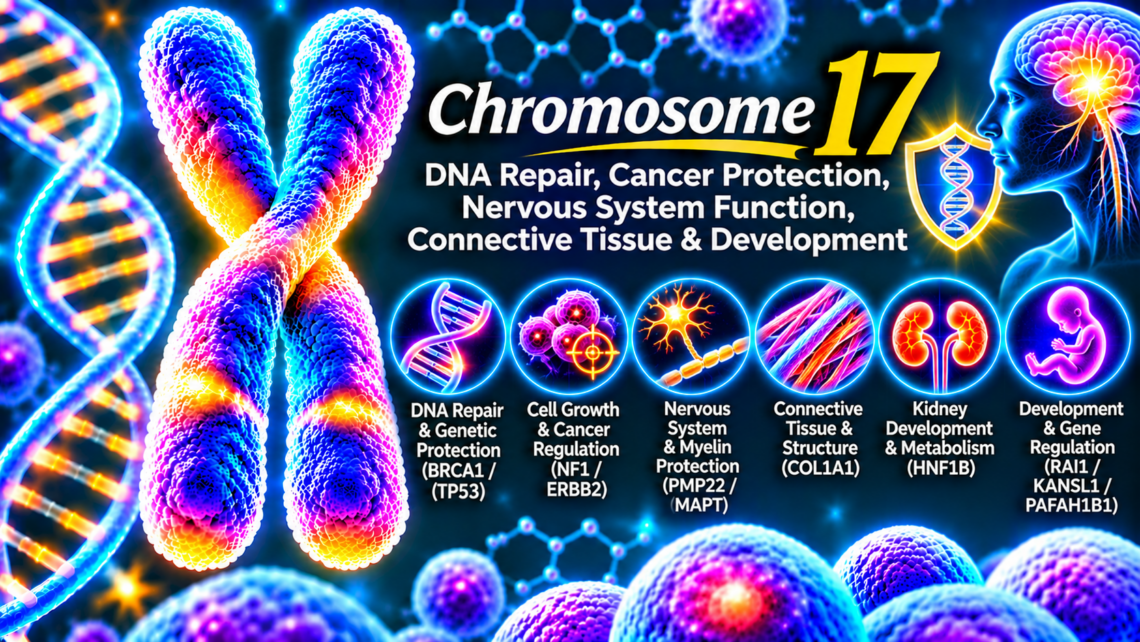
Chromosome 17 – The Genetic Blueprint of DNA Repair, Cancer Protection, Nervous System Function, Connective Tissue & Development
Exploring the genes, biological functions and genetic conditions associated with Human Chromosome 17. Introduction: Why Is Chromosome 17 So Important? Human DNA contains 23 pairs of chromosomes, with one chromosome in each pair inherited from each biological parent. These chromosomes carry the genetic instructions that guide our development, influence our characteristics and help regulate the biological processes that keep us alive. Chromosome 17 is particularly fascinating because it contains several genes that play essential roles in protecting genetic information, regulating cell growth, maintaining the nervous system, supporting connective tissue and guiding human development. Some of its most important genes include: Chromosome 17 is also associated with several important genetic conditions,…
-
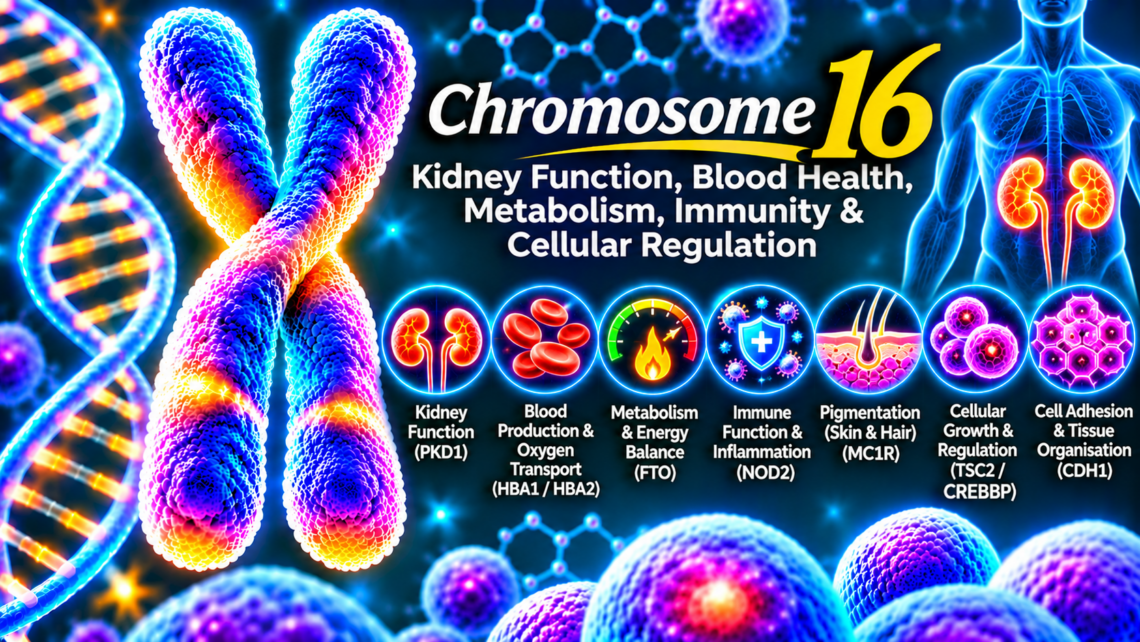
Chromosome 16 – The Genetic Blueprint of Kidney Function, Blood Health, Metabolism, Immunity & Cellular Regulation
Exploring the genes, biological functions and genetic conditions associated with Human Chromosome 16. Introduction: Why Is Chromosome 16 Important? Human DNA contains 23 pairs of chromosomes, with one chromosome in each pair inherited from each biological parent. These chromosomes carry the genetic instructions that help guide our development, biological characteristics and everyday biological functions. Chromosome 16 is particularly interesting because it contains genes involved in several essential processes, including kidney function, red blood cell production, metabolism, immune responses, pigmentation, connective tissue and cellular growth. Some of its most significant genes include: Chromosome 16 also contains regions where structural changes can affect multiple genes simultaneously, sometimes resulting in complex developmental or…
-
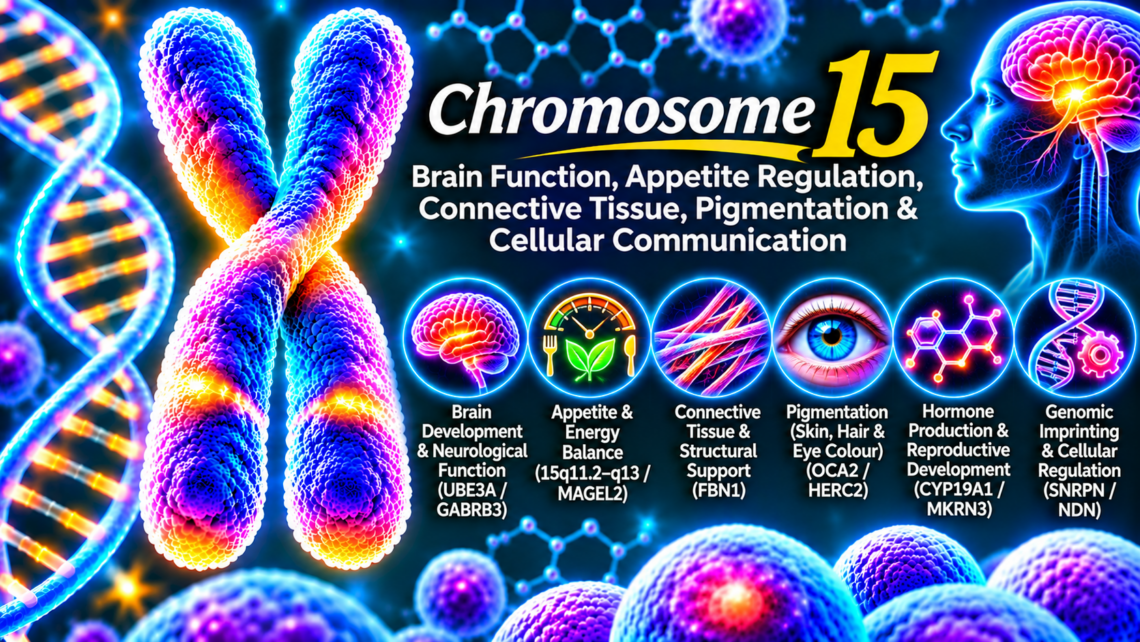
Chromosome 15 – The Genetic Blueprint of Brain Function, Appetite Regulation, Connective Tissue, Pigmentation & Cellular Communication
Exploring the genes, biological functions and fascinating parent-of-origin effects associated with Human Chromosome 15. Introduction: Why Is Chromosome 15 So Interesting? Human DNA contains 23 pairs of chromosomes, with one chromosome in each pair inherited from each biological parent. These chromosomes carry the genetic instructions that help guide our development, biological functions and individual characteristics. Among them, Chromosome 15 is particularly fascinating because it contains genes involved in neurological development, appetite regulation, connective tissue formation, pigmentation, hormone production and cellular communication. It is also home to one of the best-known examples of a genetic phenomenon called genomic imprinting. This is where certain genes behave differently depending on whether they are…
-
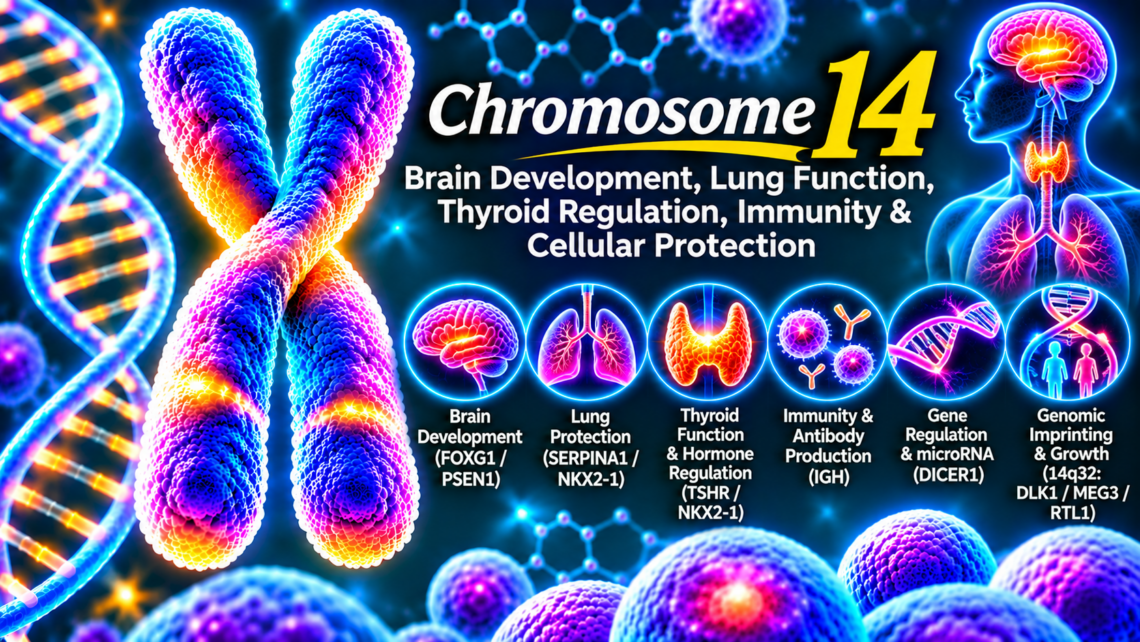
Chromosome 14: The Genetic Blueprint of Brain Development, Lung Function, Immunity & Cellular Protection
Exploring the genes that influence neurological development, thyroid function, respiratory health, protein regulation, immune cell formation and the body’s ability to maintain biological balance. Introduction What connects the development of the brain, the functioning of the lungs, the regulation of thyroid hormones, the production of antibodies and the body’s ability to protect itself against abnormal cellular growth? An important part of the answer lies in Chromosome 14. Chromosome 14 contains a fascinating collection of genes involved in several essential biological processes. Some contribute to brain development and neurological function, while others regulate thyroid activity, protect lung tissue, process proteins and help the immune system recognise potential threats. Among its best-known…
-
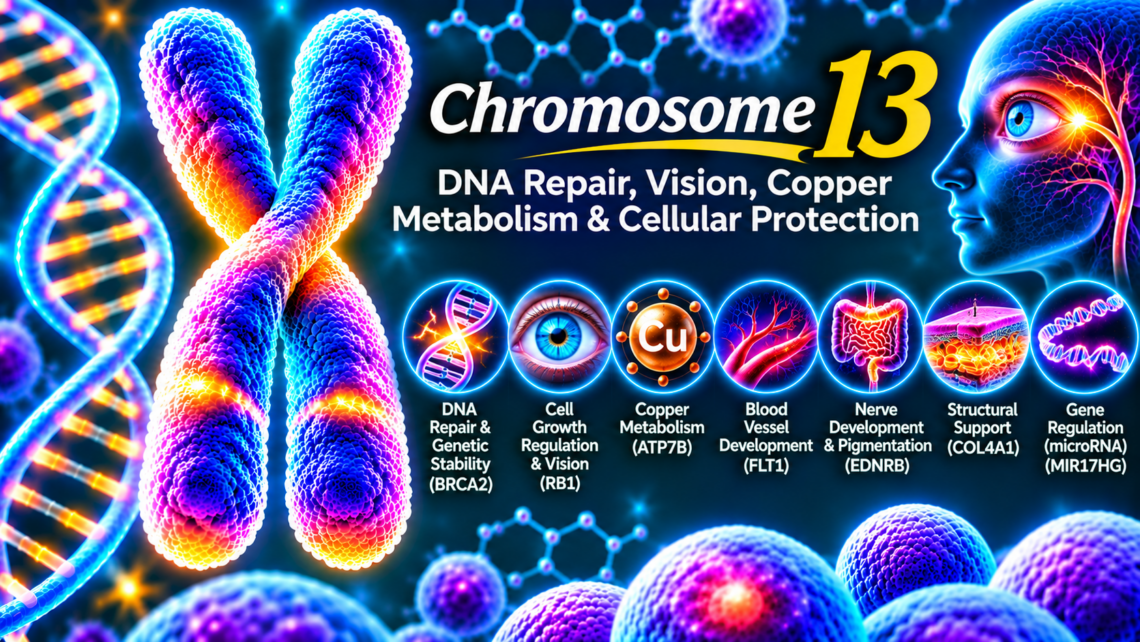
Chromosome 13: The Genetic Blueprint of DNA Repair, Vision, Copper Metabolism & Cellular Protection
Exploring the genes that help protect genetic information, regulate cell growth, support eye development, transport essential minerals and maintain healthy blood vessels. Introduction What connects the body’s ability to repair damaged DNA, regulate cell division, develop the retina, process copper and maintain the structure of blood vessels? An important part of the answer lies in Chromosome 13. Chromosome 13 contains several genes with essential roles in human development and cellular maintenance. Some help protect the integrity of our genetic information, while others regulate cell growth, support the development of the eyes, transport copper and maintain the structural foundations of blood vessels. Among its best-known genes are BRCA2, RB1, ATP7B, FLT1,…
You May Also Like

How to Support Your Adrenal Health Naturally: Restoring Balance, Managing Stress & Reclaiming Your Energy

Alternative & Integrative Health: A Holistic Approach to Improving Your Quality of Life

Food & Monosodium Glutamate (MSG): Understanding Monosodium Glutamate, Its Effects on the Body & How to Make Informed Food Choices
-
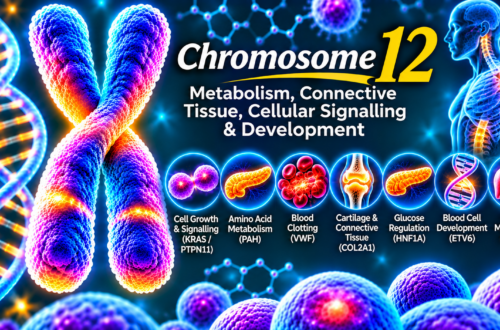
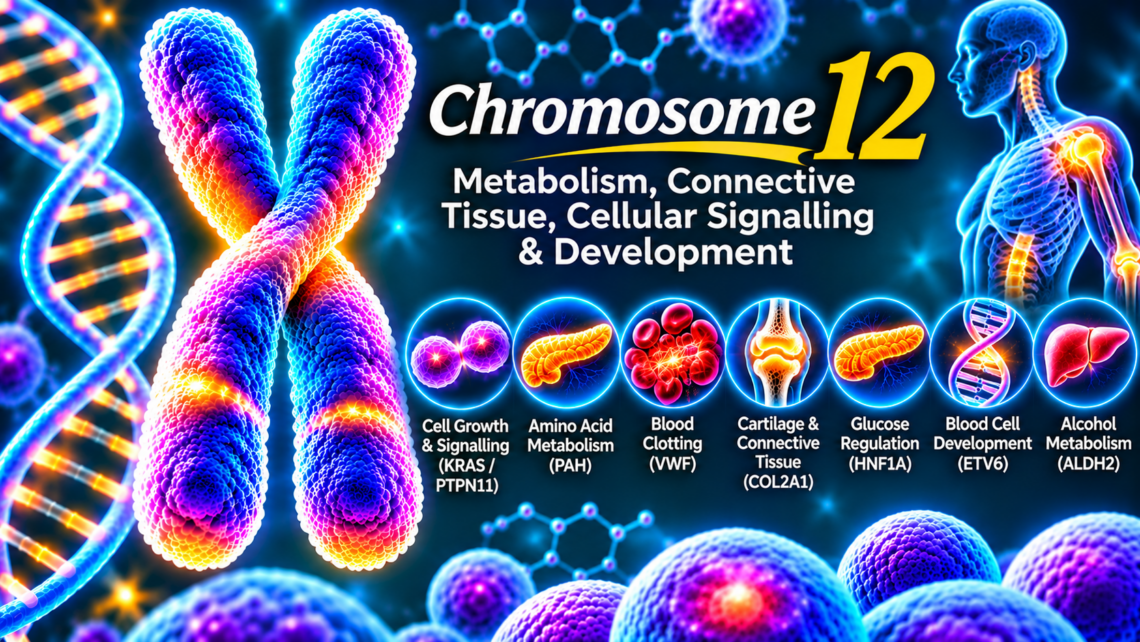
Chromosome 12: The Genetic Blueprint of Metabolism, Connective Tissue, Cellular Signalling & Development
Exploring the genes that influence how the body processes nutrients, regulates growth, maintains connective tissue, supports blood clotting and coordinates essential cellular functions. Introduction Chromosomes carry the genetic instructions that help build, maintain and regulate the human body. Each chromosome contains hundreds or thousands of genes, and many of these genes work together to support multiple biological systems. Chromosome 12 is particularly interesting because of the diversity of its genetic functions. It contains genes involved in metabolism, amino acid processing, connective tissue formation, blood clotting, cellular communication, growth regulation and neurological development. Among its most significant genes are KRAS, PTPN11, PAH, VWF, COL2A1, HNF1A, ETV6 and ALDH2. Some of these…
-
Chromosome 11: The Genetic Blueprint of Blood, Brain Development, Hormones & Growth
Exploring the genes that influence oxygen transport, insulin production, neurological development, eye formation, cellular growth and the body’s ability to maintain balance. Introduction What connects the oxygen carried by your red blood cells, the insulin that regulates your blood sugar, the development of your eyes and brain, and the growth of your body’s tissues? An important part of the answer lies in Chromosome 11. Chromosome 11 contains a remarkable collection of genes involved in some of the body’s most essential biological functions. It carries instructions for producing components of haemoglobin, regulating blood glucose, supporting nervous system development, forming the eyes and kidneys, and controlling cellular growth. Among its best-known genes…